Interreg MED
-
DATABASE (414)
-
ARTICLES (2)
CTO and Founder of CH Biomedical
With a doctorate in mechanical engineering from the University of Maryland, Frank Lin has over 25 years of technical and managerial experience in medtech and aerospace. Before founding CH Biomedical in 2008, he was the principal staff engineer at Kriton Medical, the predecessor of HeartWare International (now Medtronic), leading the computational fluid dynamic design of its Heartware Ventricular Assist Device (HVAD) system. Lin holds 15 US and international patents in left ventricular assist device and turbomachinery. He is also an adjunct professor at the Academy of Engineering and Technology, Fudan University.

With a doctorate in mechanical engineering from the University of Maryland, Frank Lin has over 25 years of technical and managerial experience in medtech and aerospace. Before founding CH Biomedical in 2008, he was the principal staff engineer at Kriton Medical, the predecessor of HeartWare International (now Medtronic), leading the computational fluid dynamic design of its Heartware Ventricular Assist Device (HVAD) system. Lin holds 15 US and international patents in left ventricular assist device and turbomachinery. He is also an adjunct professor at the Academy of Engineering and Technology, Fudan University.
CEO and co-founder of Refurbed
Kilian Kaminski graduated in communication and media studies in 2013 at Fresenius University in Cologne, Germany. Kaminski and Peter Windischhofer met during a master’s program at Hult International Business School. The two post-grads also worked in Shanghai in 2014.Kaminski held various business and marketing internship roles at Fiege Far East Holding and pottery-maker ProGreen in Shanghai, Hansa shipping GmbH and Hamburg Sparkasse bank in Germany and also at a music agency in Australia.In December 2014, he joined Amazon Services as an accounts manager in Munich. He also worked as Amazon’s program lead for certified refurbished DE marketplace for over two years.He left in 2017 and co-founded Refurbed with Windischhofer in Austria. In 2019, the CEO of Vienna-based refurbished electronics marketplace became an expert member of the Consumer Insight Action Panel, an EU initiative designed to support the transition to the circular economy.

Kilian Kaminski graduated in communication and media studies in 2013 at Fresenius University in Cologne, Germany. Kaminski and Peter Windischhofer met during a master’s program at Hult International Business School. The two post-grads also worked in Shanghai in 2014.Kaminski held various business and marketing internship roles at Fiege Far East Holding and pottery-maker ProGreen in Shanghai, Hansa shipping GmbH and Hamburg Sparkasse bank in Germany and also at a music agency in Australia.In December 2014, he joined Amazon Services as an accounts manager in Munich. He also worked as Amazon’s program lead for certified refurbished DE marketplace for over two years.He left in 2017 and co-founded Refurbed with Windischhofer in Austria. In 2019, the CEO of Vienna-based refurbished electronics marketplace became an expert member of the Consumer Insight Action Panel, an EU initiative designed to support the transition to the circular economy.
Co-founder, CTO of Meatable
Daan Luining is the Dutch co-founder and CTO at cell-based meat startup Meatable, the first to claim a highly scalable culture technology, where he has worked since 2018. He is also a research director at the Cellular Agriculture Society in Leiden, a joint initiative for cell-based startups to share knowledge and to collaborate on projects to further scale the sector. Luining is also on the board of directors at the not-for-profit Cultured Meat Foundation that promotes sector innovation. His past posts have all been in the area of research, either as a researcher or a technician, and at the same time as completing studies. His last job was as a research strategist at New York-based New Harvest, a callular food rsearch funding body, where he worked for a year and met Dr. Kotter, the inventor of Meatable’s cellular technology. His research positions from 2009–15 were in the area of cell culture, mass spectrometry and DNA sequencing at the Maastricht University, University Medical Center Amsterdam, Utrecht University and Leiden University. Luining holds a master’s in biological sciences from Leiden University in the Netherlands.

Daan Luining is the Dutch co-founder and CTO at cell-based meat startup Meatable, the first to claim a highly scalable culture technology, where he has worked since 2018. He is also a research director at the Cellular Agriculture Society in Leiden, a joint initiative for cell-based startups to share knowledge and to collaborate on projects to further scale the sector. Luining is also on the board of directors at the not-for-profit Cultured Meat Foundation that promotes sector innovation. His past posts have all been in the area of research, either as a researcher or a technician, and at the same time as completing studies. His last job was as a research strategist at New York-based New Harvest, a callular food rsearch funding body, where he worked for a year and met Dr. Kotter, the inventor of Meatable’s cellular technology. His research positions from 2009–15 were in the area of cell culture, mass spectrometry and DNA sequencing at the Maastricht University, University Medical Center Amsterdam, Utrecht University and Leiden University. Luining holds a master’s in biological sciences from Leiden University in the Netherlands.
Co-founder of Meatable
Mark Kotter is the Austrian co-founder at Dutch cell-based meat startup Meatable, the first to use pluripotent stem cells and claim a highly scalable culture technology, which was developed by Kotter prior to founding the startup in 2018. He is also founder at his biotech startup, bit.bio, which is based in Cambridge, UK, since 2016, where he applies his cellular technological innovation to human stem cell research and has raised investments totaling $42m. His main full-time position is at the University of Cambridge, where he has worked since 2009. He has spent more than five years as a clinician-scientist in stem cell research and was previously a lecturer in neurosurgery. Kotter also lectures at Paris Descartes University and is a team leader at the UK’s National Institute for Health Research’s Brain Injury MedTech Co-operative. He also founded Myelopathy.org to raise awareness of cervical myelopathy. His past positions were as a research group leader at the Max Planck Institute for Experimental Medicine for one year, and for two years spent at the Medical University of Vienna. Kotter holds two doctorates; one in philosophy from the University of Cambridge and the other in medicine from the University of Graz in Austria. Kotter also holds a master’s in philosophy from the University of Cambridge.
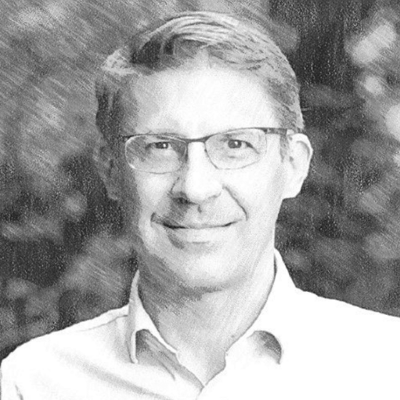
Mark Kotter is the Austrian co-founder at Dutch cell-based meat startup Meatable, the first to use pluripotent stem cells and claim a highly scalable culture technology, which was developed by Kotter prior to founding the startup in 2018. He is also founder at his biotech startup, bit.bio, which is based in Cambridge, UK, since 2016, where he applies his cellular technological innovation to human stem cell research and has raised investments totaling $42m. His main full-time position is at the University of Cambridge, where he has worked since 2009. He has spent more than five years as a clinician-scientist in stem cell research and was previously a lecturer in neurosurgery. Kotter also lectures at Paris Descartes University and is a team leader at the UK’s National Institute for Health Research’s Brain Injury MedTech Co-operative. He also founded Myelopathy.org to raise awareness of cervical myelopathy. His past positions were as a research group leader at the Max Planck Institute for Experimental Medicine for one year, and for two years spent at the Medical University of Vienna. Kotter holds two doctorates; one in philosophy from the University of Cambridge and the other in medicine from the University of Graz in Austria. Kotter also holds a master’s in philosophy from the University of Cambridge.
Chairman of the Board, co-founder, co-inventor of NovoNutrients
Russell J. Howard has been co-founder and chairman of the board at NovoNutrients, a San Francisco biotech manufacturer of alt-protein produced using fermentation and CO2, and the research company Oakbio, since the latter’s foundation in 2009. During this period, for a year, Howard also worked as head of commercial strategy at Genome.One, a genetics startup. Howard is also on the board of executives of two Australian pharma companies, Immutep and NeuClone. Previously, between 1997 and 2009, he was CEO at California-based Maxygen, dedicated to the commercialization of molecular breeding and gene shuffling in protein. The year before that, Howard was president and scientific director at global pharma giant GSK in Santa Clara, and between 1994 and 1996, he held the same position at AFFYMAX Research Institute, working on new drugs research. Howard also held long-term research positions, heading up the laboratory at Palo Alto’s DNAX Research Institute of Molecular & Cellular Biology for six years, and earlier spent nine years at Bethesda’s National Institute of Allergy and Infectious Diseases (NIAID) working on identifying new malarial pathogens. The doctor of biochemistry from the University of Melbourne has over 140 peer-reviewed publications. Following his studies, Howard spent three years undertaking postdoctoral research at Australia’s WEHI (formerly the Walter and Eliza Hall Institute of Medical Research).
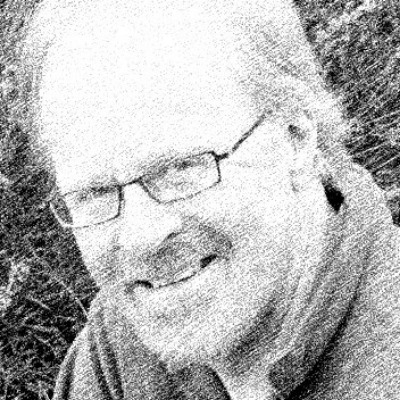
Russell J. Howard has been co-founder and chairman of the board at NovoNutrients, a San Francisco biotech manufacturer of alt-protein produced using fermentation and CO2, and the research company Oakbio, since the latter’s foundation in 2009. During this period, for a year, Howard also worked as head of commercial strategy at Genome.One, a genetics startup. Howard is also on the board of executives of two Australian pharma companies, Immutep and NeuClone. Previously, between 1997 and 2009, he was CEO at California-based Maxygen, dedicated to the commercialization of molecular breeding and gene shuffling in protein. The year before that, Howard was president and scientific director at global pharma giant GSK in Santa Clara, and between 1994 and 1996, he held the same position at AFFYMAX Research Institute, working on new drugs research. Howard also held long-term research positions, heading up the laboratory at Palo Alto’s DNAX Research Institute of Molecular & Cellular Biology for six years, and earlier spent nine years at Bethesda’s National Institute of Allergy and Infectious Diseases (NIAID) working on identifying new malarial pathogens. The doctor of biochemistry from the University of Melbourne has over 140 peer-reviewed publications. Following his studies, Howard spent three years undertaking postdoctoral research at Australia’s WEHI (formerly the Walter and Eliza Hall Institute of Medical Research).
CPO and Co-founder of Kuaishou
Cheng Yixiao began his career as a software engineer at HP in Dalian where he met Kuaishou co-founder Yang Yuanxi. Cheng left HP to join Renren as an iPhone client software developer.In 2011, Cheng started a photo-sharing platform GIF Kuaishou and obtained some seed funding. In 2013, he was introduced to a successful entrepreneur Su Hua. They decided to pivot GIF Kuaishou into a video-sharing app, with Cheng as CPO and Su as CEO.Many believe that his earlier experiences of living in Tieling, a county in northeast China, and later in Beijing’s suburb Tiantongyuan, have helped him to identify business opportunities and develop social media tools for the grassroots. He has quite a reputation for his creativity and passion for product development in tech circles.
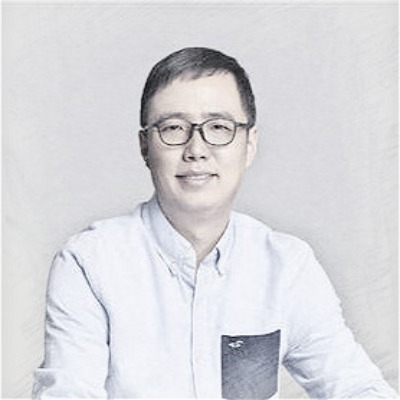
Cheng Yixiao began his career as a software engineer at HP in Dalian where he met Kuaishou co-founder Yang Yuanxi. Cheng left HP to join Renren as an iPhone client software developer.In 2011, Cheng started a photo-sharing platform GIF Kuaishou and obtained some seed funding. In 2013, he was introduced to a successful entrepreneur Su Hua. They decided to pivot GIF Kuaishou into a video-sharing app, with Cheng as CPO and Su as CEO.Many believe that his earlier experiences of living in Tieling, a county in northeast China, and later in Beijing’s suburb Tiantongyuan, have helped him to identify business opportunities and develop social media tools for the grassroots. He has quite a reputation for his creativity and passion for product development in tech circles.
CEO and co-founder of OLIO
Tessa Clarke is the British CEO and co-founder of food-sharing app OLIO that was inspired by her experience of having to throw away perfectly good unused food when she was packing up to move from Switzerland back to the UK in 2014.After graduating with a first-class degree in social and political sciences at the University of Cambridge in UK in 1997, she worked for three years at the Boston Consulting Group as a junior associate. She joined an MBA program at Stanford University Graduate School of Business in 2002 and met Saasha Celestial-One, who was also studying for an MBA at Stanford. In 2015, Clarke and Celestial-One decided to use their savings to create a food-sharing app OLIO after successfully testing the idea as a private WhatsApp group in North London.Before becoming an entrepreneur in 2015, Clarke has held various senior management roles since completing her MBA in 2004. She worked for global business publisher EMAP from 2005 until 2009, when she joined Dyson Inc as e-commerce managing director (MD). In 2013, she left Dyson to become MD of fintech PayLater based in Switzerland run by the Wonga payday loan company. Known then as Tessa Cook, she later became Wonga’s MD for eight months when she was tasked with “cleaning up” the tarnished reputation of the high interest loan company. From 2013 to 2021, she was also chair of the management board of St George’s Palace, a boutique apart-hotel and spa complex in Bansko, Bulgaria.In 2018, she became a fellow at Unreasonable, an organization that supports social and environmental entrepreneurship. For two years until 2021, Clarke was ambassador for the Meaningful Business 100 global event that advocates the achievement of the UN’s Sustainable Development Goals. She was also a board member for six years at Contentive, a global B2B media and information company. In 2021, her busy schedule now includes becoming a business mentor for not-for-profit Virgin Startup.
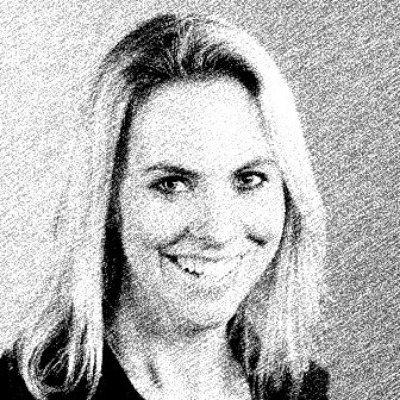
Tessa Clarke is the British CEO and co-founder of food-sharing app OLIO that was inspired by her experience of having to throw away perfectly good unused food when she was packing up to move from Switzerland back to the UK in 2014.After graduating with a first-class degree in social and political sciences at the University of Cambridge in UK in 1997, she worked for three years at the Boston Consulting Group as a junior associate. She joined an MBA program at Stanford University Graduate School of Business in 2002 and met Saasha Celestial-One, who was also studying for an MBA at Stanford. In 2015, Clarke and Celestial-One decided to use their savings to create a food-sharing app OLIO after successfully testing the idea as a private WhatsApp group in North London.Before becoming an entrepreneur in 2015, Clarke has held various senior management roles since completing her MBA in 2004. She worked for global business publisher EMAP from 2005 until 2009, when she joined Dyson Inc as e-commerce managing director (MD). In 2013, she left Dyson to become MD of fintech PayLater based in Switzerland run by the Wonga payday loan company. Known then as Tessa Cook, she later became Wonga’s MD for eight months when she was tasked with “cleaning up” the tarnished reputation of the high interest loan company. From 2013 to 2021, she was also chair of the management board of St George’s Palace, a boutique apart-hotel and spa complex in Bansko, Bulgaria.In 2018, she became a fellow at Unreasonable, an organization that supports social and environmental entrepreneurship. For two years until 2021, Clarke was ambassador for the Meaningful Business 100 global event that advocates the achievement of the UN’s Sustainable Development Goals. She was also a board member for six years at Contentive, a global B2B media and information company. In 2021, her busy schedule now includes becoming a business mentor for not-for-profit Virgin Startup.
CTO and Co-founder of Plastic Bank
Since 2008, after completing a business course at Royal Roads University in Canada, Shaun Frankson has been running his own consultancy Frankson Media in Vancouver.From 2009 to 2014, Frankson worked as VP at Nero Global Tracking, a SaaS platform for mobile vehicles founded by David Katz. In 2013, the duo co-founded Plastic Bank in 2013 to launch a “Social Plastic” movement to reduce ocean plastic and set up recycling centers to create jobs to improve the livelihood of locals in under-served coastal villages. The Canadian co-founder is now the CTO of Plastic Bank. In 2014, he also became an advisor at HeroX, a social network for innovation with over 2m members.
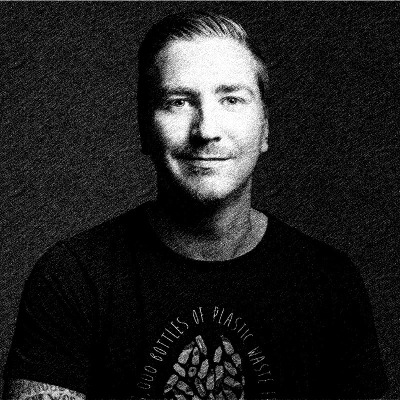
Since 2008, after completing a business course at Royal Roads University in Canada, Shaun Frankson has been running his own consultancy Frankson Media in Vancouver.From 2009 to 2014, Frankson worked as VP at Nero Global Tracking, a SaaS platform for mobile vehicles founded by David Katz. In 2013, the duo co-founded Plastic Bank in 2013 to launch a “Social Plastic” movement to reduce ocean plastic and set up recycling centers to create jobs to improve the livelihood of locals in under-served coastal villages. The Canadian co-founder is now the CTO of Plastic Bank. In 2014, he also became an advisor at HeroX, a social network for innovation with over 2m members.
EMTEK (PT. Elang Mahkota Teknologi Tbk.)
Founded in 1983, EMTEK is Indonesia’s second-largest media group.

Founded in 1983, EMTEK is Indonesia’s second-largest media group.
Skystar Capital is a fund that invests in technology startups in the Asia Pacific region, particularly Indonesia. It is backed by Kompas Gramedia, Indonesia's largest media conglomerate. Skystar Capital is a separate and independent investment arm from Skystar Ventures

Skystar Capital is a fund that invests in technology startups in the Asia Pacific region, particularly Indonesia. It is backed by Kompas Gramedia, Indonesia's largest media conglomerate. Skystar Capital is a separate and independent investment arm from Skystar Ventures
Korea Investment Partners is a venture capital fund established in 1986. It primarily invests in companies from Korea, China and the United States. It has invested a total of more than US$1.7 billion in over 500 companies across various sectors, from social media to medtech.

Korea Investment Partners is a venture capital fund established in 1986. It primarily invests in companies from Korea, China and the United States. It has invested a total of more than US$1.7 billion in over 500 companies across various sectors, from social media to medtech.
Founded in 2010 by Martin Hartono, son of Indonesia’s richest man Robert Budi Hartono, GDP Venture is a venture capital firm focused on digital communities, and media, commerce and solution companies in the Indonesian consumer internet industry.

Founded in 2010 by Martin Hartono, son of Indonesia’s richest man Robert Budi Hartono, GDP Venture is a venture capital firm focused on digital communities, and media, commerce and solution companies in the Indonesian consumer internet industry.
The VC arm of one of Japan's largest internet and media companies, CyberAgent Ventures specializes in the Internet-related industry. It invests in startups at various stages from the seed stage. CyberAgent has 10 offices in 8 countries mainly in Asia, including Jakarta, Beijing, Shanghai and Shenzhen.

The VC arm of one of Japan's largest internet and media companies, CyberAgent Ventures specializes in the Internet-related industry. It invests in startups at various stages from the seed stage. CyberAgent has 10 offices in 8 countries mainly in Asia, including Jakarta, Beijing, Shanghai and Shenzhen.
With about $2 billion under management, this VC fund invests primarily in early- and growth-stage global companies with substantial businesses in China, namely in the semiconductor, Internet, wireless, new media and cleantech sectors. GSR Ventures has backed Didi, Ele.me, among others, and was involved in the $2.8 billion purchase of an 80% stake in Philips's LED components and automotive business. It has offices in Beijing, Hong Kong and Silicon Valley.
With about $2 billion under management, this VC fund invests primarily in early- and growth-stage global companies with substantial businesses in China, namely in the semiconductor, Internet, wireless, new media and cleantech sectors. GSR Ventures has backed Didi, Ele.me, among others, and was involved in the $2.8 billion purchase of an 80% stake in Philips's LED components and automotive business. It has offices in Beijing, Hong Kong and Silicon Valley.
Started in 2008 by Joe Zhou (Zhou Zhixiong), one of the founders of Kleiner Perkins Caufield & Byers' China fund, Keytone Ventures primarily invests in high-growth companies in the cleantech, media, hi-tech and consumer sectors.
Started in 2008 by Joe Zhou (Zhou Zhixiong), one of the founders of Kleiner Perkins Caufield & Byers' China fund, Keytone Ventures primarily invests in high-growth companies in the cleantech, media, hi-tech and consumer sectors.
Alén Space: Nanosatellite company targets contracts of over €2 million by 2020
Alén Space seeks funding of €1.5 million to accelerate plans to win a share of the global market of 2,600 small satellites to be launched by 2023

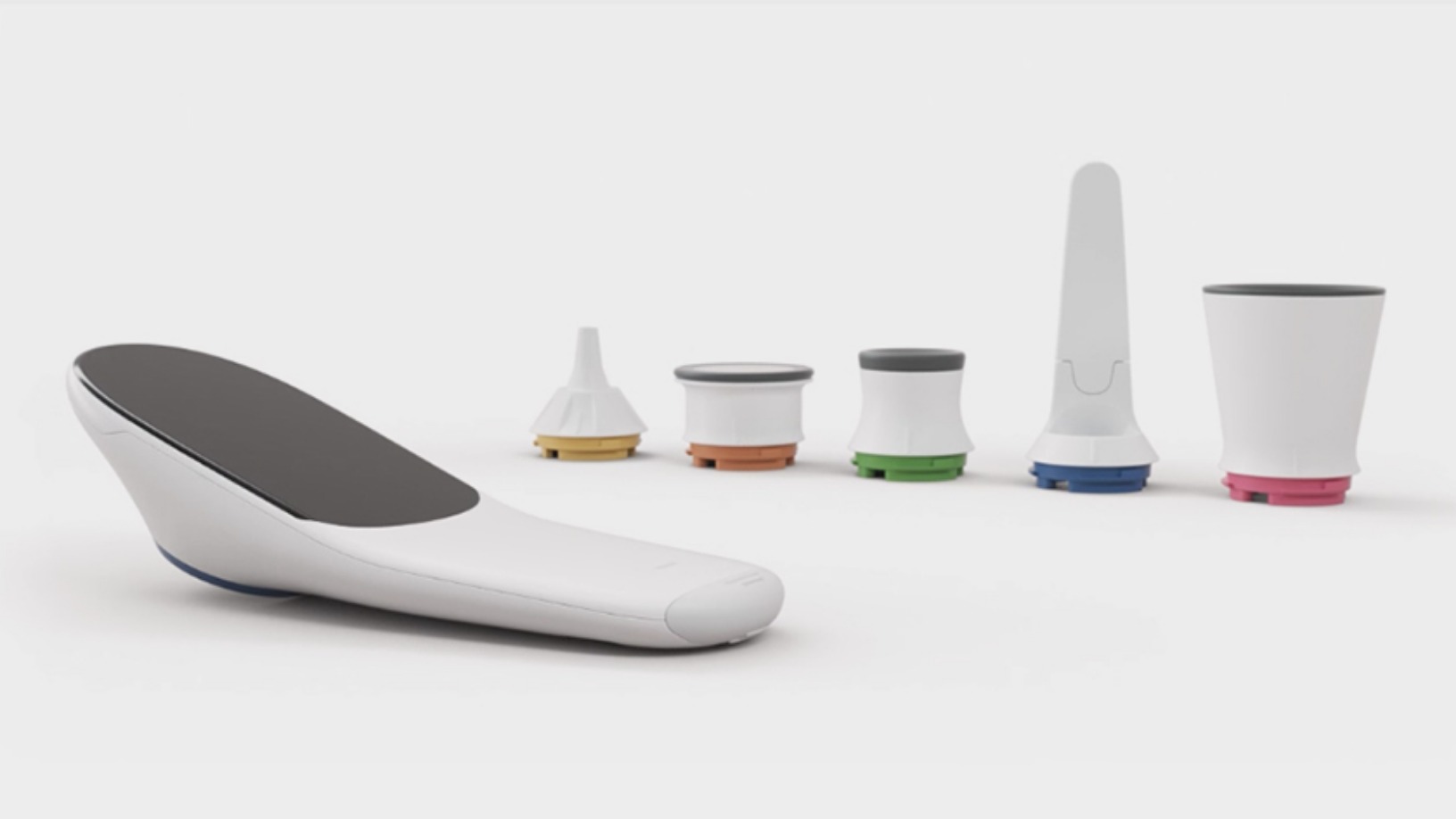
HigoSense launching advanced mobile device for self-triage and diagnosis, boosting telemedicine
The Polish medtech has developed a five-in-one diagnostic device for throat, ear, heart checks and more, with diagnosis in four minutes and compatible with diagnostic equipment
Sorry, we couldn’t find any matches for “Interreg MED”.
POPULAR DATABASE