sustainable mobility
-
DATABASE (110)
-
ARTICLES (229)
Co-CEO and Co-founder of Notpla (formerly Skipping Rocks Lab)
Rodrigo García González graduated in Architecture at the Technical University of Madrid (ETSAM) in 2009 and also completed various PhD courses in advanced architecture at his alma mater.In 2006, the architect student joined an EU Asia-Link sustainable humane habitat program that included stints at the Centre for Environmental Planning and Technology (CEPT) University in India. He also won a SMILE scholarship to study industrial design at Pontificia Universidad Católica in Chile for one year. In 2011, he obtained a scholarship to study industrial design and business at Umeå Institute of Design in Sweden. In 2014, he completed two master’s programs in innovation design engineering run by London’s Imperial College and Royal College of Art.In July 2014, he co-founded Skipping Rocks Lab, that was later pivoted into Notpla, a UK-based startup that develops compostable and edible packaging materials made of seaweed and other plants.Since 2007, he has worked with various institutions in Europe, Latin America and the US including Cornell University, CEPT, Imperial College and Royal College of Art. In 2016, he became a senior lecturer for a degree program in product and furniture design at Kingston University.He has two patents for his work on structural and deployable systems. His designs have also been featured in prestigious art centers like the Cite de l'Architecture of Paris and the Venice Biennale of Architecture.Other projects include the Hop! suitcase that can follow the user by tracking the signal of the user’s mobile phone and Aer, an artificial cloud that can evaporate “drinkable” water from the sea. He also developed Zipizip, an architectural system that enables the construction of several floors of a building in a few hours.

Rodrigo García González graduated in Architecture at the Technical University of Madrid (ETSAM) in 2009 and also completed various PhD courses in advanced architecture at his alma mater.In 2006, the architect student joined an EU Asia-Link sustainable humane habitat program that included stints at the Centre for Environmental Planning and Technology (CEPT) University in India. He also won a SMILE scholarship to study industrial design at Pontificia Universidad Católica in Chile for one year. In 2011, he obtained a scholarship to study industrial design and business at Umeå Institute of Design in Sweden. In 2014, he completed two master’s programs in innovation design engineering run by London’s Imperial College and Royal College of Art.In July 2014, he co-founded Skipping Rocks Lab, that was later pivoted into Notpla, a UK-based startup that develops compostable and edible packaging materials made of seaweed and other plants.Since 2007, he has worked with various institutions in Europe, Latin America and the US including Cornell University, CEPT, Imperial College and Royal College of Art. In 2016, he became a senior lecturer for a degree program in product and furniture design at Kingston University.He has two patents for his work on structural and deployable systems. His designs have also been featured in prestigious art centers like the Cite de l'Architecture of Paris and the Venice Biennale of Architecture.Other projects include the Hop! suitcase that can follow the user by tracking the signal of the user’s mobile phone and Aer, an artificial cloud that can evaporate “drinkable” water from the sea. He also developed Zipizip, an architectural system that enables the construction of several floors of a building in a few hours.
Krakakoa empowers and supports farmers to become master craftsmen in their trade, creating the exceptional cacao beans that go into our chocolate.

Krakakoa empowers and supports farmers to become master craftsmen in their trade, creating the exceptional cacao beans that go into our chocolate.
Founded in 2013 by Ramanan Raghavendran and John Kim, Amasia is a venture capital investment firm based in San Francisco and Singapore. The VC promotes environmental and sustainable innovations that help to reduce consumption, boost recycling and upcycling. Eco-investments include Finch, Treedots and Joro. Finch provides information about a product’s environmental impact to consumers while TreeDots connects grocery suppliers directly with businesses and households. Joro advises users on actionable steps to reduce their carbon footprints.Amasia primarily invests in startups from seed stage up to Series B, but it has also participated in later-stage investments. The VC also aims to encourage conventional offline businesses to go online and optimize supply chain activities. In October 2020, Amasia participated in a $100m Series E round raised by Dialpad, a remote working communication software firm. In September 2021, the VC took a stake in Indonesian fintech Xendit’s $150m Series C round. Tokopedia also joined the Amasia stable in 2016 when the e-commerce platform became Indonesia’s first tech unicorn after the $147m funding round.Other investments include Super, a social commerce platform that improves FMCG distribution to tier-2 and tier-3 cities in Indonesia, online education firm SkillShare and Rainforest Life that acquires and aggregates direct-to-consumer e-commerce brands.


Founded in 2013 by Ramanan Raghavendran and John Kim, Amasia is a venture capital investment firm based in San Francisco and Singapore. The VC promotes environmental and sustainable innovations that help to reduce consumption, boost recycling and upcycling. Eco-investments include Finch, Treedots and Joro. Finch provides information about a product’s environmental impact to consumers while TreeDots connects grocery suppliers directly with businesses and households. Joro advises users on actionable steps to reduce their carbon footprints.Amasia primarily invests in startups from seed stage up to Series B, but it has also participated in later-stage investments. The VC also aims to encourage conventional offline businesses to go online and optimize supply chain activities. In October 2020, Amasia participated in a $100m Series E round raised by Dialpad, a remote working communication software firm. In September 2021, the VC took a stake in Indonesian fintech Xendit’s $150m Series C round. Tokopedia also joined the Amasia stable in 2016 when the e-commerce platform became Indonesia’s first tech unicorn after the $147m funding round.Other investments include Super, a social commerce platform that improves FMCG distribution to tier-2 and tier-3 cities in Indonesia, online education firm SkillShare and Rainforest Life that acquires and aggregates direct-to-consumer e-commerce brands.
TRATON is a subsidiary of Volkswagen Group and one of the world’s largest producer of commercial vehicles. It manufactures light-duty commercial vehicles, trucks and buses at 29 production and assembly sites in 17 countries.The company is now focusing on developing electric trucks and announced in March 2021 that it will invest a total of €1.6bn in e-mobility R&D by 2025. In September 2020, it partnered with self-driving trucking startup TuSimple to mass produce driverless trucks.In March 2021, Navistar stockholders approved the acquisition of Navistar by TRATON. Subject to regulatory approvals, the transaction is expected to be completed by mid-May.

TRATON is a subsidiary of Volkswagen Group and one of the world’s largest producer of commercial vehicles. It manufactures light-duty commercial vehicles, trucks and buses at 29 production and assembly sites in 17 countries.The company is now focusing on developing electric trucks and announced in March 2021 that it will invest a total of €1.6bn in e-mobility R&D by 2025. In September 2020, it partnered with self-driving trucking startup TuSimple to mass produce driverless trucks.In March 2021, Navistar stockholders approved the acquisition of Navistar by TRATON. Subject to regulatory approvals, the transaction is expected to be completed by mid-May.
WWF-backed biotech Oceanium has developed a biorefinery that transforms seaweed into alt-proteins and compostable packaging that will soon be launched commercially.

WWF-backed biotech Oceanium has developed a biorefinery that transforms seaweed into alt-proteins and compostable packaging that will soon be launched commercially.
Toyota Motor Corporation (Toyota) started as a division of the Toyoda Automatic Loom Works in 1933, and established as an independent in 1937. As of December 2019, it ranked tenth largest company in the world by revenue. An established multinational automotive manufacturer, Toyota has invested in startups working on everything from online marketing to cybersecurity, placing an focus on new-generation mobility services. In 2019, it invested $600m in Chinese ride-hailing giant Didi Chuxing, and founded a joint venture to offer car maintenance, insurance and finance services to ride-hailing drivers. Also that year, Toyota invested $500m in Uber for self-driving cars. In early 2020, the auto giant invested $400 in the self-driving startup Pony.ai. Before the investment, the two had already partnered to test self-driving cars on public roads in China.

Toyota Motor Corporation (Toyota) started as a division of the Toyoda Automatic Loom Works in 1933, and established as an independent in 1937. As of December 2019, it ranked tenth largest company in the world by revenue. An established multinational automotive manufacturer, Toyota has invested in startups working on everything from online marketing to cybersecurity, placing an focus on new-generation mobility services. In 2019, it invested $600m in Chinese ride-hailing giant Didi Chuxing, and founded a joint venture to offer car maintenance, insurance and finance services to ride-hailing drivers. Also that year, Toyota invested $500m in Uber for self-driving cars. In early 2020, the auto giant invested $400 in the self-driving startup Pony.ai. Before the investment, the two had already partnered to test self-driving cars on public roads in China.
Adevinta Ventures is the investment arm of the Norway-based Adevinta, a local digital marketplace group operating in 15 countries in Europe, Latin America and North Africa, with 1.5bn monthly visitors. Its leading local brands include Leboncoin in France, InfoJobs in Spain, Subito in Italy and Jofogás in Hungary. In Spain, where its headquarters is in Barcelona, the company includes an umbrella of successful online classified platforms such as Infojobs, Fotocasa, Habitaclia, Milanuncios and Vibbo, counting over 18m active users.Adevinta Ventures invests in startups focused on marketplace and platform space specifically in verticals such as mobility, education and real estate. The fund typically invests in Series A and B rounds backing them also with marketing and data support as well as mentorship. Initial investments go up to €5m with follow-on capacity.

Adevinta Ventures is the investment arm of the Norway-based Adevinta, a local digital marketplace group operating in 15 countries in Europe, Latin America and North Africa, with 1.5bn monthly visitors. Its leading local brands include Leboncoin in France, InfoJobs in Spain, Subito in Italy and Jofogás in Hungary. In Spain, where its headquarters is in Barcelona, the company includes an umbrella of successful online classified platforms such as Infojobs, Fotocasa, Habitaclia, Milanuncios and Vibbo, counting over 18m active users.Adevinta Ventures invests in startups focused on marketplace and platform space specifically in verticals such as mobility, education and real estate. The fund typically invests in Series A and B rounds backing them also with marketing and data support as well as mentorship. Initial investments go up to €5m with follow-on capacity.
Tapping into Indonesia’s US$24 billion crowdfunding pool, iGrow’s agribusiness platform aims to help poor farmers to transform underused arable land into sustainable profit-sharing organic micro-farms.

Tapping into Indonesia’s US$24 billion crowdfunding pool, iGrow’s agribusiness platform aims to help poor farmers to transform underused arable land into sustainable profit-sharing organic micro-farms.
3D Click is gearing up to provide the biggest online 3D catalog of customizable and sustainable packaging at affordable prices for the industry.

3D Click is gearing up to provide the biggest online 3D catalog of customizable and sustainable packaging at affordable prices for the industry.
Delivery service Koiki is a social enterprise that offers employment opportunities for vulnerable people while reducing the carbon impact of last-mile deliveries.

Delivery service Koiki is a social enterprise that offers employment opportunities for vulnerable people while reducing the carbon impact of last-mile deliveries.
Digital marketplace and blockchain-guaranteed traceability app empowering fisherman with rapid sales, improved market access and reduced waste. Ensures sustainability and guaranteed supply for buyers.

Digital marketplace and blockchain-guaranteed traceability app empowering fisherman with rapid sales, improved market access and reduced waste. Ensures sustainability and guaranteed supply for buyers.
Led by billionaire investors includings Bill Gates, Jeff Bezos, Jack Ma, Michael Bloomberg and Richard Branson, US-based Breakthrough Energy Ventures (BEV) is an energy tech innovation fund for highly-scalable tech with the potential to help cut net greenhouse gas emissions to zero. Since its founding in 2016, it has launched several funds, including the $1bn Breakthrough Energy Ventures initial fund and a $100m European fund. The entity employs scientists and has a model available to startups to identify sustainability opportunities in the US grid. It currently has 30 startups in its portfolio across technologies and geographies. Among its most recent investments in early 2021 are the $11.5m Series A round of US low-emission hydrogen producer C-Zero and in the $50m Series B round of US sustainable metal producer Boston Metals. In January 2021, BEV also closed a new round of another $1 billion to invest in up to 50 startups. The round saw the addition participation of several new investors including Abigail Johnson, CEO of Fidelity Investments, Shopify founder Tobias Lütke, property developer John Sobrato, of CEO of hedge fund Baupost Group Seth Klarman, founder of Tableau Software Chris Stolte and Walmart heir Sam Walton.

Led by billionaire investors includings Bill Gates, Jeff Bezos, Jack Ma, Michael Bloomberg and Richard Branson, US-based Breakthrough Energy Ventures (BEV) is an energy tech innovation fund for highly-scalable tech with the potential to help cut net greenhouse gas emissions to zero. Since its founding in 2016, it has launched several funds, including the $1bn Breakthrough Energy Ventures initial fund and a $100m European fund. The entity employs scientists and has a model available to startups to identify sustainability opportunities in the US grid. It currently has 30 startups in its portfolio across technologies and geographies. Among its most recent investments in early 2021 are the $11.5m Series A round of US low-emission hydrogen producer C-Zero and in the $50m Series B round of US sustainable metal producer Boston Metals. In January 2021, BEV also closed a new round of another $1 billion to invest in up to 50 startups. The round saw the addition participation of several new investors including Abigail Johnson, CEO of Fidelity Investments, Shopify founder Tobias Lütke, property developer John Sobrato, of CEO of hedge fund Baupost Group Seth Klarman, founder of Tableau Software Chris Stolte and Walmart heir Sam Walton.
Based in Sao Paulo, Maya Capital was co-founded in 2018 by Lara Lemann and Mônica Saggioro. The VC manages two funds that invest in early-stage startups in Latin America. The first is worth $26m and the second raised $15m in October 2020. Half of the amount raised will be invested in new startups, while the balance will fund Series A rounds of portfolio startups.Together with co-investors like Kaszek Ventures and Y Combinator, the VC has invested in 25 startups in Brazil, Chile, Colombia and Mexico. Investments include plant-based foodtech NotCo, the car-rental operator Kovi and online education platform Trybe. Maya aims to increase its portfolio to 35 startups, focusing on post-Covid opportunities in diverse sectors like health, finance, mobility and logistics.
Based in Sao Paulo, Maya Capital was co-founded in 2018 by Lara Lemann and Mônica Saggioro. The VC manages two funds that invest in early-stage startups in Latin America. The first is worth $26m and the second raised $15m in October 2020. Half of the amount raised will be invested in new startups, while the balance will fund Series A rounds of portfolio startups.Together with co-investors like Kaszek Ventures and Y Combinator, the VC has invested in 25 startups in Brazil, Chile, Colombia and Mexico. Investments include plant-based foodtech NotCo, the car-rental operator Kovi and online education platform Trybe. Maya aims to increase its portfolio to 35 startups, focusing on post-Covid opportunities in diverse sectors like health, finance, mobility and logistics.
Chairman and co-founder of Everimpact
Jan Mattsson is a former senior UN official and the head of an ESG management consultancy. He is also chairman and co-founder of Everimpact, a GHG monitoring company that uses satellites, ground sensors, AI and machine learning to deliver more reliable carbon emissions data to public bodies, municipalities, and businesses. Mattsson has four decades of experience in development, humanitarian and peacekeeping operations, and has led operations and programs in Asia, Africa, Latin America and Central Asia. He spent nearly 14 years as UN Under-Secretary-General and Executive Director of the United Nations Office for Project Services (UNOPS), the operational arm of the UN. Over his professional career, Mattsson has also engaged with international organizations such as the World Bank and the Green Climate Fund. Outside of Everimpact, Mattsson is founder and CEO of M-Trust Leadership AB, an independent ESG and sustainable development management consultancy. He chairs the board of the Museum for the United Nations, and 4Life Solutions (formerly known as SolarSack), a company offering a solar-powered product that can provide safe drinking water to low-income and vulnerable communities. Mattsson also serves on the boards of The Management Lab, which aims to help investors analyze the social and environmental impact of their investments and philanthropy, as well as the World Benchmarking Alliance, an Amsterdam-based non-profit organization that aims to measure and incentivise businesses’ contributions towards the UN SDGs.

Jan Mattsson is a former senior UN official and the head of an ESG management consultancy. He is also chairman and co-founder of Everimpact, a GHG monitoring company that uses satellites, ground sensors, AI and machine learning to deliver more reliable carbon emissions data to public bodies, municipalities, and businesses. Mattsson has four decades of experience in development, humanitarian and peacekeeping operations, and has led operations and programs in Asia, Africa, Latin America and Central Asia. He spent nearly 14 years as UN Under-Secretary-General and Executive Director of the United Nations Office for Project Services (UNOPS), the operational arm of the UN. Over his professional career, Mattsson has also engaged with international organizations such as the World Bank and the Green Climate Fund. Outside of Everimpact, Mattsson is founder and CEO of M-Trust Leadership AB, an independent ESG and sustainable development management consultancy. He chairs the board of the Museum for the United Nations, and 4Life Solutions (formerly known as SolarSack), a company offering a solar-powered product that can provide safe drinking water to low-income and vulnerable communities. Mattsson also serves on the boards of The Management Lab, which aims to help investors analyze the social and environmental impact of their investments and philanthropy, as well as the World Benchmarking Alliance, an Amsterdam-based non-profit organization that aims to measure and incentivise businesses’ contributions towards the UN SDGs.
Ensures sustainable land management and supply chains for multinationals by identifying deforestation, fire risks using real-time optical and radar satellite information, enabled by AI algorithms.

Ensures sustainable land management and supply chains for multinationals by identifying deforestation, fire risks using real-time optical and radar satellite information, enabled by AI algorithms.
GoWithFlow: Scaling ERP platform for sustainable mobility in global transportation markets
Portugal’s CEiiA spin-off leads the way to manage smart transportation systems of cities and corporations to boost fleet performance by reducing CO2 emissions and maintenance costs

Vadecity: Stop bicycle theft with an intelligent bike-parking system
The Barcelona-based startup wants more people to bike by offering flexible, affordable parking with its Vadebike solution

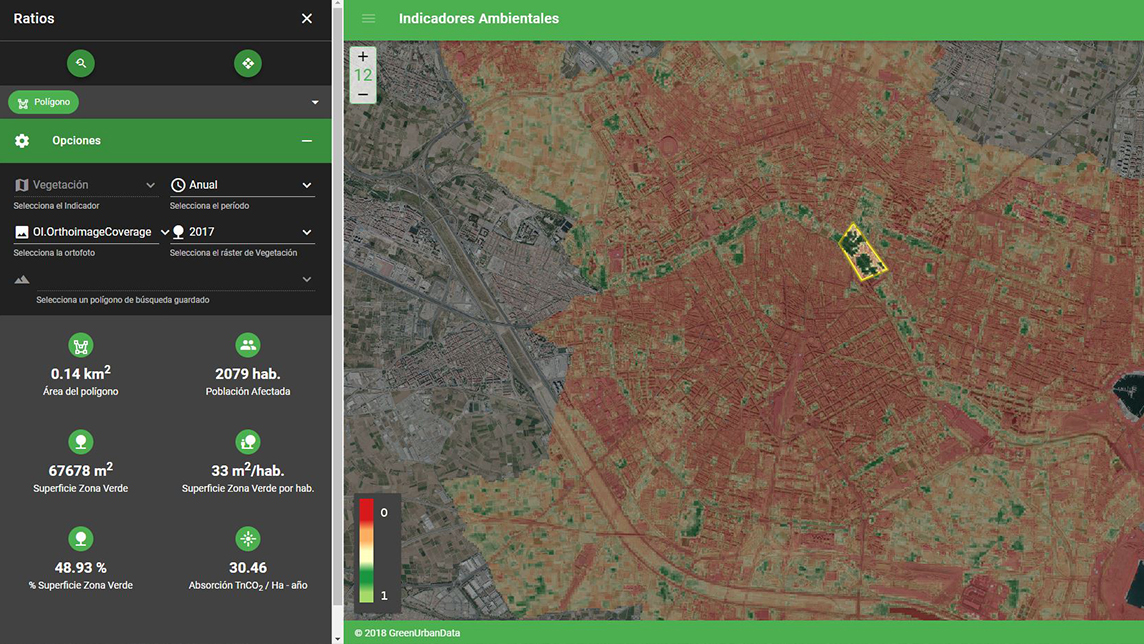
Green Urban Data: Empowering cities to mitigate climate change
The Valencia-based startup is the first to mitigate urban temperature increases and provide healthy travel route suggestions using AI and big data
eCooltra CEO: Offline-to-online leader in two-wheel sharing economy
Timo Buetefisch, the CEO and co-founder of Europe's largest scooter rental firm Cooltra, discusses the successful offline-to-online shift to scooter-sharing app eCooltra

HOOP Carpool: Graduates bootstrap ride-sharing app to facilitate sustainable commuting
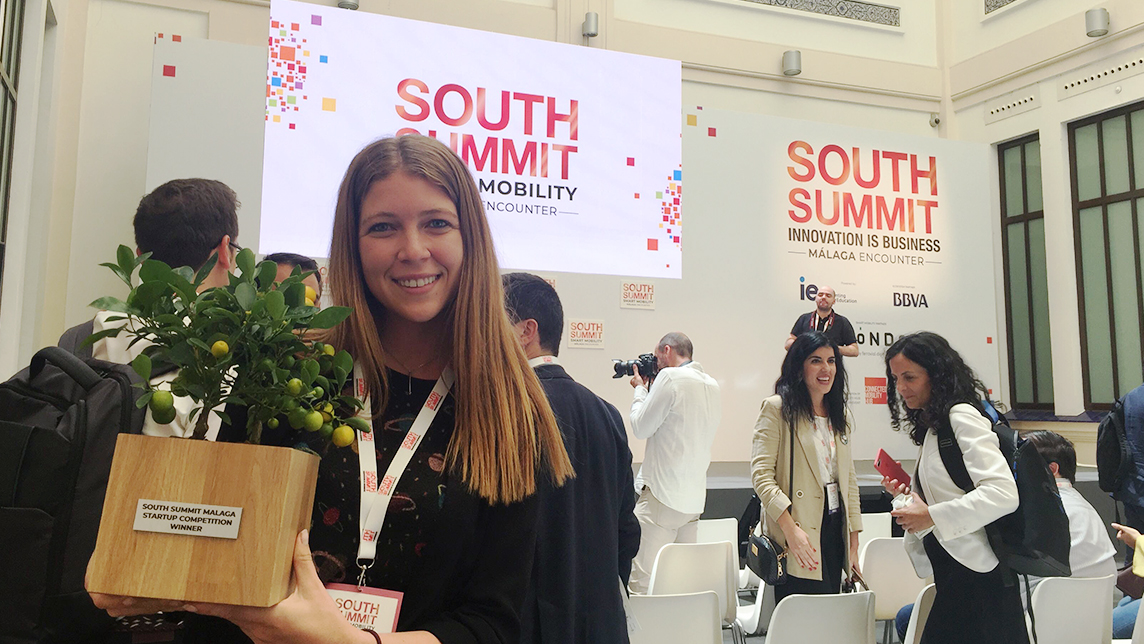
South Summit Malaga (Smart Mobility Encounters) winners Nathan Lehoucq and Andrea García Torrijos discuss their ride-sharing app for consumers and corporates
Sustainable last-mile grocery delivery startup Revoolt eyes French, LatAm expansion
Seeking up to €1m new funding for its growth, the Madrid-based startup with its EV fleet and turnkey IoT solutions has also broken even

Teliman: Driver-centered mobility model assisting Malian development
The startup addresses a basic necessity with its on-demand ride-hailing services while supporting the personal and economic progress of its drivers, including empowering women

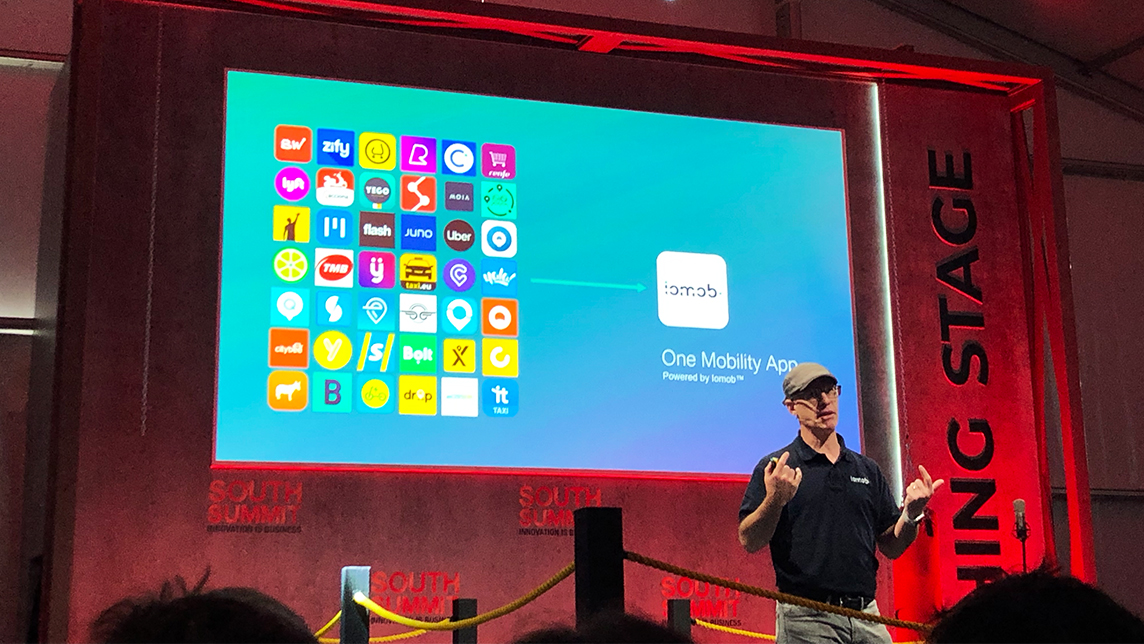
Iomob: Universal mobility app to help people find best route from A to B
Rapid growth in MaaS will boost revenue to over €1m by 2020 for Spanish transport app Iomob
Wallbox’s bumper funding boosts Spain’s EV charging sector
Wallbox’s generic EV charging systems are sold in 40 countries, including the US and China; attracting major backers like Seaya Ventures, Spanish utility Iberdrola and US VC Endeavor

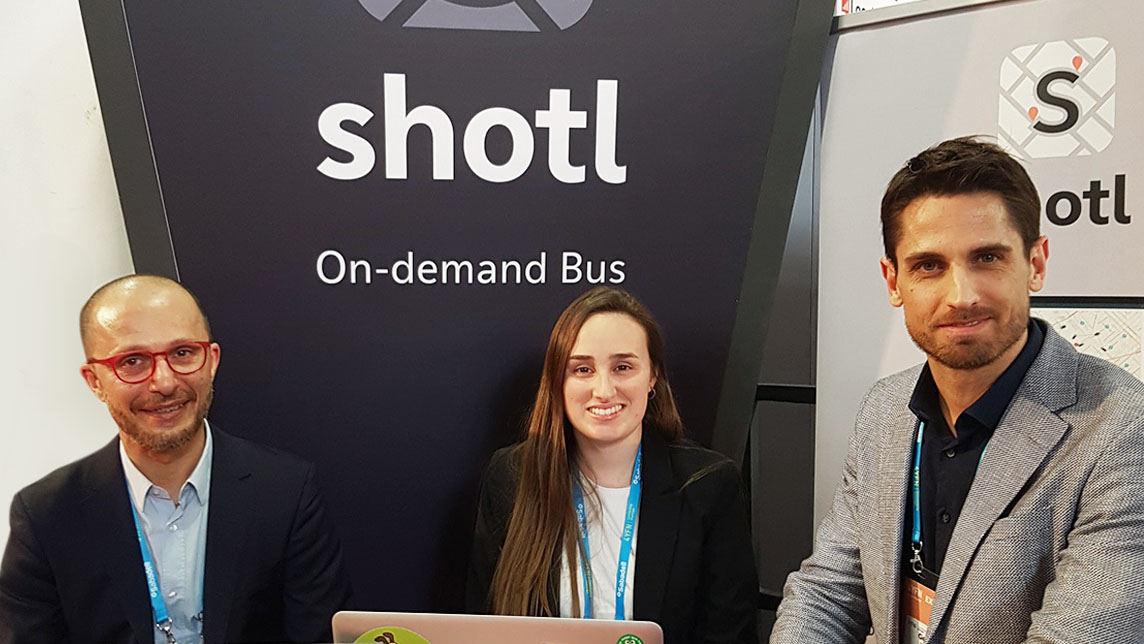
Shotl: Making public transport smarter, more sustainable
The first on-demand European mass transit app, Shotl aims to revolutionize city transit
Verkor: Accelerating low‑carbon battery production in France
French startup Verkor aims to raise up to €1.3bn by the end of next year to finance its first Gigafactory producing sustainable lithium-ion batteries for the European market

Europe ramps up development of local EV battery sector in race to zero emissions
Startups, automakers jostle or unite to ride the fast-growing EV battery market, as the EU pumps billions into developing its own value chain, to cut reliance on imports

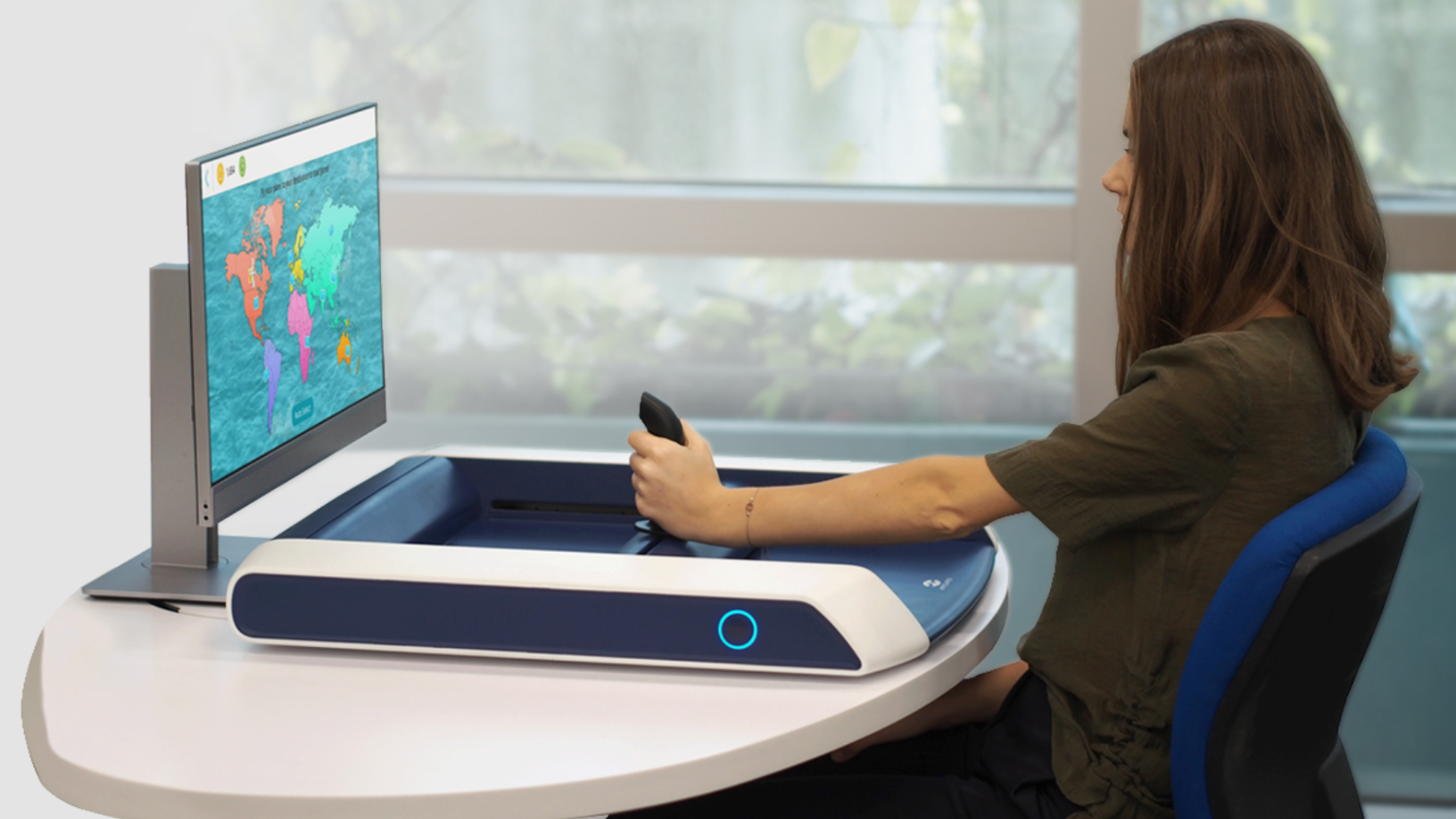
ARTICARES: Personalized, more affordable arm rehab therapy at home
Using adaptive AI, its H-Man robot works like an occupational therapist, assessing patient’s performance and adjusting the complexity of training tasks in real time
Omniflow gets €2 million boost for its solar-, wind-powered IoT street lights
Thanks to Portugal's Omniflow, renewable energy street lamps doubling up as Wi-Fi hotspots, e-chargers and traffic monitors may soon be ubiquitous street furniture in tomorrow's smart cities

Oceanium: Supporting sustainable seaweed farming
Scottish startup Oceanium has developed a proprietary biorefinery and processing model to create seaweed-based compostable materials, alt-protein ingredients and nutraceuticals for use across industry verticals

Sorry, we couldn’t find any matches for “sustainable mobility”.
POPULAR DATABASE