Bank of China
-
DATABASE (2952)
-
ARTICLES (812)
A serial entrepreneur, Lu is the founder of car rental company CAR Inc. He is also chairman and founding CEO of car services provider UCAR. In 2003, he founded Beijing Huaxia United Technology Co Ltd, a company that now controls around 67% of China Telecom’s VOIP business in Beijing. In 1995, Lu founded DITEL Technology, a trading company for telecom equipment and supplier of system integration services. He received his bachelor's degree in Industrial Electric Automation from the University of Science & Technology of Beijing and his EMBA from Peking University.
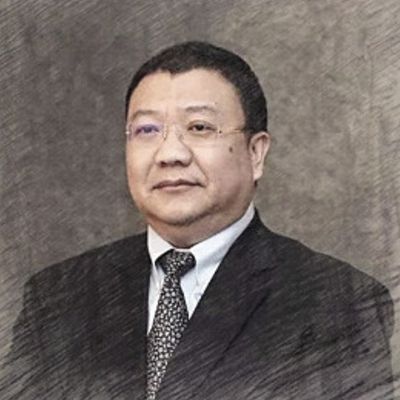

A serial entrepreneur, Lu is the founder of car rental company CAR Inc. He is also chairman and founding CEO of car services provider UCAR. In 2003, he founded Beijing Huaxia United Technology Co Ltd, a company that now controls around 67% of China Telecom’s VOIP business in Beijing. In 1995, Lu founded DITEL Technology, a trading company for telecom equipment and supplier of system integration services. He received his bachelor's degree in Industrial Electric Automation from the University of Science & Technology of Beijing and his EMBA from Peking University.
GF Qianhe is an equity investment company launched by GF Securities in May 2012. Incorporated as Guangfa Qianhe Investments Co Ltd, with a registered capital of RMB 500m, the company was one of the earliest alternative investment companies to gain approval from the Securities Commission of China. As of late 2018, GF Qianhe has invested in 86 equity-related projects, among which four have gone public. By the end of 2014, its total investment value reached almost RMB 2bn and revenues of over RMB 340m.
GF Qianhe is an equity investment company launched by GF Securities in May 2012. Incorporated as Guangfa Qianhe Investments Co Ltd, with a registered capital of RMB 500m, the company was one of the earliest alternative investment companies to gain approval from the Securities Commission of China. As of late 2018, GF Qianhe has invested in 86 equity-related projects, among which four have gone public. By the end of 2014, its total investment value reached almost RMB 2bn and revenues of over RMB 340m.
One of the earliest backers of Chinese internet firms, most famously Tencent and JD.com, Hillhouse Capital is a US$20 billion fund today. Founded in 2005 by Zhang Lei, a Yale School of Management graduate (the initial US$20 million used to start Hillhouse came from the Yale Endowment), the long-term fundamental equity investor is focused on China and Asia, particularly the consumer, TMT, industrials and healthcare sectors. It manages capital for institutional clients, e.g., university endowments, foundations, sovereign wealth funds and pension funds, and invests across all equity stages.

One of the earliest backers of Chinese internet firms, most famously Tencent and JD.com, Hillhouse Capital is a US$20 billion fund today. Founded in 2005 by Zhang Lei, a Yale School of Management graduate (the initial US$20 million used to start Hillhouse came from the Yale Endowment), the long-term fundamental equity investor is focused on China and Asia, particularly the consumer, TMT, industrials and healthcare sectors. It manages capital for institutional clients, e.g., university endowments, foundations, sovereign wealth funds and pension funds, and invests across all equity stages.
Lei is co-founder, chairman and CEO of Xiaomi, one of the world’s largest smartphone companies. Born in December 1969, he holds a degree in Engineering from Wuhan University. With a personal net worth of US$11.2 billion, Lei has invested in 33 companies as a business angel, including Vancl.com, UCWeb, and YY Inc., a live streaming social media platform in China. He has also invested in 270 companies through Shunwei Capital, where he is a founding partner. Lei's investment focuses are e-commerce, mobile internet and social networking.

Lei is co-founder, chairman and CEO of Xiaomi, one of the world’s largest smartphone companies. Born in December 1969, he holds a degree in Engineering from Wuhan University. With a personal net worth of US$11.2 billion, Lei has invested in 33 companies as a business angel, including Vancl.com, UCWeb, and YY Inc., a live streaming social media platform in China. He has also invested in 270 companies through Shunwei Capital, where he is a founding partner. Lei's investment focuses are e-commerce, mobile internet and social networking.
Founded in 1992 in Shanghai, Red Star Macalline is China's largest furniture retailer. By the end of 2017, it had built up a network of 256 shopping malls, offering home furnishings of about 20,000 brands across 177 cities in China. The company also engages in interior design and renovation. The company has been listed on the Hong Kong Stock Exchange in June 2015 and the Shanghai Stock Exchange in January 2018, making it the first Chinese home furnishing company listed on both exchanges.

Founded in 1992 in Shanghai, Red Star Macalline is China's largest furniture retailer. By the end of 2017, it had built up a network of 256 shopping malls, offering home furnishings of about 20,000 brands across 177 cities in China. The company also engages in interior design and renovation. The company has been listed on the Hong Kong Stock Exchange in June 2015 and the Shanghai Stock Exchange in January 2018, making it the first Chinese home furnishing company listed on both exchanges.
Founder and CEO of Sharkpark
Zhang Yongqi was the first in China to sell books and training programs for IELTS (International English Language Testing System), the world’s most popular English language test. He went on to set up Global Education & Technology Group, which ran 450 IELTS centers in 60 cities and listed on Nasdaq. Zhang sold the company in 2011 to the Pearson Group for US$294 million. The former Honeywell agent is now highly influential in education and training. He is a member of the Beijing Democratic League.

Zhang Yongqi was the first in China to sell books and training programs for IELTS (International English Language Testing System), the world’s most popular English language test. He went on to set up Global Education & Technology Group, which ran 450 IELTS centers in 60 cities and listed on Nasdaq. Zhang sold the company in 2011 to the Pearson Group for US$294 million. The former Honeywell agent is now highly influential in education and training. He is a member of the Beijing Democratic League.
Co-founder of Ximalaya
Before co-founding Ximalaya with Yu Jianjun, Chen Xiaoyu worked as an investment director at one of Thailand's largest conglomerates, Charoen Pokphand Group, in its China office. There, she supervised the Group’s investments in internet startups. With seed funding from the Group in 2009, Chen and Yu Jianjun founded their first startup, Na Li Shi Jie, building online virtual city maps. Though the business failed after two years, they utilised the rich experience they gained and founded the much more successful Ximalaya in 2012.

Before co-founding Ximalaya with Yu Jianjun, Chen Xiaoyu worked as an investment director at one of Thailand's largest conglomerates, Charoen Pokphand Group, in its China office. There, she supervised the Group’s investments in internet startups. With seed funding from the Group in 2009, Chen and Yu Jianjun founded their first startup, Na Li Shi Jie, building online virtual city maps. Though the business failed after two years, they utilised the rich experience they gained and founded the much more successful Ximalaya in 2012.
Co-founder and CTO of Shiyin Tech
Associate professor and doctoral advisor at Zhejiang University, He Yong is also vice-president of Zhejiang Province's Key Laboratory of 3D Printing Process and Equipment, where he has been in charge of multiple 3D printing projects, owning over 50 patents. In 2001, he received a bachelor's in Engineering Mechanics from China University of Mining and Technology. Six years later he received a PhD in Mechanical Manufacturing and Automation from Zhejiang University. The following year, he joined Zhejiang University as a postdoctoral researcher. In 2015, he co-founded Shiyin Tech and has since served as its CTO.
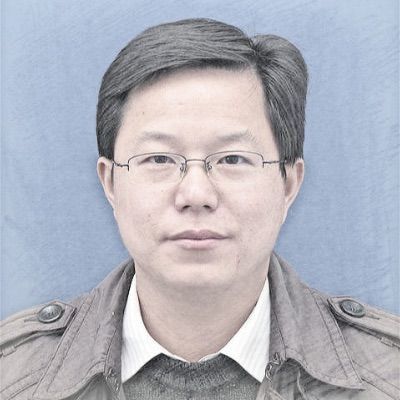
Associate professor and doctoral advisor at Zhejiang University, He Yong is also vice-president of Zhejiang Province's Key Laboratory of 3D Printing Process and Equipment, where he has been in charge of multiple 3D printing projects, owning over 50 patents. In 2001, he received a bachelor's in Engineering Mechanics from China University of Mining and Technology. Six years later he received a PhD in Mechanical Manufacturing and Automation from Zhejiang University. The following year, he joined Zhejiang University as a postdoctoral researcher. In 2015, he co-founded Shiyin Tech and has since served as its CTO.
The VC arm of Tsinghua University, THG Ventures was founded in 2015. It is managed by the investment team from the state-owned Tsinghua Holdings Ltd., which has specialized in venture capital investments since 1999 and is one of the first China teams focused on RMB investment. The team also founded TusPark Incubator and TusPark Ventures.
The VC arm of Tsinghua University, THG Ventures was founded in 2015. It is managed by the investment team from the state-owned Tsinghua Holdings Ltd., which has specialized in venture capital investments since 1999 and is one of the first China teams focused on RMB investment. The team also founded TusPark Incubator and TusPark Ventures.
ATM Capital is a China-based venture capital firm with a focus on Southeast Asia. In 2017, ATM Capital participated in the seed round of Indonesian coworking space operator Rework (now GoWork). Its its partners have invested in Go-Jek, Rocket Internet and several Chinese companies. It closed its US$200 million fund in January 2019.

ATM Capital is a China-based venture capital firm with a focus on Southeast Asia. In 2017, ATM Capital participated in the seed round of Indonesian coworking space operator Rework (now GoWork). Its its partners have invested in Go-Jek, Rocket Internet and several Chinese companies. It closed its US$200 million fund in January 2019.
CICFH was co-founded in 2013 by China Investment Securities, ZhongCai Financial Holding Investment and other companies. Based in Tianjin, the VC manages multiple funds worth over RMB 80bn in total.CICFH focuses on M&A in emerging industries and mainly invests in sectors of media, arts, entertainment, healthcare, fintech and environmental technology through multiple funds established with other enterprises. It has also set up multiple FoFs, partnering with provincial governments to spur the development of certain industries.
CICFH was co-founded in 2013 by China Investment Securities, ZhongCai Financial Holding Investment and other companies. Based in Tianjin, the VC manages multiple funds worth over RMB 80bn in total.CICFH focuses on M&A in emerging industries and mainly invests in sectors of media, arts, entertainment, healthcare, fintech and environmental technology through multiple funds established with other enterprises. It has also set up multiple FoFs, partnering with provincial governments to spur the development of certain industries.
Wei Venture Capital is a VC fund jointly launched in November 2010 by Sina Corporation, Sequoia Capital China, IDG Capital, Sinovation Ventures, YF Capital and DFJ Dragon Fund. Sina contributed half of Wei's RMB 200m fund, with the other five partners contributing RMB 20m each. The fund is managed by Beijing Weimeng Innovation Venture Capital Management Co Ltd.

Wei Venture Capital is a VC fund jointly launched in November 2010 by Sina Corporation, Sequoia Capital China, IDG Capital, Sinovation Ventures, YF Capital and DFJ Dragon Fund. Sina contributed half of Wei's RMB 200m fund, with the other five partners contributing RMB 20m each. The fund is managed by Beijing Weimeng Innovation Venture Capital Management Co Ltd.
CEO and founder of M Mandarin
Dou received her master's degree in International Chinese Language Education from Shandong University in 2014. She worked in the TCSL (Teaching Chinese as a Second Language) sector for over 10 years, including as a TCSL teacher at the Confucius Institute in South Korea, as product manager at the Confucius Institute Headquarters and the Open University of China and as teacher at Shandong University. Before founding Funnybean Technology, parent company of M Mandarin, in 2016, she helped design the app Hello HSK - a platform for foreigners to learn and prepare for the HSK tests.
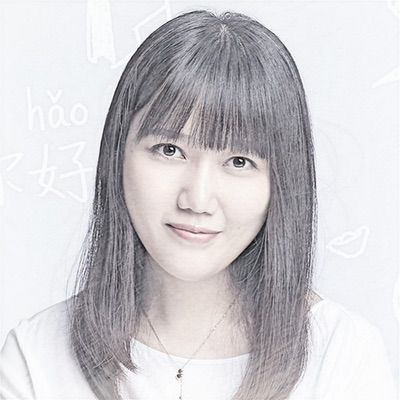
Dou received her master's degree in International Chinese Language Education from Shandong University in 2014. She worked in the TCSL (Teaching Chinese as a Second Language) sector for over 10 years, including as a TCSL teacher at the Confucius Institute in South Korea, as product manager at the Confucius Institute Headquarters and the Open University of China and as teacher at Shandong University. Before founding Funnybean Technology, parent company of M Mandarin, in 2016, she helped design the app Hello HSK - a platform for foreigners to learn and prepare for the HSK tests.
Co-founder of 4D ShoeTech
Feng Zifeng read Engineering at South China Agricultural University in 2014. In 2015, he incorporated the idea of emerging 3D printing technology into his college innovation project. He and a few friends created a 3-in-1 printer with 3D printing and scanning functions.In 2016, he led the team to conduct research to apply 3D printing technology in the footwear industry. He met Zhou Zhiheng, China’s general manager for footwear brand Michael Antonio. He decided to focus on using 3D printing technology in footwear industry and became a co-founder of 4D ShoeTech.

Feng Zifeng read Engineering at South China Agricultural University in 2014. In 2015, he incorporated the idea of emerging 3D printing technology into his college innovation project. He and a few friends created a 3-in-1 printer with 3D printing and scanning functions.In 2016, he led the team to conduct research to apply 3D printing technology in the footwear industry. He met Zhou Zhiheng, China’s general manager for footwear brand Michael Antonio. He decided to focus on using 3D printing technology in footwear industry and became a co-founder of 4D ShoeTech.
CTO and Co-founder of Squirrel AI
CTO and co-founder of Squirrel AI, Fan Xing obtained his bachelor’s and master’s degrees in computer science from Northwestern Polytechnical University in Xi’an, China, between 1999 and 2006. After graduating, he worked at several Internet companies as a software engineer and architect. He was CTO and R&D Director of IMO Cloud Office from 2012–2015, a senior researcher and platform technology manager at ShanDa Interactive Entertainment from 2010–2012, a server manager at 51.com from 2008–2010 and a senior engineer at Tencent from 2006–2008. He joined Squirrel AI in 2015.

CTO and co-founder of Squirrel AI, Fan Xing obtained his bachelor’s and master’s degrees in computer science from Northwestern Polytechnical University in Xi’an, China, between 1999 and 2006. After graduating, he worked at several Internet companies as a software engineer and architect. He was CTO and R&D Director of IMO Cloud Office from 2012–2015, a senior researcher and platform technology manager at ShanDa Interactive Entertainment from 2010–2012, a server manager at 51.com from 2008–2010 and a senior engineer at Tencent from 2006–2008. He joined Squirrel AI in 2015.
No bank account? In Indonesia, you can still shop online
Indonesian startups are racing to serve the millions of consumers that banks haven’t reached. Here’s a look at some of the leading players, their innovations and how they have redefined the market

China new retail: A blend of the best of online and offline shopping
Players big and small are contributing to China’s new retail revolution

This startup aims to be the DocuSign of China
Having captured a third of a largely untapped domestic e-contracting market, Shangshangqian looks to gain a greater foothold at home and abroad

NANOxARCH: Pioneering awareness and use of sustainable materials in China
Founder Lei Yuxi reckons Covid-19 could usher China into a new era of sustainability, as her startup seeks to make sustainable materials more affordable
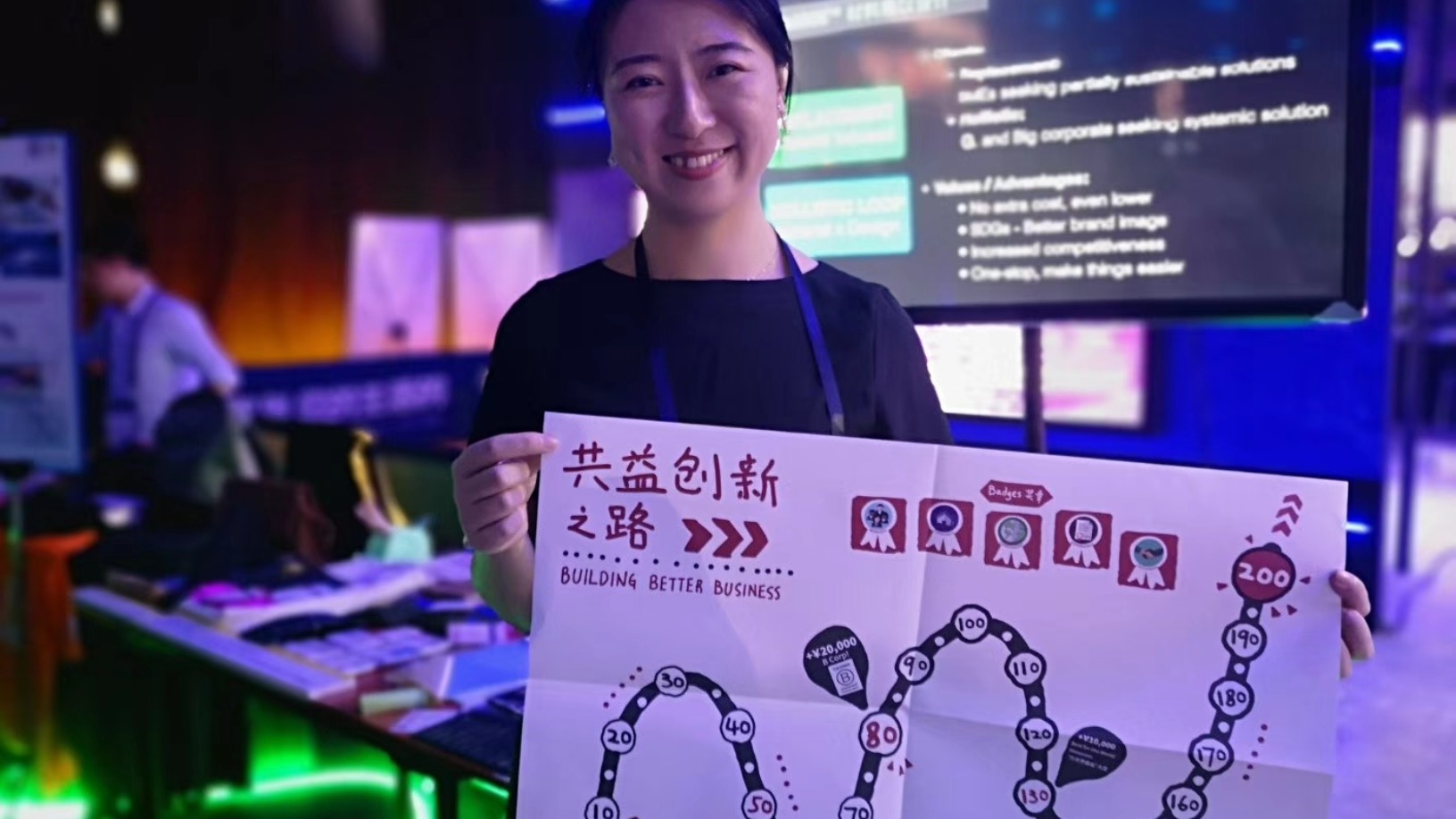
CraiditX gives banks and insurers AI tools for assessing consumer credit risk
Used by big lenders like Bank of China and Minsheng Bank, CraiditX's solutions can gauge consumer default risk even if a user has no credit history

Sequoia China Seed Fund: Growing an era of deep-tech startups
Managing Partner Neil Shen wants to help deep-tech and enterprise tech startups get investments more easily, across quantum computing, semiconductors, synthetic biology and more

With universal QR code, Indonesia achieves e-payment harmony
The move to standardize Indonesia's QR code is expected to unify the country's cashless payments system and lift tens of thousands of small merchants into the payments mainstream

China a “positive environment” for uptake of cultured meat, researcher tells Future Food Asia
But for interested cultured meat companies, China-based Chloe Dempsey suggests it would be better to wait, observe and learn more about the market before trying to tap its massive potential

More than desire: When resale sneakers become objects of speculation
Sneaker resale platforms like Poizon and Nice feel the heat as China regulators panned such trading for getting out of control

Have you ever bought expensive equipment but seldom used it? Do you want to try the latest electronic gadgets at low cost? Try this online sharing and rental platform

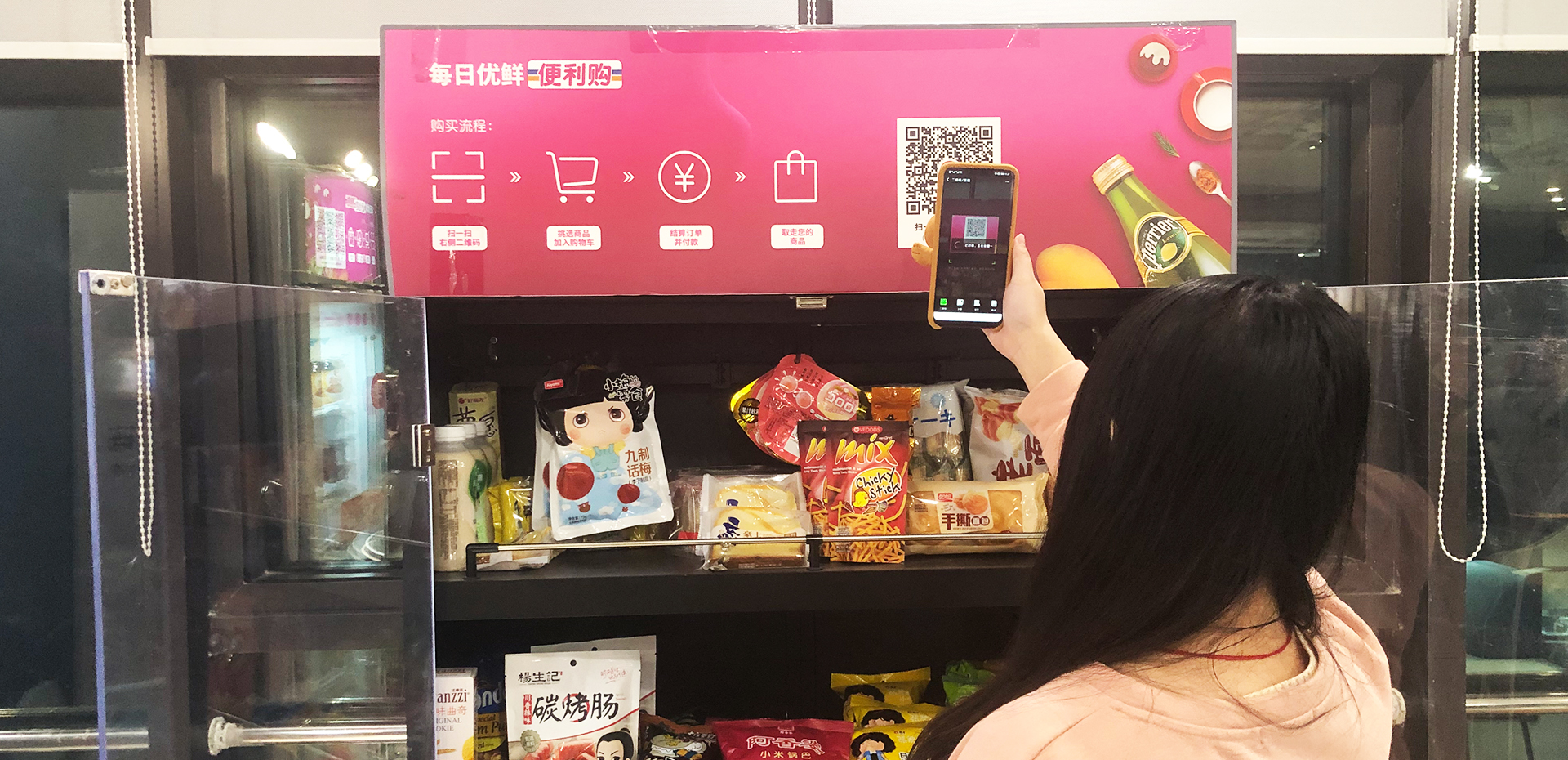
Once the darling of investors, unmanned shelf startups are going through a hard time in China
Startups are being forced to transform their business models to survive
China bets on road-vehicle coordination for the mass adoption of autonomous driving cars by 2025
Money pours in as China pushes sector to be the next growth engine, and both self-driving startups and their investors are optimistic about their commercialization attempts

Exclusive: Patamar Capital to raise US$150 million, eyes Series B investments
The impact investment VC recently scored an exit at Indonesian online-to-offline group buying startup Mapan, when it was bought over by Go-Jek

Covid-19: A closer look at how China's businesses and consumer behavior have changed
The lockdown in China has reshaped how people work and live. Some of the changes may be short-term, but others probably have become a part of life

China's Yuanfudao now the world's most valuable edtech with $2.2bn new funding
Yuanfudao’s second tranche of its Series G funding follows the $1bn it raised in March, bringing its valuation to $15.5bn

Sorry, we couldn’t find any matches for “Bank of China”.
POPULAR DATABASE