Bank of China
-
DATABASE (2952)
-
ARTICLES (812)
CEO and Founder of Waterdrop (Shuidi)
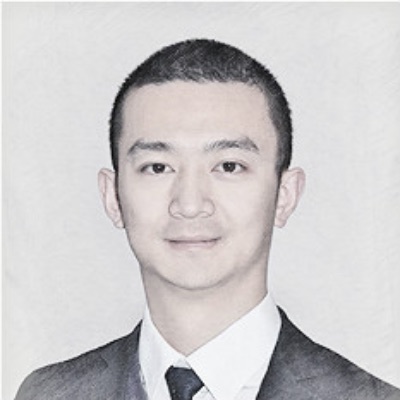
Shen Peng had first tried founding a startup while studying finance at Beijing's Central University of Finance and Economics from 2006 to 2010. In 2009, he joined Meituan – now known as Meituan Dianping – as its tenth employee. At the age of 23, he was in charge of Meituan's group buying business in north China. Shen was also a key player when Meituan expanded into the food delivery business. He received his master's degree in retail management from the Neoma Business School through a partnership with the University of International Business and Economics in Beijing. He founded Waterdrop in 2016 and has served as its CEO since.
Shen Peng had first tried founding a startup while studying finance at Beijing's Central University of Finance and Economics from 2006 to 2010. In 2009, he joined Meituan – now known as Meituan Dianping – as its tenth employee. At the age of 23, he was in charge of Meituan's group buying business in north China. Shen was also a key player when Meituan expanded into the food delivery business. He received his master's degree in retail management from the Neoma Business School through a partnership with the University of International Business and Economics in Beijing. He founded Waterdrop in 2016 and has served as its CEO since.
Co-founder of Reworld
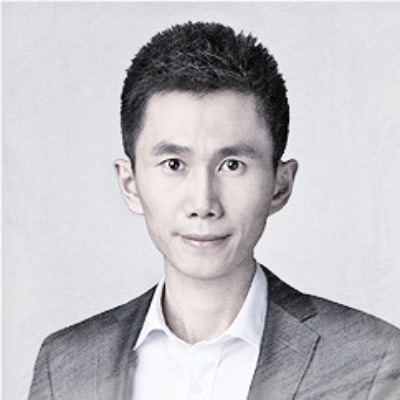
Yao Guangshi is a well-known game distributor and angel investor in the gaming industry. Born in 1972, he graduated from the University of Shanghai for Science and Technology in 1992. He studied for an EMBA in Renmin University of China from 2011 to 2013. In 1995, he joined the edible oil manufacturer Luhua Group, where he was in charge of import and export management. He founded Jinshi Software in 1997. In 2003, he became the exclusive distributor of many prominent gaming companies like Tencent and Shengqu Games in Shandong province. In 2008, he founded Xinhe Technology as an exclusive distributor for top games including Genghis Khan and Shumen. He invested in the online game developer Locojoy in 2011 and joined the company in 2013. In 2018, he co-founded Beijing Code View Technology, which launched Reworld in 2019.
Yao Guangshi is a well-known game distributor and angel investor in the gaming industry. Born in 1972, he graduated from the University of Shanghai for Science and Technology in 1992. He studied for an EMBA in Renmin University of China from 2011 to 2013. In 1995, he joined the edible oil manufacturer Luhua Group, where he was in charge of import and export management. He founded Jinshi Software in 1997. In 2003, he became the exclusive distributor of many prominent gaming companies like Tencent and Shengqu Games in Shandong province. In 2008, he founded Xinhe Technology as an exclusive distributor for top games including Genghis Khan and Shumen. He invested in the online game developer Locojoy in 2011 and joined the company in 2013. In 2018, he co-founded Beijing Code View Technology, which launched Reworld in 2019.
DCP Capital is an international private equity firm that mainly invests in Asia. The DCP team previously led KKR and Morgan Stanley’s private equity businesses in Asia. Over the past 27 years, it has invested in a number of leading enterprises including Ping An Insurance, Mengniu Dairy, CICC and Haier Electronics. Its existing investors include leading sovereign wealth funds, pension funds, endowments, family offices and funds of funds (FOF) across the world.In April 2019, DCP successfully raised over $2bn for its first Greater China-focused USD fund known as DCP Capital Partners I. The fund mainly invests in diverse sectors including consumer goods, industrial technology, healthcare, agrifood, enterprise tech, financial services and technology, media & telecom (TMT).


DCP Capital is an international private equity firm that mainly invests in Asia. The DCP team previously led KKR and Morgan Stanley’s private equity businesses in Asia. Over the past 27 years, it has invested in a number of leading enterprises including Ping An Insurance, Mengniu Dairy, CICC and Haier Electronics. Its existing investors include leading sovereign wealth funds, pension funds, endowments, family offices and funds of funds (FOF) across the world.In April 2019, DCP successfully raised over $2bn for its first Greater China-focused USD fund known as DCP Capital Partners I. The fund mainly invests in diverse sectors including consumer goods, industrial technology, healthcare, agrifood, enterprise tech, financial services and technology, media & telecom (TMT).
Aspex Management was founded in 2018 by Hermes Li Ho Kei who was previously the executive MD and Head of Asia Equities at Och-Ziff Capital Management, aka OZ Management. Prior to joining OZ in 2011 Li worked at Goldman, Sachs & Co in Hong Kong.The London School of Economics graduate is now the chief investment officer at Aspex. The Hong Kong firm focuses on equity investments in Pan-Asia, specializing in sectors with long-term market growth potential and companies undergoing structural changes.Aspex led the $64m funding round for South Korean fintech unicorn Toss in August 2019. The P2P money transfer service platform Toss is created by Viva Republica backed by PayPal. Other participants in the round included existing Toss investors Kleiner Perkins, Altos Ventures, Singapore's GIC, Sequoia Capital China, Goodwater Capital and Bessemer Venture Partners.In May 2020, Aspex also invested in another startup Market Kurly, a grocery-delivery service provider that became South Korea’s latest unicorn via the Series E funding round that secured $328m led by DST Global. In July, Aspex also joined the $900m Series C+ funding round of Xpeng Motors, Tesla’s EV rival in China.

Aspex Management was founded in 2018 by Hermes Li Ho Kei who was previously the executive MD and Head of Asia Equities at Och-Ziff Capital Management, aka OZ Management. Prior to joining OZ in 2011 Li worked at Goldman, Sachs & Co in Hong Kong.The London School of Economics graduate is now the chief investment officer at Aspex. The Hong Kong firm focuses on equity investments in Pan-Asia, specializing in sectors with long-term market growth potential and companies undergoing structural changes.Aspex led the $64m funding round for South Korean fintech unicorn Toss in August 2019. The P2P money transfer service platform Toss is created by Viva Republica backed by PayPal. Other participants in the round included existing Toss investors Kleiner Perkins, Altos Ventures, Singapore's GIC, Sequoia Capital China, Goodwater Capital and Bessemer Venture Partners.In May 2020, Aspex also invested in another startup Market Kurly, a grocery-delivery service provider that became South Korea’s latest unicorn via the Series E funding round that secured $328m led by DST Global. In July, Aspex also joined the $900m Series C+ funding round of Xpeng Motors, Tesla’s EV rival in China.
Wang Gang is an angel investor and a former senior director at Alibaba. His investments are concentrated in the internet, mobile internet and e-commerce sectors, in over 70 companies to date in both China and the US; including Didi, Uucars (formerly Uuzuche), ofo and Huajuan.

Wang Gang is an angel investor and a former senior director at Alibaba. His investments are concentrated in the internet, mobile internet and e-commerce sectors, in over 70 companies to date in both China and the US; including Didi, Uucars (formerly Uuzuche), ofo and Huajuan.
Founded in 1990, Macrolink Group is now a large-scale modernized group with businesses in real estate, mining, petroleum, chemical, investment, finance and other industries. It has 90+ wholly owned subsidiaries, holding subsidiaries and sharing subsidiaries, operating in 20+ provinces in China and 40+ countries overseas.
Founded in 1990, Macrolink Group is now a large-scale modernized group with businesses in real estate, mining, petroleum, chemical, investment, finance and other industries. It has 90+ wholly owned subsidiaries, holding subsidiaries and sharing subsidiaries, operating in 20+ provinces in China and 40+ countries overseas.
CEMEX Ventures is the investment arm of global Mexican cement giant CEMEX and was established in 2017 with offices in Mexico, Spain, Colombia and China. It focuses exclusively on tech and non-tech solutions to painpoints in the construction sector. Every year, together with global management consultant Boston Consulting Group and startup monitoring platform Tracxn, it names its 50 Most Promising Startups in the Construction Ecosystem, investing in a few of the companies cited. It currently has 12 companies in its portfolio.Its most recent investments have included an undisclosed contribution to the funding round of US soil marketplace Soil Connect in 4Q 2020 and in the $1.7m July 2020 Series A round of US recycling company Arqlite.

CEMEX Ventures is the investment arm of global Mexican cement giant CEMEX and was established in 2017 with offices in Mexico, Spain, Colombia and China. It focuses exclusively on tech and non-tech solutions to painpoints in the construction sector. Every year, together with global management consultant Boston Consulting Group and startup monitoring platform Tracxn, it names its 50 Most Promising Startups in the Construction Ecosystem, investing in a few of the companies cited. It currently has 12 companies in its portfolio.Its most recent investments have included an undisclosed contribution to the funding round of US soil marketplace Soil Connect in 4Q 2020 and in the $1.7m July 2020 Series A round of US recycling company Arqlite.
VP and Co-founder of Bailian.ai
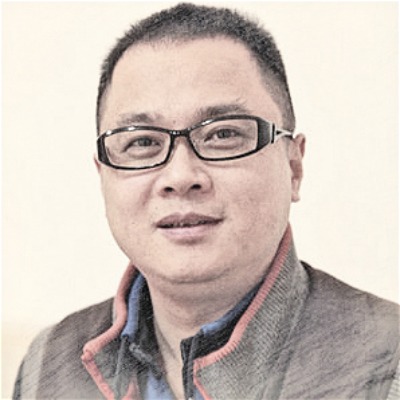
She Wei graduated from Tsinghua University with a master's in Computer Science in 2006 and has since worked for IBM, CDL and HP Labs China. He joined Miaozhen Systems at the end of 2011, where he developed a series of B2B products for brands and advertisers. She joined MININGLAMP Technology as co-founder and CTO in 2013; led development of DataInsight (MININGLAMP's data mining platform); and headed the algorithm team, which served clients in the sectors of finance, homeland security and manufacture. A serial entrepreneur, he co-founded game media platform Ye Zizhu in 2003.
She Wei graduated from Tsinghua University with a master's in Computer Science in 2006 and has since worked for IBM, CDL and HP Labs China. He joined Miaozhen Systems at the end of 2011, where he developed a series of B2B products for brands and advertisers. She joined MININGLAMP Technology as co-founder and CTO in 2013; led development of DataInsight (MININGLAMP's data mining platform); and headed the algorithm team, which served clients in the sectors of finance, homeland security and manufacture. A serial entrepreneur, he co-founded game media platform Ye Zizhu in 2003.
CPO and Co-founder of Kuaishou
Cheng Yixiao began his career as a software engineer at HP in Dalian where he met Kuaishou co-founder Yang Yuanxi. Cheng left HP to join Renren as an iPhone client software developer.In 2011, Cheng started a photo-sharing platform GIF Kuaishou and obtained some seed funding. In 2013, he was introduced to a successful entrepreneur Su Hua. They decided to pivot GIF Kuaishou into a video-sharing app, with Cheng as CPO and Su as CEO.Many believe that his earlier experiences of living in Tieling, a county in northeast China, and later in Beijing’s suburb Tiantongyuan, have helped him to identify business opportunities and develop social media tools for the grassroots. He has quite a reputation for his creativity and passion for product development in tech circles.

Cheng Yixiao began his career as a software engineer at HP in Dalian where he met Kuaishou co-founder Yang Yuanxi. Cheng left HP to join Renren as an iPhone client software developer.In 2011, Cheng started a photo-sharing platform GIF Kuaishou and obtained some seed funding. In 2013, he was introduced to a successful entrepreneur Su Hua. They decided to pivot GIF Kuaishou into a video-sharing app, with Cheng as CPO and Su as CEO.Many believe that his earlier experiences of living in Tieling, a county in northeast China, and later in Beijing’s suburb Tiantongyuan, have helped him to identify business opportunities and develop social media tools for the grassroots. He has quite a reputation for his creativity and passion for product development in tech circles.
Co-founder, CEO of SwissDeCode
Brij Sahi is CEO and co-founder at Swiss biotech SwissDeCode, which applies DNA testing to food traceability, He has worked there full-time since April 2016. Since 2011, Sahi has also been an adjunct professor at Webster University in Geneva, teaching Business Policy, Strategic Management and Leadership. He is also a Swiss-based private investor in unnamed companies.From 2000–2008, Sahi worked at airline IT and telecommunications company SITA in both Singapore and Switzerland, where he reached the role of VP working in sales and marketing. He previously worked for two-and-a-half years in the area of sales and marketing at GAMECO, an aircraft maintenance and services company in China. Sahi started his corporate career at British Airways, where he spent over 11 years in marketing and business development. Sahi holds an MBA from Cass Business School in London and a first degree in air transport engineering from City University, London.

Brij Sahi is CEO and co-founder at Swiss biotech SwissDeCode, which applies DNA testing to food traceability, He has worked there full-time since April 2016. Since 2011, Sahi has also been an adjunct professor at Webster University in Geneva, teaching Business Policy, Strategic Management and Leadership. He is also a Swiss-based private investor in unnamed companies.From 2000–2008, Sahi worked at airline IT and telecommunications company SITA in both Singapore and Switzerland, where he reached the role of VP working in sales and marketing. He previously worked for two-and-a-half years in the area of sales and marketing at GAMECO, an aircraft maintenance and services company in China. Sahi started his corporate career at British Airways, where he spent over 11 years in marketing and business development. Sahi holds an MBA from Cass Business School in London and a first degree in air transport engineering from City University, London.
CEO and co-founder of IXON Food Technology
Felix Cheung graduated in physics from Adelaide’s Flinders University in 1999 and obtained a PhD in physics from the University of Sydney in 2005. He obtained a master’s in food analysis and food safety management from Hong Kong Baptist University in 2015. Cheung met Elton Ho during the master’s program at university and they teamed up to co-develop the advanced sous-vide aseptic packaging (ASAP) technology. In January 2017, they established IXON Food Technology to further develop and commercialize ASAP for the food industry.Cheung previously worked as a website designer and administrator at the Complex Plasma Laboratory, University of Sydney, from 2002–2006. He was also an editor at Macmillan Science Communication for one year before joining the Springer Nature publishing group to work as editor at Nature China from 2007–2014.

Felix Cheung graduated in physics from Adelaide’s Flinders University in 1999 and obtained a PhD in physics from the University of Sydney in 2005. He obtained a master’s in food analysis and food safety management from Hong Kong Baptist University in 2015. Cheung met Elton Ho during the master’s program at university and they teamed up to co-develop the advanced sous-vide aseptic packaging (ASAP) technology. In January 2017, they established IXON Food Technology to further develop and commercialize ASAP for the food industry.Cheung previously worked as a website designer and administrator at the Complex Plasma Laboratory, University of Sydney, from 2002–2006. He was also an editor at Macmillan Science Communication for one year before joining the Springer Nature publishing group to work as editor at Nature China from 2007–2014.
Founded in 1813 as a small grain-trading firm in Arlon, France (now Belgium), Continental Grain Company (CGC) is now headquartered in New York. It has operations in 10 countries and employs over 13,500 people worldwide. Business activities include animal feeds, aquaculture and meat production.Besides interests in the food, agribusiness and commodities sectors, CGC also manages different asset classes like private equity, listed securities and venture capital. Its investment portfolio includes more than 30 food and agribusiness companies, ranging from early-stage ventures to established market leaders across the US, China and Latin America.CGC Asia mainly invests in feed milling, animal husbandry, meat production and processing businesses in the region. Direct investments are made through Continental Capital Limited in China, focusing on high‐growth food and agribusiness firms.

Founded in 1813 as a small grain-trading firm in Arlon, France (now Belgium), Continental Grain Company (CGC) is now headquartered in New York. It has operations in 10 countries and employs over 13,500 people worldwide. Business activities include animal feeds, aquaculture and meat production.Besides interests in the food, agribusiness and commodities sectors, CGC also manages different asset classes like private equity, listed securities and venture capital. Its investment portfolio includes more than 30 food and agribusiness companies, ranging from early-stage ventures to established market leaders across the US, China and Latin America.CGC Asia mainly invests in feed milling, animal husbandry, meat production and processing businesses in the region. Direct investments are made through Continental Capital Limited in China, focusing on high‐growth food and agribusiness firms.
Founded in 2008, Bertelsmann Asia Investments (BAI) is an evergreen fund wholly owned by Bertelsmann focusing on private equity investment in the Greater China Region. With over US$1 billion under management, BAI mainly invests in high-growth startups in industries including consumer upgrades, mobile sea, online education, financial services, mobile health and enterprise services.

Founded in 2008, Bertelsmann Asia Investments (BAI) is an evergreen fund wholly owned by Bertelsmann focusing on private equity investment in the Greater China Region. With over US$1 billion under management, BAI mainly invests in high-growth startups in industries including consumer upgrades, mobile sea, online education, financial services, mobile health and enterprise services.
Zhenzhen Sun is a veteran investor who has worked in prestigious firms like Morgan Stanley and JP Morgan. After leaving JP Morgan in 2009, she worked for Chinese real estate developer LL Land. She left in 2013 to join PreAngel Partners, an angel investment fund. She recently joined Proxima Ventures, a China-based VC that invests in healthcare technology.

Zhenzhen Sun is a veteran investor who has worked in prestigious firms like Morgan Stanley and JP Morgan. After leaving JP Morgan in 2009, she worked for Chinese real estate developer LL Land. She left in 2013 to join PreAngel Partners, an angel investment fund. She recently joined Proxima Ventures, a China-based VC that invests in healthcare technology.
Toyota Motor Corporation (Toyota) started as a division of the Toyoda Automatic Loom Works in 1933, and established as an independent in 1937. As of December 2019, it ranked tenth largest company in the world by revenue. An established multinational automotive manufacturer, Toyota has invested in startups working on everything from online marketing to cybersecurity, placing an focus on new-generation mobility services. In 2019, it invested $600m in Chinese ride-hailing giant Didi Chuxing, and founded a joint venture to offer car maintenance, insurance and finance services to ride-hailing drivers. Also that year, Toyota invested $500m in Uber for self-driving cars. In early 2020, the auto giant invested $400 in the self-driving startup Pony.ai. Before the investment, the two had already partnered to test self-driving cars on public roads in China.

Toyota Motor Corporation (Toyota) started as a division of the Toyoda Automatic Loom Works in 1933, and established as an independent in 1937. As of December 2019, it ranked tenth largest company in the world by revenue. An established multinational automotive manufacturer, Toyota has invested in startups working on everything from online marketing to cybersecurity, placing an focus on new-generation mobility services. In 2019, it invested $600m in Chinese ride-hailing giant Didi Chuxing, and founded a joint venture to offer car maintenance, insurance and finance services to ride-hailing drivers. Also that year, Toyota invested $500m in Uber for self-driving cars. In early 2020, the auto giant invested $400 in the self-driving startup Pony.ai. Before the investment, the two had already partnered to test self-driving cars on public roads in China.
No bank account? In Indonesia, you can still shop online
Indonesian startups are racing to serve the millions of consumers that banks haven’t reached. Here’s a look at some of the leading players, their innovations and how they have redefined the market

China new retail: A blend of the best of online and offline shopping
Players big and small are contributing to China’s new retail revolution

This startup aims to be the DocuSign of China
Having captured a third of a largely untapped domestic e-contracting market, Shangshangqian looks to gain a greater foothold at home and abroad

NANOxARCH: Pioneering awareness and use of sustainable materials in China
Founder Lei Yuxi reckons Covid-19 could usher China into a new era of sustainability, as her startup seeks to make sustainable materials more affordable
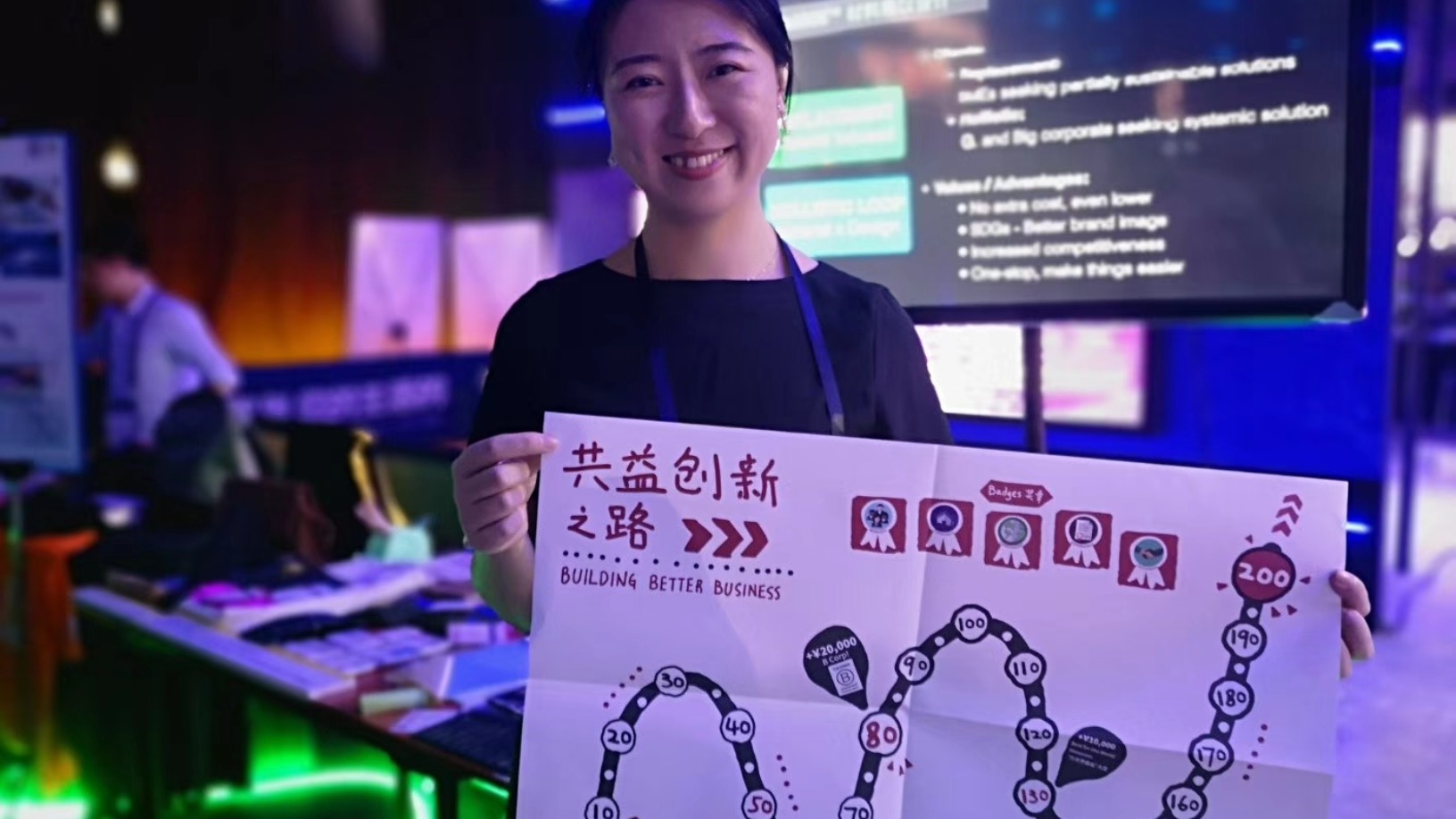
CraiditX gives banks and insurers AI tools for assessing consumer credit risk
Used by big lenders like Bank of China and Minsheng Bank, CraiditX's solutions can gauge consumer default risk even if a user has no credit history

Sequoia China Seed Fund: Growing an era of deep-tech startups
Managing Partner Neil Shen wants to help deep-tech and enterprise tech startups get investments more easily, across quantum computing, semiconductors, synthetic biology and more

With universal QR code, Indonesia achieves e-payment harmony
The move to standardize Indonesia's QR code is expected to unify the country's cashless payments system and lift tens of thousands of small merchants into the payments mainstream

China a “positive environment” for uptake of cultured meat, researcher tells Future Food Asia
But for interested cultured meat companies, China-based Chloe Dempsey suggests it would be better to wait, observe and learn more about the market before trying to tap its massive potential

More than desire: When resale sneakers become objects of speculation
Sneaker resale platforms like Poizon and Nice feel the heat as China regulators panned such trading for getting out of control

Have you ever bought expensive equipment but seldom used it? Do you want to try the latest electronic gadgets at low cost? Try this online sharing and rental platform

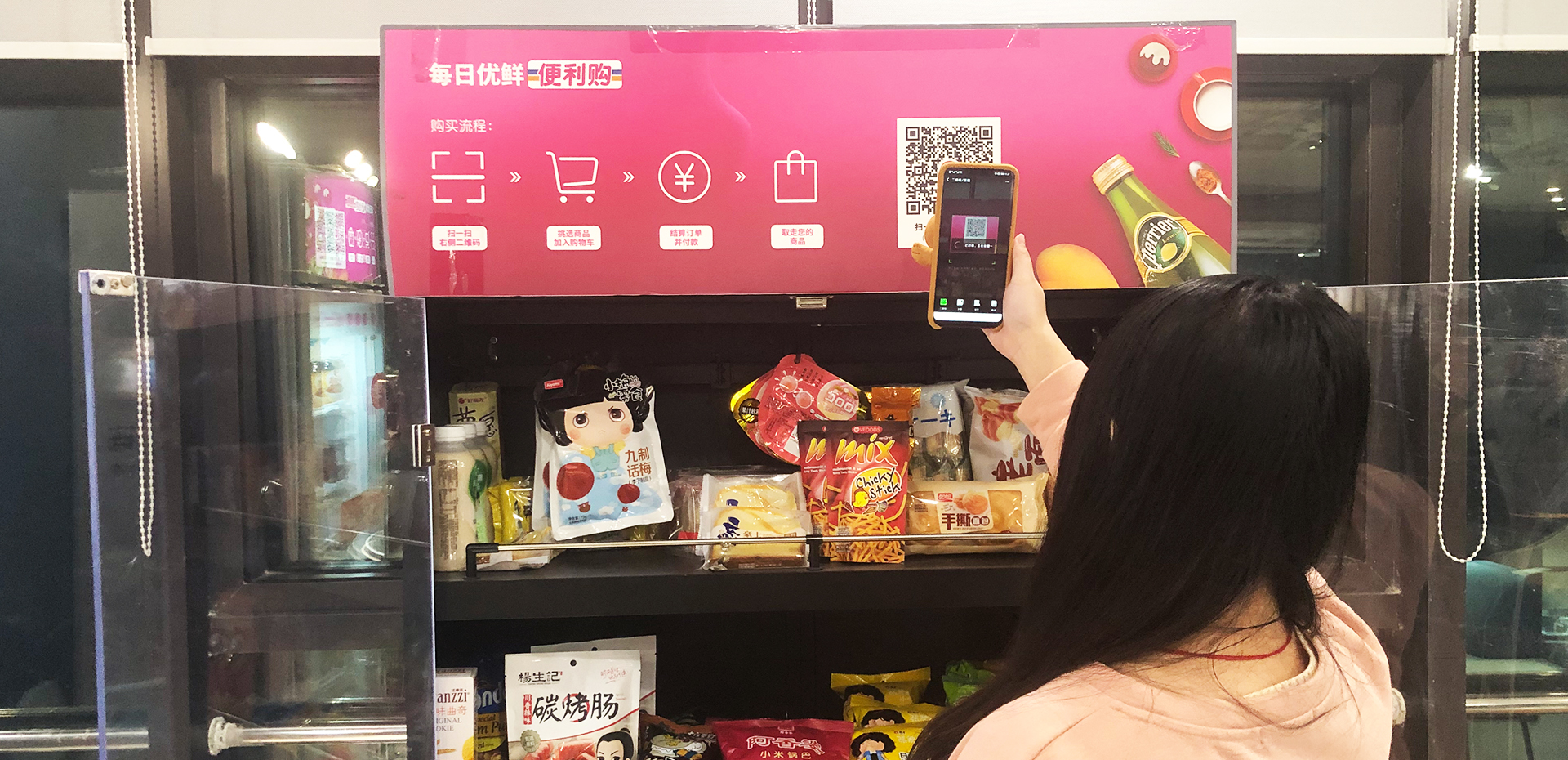
Once the darling of investors, unmanned shelf startups are going through a hard time in China
Startups are being forced to transform their business models to survive
China bets on road-vehicle coordination for the mass adoption of autonomous driving cars by 2025
Money pours in as China pushes sector to be the next growth engine, and both self-driving startups and their investors are optimistic about their commercialization attempts

Exclusive: Patamar Capital to raise US$150 million, eyes Series B investments
The impact investment VC recently scored an exit at Indonesian online-to-offline group buying startup Mapan, when it was bought over by Go-Jek

Covid-19: A closer look at how China's businesses and consumer behavior have changed
The lockdown in China has reshaped how people work and live. Some of the changes may be short-term, but others probably have become a part of life

China's Yuanfudao now the world's most valuable edtech with $2.2bn new funding
Yuanfudao’s second tranche of its Series G funding follows the $1bn it raised in March, bringing its valuation to $15.5bn

Sorry, we couldn’t find any matches for “Bank of China”.
POPULAR DATABASE