Bank of China
-
DATABASE (2952)
-
ARTICLES (812)
Co-founder of Diamond Foundry
Kyle Gazay is a co-founder of Diamond Foundry, the US-based unicorn that makes lab-grown diamonds and which is also the world’s first diamond producer to be certified carbon neutral. He has worked at Diamond Foundry since its launch, and held several roles there, including being COO as well as president of productionCurrently, Gazay oversees all diamond production at the company. Gazay’s expertise is in engineering and production. He has a decade’s track record in working with any equipment to obtain a robust and repeatable baseline output.Like the other co-founders of Diamond Foundry, Gazay previously worked at Nanosolar, a $640m US-based solar power technology provider, which later folded due to pressure from cheaper competition in China. At Nanosolar, Gazay led the development of its production line, and oversaw the translation of the company’s research into development and baseline production output. Upon the closure of Nanosolar, Gazay joined former Nanosolar CEO Martin Roscheisen and former Nanosolar engineer Jeremy Scholz in pivoting to work on lab-grown diamonds, and in establishing Diamond Foundry.

Kyle Gazay is a co-founder of Diamond Foundry, the US-based unicorn that makes lab-grown diamonds and which is also the world’s first diamond producer to be certified carbon neutral. He has worked at Diamond Foundry since its launch, and held several roles there, including being COO as well as president of productionCurrently, Gazay oversees all diamond production at the company. Gazay’s expertise is in engineering and production. He has a decade’s track record in working with any equipment to obtain a robust and repeatable baseline output.Like the other co-founders of Diamond Foundry, Gazay previously worked at Nanosolar, a $640m US-based solar power technology provider, which later folded due to pressure from cheaper competition in China. At Nanosolar, Gazay led the development of its production line, and oversaw the translation of the company’s research into development and baseline production output. Upon the closure of Nanosolar, Gazay joined former Nanosolar CEO Martin Roscheisen and former Nanosolar engineer Jeremy Scholz in pivoting to work on lab-grown diamonds, and in establishing Diamond Foundry.
CTO and co-founder of Diamond Foundry
Jeremy Scholz is CTO and co-founder at US-based unicorn Diamond Foundry, the first certified carbon-neutral lab-produced diamond manufacturer. He has worked there since 2012, leading up to the company’s official establishment. Prior to this, Scholz co-founded startup consultancy Alicanto in 2011 and briefly worked at startup YottaQ as director of engineering. From 2006–2011, Scholz worked as an engineer and manager at the $640m solar power startup Nanosolar. Silicon Valley's first solar power technology startup financed by American venture capital, the firm was the highest-valued firm in the industry at the time. When Nanosolar closed due to cheaper competition from China, much of its technical expertise and experience were diverted to set up Diamond Foundry. Scholz graduated from the Massachusetts Institute of Technology in mechanical engineering and started his career working at Boeing as a mechanical engineer from 2005–2006.

Jeremy Scholz is CTO and co-founder at US-based unicorn Diamond Foundry, the first certified carbon-neutral lab-produced diamond manufacturer. He has worked there since 2012, leading up to the company’s official establishment. Prior to this, Scholz co-founded startup consultancy Alicanto in 2011 and briefly worked at startup YottaQ as director of engineering. From 2006–2011, Scholz worked as an engineer and manager at the $640m solar power startup Nanosolar. Silicon Valley's first solar power technology startup financed by American venture capital, the firm was the highest-valued firm in the industry at the time. When Nanosolar closed due to cheaper competition from China, much of its technical expertise and experience were diverted to set up Diamond Foundry. Scholz graduated from the Massachusetts Institute of Technology in mechanical engineering and started his career working at Boeing as a mechanical engineer from 2005–2006.
Formerly known as Guangdong Technology Venture Capital Group, Technology Financial Group is a state-owned firm based in Guangzhou. It has a subsidiary in Guangdong province and has set up nine offices in other provinces across China. Technology Financial Group began investing in companies when it was founded in 1992, and it has assets under management of RMB 50bn. With a focus on VC investment, it also provides financial services such as asset management.The firm invests mainly in the high-end equipment manufacturing; new-generation information technology; new material; art, entertainment and media; consumption; biotech and pharmacy; energy and environmental protection; and automotive sectors.

Formerly known as Guangdong Technology Venture Capital Group, Technology Financial Group is a state-owned firm based in Guangzhou. It has a subsidiary in Guangdong province and has set up nine offices in other provinces across China. Technology Financial Group began investing in companies when it was founded in 1992, and it has assets under management of RMB 50bn. With a focus on VC investment, it also provides financial services such as asset management.The firm invests mainly in the high-end equipment manufacturing; new-generation information technology; new material; art, entertainment and media; consumption; biotech and pharmacy; energy and environmental protection; and automotive sectors.
Sofina began in 1898 as Société Financière de Transport et d’Entreprises Industrielles, an engineering conglomerate in Belgium. In the late 1960s, Sofina changed course to become an investment company. As a holding company, its major investments lie in the consumer goods, energy, and distribution sectors, with stakes in companies like Danone and communications satellite operator SES. It has also been involved in various venture capital investment activities, both as an LP to other VCs and as a VC itself, running the Sofina Growth portfolio. The Sofina Growth portfolio spans a wide range of sectors and geographies, from China to Southeast Asia, with investments in notable companies like Zilingo, Byju’s and Kopi Kenangan.
Sofina began in 1898 as Société Financière de Transport et d’Entreprises Industrielles, an engineering conglomerate in Belgium. In the late 1960s, Sofina changed course to become an investment company. As a holding company, its major investments lie in the consumer goods, energy, and distribution sectors, with stakes in companies like Danone and communications satellite operator SES. It has also been involved in various venture capital investment activities, both as an LP to other VCs and as a VC itself, running the Sofina Growth portfolio. The Sofina Growth portfolio spans a wide range of sectors and geographies, from China to Southeast Asia, with investments in notable companies like Zilingo, Byju’s and Kopi Kenangan.
Famous techpreneur Li Yinan (b. 1970) is the former CTO of Baidu and former CEO of Wuxian Xunqi, a China Mobile subsidiary. After Li graduated from Huazhong University of Science & Technology with a master’s degree in Optics Engineering, he joined Huawei and was promoted to vice-president of its Central Research Department in just six months; in 1997 Li because the youngest vice-president at Huawei. In 2001, Li quit Huawei and started his own data communication company, Harbour Networks, which followed the same structure of Huawei and soon became its main competitor. In 2005, Harbour Networks lost in its intense battle with Huawei and was acquired by the larger player. Even though Li rejoined Huawei after the acquisition, he was never able to re-enter the core management team because of his damaged relationship with Ren Zhengfei, the founder and president of Huawei. In April 2015, Li founded his smart e-scooter company, NIU Smart Scooters. Li began investing in 2010 and joined GSR Ventures in 2011. Up to June 2015, Li had invested in more than 10 companies from the TMT sector. Li stood trial for insider trading in March 2016, according to news reports.
Famous techpreneur Li Yinan (b. 1970) is the former CTO of Baidu and former CEO of Wuxian Xunqi, a China Mobile subsidiary. After Li graduated from Huazhong University of Science & Technology with a master’s degree in Optics Engineering, he joined Huawei and was promoted to vice-president of its Central Research Department in just six months; in 1997 Li because the youngest vice-president at Huawei. In 2001, Li quit Huawei and started his own data communication company, Harbour Networks, which followed the same structure of Huawei and soon became its main competitor. In 2005, Harbour Networks lost in its intense battle with Huawei and was acquired by the larger player. Even though Li rejoined Huawei after the acquisition, he was never able to re-enter the core management team because of his damaged relationship with Ren Zhengfei, the founder and president of Huawei. In April 2015, Li founded his smart e-scooter company, NIU Smart Scooters. Li began investing in 2010 and joined GSR Ventures in 2011. Up to June 2015, Li had invested in more than 10 companies from the TMT sector. Li stood trial for insider trading in March 2016, according to news reports.
Founded in 2017 in Hong Kong, Happiness Capital invests in seed to growth stage companies in the US, Europe, Israel, and China, with a focus on issues affecting global happiness within the areas of citizen trust, food, health, climate change, and reduced inequalities. It hosts its own annual contest, the Super Happiness Challenge , a global open innovation contest to fund individuals and startups with ideas and new products or services that tapped into unmet needs to achieve happiness, with a possible $1m in total investment on offer. The VC currently has 37 startups in its portfolio, around half of which are in foodtech and agtech. Its most recent investments include leading the $4.7m July 2021 seed funding round of NovoNutrients, the US-based biotech producer of alt-protein from fermentation using CO2 and other emissions, and co-leading the $29m February 2021 Series A round of Israeli 3D printed alt-meat startup Redefine Meat.

Founded in 2017 in Hong Kong, Happiness Capital invests in seed to growth stage companies in the US, Europe, Israel, and China, with a focus on issues affecting global happiness within the areas of citizen trust, food, health, climate change, and reduced inequalities. It hosts its own annual contest, the Super Happiness Challenge , a global open innovation contest to fund individuals and startups with ideas and new products or services that tapped into unmet needs to achieve happiness, with a possible $1m in total investment on offer. The VC currently has 37 startups in its portfolio, around half of which are in foodtech and agtech. Its most recent investments include leading the $4.7m July 2021 seed funding round of NovoNutrients, the US-based biotech producer of alt-protein from fermentation using CO2 and other emissions, and co-leading the $29m February 2021 Series A round of Israeli 3D printed alt-meat startup Redefine Meat.
Founder and CEO of Mommy Knows
Liang graduated from Fudan University with a bachelor's degree in Physics in 2004 and received his MBA from the Hong Kong University of Science and Technology in 2013. He worked as an account manager at GE from 2004 to 2008. In 2010, Liang joined Aramark, a US food service, facilities, and uniform services provider, and served successively as business development manager and regional operations director. After returning to China in 2014, he founded Shenzhen Easyhin Technology Co., Ltd.
Liang graduated from Fudan University with a bachelor's degree in Physics in 2004 and received his MBA from the Hong Kong University of Science and Technology in 2013. He worked as an account manager at GE from 2004 to 2008. In 2010, Liang joined Aramark, a US food service, facilities, and uniform services provider, and served successively as business development manager and regional operations director. After returning to China in 2014, he founded Shenzhen Easyhin Technology Co., Ltd.
Founded in Shanghai in 2002, Pre IPO is a private equity investor targeting pre-IPO startups in China. It specializes in sectors like consumer products, medicine, edtech, eco-friendly technology, advanced manufacturing and agriculture. The firm also participates in M&A ventures and risk investments in high-tech, new media and IT.
Founded in Shanghai in 2002, Pre IPO is a private equity investor targeting pre-IPO startups in China. It specializes in sectors like consumer products, medicine, edtech, eco-friendly technology, advanced manufacturing and agriculture. The firm also participates in M&A ventures and risk investments in high-tech, new media and IT.
Hengqin CIMC Readysun Innovation & Entrepreneurship Investment Fund
Hengqin CIMC Readysun Innovation & Entrepreneurship Investment Fund is a VC fund set up by China International Marine Containers (CIMC) and Shenzhen Readysun Investment Group on June 14, 2017. The fund focuses on fast-growing high-end equipment manufacturing and new technology sectors, such as intelligent logistics, industrial automation and robots, industrial internet, green new materials.

Hengqin CIMC Readysun Innovation & Entrepreneurship Investment Fund is a VC fund set up by China International Marine Containers (CIMC) and Shenzhen Readysun Investment Group on June 14, 2017. The fund focuses on fast-growing high-end equipment manufacturing and new technology sectors, such as intelligent logistics, industrial automation and robots, industrial internet, green new materials.
Incorporated as Composite Capital Management (HK) Limited, the VC was founded in Hong Kong in January 2016 by David Ma who was a former partner at Hillhouse Capital Group that specializes in China-tech investments. Ma was at Hillhouse for seven years before founding Composite Capital that now manages total assets valued at RMB 3bn.

Incorporated as Composite Capital Management (HK) Limited, the VC was founded in Hong Kong in January 2016 by David Ma who was a former partner at Hillhouse Capital Group that specializes in China-tech investments. Ma was at Hillhouse for seven years before founding Composite Capital that now manages total assets valued at RMB 3bn.
Born in 1969, Pan Yingjiu had worked at Zhuhai Nanping Enterprise Corporation from September 1990 to July 1991. He also worked as an engineer at Canon Zhuhai until August 1994 when he left to start a new career as an investment manager at Zhuhai Pingsha Jinyan Tourism Corporation.In December 1999, he became a financial investment manager at China Materials Development Investment Corporation and rose to become a board director in May 2005 at a Hong Kong-based luminescent material manufacturer. In March 2007, he became the GM of Lanshi VC until March 2011. Since September 2010, he has also been working as a board director at Weibang Investment in Shenzhen and Beijing IN-Power Electric Co Ltd.

Born in 1969, Pan Yingjiu had worked at Zhuhai Nanping Enterprise Corporation from September 1990 to July 1991. He also worked as an engineer at Canon Zhuhai until August 1994 when he left to start a new career as an investment manager at Zhuhai Pingsha Jinyan Tourism Corporation.In December 1999, he became a financial investment manager at China Materials Development Investment Corporation and rose to become a board director in May 2005 at a Hong Kong-based luminescent material manufacturer. In March 2007, he became the GM of Lanshi VC until March 2011. Since September 2010, he has also been working as a board director at Weibang Investment in Shenzhen and Beijing IN-Power Electric Co Ltd.
Sierra Ventures is an American, private-owned venture capital firm founded in 1982. The company now manages a $1.5bn fund with a focus on domestic consumer solutions and advanced technology. It has helped more than 200 companies around the globe to grow, having raised more than $1.9bn in capital. Since 2006, it has been actively investing in India and China.
Sierra Ventures is an American, private-owned venture capital firm founded in 1982. The company now manages a $1.5bn fund with a focus on domestic consumer solutions and advanced technology. It has helped more than 200 companies around the globe to grow, having raised more than $1.9bn in capital. Since 2006, it has been actively investing in India and China.
CEO and Founder of CH Biomedical
Chen Chen is an expert in artificial heart development. After graduating from Tsinghua University with a major in Thermal Engineering in 1984, he switched to study Biomechanics in Sichuan University and received a doctorate in 1991.He lectured at Nanjing University from 1991 to 1996 before going to Japan to continue his research on artificial heart technology and development. He was a visiting scholar at the University of Tokyo for one year until 1997.In 1999, Chen was headhunted and joined a US startup to work on developing an artificial heart (LVAD) product Levacor. The startup was later acquired by World Heart Corporation and Chen became its chief engineer. World Heart decided to shut down the program in 2006 because the product was too big to be placed inside a human chest.Chen went back to China in 2007 to found CH Biomedical to build a smaller LVAD device.
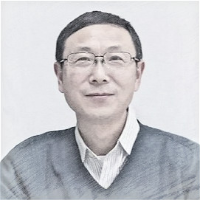
Chen Chen is an expert in artificial heart development. After graduating from Tsinghua University with a major in Thermal Engineering in 1984, he switched to study Biomechanics in Sichuan University and received a doctorate in 1991.He lectured at Nanjing University from 1991 to 1996 before going to Japan to continue his research on artificial heart technology and development. He was a visiting scholar at the University of Tokyo for one year until 1997.In 1999, Chen was headhunted and joined a US startup to work on developing an artificial heart (LVAD) product Levacor. The startup was later acquired by World Heart Corporation and Chen became its chief engineer. World Heart decided to shut down the program in 2006 because the product was too big to be placed inside a human chest.Chen went back to China in 2007 to found CH Biomedical to build a smaller LVAD device.
Founded in Beijing in May 2015, Chunxiao Capital mainly invests in angel/seed to Series B funding rounds. With staff of 22, the VC has invested in over 50 companies by March 2019. Investments include technology innovations in fintech, big data and AI. Other investment sectors involve corporate services, Industry 4.0, B2B and SaaS for industrial enterprises and consumer-oriented businesses like retail, sports, maternal and infant care.In May 2019, the Asset Management Association of China revoked Chunxiao's private equity certification due to links with five online P2P lending firms facing default problems.
Founded in Beijing in May 2015, Chunxiao Capital mainly invests in angel/seed to Series B funding rounds. With staff of 22, the VC has invested in over 50 companies by March 2019. Investments include technology innovations in fintech, big data and AI. Other investment sectors involve corporate services, Industry 4.0, B2B and SaaS for industrial enterprises and consumer-oriented businesses like retail, sports, maternal and infant care.In May 2019, the Asset Management Association of China revoked Chunxiao's private equity certification due to links with five online P2P lending firms facing default problems.
Founded in 2017, Rekanext Capital Partners Pte Ltd is an early-stage VC firm based in Singapore and Jakarta. The VC focuses on scaling high potential startups in Southeast Asia to expand regionally by providing expertise, industry experience and networks. Its diverse investment portfolio includes agri-crowdfunding platform iGrow, chat and customer service developer Qiscus and architecture-focused VR Collab that has operations in Singapore and China.

Founded in 2017, Rekanext Capital Partners Pte Ltd is an early-stage VC firm based in Singapore and Jakarta. The VC focuses on scaling high potential startups in Southeast Asia to expand regionally by providing expertise, industry experience and networks. Its diverse investment portfolio includes agri-crowdfunding platform iGrow, chat and customer service developer Qiscus and architecture-focused VR Collab that has operations in Singapore and China.
No bank account? In Indonesia, you can still shop online
Indonesian startups are racing to serve the millions of consumers that banks haven’t reached. Here’s a look at some of the leading players, their innovations and how they have redefined the market

China new retail: A blend of the best of online and offline shopping
Players big and small are contributing to China’s new retail revolution

This startup aims to be the DocuSign of China
Having captured a third of a largely untapped domestic e-contracting market, Shangshangqian looks to gain a greater foothold at home and abroad

NANOxARCH: Pioneering awareness and use of sustainable materials in China
Founder Lei Yuxi reckons Covid-19 could usher China into a new era of sustainability, as her startup seeks to make sustainable materials more affordable
CraiditX gives banks and insurers AI tools for assessing consumer credit risk
Used by big lenders like Bank of China and Minsheng Bank, CraiditX's solutions can gauge consumer default risk even if a user has no credit history

Sequoia China Seed Fund: Growing an era of deep-tech startups
Managing Partner Neil Shen wants to help deep-tech and enterprise tech startups get investments more easily, across quantum computing, semiconductors, synthetic biology and more

With universal QR code, Indonesia achieves e-payment harmony
The move to standardize Indonesia's QR code is expected to unify the country's cashless payments system and lift tens of thousands of small merchants into the payments mainstream

China a “positive environment” for uptake of cultured meat, researcher tells Future Food Asia
But for interested cultured meat companies, China-based Chloe Dempsey suggests it would be better to wait, observe and learn more about the market before trying to tap its massive potential
More than desire: When resale sneakers become objects of speculation
Sneaker resale platforms like Poizon and Nice feel the heat as China regulators panned such trading for getting out of control

Have you ever bought expensive equipment but seldom used it? Do you want to try the latest electronic gadgets at low cost? Try this online sharing and rental platform

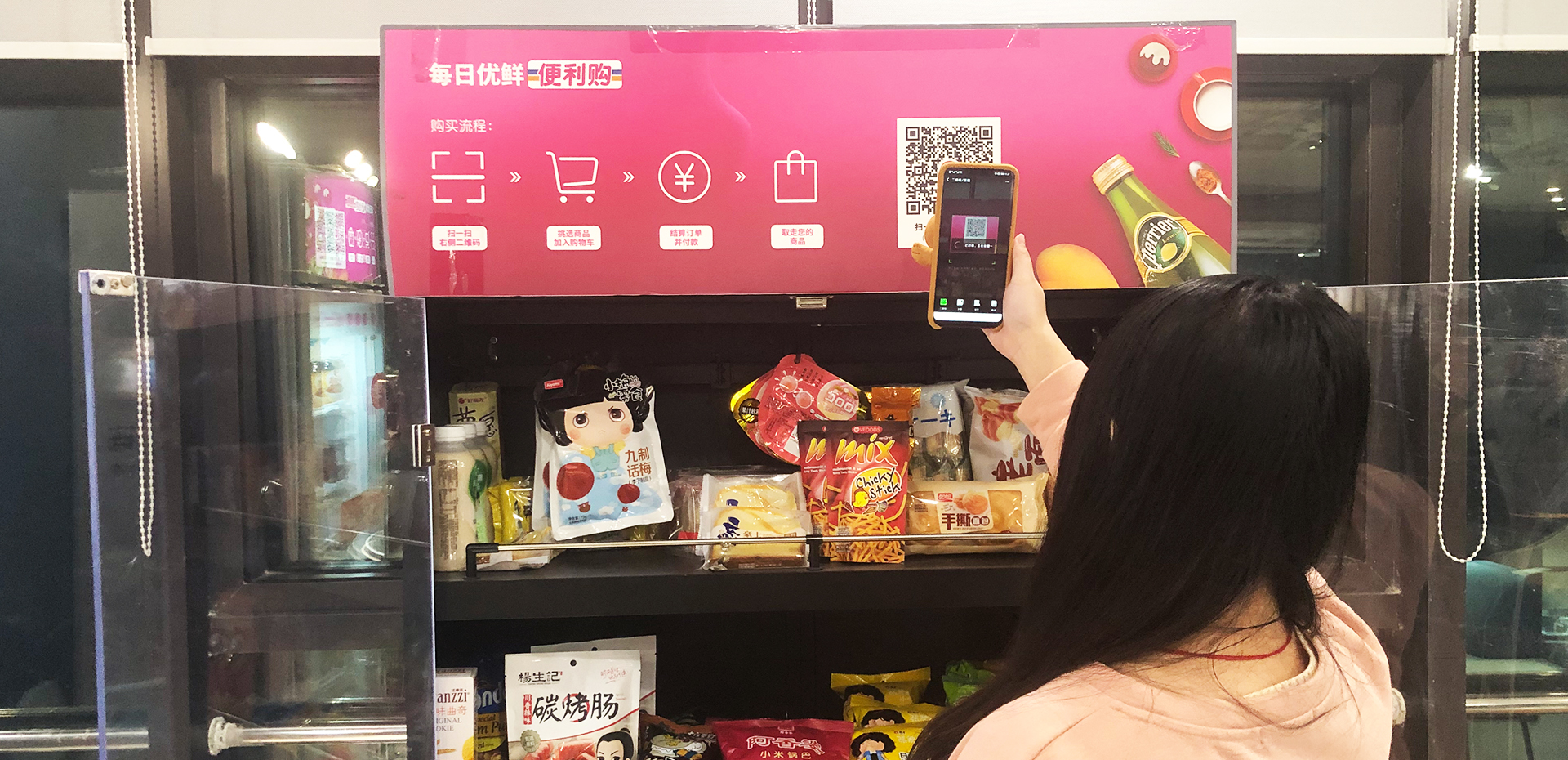
Once the darling of investors, unmanned shelf startups are going through a hard time in China
Startups are being forced to transform their business models to survive
China bets on road-vehicle coordination for the mass adoption of autonomous driving cars by 2025
Money pours in as China pushes sector to be the next growth engine, and both self-driving startups and their investors are optimistic about their commercialization attempts

Exclusive: Patamar Capital to raise US$150 million, eyes Series B investments
The impact investment VC recently scored an exit at Indonesian online-to-offline group buying startup Mapan, when it was bought over by Go-Jek

Covid-19: A closer look at how China's businesses and consumer behavior have changed
The lockdown in China has reshaped how people work and live. Some of the changes may be short-term, but others probably have become a part of life

China's Yuanfudao now the world's most valuable edtech with $2.2bn new funding
Yuanfudao’s second tranche of its Series G funding follows the $1bn it raised in March, bringing its valuation to $15.5bn

Sorry, we couldn’t find any matches for “Bank of China”.
POPULAR DATABASE