Bank of China
-
DATABASE (2952)
-
ARTICLES (812)
China Minsheng Investment Group
China Minsheng Investment Group (CMIG) is the largest privately owned investment group in China, with RMB 50 billion in registered capital. It was initiated by the All-China Federation of Industry and Commerce, and its Global Advisory Council includes the former prime ministers of France, Italy and Pakistan, and various other global experts and Nobel Prize winners.


China Minsheng Investment Group (CMIG) is the largest privately owned investment group in China, with RMB 50 billion in registered capital. It was initiated by the All-China Federation of Industry and Commerce, and its Global Advisory Council includes the former prime ministers of France, Italy and Pakistan, and various other global experts and Nobel Prize winners.
Founder and CEO of Pengyoufan
A former senior executive at Standard Chartered Bank and HP, Wang Huawei went on to set up his own business in internet investment/wealth management information services, Weitouhuirong (Beijing) Network Technology; and subsequently, P2P financing-social networking app Pengyoufan.

A former senior executive at Standard Chartered Bank and HP, Wang Huawei went on to set up his own business in internet investment/wealth management information services, Weitouhuirong (Beijing) Network Technology; and subsequently, P2P financing-social networking app Pengyoufan.
American investment capital firm Farallon Capital Management was established in 1986. The company manages equity capital for institutions, including college endowments, charitable foundations and pension plans, and funds for high net worth individuals. While most of its investments are in risk arbitrage and debt restructuring, it has also invested in startups across different verticals, such as Indonesian ride-hailing firm Gojek and a host of biotechnology, pharmaceuticals and medical technology companies.Farallon’s history with Indonesia began long before Gojek came into existence. In 2002, Farallon bought a controlling stake in Bank Central Asia (BCA), an Indonesian bank, during a time when investors avoided Indonesian banks that had been saddled with bad debt. With the controlling stake, Farallon installed a new bank chairman and reformed BCA. Over the next four years Farallon slowly divested in BCA and finally sold the remaining 4% stake in 2006 to earn a profit.

American investment capital firm Farallon Capital Management was established in 1986. The company manages equity capital for institutions, including college endowments, charitable foundations and pension plans, and funds for high net worth individuals. While most of its investments are in risk arbitrage and debt restructuring, it has also invested in startups across different verticals, such as Indonesian ride-hailing firm Gojek and a host of biotechnology, pharmaceuticals and medical technology companies.Farallon’s history with Indonesia began long before Gojek came into existence. In 2002, Farallon bought a controlling stake in Bank Central Asia (BCA), an Indonesian bank, during a time when investors avoided Indonesian banks that had been saddled with bad debt. With the controlling stake, Farallon installed a new bank chairman and reformed BCA. Over the next four years Farallon slowly divested in BCA and finally sold the remaining 4% stake in 2006 to earn a profit.
Co-founder and AI Product Architect of Get.AI
Shadow Chi graduated with a bachelor's degree in design from Shanghai Jiao Tong University in 2008 and received his master‘s degree in computer-aided design from Tongji University in 2013. He specializes in innovative product design and development, and has worked at ZTE Corporation, China Merchants Bank, and ARKIE as product architect and designer. He founded online community MixLab in 2016 and has built it into an interdisciplinary hub for more than 35,000 designers and programmers. After co-founding Get.AI in 2018, he has served as its AI Product Architect.

Shadow Chi graduated with a bachelor's degree in design from Shanghai Jiao Tong University in 2008 and received his master‘s degree in computer-aided design from Tongji University in 2013. He specializes in innovative product design and development, and has worked at ZTE Corporation, China Merchants Bank, and ARKIE as product architect and designer. He founded online community MixLab in 2016 and has built it into an interdisciplinary hub for more than 35,000 designers and programmers. After co-founding Get.AI in 2018, he has served as its AI Product Architect.
Headquartered in Beijing and set up in 2006, China Growth Capital invests in early-stage internet startups in China and the US. As of May 2016, it has two USD-denominated funds and three RMB-denominated funds, valued around RMB 4 billion in total.

Headquartered in Beijing and set up in 2006, China Growth Capital invests in early-stage internet startups in China and the US. As of May 2016, it has two USD-denominated funds and three RMB-denominated funds, valued around RMB 4 billion in total.
China Merchants Venture, a subsidiary of China Merchants Group, was founded in November 2015. It is headquartered in Shenzhen and has opened offices in Beijing, Hong Kong, Israel and Silicon Valley. The company invests in finance, real estate, logistics, transportation, healthcare, AI, among other industries. Of the RMB 5 bn capital under its management, RMB 2bn is earmarked for a fund of funds (FOF) and the other RMB 3 bn for direct investment. As of April 2019, the FOF has invested in 28 early and growth stage funds, and directly invested in over 50 startups.
China Merchants Venture, a subsidiary of China Merchants Group, was founded in November 2015. It is headquartered in Shenzhen and has opened offices in Beijing, Hong Kong, Israel and Silicon Valley. The company invests in finance, real estate, logistics, transportation, healthcare, AI, among other industries. Of the RMB 5 bn capital under its management, RMB 2bn is earmarked for a fund of funds (FOF) and the other RMB 3 bn for direct investment. As of April 2019, the FOF has invested in 28 early and growth stage funds, and directly invested in over 50 startups.
BlueRun Ventures China was founded in 2005, focusing on early-stage investment of companies. The investments are usually from US$100,000 to US$10 million.

BlueRun Ventures China was founded in 2005, focusing on early-stage investment of companies. The investments are usually from US$100,000 to US$10 million.
Armed with Asian and European experience, Miguel Amaro co-founded Uniplaces in 2011. He earned his bachelor’s degree in Finance from the University of Nottingham, and took a course in Chinese Studies at East China Normal University. He obtained his master’s in Management, with a concentration in Global Entrepreneurship, from Babson Graduate School. Amaro also spent two months as an analyst at Grameen Bank in Dhaka, Bangladesh. While developing Uniplaces, he was an entrepreneur-in-residence at Picvic Labs (France), Zhejiang University Innovation Institute (China) and Osram (United States). Amaro is currently part of the World Economic Forum’s Global Shapers. As an investor, to date, he has only invested in Portuguese healthy food service EatTasty and part funding the company's angel, pre-seed and seed rounds, with undisclosed investments.

Armed with Asian and European experience, Miguel Amaro co-founded Uniplaces in 2011. He earned his bachelor’s degree in Finance from the University of Nottingham, and took a course in Chinese Studies at East China Normal University. He obtained his master’s in Management, with a concentration in Global Entrepreneurship, from Babson Graduate School. Amaro also spent two months as an analyst at Grameen Bank in Dhaka, Bangladesh. While developing Uniplaces, he was an entrepreneur-in-residence at Picvic Labs (France), Zhejiang University Innovation Institute (China) and Osram (United States). Amaro is currently part of the World Economic Forum’s Global Shapers. As an investor, to date, he has only invested in Portuguese healthy food service EatTasty and part funding the company's angel, pre-seed and seed rounds, with undisclosed investments.
Puxin Fintech Fund was co-launched by Shanghai Pudong Development Bank and Shanghai Trust in late October 2019. Operated by Puxin Capital, a subsidiary of Shanghai Trust, the fund mainly invests in fintech startups.

Puxin Fintech Fund was co-launched by Shanghai Pudong Development Bank and Shanghai Trust in late October 2019. Operated by Puxin Capital, a subsidiary of Shanghai Trust, the fund mainly invests in fintech startups.
China Literature was founded in March 2015 by merging Tencent Literature and Shanda Literature. It went public on the Stock Exchange of Hong Kong in November 2017. It owns online reading brand Qidian.com and acquired film and television production company New Classic Media in August 2018. It focuses on building a premium e-reading platform at home and abroad while seeking business opportunities in the adaptation of its copyrighted literary works into film and television productions, comics and animation and video games. As at late June 2019, there are over 11.7m pieces of literary works in its online library.
China Literature was founded in March 2015 by merging Tencent Literature and Shanda Literature. It went public on the Stock Exchange of Hong Kong in November 2017. It owns online reading brand Qidian.com and acquired film and television production company New Classic Media in August 2018. It focuses on building a premium e-reading platform at home and abroad while seeking business opportunities in the adaptation of its copyrighted literary works into film and television productions, comics and animation and video games. As at late June 2019, there are over 11.7m pieces of literary works in its online library.
Co-founder, CTO of Heptasense
Mauro Peixe has been the co-founder and CTO of Heptasense since 2016. The Portuguese national helped to build BPI's banking app when he worked as a software engineer at the major Portuguese bank based in Oporto. He has a master's in Electrical and Computer Engineering from the Higher Technical Institute in Lisbon.

Mauro Peixe has been the co-founder and CTO of Heptasense since 2016. The Portuguese national helped to build BPI's banking app when he worked as a software engineer at the major Portuguese bank based in Oporto. He has a master's in Electrical and Computer Engineering from the Higher Technical Institute in Lisbon.
Russia-China Investment Fund (RCIF) is a private equity fund that invests in projects created to advance economic cooperation between Russia and China. RCIF was founded in 2012 by two government-backed funds: Russian Direct Investment Fund (RDIF) and China Investment Corporation (CIC). RCIF has received US$1 billion commitments from both RDIF and CIC. International institutional investors are expected to commit an additional US$2 billion. RCIF will invest at least 70% of its capital in Russia and CIS countries and around 30% in China.
Russia-China Investment Fund (RCIF) is a private equity fund that invests in projects created to advance economic cooperation between Russia and China. RCIF was founded in 2012 by two government-backed funds: Russian Direct Investment Fund (RDIF) and China Investment Corporation (CIC). RCIF has received US$1 billion commitments from both RDIF and CIC. International institutional investors are expected to commit an additional US$2 billion. RCIF will invest at least 70% of its capital in Russia and CIS countries and around 30% in China.
China Creation Ventures (CCV) was founded in 2017 by Wei Zhou, the former managing partner of KPCB China. Headquartered in Beijing, it invests mainly in early-stage startups in sectors such as finance and TMT. Series A funding accounts for around 70% of total investment. CCV manages USD and RMB funds collectively worth over RMB 3 billion.
China Creation Ventures (CCV) was founded in 2017 by Wei Zhou, the former managing partner of KPCB China. Headquartered in Beijing, it invests mainly in early-stage startups in sectors such as finance and TMT. Series A funding accounts for around 70% of total investment. CCV manages USD and RMB funds collectively worth over RMB 3 billion.
Co-founder of Kioson
Viperi Limiardi is the commissioner of Artav, the national distributor for mobile network operator XL Axiata. Artav was an early investor in Kioson and is now a majority shareholder of the recently public-listed fintech in Indonesia. A Computer Science graduate from Universitas Trisakti, Viperi had also worked as a professional banker at Bank Indonesia for more than 15 years.

Viperi Limiardi is the commissioner of Artav, the national distributor for mobile network operator XL Axiata. Artav was an early investor in Kioson and is now a majority shareholder of the recently public-listed fintech in Indonesia. A Computer Science graduate from Universitas Trisakti, Viperi had also worked as a professional banker at Bank Indonesia for more than 15 years.
Founded in 2007 by two US-educated and -trained returnees, David Zhang (Zhang Pin) and Shao Bo (Shao Yibo), Matrix Partners China has managed more than RMB 15.5 billion in capital and invested in over 320 companies, including Cheetah Mobile, Didi, Kuaidi, Ele.me, Koudai Shopping and Momo. Zhang has described the 100-strong firm’s investment style as “aggressive”, backing about 80 companies a year. An affiliate of Matrix Partners in the US, the firm focuses on internet & mobile internet, financial services, healthcare and SaaS companies in China.

Founded in 2007 by two US-educated and -trained returnees, David Zhang (Zhang Pin) and Shao Bo (Shao Yibo), Matrix Partners China has managed more than RMB 15.5 billion in capital and invested in over 320 companies, including Cheetah Mobile, Didi, Kuaidi, Ele.me, Koudai Shopping and Momo. Zhang has described the 100-strong firm’s investment style as “aggressive”, backing about 80 companies a year. An affiliate of Matrix Partners in the US, the firm focuses on internet & mobile internet, financial services, healthcare and SaaS companies in China.
No bank account? In Indonesia, you can still shop online
Indonesian startups are racing to serve the millions of consumers that banks haven’t reached. Here’s a look at some of the leading players, their innovations and how they have redefined the market

China new retail: A blend of the best of online and offline shopping
Players big and small are contributing to China’s new retail revolution

This startup aims to be the DocuSign of China
Having captured a third of a largely untapped domestic e-contracting market, Shangshangqian looks to gain a greater foothold at home and abroad

NANOxARCH: Pioneering awareness and use of sustainable materials in China
Founder Lei Yuxi reckons Covid-19 could usher China into a new era of sustainability, as her startup seeks to make sustainable materials more affordable
CraiditX gives banks and insurers AI tools for assessing consumer credit risk
Used by big lenders like Bank of China and Minsheng Bank, CraiditX's solutions can gauge consumer default risk even if a user has no credit history

Sequoia China Seed Fund: Growing an era of deep-tech startups
Managing Partner Neil Shen wants to help deep-tech and enterprise tech startups get investments more easily, across quantum computing, semiconductors, synthetic biology and more

With universal QR code, Indonesia achieves e-payment harmony
The move to standardize Indonesia's QR code is expected to unify the country's cashless payments system and lift tens of thousands of small merchants into the payments mainstream

China a “positive environment” for uptake of cultured meat, researcher tells Future Food Asia
But for interested cultured meat companies, China-based Chloe Dempsey suggests it would be better to wait, observe and learn more about the market before trying to tap its massive potential

More than desire: When resale sneakers become objects of speculation
Sneaker resale platforms like Poizon and Nice feel the heat as China regulators panned such trading for getting out of control

Have you ever bought expensive equipment but seldom used it? Do you want to try the latest electronic gadgets at low cost? Try this online sharing and rental platform

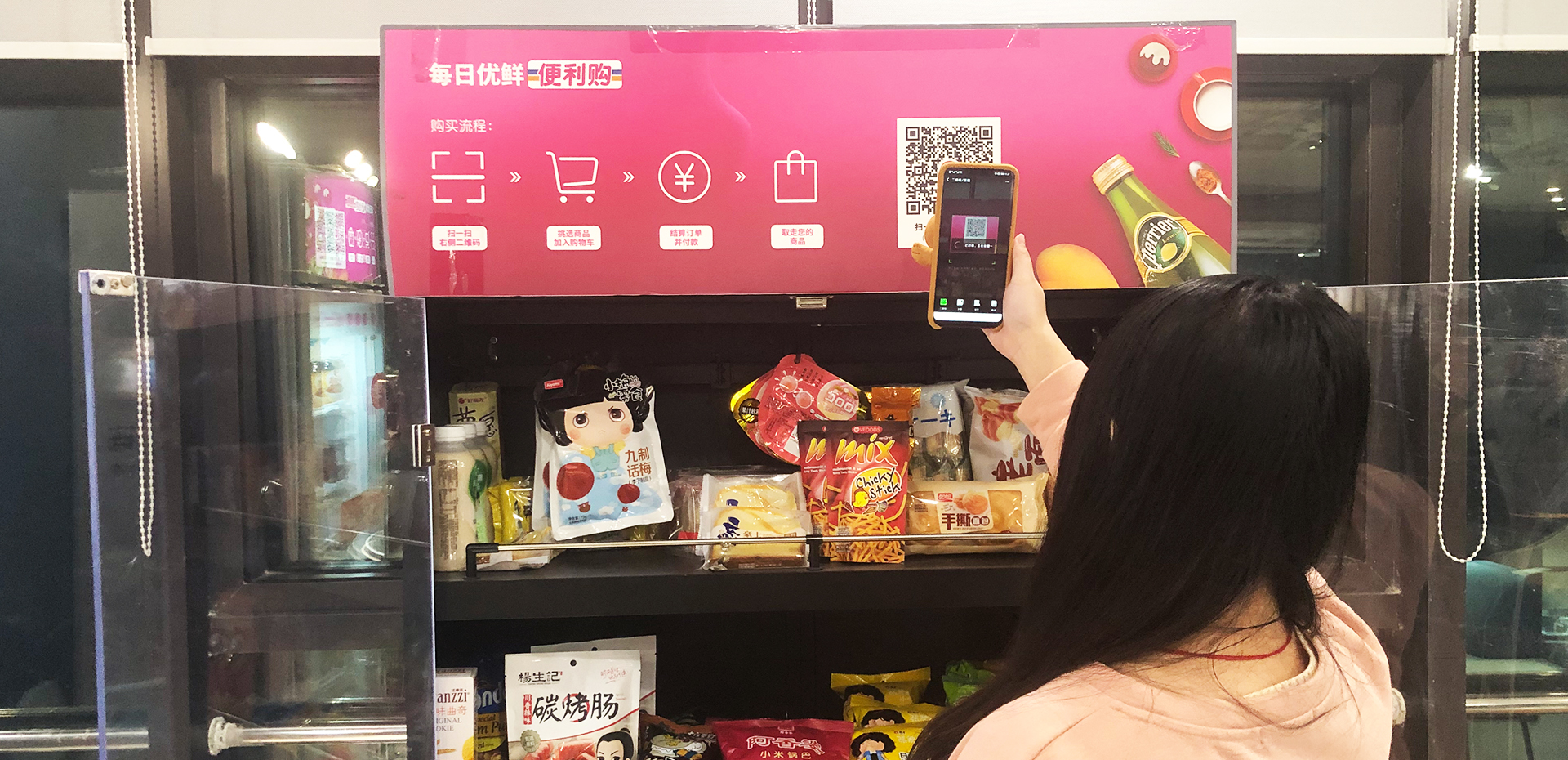
Once the darling of investors, unmanned shelf startups are going through a hard time in China
Startups are being forced to transform their business models to survive
China bets on road-vehicle coordination for the mass adoption of autonomous driving cars by 2025
Money pours in as China pushes sector to be the next growth engine, and both self-driving startups and their investors are optimistic about their commercialization attempts

Exclusive: Patamar Capital to raise US$150 million, eyes Series B investments
The impact investment VC recently scored an exit at Indonesian online-to-offline group buying startup Mapan, when it was bought over by Go-Jek

Covid-19: A closer look at how China's businesses and consumer behavior have changed
The lockdown in China has reshaped how people work and live. Some of the changes may be short-term, but others probably have become a part of life

China's Yuanfudao now the world's most valuable edtech with $2.2bn new funding
Yuanfudao’s second tranche of its Series G funding follows the $1bn it raised in March, bringing its valuation to $15.5bn

Sorry, we couldn’t find any matches for “Bank of China”.