China Merchants Bank
-
DATABASE (857)
-
ARTICLES (417)
Chairman and co-founder of Everimpact
Jan Mattsson is a former senior UN official and the head of an ESG management consultancy. He is also chairman and co-founder of Everimpact, a GHG monitoring company that uses satellites, ground sensors, AI and machine learning to deliver more reliable carbon emissions data to public bodies, municipalities, and businesses. Mattsson has four decades of experience in development, humanitarian and peacekeeping operations, and has led operations and programs in Asia, Africa, Latin America and Central Asia. He spent nearly 14 years as UN Under-Secretary-General and Executive Director of the United Nations Office for Project Services (UNOPS), the operational arm of the UN. Over his professional career, Mattsson has also engaged with international organizations such as the World Bank and the Green Climate Fund. Outside of Everimpact, Mattsson is founder and CEO of M-Trust Leadership AB, an independent ESG and sustainable development management consultancy. He chairs the board of the Museum for the United Nations, and 4Life Solutions (formerly known as SolarSack), a company offering a solar-powered product that can provide safe drinking water to low-income and vulnerable communities. Mattsson also serves on the boards of The Management Lab, which aims to help investors analyze the social and environmental impact of their investments and philanthropy, as well as the World Benchmarking Alliance, an Amsterdam-based non-profit organization that aims to measure and incentivise businesses’ contributions towards the UN SDGs.

Jan Mattsson is a former senior UN official and the head of an ESG management consultancy. He is also chairman and co-founder of Everimpact, a GHG monitoring company that uses satellites, ground sensors, AI and machine learning to deliver more reliable carbon emissions data to public bodies, municipalities, and businesses. Mattsson has four decades of experience in development, humanitarian and peacekeeping operations, and has led operations and programs in Asia, Africa, Latin America and Central Asia. He spent nearly 14 years as UN Under-Secretary-General and Executive Director of the United Nations Office for Project Services (UNOPS), the operational arm of the UN. Over his professional career, Mattsson has also engaged with international organizations such as the World Bank and the Green Climate Fund. Outside of Everimpact, Mattsson is founder and CEO of M-Trust Leadership AB, an independent ESG and sustainable development management consultancy. He chairs the board of the Museum for the United Nations, and 4Life Solutions (formerly known as SolarSack), a company offering a solar-powered product that can provide safe drinking water to low-income and vulnerable communities. Mattsson also serves on the boards of The Management Lab, which aims to help investors analyze the social and environmental impact of their investments and philanthropy, as well as the World Benchmarking Alliance, an Amsterdam-based non-profit organization that aims to measure and incentivise businesses’ contributions towards the UN SDGs.
One of China’s most famous angel investors and a prolific speaker, Xu Xiaoping (b.1960) is the managing partner of ZhenFund, a TMT-focused seed fund he founded with close friend and business partner Wang Qiang, in collaboration with Sequoia Capital China, in 2011. Xu began investing in 2006, after the New Oriental Education & Technology Group he co-founded became the first Chinese education company to list on NYSE. Trained as a professional musician, Xu plays the piano, violin, and oboe, and composes music as a hobby. He is also the author of more than 10 books. He studied at the Beijing Central Conservatory of Music and holds a master's in Music from the University of Saskatchewan.
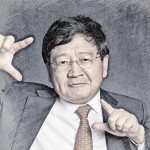

One of China’s most famous angel investors and a prolific speaker, Xu Xiaoping (b.1960) is the managing partner of ZhenFund, a TMT-focused seed fund he founded with close friend and business partner Wang Qiang, in collaboration with Sequoia Capital China, in 2011. Xu began investing in 2006, after the New Oriental Education & Technology Group he co-founded became the first Chinese education company to list on NYSE. Trained as a professional musician, Xu plays the piano, violin, and oboe, and composes music as a hobby. He is also the author of more than 10 books. He studied at the Beijing Central Conservatory of Music and holds a master's in Music from the University of Saskatchewan.
Founded in Beijing in May 2015, Chunxiao Capital mainly invests in angel/seed to Series B funding rounds. With staff of 22, the VC has invested in over 50 companies by March 2019. Investments include technology innovations in fintech, big data and AI. Other investment sectors involve corporate services, Industry 4.0, B2B and SaaS for industrial enterprises and consumer-oriented businesses like retail, sports, maternal and infant care.In May 2019, the Asset Management Association of China revoked Chunxiao's private equity certification due to links with five online P2P lending firms facing default problems.

Founded in Beijing in May 2015, Chunxiao Capital mainly invests in angel/seed to Series B funding rounds. With staff of 22, the VC has invested in over 50 companies by March 2019. Investments include technology innovations in fintech, big data and AI. Other investment sectors involve corporate services, Industry 4.0, B2B and SaaS for industrial enterprises and consumer-oriented businesses like retail, sports, maternal and infant care.In May 2019, the Asset Management Association of China revoked Chunxiao's private equity certification due to links with five online P2P lending firms facing default problems.
CEMEX Ventures is the investment arm of global Mexican cement giant CEMEX and was established in 2017 with offices in Mexico, Spain, Colombia and China. It focuses exclusively on tech and non-tech solutions to painpoints in the construction sector. Every year, together with global management consultant Boston Consulting Group and startup monitoring platform Tracxn, it names its 50 Most Promising Startups in the Construction Ecosystem, investing in a few of the companies cited. It currently has 12 companies in its portfolio.Its most recent investments have included an undisclosed contribution to the funding round of US soil marketplace Soil Connect in 4Q 2020 and in the $1.7m July 2020 Series A round of US recycling company Arqlite.

CEMEX Ventures is the investment arm of global Mexican cement giant CEMEX and was established in 2017 with offices in Mexico, Spain, Colombia and China. It focuses exclusively on tech and non-tech solutions to painpoints in the construction sector. Every year, together with global management consultant Boston Consulting Group and startup monitoring platform Tracxn, it names its 50 Most Promising Startups in the Construction Ecosystem, investing in a few of the companies cited. It currently has 12 companies in its portfolio.Its most recent investments have included an undisclosed contribution to the funding round of US soil marketplace Soil Connect in 4Q 2020 and in the $1.7m July 2020 Series A round of US recycling company Arqlite.
CEO and founder of Diamond Foundry
Martin Roscheisen is an American-Austrian tech entrepreneur. He is CEO and co-founder of US-based unicorn Diamond Foundry, the first certified carbon-neutral producer of lab-grown diamonds. He has worked there since 2012, prior to the company’s official establishment in 2013.Roscheisen holds a PhD in computer science from Stanford University, where his classmates included Google founders Larry Page and Sergey Brin. He is one of the first generation of internet entrepreneurs, and has been involved in starting a number of companies. Before starting Diamond Foundry, Roscheisen headed the $640m solar startup Nanosolar from 2002–2010 as its CEO and founder. This was Silicon Valley's first solar power tech startup financed by American venture capital and, at the time, the highest-valued solar startup.When Nanosolar closed due to cheaper competition from China, much of its remaining technical expertise and resources went to setting up Diamond Foundry.In addition, Roscheisen was also formerlyCEO and the founder of eGroups. One of the first social media platforms to reach 50m users, the firm was acquired by Yahoo!.CTO and co-founder of enterprise software firm TradingDynamics, which sold to Ariba for $1.2bn.CTO and co-founder of FindLaw, a leading Internet legal site eventually sold to Thomson Reuters.In 2003, Fortune Magazine named Roscheisen one of America’s 40 Under 40, and one of the top 10 entrepreneurs in the country.

Martin Roscheisen is an American-Austrian tech entrepreneur. He is CEO and co-founder of US-based unicorn Diamond Foundry, the first certified carbon-neutral producer of lab-grown diamonds. He has worked there since 2012, prior to the company’s official establishment in 2013.Roscheisen holds a PhD in computer science from Stanford University, where his classmates included Google founders Larry Page and Sergey Brin. He is one of the first generation of internet entrepreneurs, and has been involved in starting a number of companies. Before starting Diamond Foundry, Roscheisen headed the $640m solar startup Nanosolar from 2002–2010 as its CEO and founder. This was Silicon Valley's first solar power tech startup financed by American venture capital and, at the time, the highest-valued solar startup.When Nanosolar closed due to cheaper competition from China, much of its remaining technical expertise and resources went to setting up Diamond Foundry.In addition, Roscheisen was also formerlyCEO and the founder of eGroups. One of the first social media platforms to reach 50m users, the firm was acquired by Yahoo!.CTO and co-founder of enterprise software firm TradingDynamics, which sold to Ariba for $1.2bn.CTO and co-founder of FindLaw, a leading Internet legal site eventually sold to Thomson Reuters.In 2003, Fortune Magazine named Roscheisen one of America’s 40 Under 40, and one of the top 10 entrepreneurs in the country.
Fu was born in Jiangxi province in March 1978. In 2005, he led a team that created free antivirus software Qihoo 360 Security Guard. In 2008, he became vice president at Matrix Partners China. A year later, Fu became CEO and chairman of picture software firm Conew Image, which merged with Kingsoft Security in November 2010 to create Kingsoft Network. Fu has served as CEO of the merged company ever since, which, in March 2014, was renamed Cheetah Mobile. He is also founder and general partner at Purple Cow Startups.

Fu was born in Jiangxi province in March 1978. In 2005, he led a team that created free antivirus software Qihoo 360 Security Guard. In 2008, he became vice president at Matrix Partners China. A year later, Fu became CEO and chairman of picture software firm Conew Image, which merged with Kingsoft Security in November 2010 to create Kingsoft Network. Fu has served as CEO of the merged company ever since, which, in March 2014, was renamed Cheetah Mobile. He is also founder and general partner at Purple Cow Startups.
Founded in 2017 in Hong Kong, Happiness Capital invests in seed to growth stage companies in the US, Europe, Israel, and China, with a focus on issues affecting global happiness within the areas of citizen trust, food, health, climate change, and reduced inequalities. It hosts its own annual contest, the Super Happiness Challenge , a global open innovation contest to fund individuals and startups with ideas and new products or services that tapped into unmet needs to achieve happiness, with a possible $1m in total investment on offer. The VC currently has 37 startups in its portfolio, around half of which are in foodtech and agtech. Its most recent investments include leading the $4.7m July 2021 seed funding round of NovoNutrients, the US-based biotech producer of alt-protein from fermentation using CO2 and other emissions, and co-leading the $29m February 2021 Series A round of Israeli 3D printed alt-meat startup Redefine Meat.

Founded in 2017 in Hong Kong, Happiness Capital invests in seed to growth stage companies in the US, Europe, Israel, and China, with a focus on issues affecting global happiness within the areas of citizen trust, food, health, climate change, and reduced inequalities. It hosts its own annual contest, the Super Happiness Challenge , a global open innovation contest to fund individuals and startups with ideas and new products or services that tapped into unmet needs to achieve happiness, with a possible $1m in total investment on offer. The VC currently has 37 startups in its portfolio, around half of which are in foodtech and agtech. Its most recent investments include leading the $4.7m July 2021 seed funding round of NovoNutrients, the US-based biotech producer of alt-protein from fermentation using CO2 and other emissions, and co-leading the $29m February 2021 Series A round of Israeli 3D printed alt-meat startup Redefine Meat.
Famous techpreneur Li Yinan (b. 1970) is the former CTO of Baidu and former CEO of Wuxian Xunqi, a China Mobile subsidiary. After Li graduated from Huazhong University of Science & Technology with a master’s degree in Optics Engineering, he joined Huawei and was promoted to vice-president of its Central Research Department in just six months; in 1997 Li because the youngest vice-president at Huawei. In 2001, Li quit Huawei and started his own data communication company, Harbour Networks, which followed the same structure of Huawei and soon became its main competitor. In 2005, Harbour Networks lost in its intense battle with Huawei and was acquired by the larger player. Even though Li rejoined Huawei after the acquisition, he was never able to re-enter the core management team because of his damaged relationship with Ren Zhengfei, the founder and president of Huawei. In April 2015, Li founded his smart e-scooter company, NIU Smart Scooters. Li began investing in 2010 and joined GSR Ventures in 2011. Up to June 2015, Li had invested in more than 10 companies from the TMT sector. Li stood trial for insider trading in March 2016, according to news reports.

Famous techpreneur Li Yinan (b. 1970) is the former CTO of Baidu and former CEO of Wuxian Xunqi, a China Mobile subsidiary. After Li graduated from Huazhong University of Science & Technology with a master’s degree in Optics Engineering, he joined Huawei and was promoted to vice-president of its Central Research Department in just six months; in 1997 Li because the youngest vice-president at Huawei. In 2001, Li quit Huawei and started his own data communication company, Harbour Networks, which followed the same structure of Huawei and soon became its main competitor. In 2005, Harbour Networks lost in its intense battle with Huawei and was acquired by the larger player. Even though Li rejoined Huawei after the acquisition, he was never able to re-enter the core management team because of his damaged relationship with Ren Zhengfei, the founder and president of Huawei. In April 2015, Li founded his smart e-scooter company, NIU Smart Scooters. Li began investing in 2010 and joined GSR Ventures in 2011. Up to June 2015, Li had invested in more than 10 companies from the TMT sector. Li stood trial for insider trading in March 2016, according to news reports.
Established in New York in 1979, Women's World Banking is a not-for-profit dedicated to financing initiatives for low-income women in developing nations. Its Capital Partners Fund is a private equity limited partnership that makes direct equity investments in women-focused financial institutions.To date, the fund has invested in 12 organizations, mostly banks offering micro-credits, in 10 developing nations. Investments for the first quarter of 2021 included participation in Colombian fintech Aflore’s $6.5m investment round and Kenyan insurtech Pula’s $2m Series A round.

Established in New York in 1979, Women's World Banking is a not-for-profit dedicated to financing initiatives for low-income women in developing nations. Its Capital Partners Fund is a private equity limited partnership that makes direct equity investments in women-focused financial institutions.To date, the fund has invested in 12 organizations, mostly banks offering micro-credits, in 10 developing nations. Investments for the first quarter of 2021 included participation in Colombian fintech Aflore’s $6.5m investment round and Kenyan insurtech Pula’s $2m Series A round.
Born in 1968, Jerry Yang is a Taiwanese-American billionaire computer programmer. After co-creating the Yahoo internet navigational guide in 1994, he co-founded the company Yahoo! Inc in 1995 with David Filo while both were studying at Stanford University. Yang did not complete his PhD in electrical engineering to become an entrepreneur “selling internet advertising”.Yang was Yahoo! CEO for almost two years until 2009, rejecting Microsoft’s takeover offer of $47.5bn in 2008. He eventually left the board in 2012 when he resigned due to strategic disagreements such as whether to sell all or part of the company. In 2016, Yahoo! completed the sale of its core operating business to Verizon for $5bn. Yang was also a board member of the Alibaba Group from 2006 to 2012. Yang met Jack Ma in 1997 when Ma was working as a government-employed tour guide. The former English teacher gave him a tour of the Great Wall of China. Ma went on to found Alibaba a few months after meeting Yang.After leaving Yahoo!, Yang founded AME Cloud Ventures to invest in multiple tech startups. As of November 2020, Yang’s net worth was valued at $2.3bn. In 2017, he and his wife pledged $25m to the Asian Art Museum in San Francisco, the largest gift in the museum's history.
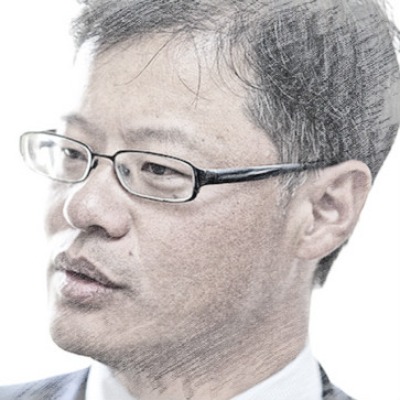
Born in 1968, Jerry Yang is a Taiwanese-American billionaire computer programmer. After co-creating the Yahoo internet navigational guide in 1994, he co-founded the company Yahoo! Inc in 1995 with David Filo while both were studying at Stanford University. Yang did not complete his PhD in electrical engineering to become an entrepreneur “selling internet advertising”.Yang was Yahoo! CEO for almost two years until 2009, rejecting Microsoft’s takeover offer of $47.5bn in 2008. He eventually left the board in 2012 when he resigned due to strategic disagreements such as whether to sell all or part of the company. In 2016, Yahoo! completed the sale of its core operating business to Verizon for $5bn. Yang was also a board member of the Alibaba Group from 2006 to 2012. Yang met Jack Ma in 1997 when Ma was working as a government-employed tour guide. The former English teacher gave him a tour of the Great Wall of China. Ma went on to found Alibaba a few months after meeting Yang.After leaving Yahoo!, Yang founded AME Cloud Ventures to invest in multiple tech startups. As of November 2020, Yang’s net worth was valued at $2.3bn. In 2017, he and his wife pledged $25m to the Asian Art Museum in San Francisco, the largest gift in the museum's history.
With currently over $21bn of AUM, Baring Private Equity Asia (BPEA) was started in Hong Kong in 1997 by Jean Eric Salata, as the regional Asian PE investment arm of UK-based Baring Private Equity Partners. With $300m in its first fund, it focused on riding China’s economic rise spurred by the country’s market liberalization. In 2000, Salata led a management buyout of BPEA and continues to head the firm today as CEO and Founding Partner. BPEA has invested in more than 100 companies, across healthcare, logistics, IT services, media, education, financial services and retail. It is one of the largest independent PE firms in Asia and has eight offices across the continent.With offices in China, India, Japan, Australia, and Singapore, it currently has around 43 portfolio companies, almost all Asia-based, across multiple business segments in tech and non-tech startups, especially in bricks-and-mortar education establishments. It also makes acquisitions, including most recently of US outsourcing services company Virtusa in February 2021.Other recent investments include in the June 2021 $85m Series C round of Portuguese home physiotherapy tech solution SWORD Health, the world’s fastest-growing musculoskeletal solution, and in the November 2020 $198m Series D round of Chinese computer coding for kids edtech Codemao.

With currently over $21bn of AUM, Baring Private Equity Asia (BPEA) was started in Hong Kong in 1997 by Jean Eric Salata, as the regional Asian PE investment arm of UK-based Baring Private Equity Partners. With $300m in its first fund, it focused on riding China’s economic rise spurred by the country’s market liberalization. In 2000, Salata led a management buyout of BPEA and continues to head the firm today as CEO and Founding Partner. BPEA has invested in more than 100 companies, across healthcare, logistics, IT services, media, education, financial services and retail. It is one of the largest independent PE firms in Asia and has eight offices across the continent.With offices in China, India, Japan, Australia, and Singapore, it currently has around 43 portfolio companies, almost all Asia-based, across multiple business segments in tech and non-tech startups, especially in bricks-and-mortar education establishments. It also makes acquisitions, including most recently of US outsourcing services company Virtusa in February 2021.Other recent investments include in the June 2021 $85m Series C round of Portuguese home physiotherapy tech solution SWORD Health, the world’s fastest-growing musculoskeletal solution, and in the November 2020 $198m Series D round of Chinese computer coding for kids edtech Codemao.
Premium customized travel packages for families and friends holidaying together to enjoy privacy, freedom and seamless travel, without the hassle of planning.

Premium customized travel packages for families and friends holidaying together to enjoy privacy, freedom and seamless travel, without the hassle of planning.
Shortlisting only the top 20% of housing stock for its clients, this short-term rentals platform carries out thorough checks; prioritizing safety, cleanliness and quality furnishings.

Shortlisting only the top 20% of housing stock for its clients, this short-term rentals platform carries out thorough checks; prioritizing safety, cleanliness and quality furnishings.

Online agency with offline stores providing screened, trained and experienced helpers; with agents to sort out the hiring and any possible issues. Quick and hassle-free.

Online agency with offline stores providing screened, trained and experienced helpers; with agents to sort out the hiring and any possible issues. Quick and hassle-free.
With universal QR code, Indonesia achieves e-payment harmony
The move to standardize Indonesia's QR code is expected to unify the country's cashless payments system and lift tens of thousands of small merchants into the payments mainstream

CraiditX gives banks and insurers AI tools for assessing consumer credit risk
Used by big lenders like Bank of China and Minsheng Bank, CraiditX's solutions can gauge consumer default risk even if a user has no credit history

QRIS: Will the new QR code standard rewrite Indonesia’s e-payments scene?
Enabling interoperability, the QRIS seeks to level the playing field until now dominated by GoPay and OVO – disruption that could go beyond the e-wallets scene

Gojek acquires Indonesian POS startup Moka, gains greater share of SME fintech market
Deal reportedly worth $120m will add Moka's network of over 30,000 merchants to Gojek's reach

Indonesian state enterprises launch e-wallet LinkAja, competing with Go-Pay and OVO
Even with a wider range of services and extensive state backing, LinkAja faces a tough battle

Alipay opens its platform to speed up digitalization of Chinese service providers amid Covid-19
As Alipay continues to battle WeChat for super-app supremacy, it's created a stronghold in China’s services industry, where 80% of businesses still operate under brick-and-mortar models
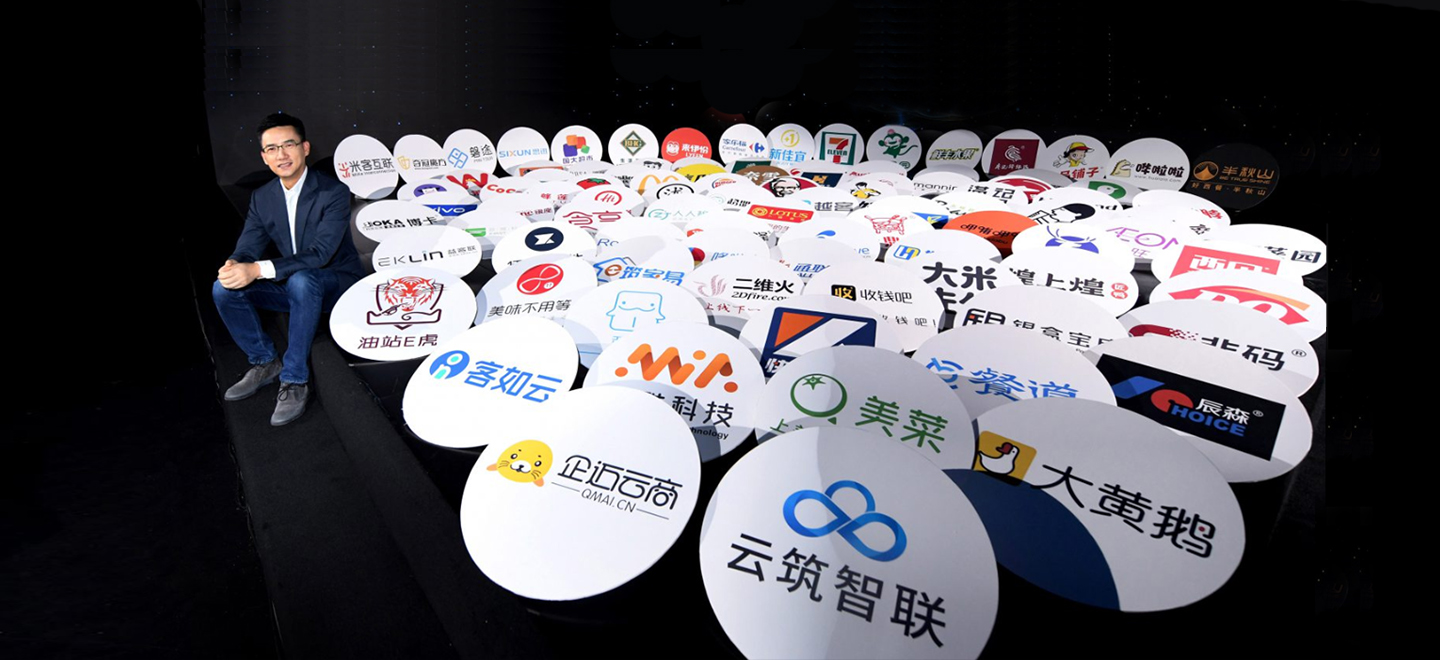
Haoyiku makes it possible to offer genuine products at lower prices
When e-commerce is combined with social media, everybody wins

China reverses ban on street vendors to boost economy, sparking new demand for digital solutions
Alibaba, Tencent, Meituan and other tech giants give roadside vendors digital makeover, so they can compete with fast-food chains like McDonald’s, KFC and Pizza Hut

Analysing and leveraging data: Interview with Datanest co-founders
From credit scoring to demand forecasting, Datanest has built many machine-learning products and looks to raise new funding, expand beyond Indonesia
Day Day Cook: Creating content that sells
She may not be a celebrity chef but Norma Chu, the analyst-turned-cook, is a familiar face in food-obsessed Hong Kong, where she has her recipe website to encourage youths to learn cooking

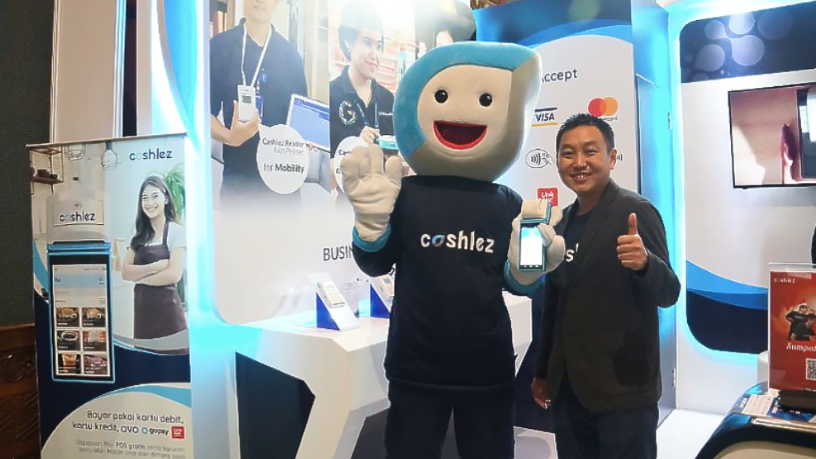
UPDATE: Indonesian mPOS startup Cashlez raises IDR 85bn from IPO in May
Cashlez is the first fintech company to list on the Indonesia Stock Exchange; will spend over 60% of proceeds to acquire payments company in toll road market
Gago Inc: Satellite data agritech startup ramps up growth with financial sector solutions
Founded by former NASA scientists, Gago began as a data solution to improve China’s traditionally low-yielding and inefficient smallholder-based farming sector

In China, e-commerce platforms and brands bet big on live commerce
Retailers embrace shopping via livestreaming, where social media influencers hawk products and get rapid sales

No bank account? In Indonesia, you can still shop online
Indonesian startups are racing to serve the millions of consumers that banks haven’t reached. Here’s a look at some of the leading players, their innovations and how they have redefined the market

Bobobobo: Indonesian luxury at a click
Amid a booming local e-commerce market, this startup carves a niche for itself in upscale trending goods and experiences influenced by Indonesia’s rich traditions

Sorry, we couldn’t find any matches for “China Merchants Bank”.
POPULAR DATABASE