China Minsheng Bank
-
DATABASE (851)
-
ARTICLES (408)
ENISA is a Spanish public company under the jurisdiction of the Ministry of Industry, Energy and Tourism. Since 1982, it has been actively supporting innovative business projects of SMEs in Spain. ENISA co-invests up to 50% of the capital, with the remaining 50% to be provided by other co-investors or founders. The funding ranges from a minimum of €25,000 to a maximum of €300,000. Unlike banks, ENISA offers interest-free finance based on a company's profitability. In this way, it allows startups to adjust their financial burdens according to each company’s natural business life cycle.

ENISA is a Spanish public company under the jurisdiction of the Ministry of Industry, Energy and Tourism. Since 1982, it has been actively supporting innovative business projects of SMEs in Spain. ENISA co-invests up to 50% of the capital, with the remaining 50% to be provided by other co-investors or founders. The funding ranges from a minimum of €25,000 to a maximum of €300,000. Unlike banks, ENISA offers interest-free finance based on a company's profitability. In this way, it allows startups to adjust their financial burdens according to each company’s natural business life cycle.
Mahanusa Capital is a financial services company founded by Daniel Budiman. The firm provides investment banking and brokerage services through its subsidiaries, Mahanusa Securities and Magna Finance. It also manages major property assets in Indonesia, including the Pacific Place mall in Jakarta. Mahanusa Capital has invested in digital signature startup PrivyID and local event discovery app Goers.

Mahanusa Capital is a financial services company founded by Daniel Budiman. The firm provides investment banking and brokerage services through its subsidiaries, Mahanusa Securities and Magna Finance. It also manages major property assets in Indonesia, including the Pacific Place mall in Jakarta. Mahanusa Capital has invested in digital signature startup PrivyID and local event discovery app Goers.
According to INADEM, Mexico's organization of entrepreneurs, DILA Capital is estimated to hold the largest and most valuable VC deal flows in Mexico. Headquartered in Mexico City and founded in 2004, the firm is dedicated to seed and early-stage investments in Latin American markets. Its latest and third fund saw 800 million pesos (US$41.7 million) invested in regional startups.Banking on a diverse and vast network of partners who are mentors and serial startup entrepreneurs, DILA also supports foreign companies in penetrating and establishing their position in the Mexican market. It has managed one exit to date: Petsy, a pet marketplace.

According to INADEM, Mexico's organization of entrepreneurs, DILA Capital is estimated to hold the largest and most valuable VC deal flows in Mexico. Headquartered in Mexico City and founded in 2004, the firm is dedicated to seed and early-stage investments in Latin American markets. Its latest and third fund saw 800 million pesos (US$41.7 million) invested in regional startups.Banking on a diverse and vast network of partners who are mentors and serial startup entrepreneurs, DILA also supports foreign companies in penetrating and establishing their position in the Mexican market. It has managed one exit to date: Petsy, a pet marketplace.
Co-founder of investment and consultancy firm SYSTEMIQ Jeremy Oppenheim invests individually in early-stage cleantech and agritech ventures. He used to be a senior partner at global consultancy McKinsey, where he worked extensively with multilateral development banks, the United Nations and developing nations' governments to set up resource-sustainability projects. From 2013-14, Oppenheim was the program director of the New Climate Economy project, an initiative of the Global Commission on Economy and Climate that identified practical actions and policy options to maximize opportunities associated with climate change. The experience helped propel him into cleantech and agtech investing.

Co-founder of investment and consultancy firm SYSTEMIQ Jeremy Oppenheim invests individually in early-stage cleantech and agritech ventures. He used to be a senior partner at global consultancy McKinsey, where he worked extensively with multilateral development banks, the United Nations and developing nations' governments to set up resource-sustainability projects. From 2013-14, Oppenheim was the program director of the New Climate Economy project, an initiative of the Global Commission on Economy and Climate that identified practical actions and policy options to maximize opportunities associated with climate change. The experience helped propel him into cleantech and agtech investing.
The VC arm of Kalonia, a Barcelona-based management consultancy focused on corporate digital transformation, Kalonia Venture Partners invests in B2B software, AI and fintech startups in the Spanish-speaking world. The VC is currently investing via its KVP III fund of €4.3m, with a target of 10 investments of about €5m on average each, taking equity stakes of 10% onward in co-investment; plus two follow-ons. Founded by Josep Arroyo, Alejandro Olabarría y Enrique Marugán, Kalonia began helping Spanish investors diversify into Silicon Valley and other US startups as early as 2001. Currently its funds come mainly from Barcelona-based family offices. Co-founder Alejandro Olabarría is son of Pedro Olabarría Delclaux, the powerful patriarch heading one of Spain's richest industrialist families today, with interests across industrial farming, banking, real estate, automotive and paper.

The VC arm of Kalonia, a Barcelona-based management consultancy focused on corporate digital transformation, Kalonia Venture Partners invests in B2B software, AI and fintech startups in the Spanish-speaking world. The VC is currently investing via its KVP III fund of €4.3m, with a target of 10 investments of about €5m on average each, taking equity stakes of 10% onward in co-investment; plus two follow-ons. Founded by Josep Arroyo, Alejandro Olabarría y Enrique Marugán, Kalonia began helping Spanish investors diversify into Silicon Valley and other US startups as early as 2001. Currently its funds come mainly from Barcelona-based family offices. Co-founder Alejandro Olabarría is son of Pedro Olabarría Delclaux, the powerful patriarch heading one of Spain's richest industrialist families today, with interests across industrial farming, banking, real estate, automotive and paper.
Everis is a Madrid-based consulting firm that was acquired in 2014 by Japan's NTT Data, the sixth-largest IT services company in the world. With a turnover of €1.17bn, the company offers consultancy services in banking, healthcare, industry, insurance, media, public sector and telecommunications across Europe, in Latin America and the US. The company has established an innovation center, NextGen, focusing on technologies that drive business disruption, such as, Cloud models, Blockchain, Big Data, AI and Robotics.

Everis is a Madrid-based consulting firm that was acquired in 2014 by Japan's NTT Data, the sixth-largest IT services company in the world. With a turnover of €1.17bn, the company offers consultancy services in banking, healthcare, industry, insurance, media, public sector and telecommunications across Europe, in Latin America and the US. The company has established an innovation center, NextGen, focusing on technologies that drive business disruption, such as, Cloud models, Blockchain, Big Data, AI and Robotics.
Blanca Hernández Rodriguez holds a Master's Degree in Finance from CUNEF, a private Spanish university specializing in banking and finance that is based in Madrid. She has over 20 years’ experience in value investing. Her career started in the Arcalia group. She later established and managed a family office fund.Today, Hernández Rodriguez is the CEO of Magallanes Value Investors SA SGIIC, a Spanish asset management company offering portfolio management, equity, financial planning and advisory services.

Blanca Hernández Rodriguez holds a Master's Degree in Finance from CUNEF, a private Spanish university specializing in banking and finance that is based in Madrid. She has over 20 years’ experience in value investing. Her career started in the Arcalia group. She later established and managed a family office fund.Today, Hernández Rodriguez is the CEO of Magallanes Value Investors SA SGIIC, a Spanish asset management company offering portfolio management, equity, financial planning and advisory services.
Indexa Capital is Spain's first automated investment manager offering index funds. Its operations are based on passive investment management. The firm's objective is to offer diversified and transparent investments with commissions that are 80% lower than those charged by the financial sector. This is achieved through index funds investments and a machine that automatically assigns clients a portfolio from the available options, based on criteria such as the client's age, income and risk aversion, promising returns that are 3% higher than the average returns offered by banks and funds.The company was founded in 2015 by Unai Ansejo Barra, François Derbaix and Ramón Blanco, all of whom have extensive experience in the digital and investments ecosystems.

Indexa Capital is Spain's first automated investment manager offering index funds. Its operations are based on passive investment management. The firm's objective is to offer diversified and transparent investments with commissions that are 80% lower than those charged by the financial sector. This is achieved through index funds investments and a machine that automatically assigns clients a portfolio from the available options, based on criteria such as the client's age, income and risk aversion, promising returns that are 3% higher than the average returns offered by banks and funds.The company was founded in 2015 by Unai Ansejo Barra, François Derbaix and Ramón Blanco, all of whom have extensive experience in the digital and investments ecosystems.
Tenaya Capital was originally founded in 1995 as Lehman Brothers Venture Partners. In 2009, following Lehman's bankruptcy, Tenaya was spun off into an independent company, with HarbourVest Partners acquired their existing investments. Since then, Tenaya has invested in some major tech companies, including event ticketing company Eventbrite, early fashion e-commerce firm Zappos, and Uber competitor Lyft. They have so far made two investments into Indonesian companies: agritech e-commerce platform TaniHub, and “Uber-for-logistics” company Kargo Technologies. Tenaya typically invests in Series B and Series C rounds, although they have gone into Series A and later rounds as well.

Tenaya Capital was originally founded in 1995 as Lehman Brothers Venture Partners. In 2009, following Lehman's bankruptcy, Tenaya was spun off into an independent company, with HarbourVest Partners acquired their existing investments. Since then, Tenaya has invested in some major tech companies, including event ticketing company Eventbrite, early fashion e-commerce firm Zappos, and Uber competitor Lyft. They have so far made two investments into Indonesian companies: agritech e-commerce platform TaniHub, and “Uber-for-logistics” company Kargo Technologies. Tenaya typically invests in Series B and Series C rounds, although they have gone into Series A and later rounds as well.
Italy's first impact investment fund is focused mainly on assisting Italian startups. Its investment size ranges from €200,000 to €6m. Oltre Venture was founded in 2006 as Oltre Venture I by Luciano Balbo and Lorenzo Allevi, both pioneers in Europe's impact investing ecosystem and each with extensive experience in investment banking, corporate finance and VC firms.In 2016, the company launched a second investment vehicle (Oltre Venture II) which currently has a portfolio of more than 22 startups.

Italy's first impact investment fund is focused mainly on assisting Italian startups. Its investment size ranges from €200,000 to €6m. Oltre Venture was founded in 2006 as Oltre Venture I by Luciano Balbo and Lorenzo Allevi, both pioneers in Europe's impact investing ecosystem and each with extensive experience in investment banking, corporate finance and VC firms.In 2016, the company launched a second investment vehicle (Oltre Venture II) which currently has a portfolio of more than 22 startups.
Laura González- Estéfani is best known as the co-founder of Venture City. Established in 2017, the tech accelerator has offices in Miami in the US and Madrid in Spain. The director of one of Spain’s largest banks CaixaBank is also a board member of the European Commission’s Innovation Council. She has also worked for Facebook as a country manager for Spain and Portugal.González- Estéfani has also been a prolific private investor and business angel since 2016. She invests across ecosystems and market verticals, including success stories like Cabify and Spotahome. In 2020, she participated in the seed round of Spanish femtech WOOM.

Laura González- Estéfani is best known as the co-founder of Venture City. Established in 2017, the tech accelerator has offices in Miami in the US and Madrid in Spain. The director of one of Spain’s largest banks CaixaBank is also a board member of the European Commission’s Innovation Council. She has also worked for Facebook as a country manager for Spain and Portugal.González- Estéfani has also been a prolific private investor and business angel since 2016. She invests across ecosystems and market verticals, including success stories like Cabify and Spotahome. In 2020, she participated in the seed round of Spanish femtech WOOM.
Founded in October 1995, CITIC Securities is China's first securities company listed in Shanghai and the Hong Kong. CITIC is its major shareholder, with 15.47% stake in it. The company provides services from securities trading, brokerage, asset management to investment banking. In 2013, CITIC Securities acquired CLSA to extend its international businesses. With branches in 13 countries and regions, it now has over 40,000 business clients and more than 10.3m individual customers home and abroad.

Founded in October 1995, CITIC Securities is China's first securities company listed in Shanghai and the Hong Kong. CITIC is its major shareholder, with 15.47% stake in it. The company provides services from securities trading, brokerage, asset management to investment banking. In 2013, CITIC Securities acquired CLSA to extend its international businesses. With branches in 13 countries and regions, it now has over 40,000 business clients and more than 10.3m individual customers home and abroad.
Fondazione Marche, founded in 2009, is a private, non-profit business promotion organization that operates exclusively in the Italian territory of the Marche Region in central-eastern Italy. It is based in the regional capital Ancona. The organization was established by local business leaders in association with banks Banca Popolare di Ancona and BPU, who funded the company with €15m. It invests across sectors and technologies, with both tech and non-tech startups supported. Its most recent investment to date was in Italo-Spanish insect protein flour manufacturer Nutrinsect, with a €350,000 pre-seed investment in May 2020.

Fondazione Marche, founded in 2009, is a private, non-profit business promotion organization that operates exclusively in the Italian territory of the Marche Region in central-eastern Italy. It is based in the regional capital Ancona. The organization was established by local business leaders in association with banks Banca Popolare di Ancona and BPU, who funded the company with €15m. It invests across sectors and technologies, with both tech and non-tech startups supported. Its most recent investment to date was in Italo-Spanish insect protein flour manufacturer Nutrinsect, with a €350,000 pre-seed investment in May 2020.
Goldman Sachs is one of the biggest investment banking and financial services group in the world. The firm went public in 1999 under the ticker NYSE:GS. To date, Goldman Sachs has raised seven funds, their latest in May 2019 for a total of $4.4bn. Based in New York, the private banking group has made 788 investments with 256 exits. Investments include tech unicorns such as Spotify, Square, Zipline, Xiaomi and the Alibaba Group.Its 2019 annual report showed that Goldman Sachs generated over $36.55 bn in net revenues, with 10% ROE and 10.6% ROTE. As of mid-July 2020, the firm has a market capitalization of $74.33 bn. Goldman Sachs has offices in over 30 countries with major operations in four sectors: investment banking, global markets, asset management and consumer & wealth management.

Goldman Sachs is one of the biggest investment banking and financial services group in the world. The firm went public in 1999 under the ticker NYSE:GS. To date, Goldman Sachs has raised seven funds, their latest in May 2019 for a total of $4.4bn. Based in New York, the private banking group has made 788 investments with 256 exits. Investments include tech unicorns such as Spotify, Square, Zipline, Xiaomi and the Alibaba Group.Its 2019 annual report showed that Goldman Sachs generated over $36.55 bn in net revenues, with 10% ROE and 10.6% ROTE. As of mid-July 2020, the firm has a market capitalization of $74.33 bn. Goldman Sachs has offices in over 30 countries with major operations in four sectors: investment banking, global markets, asset management and consumer & wealth management.
FSI is an independent private equity firm based in Milan. It currently manages the mid-market Fund FSI I. Before its launch in 2017, the FSI investment team had already made PE investments in the Italian mid-market for several years at Fondo Strategico Italiano.The FSI investors include some of Italy’s largest institutional investors, primary sovereign funds from the Middle East, Far East and Central Asia. The firm also has a network of asset managers, insurance companies, European banks, family offices and foundations.
FSI is an independent private equity firm based in Milan. It currently manages the mid-market Fund FSI I. Before its launch in 2017, the FSI investment team had already made PE investments in the Italian mid-market for several years at Fondo Strategico Italiano.The FSI investors include some of Italy’s largest institutional investors, primary sovereign funds from the Middle East, Far East and Central Asia. The firm also has a network of asset managers, insurance companies, European banks, family offices and foundations.
CraiditX gives banks and insurers AI tools for assessing consumer credit risk
Used by big lenders like Bank of China and Minsheng Bank, CraiditX's solutions can gauge consumer default risk even if a user has no credit history

No bank account? In Indonesia, you can still shop online
Indonesian startups are racing to serve the millions of consumers that banks haven’t reached. Here’s a look at some of the leading players, their innovations and how they have redefined the market

This startup aims to be the DocuSign of China
Having captured a third of a largely untapped domestic e-contracting market, Shangshangqian looks to gain a greater foothold at home and abroad

With universal QR code, Indonesia achieves e-payment harmony
The move to standardize Indonesia's QR code is expected to unify the country's cashless payments system and lift tens of thousands of small merchants into the payments mainstream

More than desire: When resale sneakers become objects of speculation
Sneaker resale platforms like Poizon and Nice feel the heat as China regulators panned such trading for getting out of control

Exclusive: Patamar Capital to raise US$150 million, eyes Series B investments
The impact investment VC recently scored an exit at Indonesian online-to-offline group buying startup Mapan, when it was bought over by Go-Jek

Covid-19: A closer look at how China's businesses and consumer behavior have changed
The lockdown in China has reshaped how people work and live. Some of the changes may be short-term, but others probably have become a part of life

China's Yuanfudao now the world's most valuable edtech with $2.2bn new funding
Yuanfudao’s second tranche of its Series G funding follows the $1bn it raised in March, bringing its valuation to $15.5bn

Baifendian: Taking Chinese big data tech overseas
With the online data of more than 70% of China’s internet users in its reach, Beijing-based big data firm Baifendian is ready for its next leap – expand overseas
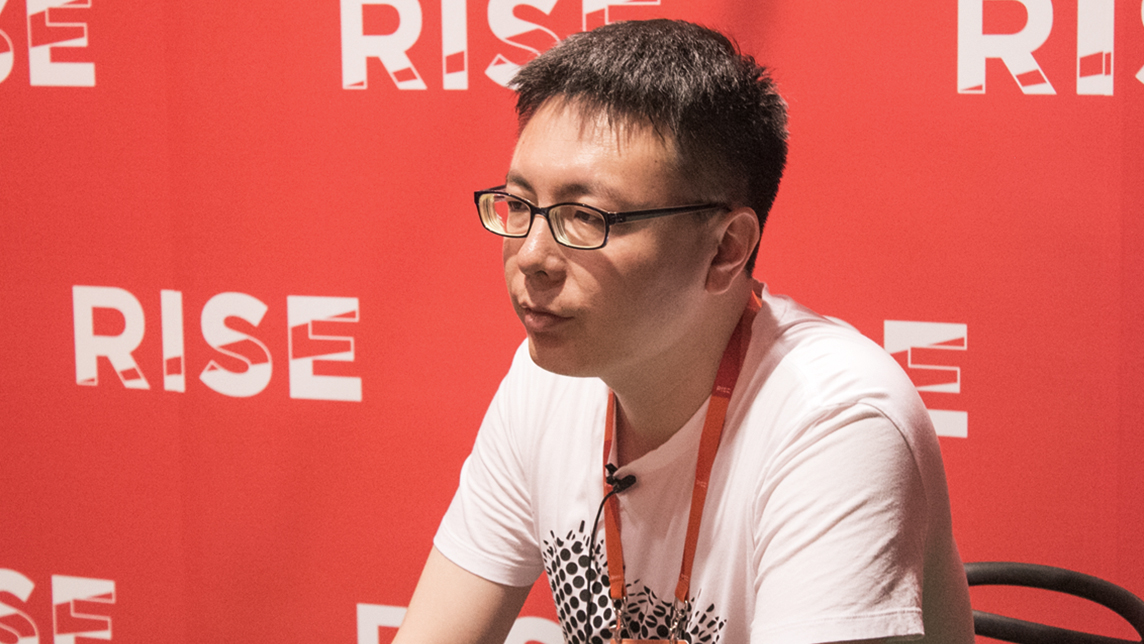
Roadstar.ai: A promising autonomous driving startup wrecked by infighting
No side benefits from the disputes, whether it is the founding team, investors or the employees

Quant Group makes personal loans safer, easier in China
Using big data and AI, Chinese fintech startup Quant Group simplifies and accelerates loan processing, and assures monetary security for financial institutions

Fumi Technology: Getting ahead of human wealth managers with its Webull robo-advisors
Fumi's AI-based fintech platform offers real-time quotes and free trading to over 10m punters in 100 countries

China a “positive environment” for uptake of cultured meat, researcher tells Future Food Asia
But for interested cultured meat companies, China-based Chloe Dempsey suggests it would be better to wait, observe and learn more about the market before trying to tap its massive potential

MioTech: Early mover in China ESG data and analytics for investing, corporate reporting
Hong Kong-based fintech uses AI technologies to monitor ESG data and risks in real time, turn unstructured data into reliable insights

Intelligent Learning: math app helps students improve their exam score in weeks
Intelligent Learning prepares K7–11 math students for the national senior high school entrance exam, or "zhongkao," by trawling through past questions and predicting what might be tested

Sorry, we couldn’t find any matches for “China Minsheng Bank”.
POPULAR DATABASE