Sequoia Capital China
-
DATABASE (1285)
-
ARTICLES (534)
Co-founder and CTO of Koala Reading
Ren earned his doctorate in Data Mining from the School of Electronics Engineering and Computer Science at Peking University. Prior to co-founding Koala Reading, he worked at IBM China, where he worked on AI-based healthcare solutions provider Watson for Life Service; Sohu's Big Data Center, where he did R&D on its advertising recommendation system; and Microsoft Research Asia, where he helped develop the Chinese handwriting input model for Windows 10.
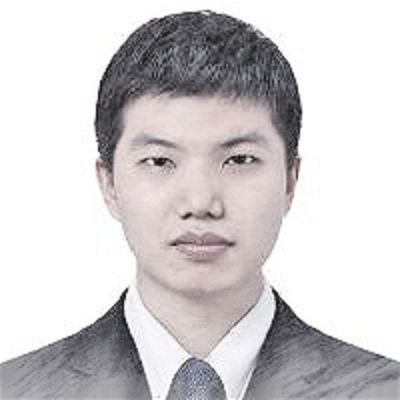
Ren earned his doctorate in Data Mining from the School of Electronics Engineering and Computer Science at Peking University. Prior to co-founding Koala Reading, he worked at IBM China, where he worked on AI-based healthcare solutions provider Watson for Life Service; Sohu's Big Data Center, where he did R&D on its advertising recommendation system; and Microsoft Research Asia, where he helped develop the Chinese handwriting input model for Windows 10.
Co-founder and CEO of Kargo Technologies
Tiger Fang is the CEO of logistics company Kargo Technologies. He was formerly the Country General Manager for Uber Indonesia. Prior to joining Uber in 2013 and leading its expansion into China, Fang was Assistant Vice President at Bank of America-Merrill Lynch, where he had been an investment analyst. He had earlier moved to Asia in 2012 and had a brief stint at Rocket Internet's Lazada. Fang holds a bachelor's in Business Administration from the University of Hawaii and was enrolled in Harvard Business School's Strategy & Leadership Executive Education program.

Tiger Fang is the CEO of logistics company Kargo Technologies. He was formerly the Country General Manager for Uber Indonesia. Prior to joining Uber in 2013 and leading its expansion into China, Fang was Assistant Vice President at Bank of America-Merrill Lynch, where he had been an investment analyst. He had earlier moved to Asia in 2012 and had a brief stint at Rocket Internet's Lazada. Fang holds a bachelor's in Business Administration from the University of Hawaii and was enrolled in Harvard Business School's Strategy & Leadership Executive Education program.
CEO of Haishen Tech
A Tsinghua University graduate, Dai Jianbin holds a doctorate degree in Deep Learning from Georgia Institute of Technology. He has worked in the R&D departments of ML technology in companies like Yahoo! and Oracle. He has also collaborated with Professor Andrew Ng while working at Baidu's R&D office in the US. In 2016, Dai returned to China and founded Haishen Technology.

A Tsinghua University graduate, Dai Jianbin holds a doctorate degree in Deep Learning from Georgia Institute of Technology. He has worked in the R&D departments of ML technology in companies like Yahoo! and Oracle. He has also collaborated with Professor Andrew Ng while working at Baidu's R&D office in the US. In 2016, Dai returned to China and founded Haishen Technology.
CEO and co-founder of Yuanfudao
Graduating with a bachelor’s degree in journalism at the Renmin University of China, Li Yong has worked for various publications like Workers Daily, Finance and Economics Magazine, Southern Weekly and Global Entrepreneur.In April 2012, he resigned as the president of portal business at news portal NetEase to establish an online tutoring platform Fenbi, the predecessor of Yuanfudao. He is currently the CEO at Yuanfudao.Before starting his own business, Li had invested in Tinder-style dating app Momo and business media Huxiu.
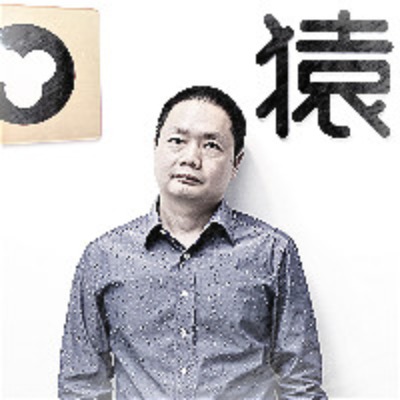
Graduating with a bachelor’s degree in journalism at the Renmin University of China, Li Yong has worked for various publications like Workers Daily, Finance and Economics Magazine, Southern Weekly and Global Entrepreneur.In April 2012, he resigned as the president of portal business at news portal NetEase to establish an online tutoring platform Fenbi, the predecessor of Yuanfudao. He is currently the CEO at Yuanfudao.Before starting his own business, Li had invested in Tinder-style dating app Momo and business media Huxiu.
CTO and co-founder of Intelligent Learning
From 1997 to 2001, Li Guibin finished his undergraduate studies at the Harbin Institute of Technology.In November 2004, he went to work at Alibaba as R&D manager on wireless technology for its sub-brands including Yahoo China, Koubei.com, Taobao.com and Fliggy.com.He left Alibaba in July 2014 and co-founded neighborhood social app Youlin with ex-Alibaba colleague Yang Renbin. They went on to set up edtech platform Intelligent Learning in January 2018, with Li as CTO and Yang as CEO.

From 1997 to 2001, Li Guibin finished his undergraduate studies at the Harbin Institute of Technology.In November 2004, he went to work at Alibaba as R&D manager on wireless technology for its sub-brands including Yahoo China, Koubei.com, Taobao.com and Fliggy.com.He left Alibaba in July 2014 and co-founded neighborhood social app Youlin with ex-Alibaba colleague Yang Renbin. They went on to set up edtech platform Intelligent Learning in January 2018, with Li as CTO and Yang as CEO.
Founded in 2010, Jumei is one of the world’s leading online cosmetics shopping platforms. With over 30 million registered users, Jumei’s monthly sales have exceeded RMB 600 million and it is now one of the fastest growing e-commerce companies in China.


Founded in 2010, Jumei is one of the world’s leading online cosmetics shopping platforms. With over 30 million registered users, Jumei’s monthly sales have exceeded RMB 600 million and it is now one of the fastest growing e-commerce companies in China.
Huazhu Hotel Group (NASDAQ: HTHT) is China’s first multi-brand hotel chain management group. It covers 360+ cities in China with 3,000+ hotels and 60,000+ staff. Huazhu is now one of the top 10 hotel groups on HOTEL’s annual hotel ranking.

Huazhu Hotel Group (NASDAQ: HTHT) is China’s first multi-brand hotel chain management group. It covers 360+ cities in China with 3,000+ hotels and 60,000+ staff. Huazhu is now one of the top 10 hotel groups on HOTEL’s annual hotel ranking.
Sinolink Securities, one of China’s first securities exchanges, was founded in 1990. Since 2013, its securities have been graded AA by the China Securities Regulatory Commission. Sinolink Securities’ main focuses are securities, futures exchange and funds, but it also has an investment bank department.

Sinolink Securities, one of China’s first securities exchanges, was founded in 1990. Since 2013, its securities have been graded AA by the China Securities Regulatory Commission. Sinolink Securities’ main focuses are securities, futures exchange and funds, but it also has an investment bank department.
Founder of PreAngel Fund, an early-stage investment firm with over RMB 300 million under management. Since 2011, PreAngel has invested in 260+ startups from China and the US. Leo Wang has over 14 years of experience in mobile, telecommunication and internet industries.

Founder of PreAngel Fund, an early-stage investment firm with over RMB 300 million under management. Since 2011, PreAngel has invested in 260+ startups from China and the US. Leo Wang has over 14 years of experience in mobile, telecommunication and internet industries.
Beijing Shengtong Zhixing Education Technology Co., Ltd.
Founded in 2017, Beijing Shengtong Zhixing Education Technology Co., Ltd., is a wholly-owned subsidiary of Beijing Shengtong Printing Co., Ltd. It has invested in several STEM education startups in China. In 2016, it acquired Roborobo, a robot coding training company.

Founded in 2017, Beijing Shengtong Zhixing Education Technology Co., Ltd., is a wholly-owned subsidiary of Beijing Shengtong Printing Co., Ltd. It has invested in several STEM education startups in China. In 2016, it acquired Roborobo, a robot coding training company.
Cathay Innovation invests in small to medium-sized companies with the potential to rapidly grow internationally. By 2016, Cathay Innovation had conducted 59 investments, with a total investment of €514 million. It has offices in France, China, the US and Germany, with €1.2 billion under management.

Cathay Innovation invests in small to medium-sized companies with the potential to rapidly grow internationally. By 2016, Cathay Innovation had conducted 59 investments, with a total investment of €514 million. It has offices in France, China, the US and Germany, with €1.2 billion under management.
Wang Gang is an angel investor and a former senior director at Alibaba. His investments are concentrated in the internet, mobile internet and e-commerce sectors, in over 70 companies to date in both China and the US; including Didi, Uucars (formerly Uuzuche), ofo and Huajuan.

Wang Gang is an angel investor and a former senior director at Alibaba. His investments are concentrated in the internet, mobile internet and e-commerce sectors, in over 70 companies to date in both China and the US; including Didi, Uucars (formerly Uuzuche), ofo and Huajuan.
Founded in 1990, Macrolink Group is now a large-scale modernized group with businesses in real estate, mining, petroleum, chemical, investment, finance and other industries. It has 90+ wholly owned subsidiaries, holding subsidiaries and sharing subsidiaries, operating in 20+ provinces in China and 40+ countries overseas.
Founded in 1990, Macrolink Group is now a large-scale modernized group with businesses in real estate, mining, petroleum, chemical, investment, finance and other industries. It has 90+ wholly owned subsidiaries, holding subsidiaries and sharing subsidiaries, operating in 20+ provinces in China and 40+ countries overseas.
Co-founder and CEO of Tiaoguoshi
The author of the earliest book on the online-to-offline (O2O) business model in China “Theory of O2O Evolution”, and an iResearch columnist, Yu Jinhua was an independent scholar before joining fresh fruit business Tiaoguoshi in May 2014, and transforming it into a roaring O2O success. He also once served as general manager, independent brands, at beauty e-retailer Lefeng.com, and vice-president of D&S Media Group, as well as created PR firm REBRAND. Aka Banzhuandayu, his online moniker, Yu was born in the 1970s and is married to fellow Tiaoguoshi co-founder Xiao Hongtao.

The author of the earliest book on the online-to-offline (O2O) business model in China “Theory of O2O Evolution”, and an iResearch columnist, Yu Jinhua was an independent scholar before joining fresh fruit business Tiaoguoshi in May 2014, and transforming it into a roaring O2O success. He also once served as general manager, independent brands, at beauty e-retailer Lefeng.com, and vice-president of D&S Media Group, as well as created PR firm REBRAND. Aka Banzhuandayu, his online moniker, Yu was born in the 1970s and is married to fellow Tiaoguoshi co-founder Xiao Hongtao.
Co-founder and CFO of Farm Friend
With a bachelor’s degree in Management from Peking University’s Guanghua School of Management and an MBA degree of Stanford University, Hou Xiaoxiao began her investment career as an investment banker at Goldman Sachs. In 2015, when researching China’s macro economy, she spotted the huge market potential of the country’s agriculture sector, given changes in China's population policy (the one-child policy was soon ended).In 2016, she left Goldman Sachs to found Farm Friend with Yu Yang and Meng Fanqi.Hou was named to the 2017 Forbes China 30 elites under 30 list.

With a bachelor’s degree in Management from Peking University’s Guanghua School of Management and an MBA degree of Stanford University, Hou Xiaoxiao began her investment career as an investment banker at Goldman Sachs. In 2015, when researching China’s macro economy, she spotted the huge market potential of the country’s agriculture sector, given changes in China's population policy (the one-child policy was soon ended).In 2016, she left Goldman Sachs to found Farm Friend with Yu Yang and Meng Fanqi.Hou was named to the 2017 Forbes China 30 elites under 30 list.
Sequoia Capital China holds steady with investments in healthcare, biotech and green economy
China’s most active investor increases bets on sectors beyond the consumer internet and edtech recently hurt by regulatory clampdown

How Sequoia Capital China is helping its portfolio startups get through the Covid-19 crisis
The renowned investor is also making big bets on the opportunities that lie head

Neil Shen: The super unicorn hunter
His bet on ByteDance, the startup that gave the world TikTok, helped Neil Shen top this year's Forbes Midas List. But for Shen, even in that deal he once made the wrong call

Sequoia China Seed Fund: Growing an era of deep-tech startups
Managing Partner Neil Shen wants to help deep-tech and enterprise tech startups get investments more easily, across quantum computing, semiconductors, synthetic biology and more

Chinese startups feel the chill of capital winter as VC activities slow
The goods news is investors still have plenty of money. They just become more cautious when making investment decisions

Bob Xu, one of China's first and most successful angel investors
Known for his whimsical investment style, Xu has caught a number of unicorns

New sectors, strategies come into play as investors respond to China's Big Tech curbs
Amid the crackdown on China’s tech giants, some investors are sussing out less risky sectors, while heavyweights like BlackRock and Fidelity stay in for the long haul

Will this one-year-old startup revolutionize traditional industries?
Targeting retail and tourism first, Aibee aims to help traditional businesses keep up with their online counterparts using its all-in-one AI solutions

Covid-19: A closer look at how China's businesses and consumer behavior have changed
The lockdown in China has reshaped how people work and live. Some of the changes may be short-term, but others probably have become a part of life

Mobike founder Hu Weiwei: A crazy idea that touched millions of lives
In just three years, Hu Weiwei has changed the way over 150 million people travel in the city with her company’s dockless bikes

Mass production and delivery delays – common challenges facing China EV startups
As Tesla postponed delivery yet again, its Chinese rivals are scrambling too

Kuaikan Comic: Discover the potential of Chinese comics
This startup wants to prove Japan isn’t the only comic game in town

4D ShoeTech: Digital design platform helps shoemakers to slash production time by over 60%
Armed with new funding, 4D ShoeTech is scaling its Ideation platform to offer digital modelling services to cover other popular products like suitcases

Yimutian: China agriculture e-commerce's comeback kid
As the world’s most populous country faces potential food supply shortages, Yimutian, China’s No. 1 agro trading marketplace, is seeing more opportunities

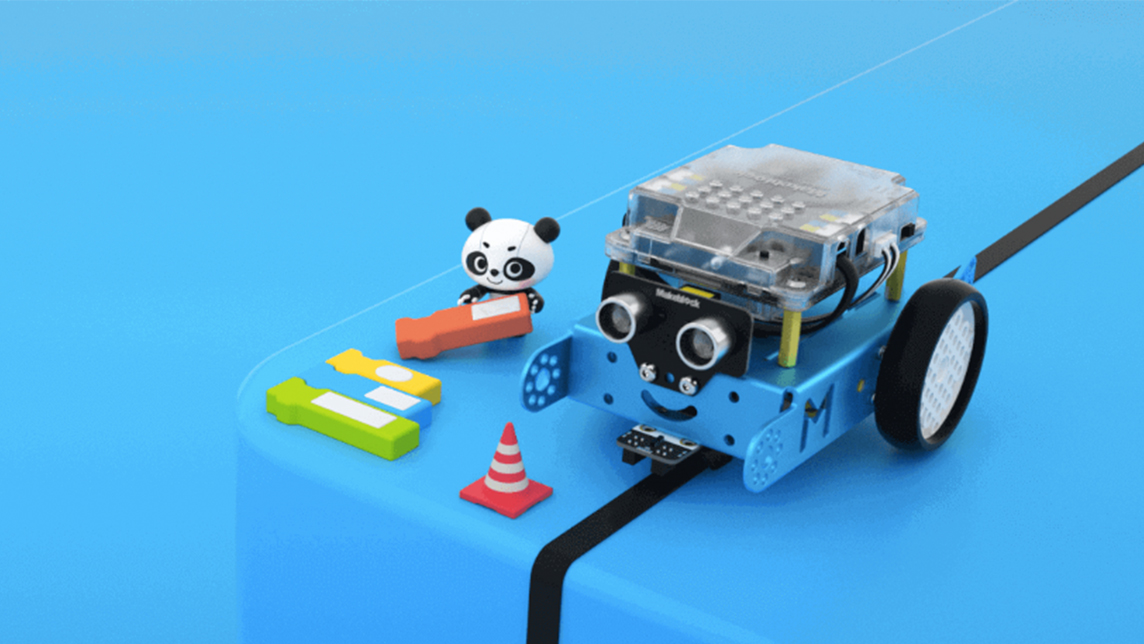
Chinese DIY robotics startup Makeblock enters the classroom
Present in more than 140 countries, this ambitious startup is taking global STEM education by storm
Sorry, we couldn’t find any matches for “Sequoia Capital China”.
POPULAR DATABASE