Bank of China
-
DATABASE (2952)
-
ARTICLES (812)
CEO and co-founder of Kobo360
In 2011, young Obi Ozor used his savings and loans from his family and friends to set up Bezmo Global to import second-hand trucks from the US and sell them in Nigeria. Despite suffering from kidney failure issues, he managed to run the business for four years to earn money to pay for his medical treatments. He fully recovered and moved to Michigan to continue his education.At the University of Michigan, Ozor met Ife Oyedele II and the two friends started an e-commerce venture to sell diapers and baby soap from the US to customers in Nigeria. Ozor moved to the University of Pennsylvania and graduated with a BA International Relations and Finance at Wharton School of Business. In 2014, he gained some work experience in investment banking at JP Morgan in New York.In 2015, Ozor returned to Nigeria and joined Uber as operations coordinator. In 2016, the serial entrepreneur and his friend Oyedele co-founded Uber-style logistics platform Kobo360 in Lagos.

In 2011, young Obi Ozor used his savings and loans from his family and friends to set up Bezmo Global to import second-hand trucks from the US and sell them in Nigeria. Despite suffering from kidney failure issues, he managed to run the business for four years to earn money to pay for his medical treatments. He fully recovered and moved to Michigan to continue his education.At the University of Michigan, Ozor met Ife Oyedele II and the two friends started an e-commerce venture to sell diapers and baby soap from the US to customers in Nigeria. Ozor moved to the University of Pennsylvania and graduated with a BA International Relations and Finance at Wharton School of Business. In 2014, he gained some work experience in investment banking at JP Morgan in New York.In 2015, Ozor returned to Nigeria and joined Uber as operations coordinator. In 2016, the serial entrepreneur and his friend Oyedele co-founded Uber-style logistics platform Kobo360 in Lagos.
CEO and founder of Les Noveaux Affineurs
Nour Akbaraly completed a master’s in engineering at Centrale Lille and also a master’s in applied mathematics at Lille University in 2010. In 2011, Akbaraly joined industrial manufacturing consultancy firm Avencore as a consultant in Paris.The avid photographer and F&B enthusiast also went to various tea-tasting classes at a tea specialist college until 2015. Passionate about gastronomy, he began exploring alt-protein alternatives to address the environmental and ethical challenges of food supply chains.In 2016, he went on an engineering training course for agronomy and agri-food at AgroSup Dijon, the National Institute of Agronomic, Food and Environmental Sciences.A year later, he founded Les Noveaux Affineurs, a startup specializing in plant-based alternatives to cheese. His ambition is to create a new range of French gastronomic vegan cheese products for consumers in France and overseas.Since 2010, Akbaraly is also a volunteer at the Action Contre la Faim, a Paris-based international NGO founded in 1979. The “Action Against Hunger” projects include running awareness campaigns on food security issues in colleges and schools in France and other countries like India and Sudan.

Nour Akbaraly completed a master’s in engineering at Centrale Lille and also a master’s in applied mathematics at Lille University in 2010. In 2011, Akbaraly joined industrial manufacturing consultancy firm Avencore as a consultant in Paris.The avid photographer and F&B enthusiast also went to various tea-tasting classes at a tea specialist college until 2015. Passionate about gastronomy, he began exploring alt-protein alternatives to address the environmental and ethical challenges of food supply chains.In 2016, he went on an engineering training course for agronomy and agri-food at AgroSup Dijon, the National Institute of Agronomic, Food and Environmental Sciences.A year later, he founded Les Noveaux Affineurs, a startup specializing in plant-based alternatives to cheese. His ambition is to create a new range of French gastronomic vegan cheese products for consumers in France and overseas.Since 2010, Akbaraly is also a volunteer at the Action Contre la Faim, a Paris-based international NGO founded in 1979. The “Action Against Hunger” projects include running awareness campaigns on food security issues in colleges and schools in France and other countries like India and Sudan.
CEO and co-founder of The Not Company (NotCo)
Matías Muchnick graduated among the top 10% in business administration from the University of Chile in 2011 and went on to complete a master’s in Finance in 2012. He gained some work experience in Santiago as an analyst at LarrainVial in 2010 and spent the summer working at JP Morgan in Hong Kong after his graduation in 2011.In 2012, he became an entrepreneur and founded the wellness app Chooz, a project sponsored by the Chilean government. In 2013, he co-founded Eggless, the first food company in Chile to offer vegan mayonnaise in Chilean supermarkets like Walmart and Jumbo. He exited the business in 2015 and, in the same year, joined an entrepreneurship bootcamp at the University of California, Berkley, where he approached the biochemistry department to learn more about data and science. He also completed executive programs at Harvard Business School in 2015 and at the Stanford University in 2018.In November 2015, he co-founded the Chilean foodtech Not Company (NotCo) with astrophysicist Karim Pichara, who he met in Harvard, and Pablo Zamora. Based in New York, Muchnick is the CEO of NotCo, which combines AI with food science to create plant-based products that mimic animal-based food like milk and burgers.

Matías Muchnick graduated among the top 10% in business administration from the University of Chile in 2011 and went on to complete a master’s in Finance in 2012. He gained some work experience in Santiago as an analyst at LarrainVial in 2010 and spent the summer working at JP Morgan in Hong Kong after his graduation in 2011.In 2012, he became an entrepreneur and founded the wellness app Chooz, a project sponsored by the Chilean government. In 2013, he co-founded Eggless, the first food company in Chile to offer vegan mayonnaise in Chilean supermarkets like Walmart and Jumbo. He exited the business in 2015 and, in the same year, joined an entrepreneurship bootcamp at the University of California, Berkley, where he approached the biochemistry department to learn more about data and science. He also completed executive programs at Harvard Business School in 2015 and at the Stanford University in 2018.In November 2015, he co-founded the Chilean foodtech Not Company (NotCo) with astrophysicist Karim Pichara, who he met in Harvard, and Pablo Zamora. Based in New York, Muchnick is the CEO of NotCo, which combines AI with food science to create plant-based products that mimic animal-based food like milk and burgers.
Senior Scientific Advisor and co-founder of The Not Company (NotCo)
Pablo Zamora is a biotechnologist from the University of Santiago, where he worked as a professor and research scientist until 2008. In 2009, he started his postdoctoral research on Mexico’s maize genetics at UC Davis Life Science Innovation Center. He worked there as a senior scientist and associate until 2014. In 2015, he was appointed the center’s Chief Science Officer based in Chile, a position he was in till January 2018.From 2013–2015, he also worked on various plant and microbe genomics projects as a senior scientist in Mars Advanced Research Institute. He was also an editor from 2012–2017 at the Journal of Technology Management & Innovation and worked at the non-profit PIPRA from 2010–2018 as international alliance manager in Sacramento, University of California.In 2015, he co-founded The Not Company (NotCo) based in Santiago. He was appointed CSO in February 2018, a role he led until March 2020, when he left the company to focus on a new project, AptaBuilder, a $60m program that promotes R&D for Chilean technology-based ventures. Zamora still consults as NotCo’s senior scientific advisor.
Pablo Zamora is a biotechnologist from the University of Santiago, where he worked as a professor and research scientist until 2008. In 2009, he started his postdoctoral research on Mexico’s maize genetics at UC Davis Life Science Innovation Center. He worked there as a senior scientist and associate until 2014. In 2015, he was appointed the center’s Chief Science Officer based in Chile, a position he was in till January 2018.From 2013–2015, he also worked on various plant and microbe genomics projects as a senior scientist in Mars Advanced Research Institute. He was also an editor from 2012–2017 at the Journal of Technology Management & Innovation and worked at the non-profit PIPRA from 2010–2018 as international alliance manager in Sacramento, University of California.In 2015, he co-founded The Not Company (NotCo) based in Santiago. He was appointed CSO in February 2018, a role he led until March 2020, when he left the company to focus on a new project, AptaBuilder, a $60m program that promotes R&D for Chilean technology-based ventures. Zamora still consults as NotCo’s senior scientific advisor.
CEO and co-founder of Xendit
Moses Lo comes from an entrepreneurial family, his father acquired a failing business in Australia and turned it into a successful company. The family business inspired Lo to start his own fashion business in Australia after graduating in finance and commerce at the University of New South Wales in 2010.Lo initially gained work experience as an analyst in 2008 as part of his undergraduate finance and commerce programs in Australia. In 2011, he became an associate at the Boston Consulting Group in Australia. After two years, he was promoted to senior associate but left BCG in 2013 to focus on his menswear ventures until 2014.Lo decided to get first-hand tech startup experience in the Silicon Valley, working at Amazon while completing an MBA program at the University of California, Berkeley. In 2015, he decided to established a P2P payments platform Xendit in Indonesia. The platform has since pivoted into a payment gateway service and became a unicorn in 2021, with Lo as CEO based in California and Jakarta. He was also featured in Forbes’ 30 Under 30 list for Asian figures in finance and venture capital in 2016.

Moses Lo comes from an entrepreneurial family, his father acquired a failing business in Australia and turned it into a successful company. The family business inspired Lo to start his own fashion business in Australia after graduating in finance and commerce at the University of New South Wales in 2010.Lo initially gained work experience as an analyst in 2008 as part of his undergraduate finance and commerce programs in Australia. In 2011, he became an associate at the Boston Consulting Group in Australia. After two years, he was promoted to senior associate but left BCG in 2013 to focus on his menswear ventures until 2014.Lo decided to get first-hand tech startup experience in the Silicon Valley, working at Amazon while completing an MBA program at the University of California, Berkeley. In 2015, he decided to established a P2P payments platform Xendit in Indonesia. The platform has since pivoted into a payment gateway service and became a unicorn in 2021, with Lo as CEO based in California and Jakarta. He was also featured in Forbes’ 30 Under 30 list for Asian figures in finance and venture capital in 2016.
Co-founder and CEO of Dianrong
Co-founder and former CTO of NYSE-listed Lending Club, the world’s first and largest P2P lender. Prior to starting his own business, Htite was a senior executive at Oracle, working in enterprise software, specifically real-time online services and system design. Computer science graduate from Université de Montreal.

Co-founder and former CTO of NYSE-listed Lending Club, the world’s first and largest P2P lender. Prior to starting his own business, Htite was a senior executive at Oracle, working in enterprise software, specifically real-time online services and system design. Computer science graduate from Université de Montreal.
Co-founder of EatTasty
University of Minho graduate Rui Costa holds a master’s degree in Marketing and Strategic Management. Since graduation, he had been working at marketing and advertising agency BySide as a digital strategist and business developer, before leaving to focus on his startup EatTasty. He co-founded the startup with BySide colleague Orlando Lopes.

University of Minho graduate Rui Costa holds a master’s degree in Marketing and Strategic Management. Since graduation, he had been working at marketing and advertising agency BySide as a digital strategist and business developer, before leaving to focus on his startup EatTasty. He co-founded the startup with BySide colleague Orlando Lopes.
Co-founder and CEO of Talkdesk
Software engineer and entrepreneur Tiago Paiva holds a master’s degree in Network and Telecommunications from the Technical University of Lisbon. Previous to Talkdesk, he was a developer at Procter & Gamble. With co-founder and former classmate Cristina Fonseca, Paiva initially developed Talkdesk as a prototype at a Twilio-hosted hackathon.

Software engineer and entrepreneur Tiago Paiva holds a master’s degree in Network and Telecommunications from the Technical University of Lisbon. Previous to Talkdesk, he was a developer at Procter & Gamble. With co-founder and former classmate Cristina Fonseca, Paiva initially developed Talkdesk as a prototype at a Twilio-hosted hackathon.
Founder and CEO of Kuaidiniao
CEO and Founder of Kuaidiniao. Serial entrepreneur. Li worked as assistant general manager for the Xinjiang GreatSun Group, Ltd., from 1999 to 2002. He set up Sanmu, a furniture company, in 2002. Since 2008 he has worked as an internet product manager and marketer for Acorn International and the Huaqiang Group, Ltd.

CEO and Founder of Kuaidiniao. Serial entrepreneur. Li worked as assistant general manager for the Xinjiang GreatSun Group, Ltd., from 1999 to 2002. He set up Sanmu, a furniture company, in 2002. Since 2008 he has worked as an internet product manager and marketer for Acorn International and the Huaqiang Group, Ltd.
Co-founder and COO of Tanijoy
Kukuh Budi Santoso graduated from Indonesia’s Universitas Brawijaya with a degree in Agriculture. While at university, he was an active in student organizations such as the IAAS (an international organization of agriculture students) and founded social enterprises. Prior to co-founding agri-investment platform Tanijoy, Kukuh ran Escape.id, a community-based tourism business.

Kukuh Budi Santoso graduated from Indonesia’s Universitas Brawijaya with a degree in Agriculture. While at university, he was an active in student organizations such as the IAAS (an international organization of agriculture students) and founded social enterprises. Prior to co-founding agri-investment platform Tanijoy, Kukuh ran Escape.id, a community-based tourism business.
Co-founder of Karsa
Yudha Kartohadiprodjo formerly worked as an editor and publisher at Femina Group, one of Indonesia’s leading magazine and media groups. In 2016, he joined forces with agritech veteran Alihan Tjohjono to establish Karsa, a social platform for farmers and agricultural stakeholders.

Yudha Kartohadiprodjo formerly worked as an editor and publisher at Femina Group, one of Indonesia’s leading magazine and media groups. In 2016, he joined forces with agritech veteran Alihan Tjohjono to establish Karsa, a social platform for farmers and agricultural stakeholders.
CEO and Founder of Xiaohongshu (RED)
The Stanford-educated former Bain consultant and “haigui” studied mechanical engineering in Shanghai Jiao Tong University and is an avid traveler who has visited more than 20 countries. Currently in his early 30s, Charlwin Mao has an MBA from Stanford (class of 2011). He is not related to Chairman Mao.

The Stanford-educated former Bain consultant and “haigui” studied mechanical engineering in Shanghai Jiao Tong University and is an avid traveler who has visited more than 20 countries. Currently in his early 30s, Charlwin Mao has an MBA from Stanford (class of 2011). He is not related to Chairman Mao.
Co-founder of Smile and Learn
Blanca Rodríguez Montero won the MIT LatAm Startup competition in 2015 while completing an MBA in Entrepreneurship and Innovation at MIT's Sloan School of Management. She also worked in Boston for VCs like Rough Draft Ventures and Founder Collective while at MIT. In 2011, she started her first job at Boston Consulting Group (BCG) after graduating with in Law and Business Administration in Spain. In 2014, she joined BCG consultant Victor Sánchez Rodríguez to co-found edtech Smile and Learn. In June 2018, she moved to Paris as co-founder of Next Station, an online recruiting platform for international talent.

Blanca Rodríguez Montero won the MIT LatAm Startup competition in 2015 while completing an MBA in Entrepreneurship and Innovation at MIT's Sloan School of Management. She also worked in Boston for VCs like Rough Draft Ventures and Founder Collective while at MIT. In 2011, she started her first job at Boston Consulting Group (BCG) after graduating with in Law and Business Administration in Spain. In 2014, she joined BCG consultant Victor Sánchez Rodríguez to co-found edtech Smile and Learn. In June 2018, she moved to Paris as co-founder of Next Station, an online recruiting platform for international talent.
COO and co-founder of Capaball
Jose Luis Vega de Seoane graduated in 2012 as a software engineer from the Complutense University of Madrid. He has also completed a global management program at IESE Business School.In 2013, he co-founded video games developer Upplication as CEO. The mobile app maker was sold in 2017 to Mobusi, a leading digital marketing company. He left Upplication in 2018 and became a digital strategy advisor at the Spanish Institute for Foreign Trade (ICEX).In 2018, he co-founded Capaball as COO. He is also a mentor at Conector Startup accelerator and a board member of IBECOSOL. In 2020, the serial entrepreneur has founded two new startups: Heris, a platform to cure patients affected by aphasia and a digital marketing agency Trevol.

Jose Luis Vega de Seoane graduated in 2012 as a software engineer from the Complutense University of Madrid. He has also completed a global management program at IESE Business School.In 2013, he co-founded video games developer Upplication as CEO. The mobile app maker was sold in 2017 to Mobusi, a leading digital marketing company. He left Upplication in 2018 and became a digital strategy advisor at the Spanish Institute for Foreign Trade (ICEX).In 2018, he co-founded Capaball as COO. He is also a mentor at Conector Startup accelerator and a board member of IBECOSOL. In 2020, the serial entrepreneur has founded two new startups: Heris, a platform to cure patients affected by aphasia and a digital marketing agency Trevol.
CTO and co-founder of IOMED Medical Solutions
Gabriel de Maeztu is CTO and co-founder of IOMED Medical Solutions, which facilitates data extraction from electronic health records (EHR) and where he has worked since 2016. He had the idea for the software in 2014 and worked on it from then, completing two internships during that time: at QMENTA, formerly Mint Labs, a US drug development startup dedicated to brain diseases (where he worked in data science) and at Barcelona bioresearch center IDIBAPS in neuro-imaging research.De Maeztu holds a doctorate in Medicine from the International University of Catalonia, where he first had the idea for IOMED. He also holds a bachelor’s in Mathematics and a postgraduate qualification in Data Processing, Data Science and Big Data. He was also previously a developer at Barcelona tech agency Chroma Branding.

Gabriel de Maeztu is CTO and co-founder of IOMED Medical Solutions, which facilitates data extraction from electronic health records (EHR) and where he has worked since 2016. He had the idea for the software in 2014 and worked on it from then, completing two internships during that time: at QMENTA, formerly Mint Labs, a US drug development startup dedicated to brain diseases (where he worked in data science) and at Barcelona bioresearch center IDIBAPS in neuro-imaging research.De Maeztu holds a doctorate in Medicine from the International University of Catalonia, where he first had the idea for IOMED. He also holds a bachelor’s in Mathematics and a postgraduate qualification in Data Processing, Data Science and Big Data. He was also previously a developer at Barcelona tech agency Chroma Branding.
No bank account? In Indonesia, you can still shop online
Indonesian startups are racing to serve the millions of consumers that banks haven’t reached. Here’s a look at some of the leading players, their innovations and how they have redefined the market


China new retail: A blend of the best of online and offline shopping
Players big and small are contributing to China’s new retail revolution

This startup aims to be the DocuSign of China
Having captured a third of a largely untapped domestic e-contracting market, Shangshangqian looks to gain a greater foothold at home and abroad

NANOxARCH: Pioneering awareness and use of sustainable materials in China
Founder Lei Yuxi reckons Covid-19 could usher China into a new era of sustainability, as her startup seeks to make sustainable materials more affordable
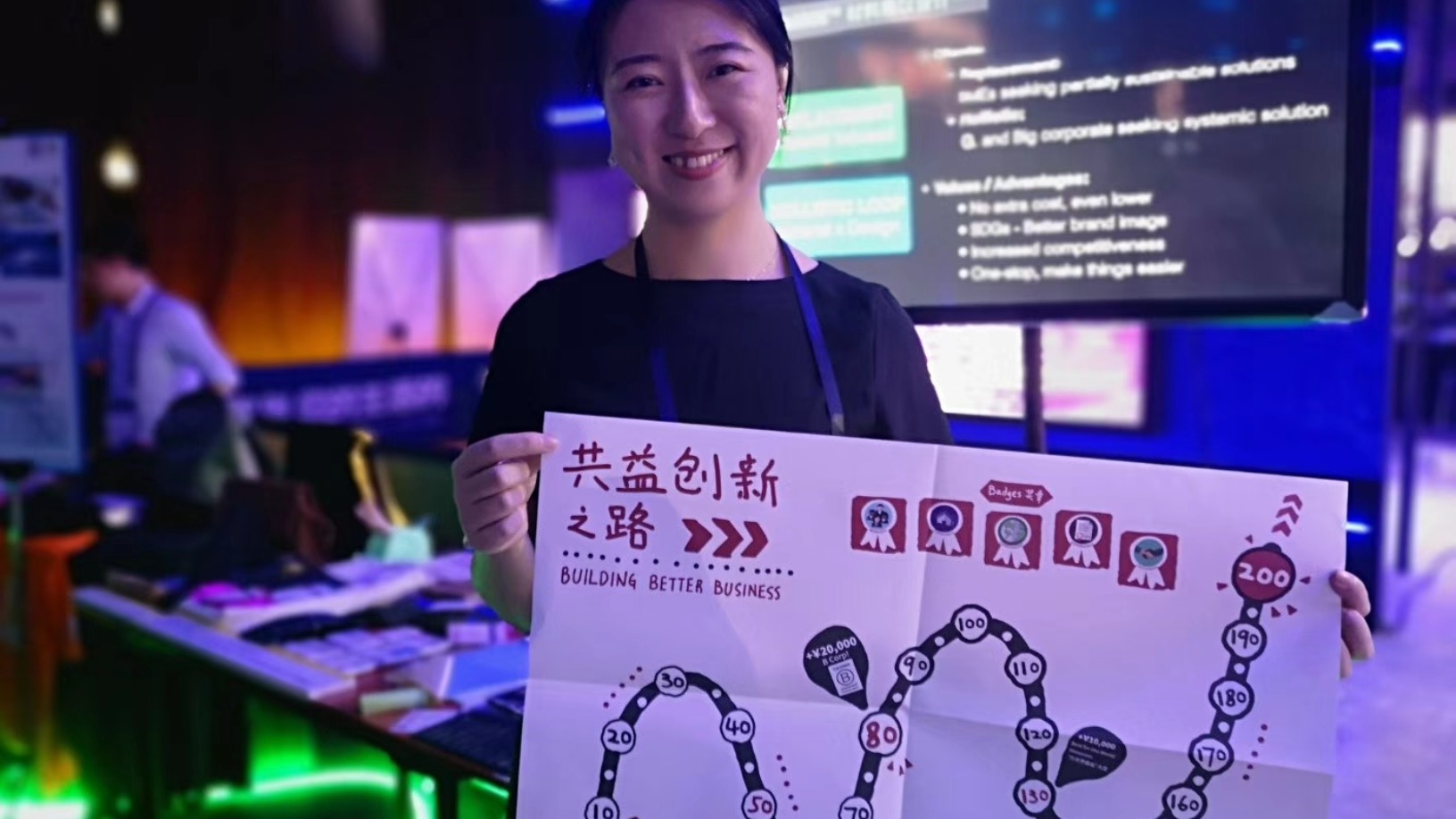
CraiditX gives banks and insurers AI tools for assessing consumer credit risk
Used by big lenders like Bank of China and Minsheng Bank, CraiditX's solutions can gauge consumer default risk even if a user has no credit history

Sequoia China Seed Fund: Growing an era of deep-tech startups
Managing Partner Neil Shen wants to help deep-tech and enterprise tech startups get investments more easily, across quantum computing, semiconductors, synthetic biology and more

With universal QR code, Indonesia achieves e-payment harmony
The move to standardize Indonesia's QR code is expected to unify the country's cashless payments system and lift tens of thousands of small merchants into the payments mainstream

China a “positive environment” for uptake of cultured meat, researcher tells Future Food Asia
But for interested cultured meat companies, China-based Chloe Dempsey suggests it would be better to wait, observe and learn more about the market before trying to tap its massive potential

More than desire: When resale sneakers become objects of speculation
Sneaker resale platforms like Poizon and Nice feel the heat as China regulators panned such trading for getting out of control

Have you ever bought expensive equipment but seldom used it? Do you want to try the latest electronic gadgets at low cost? Try this online sharing and rental platform

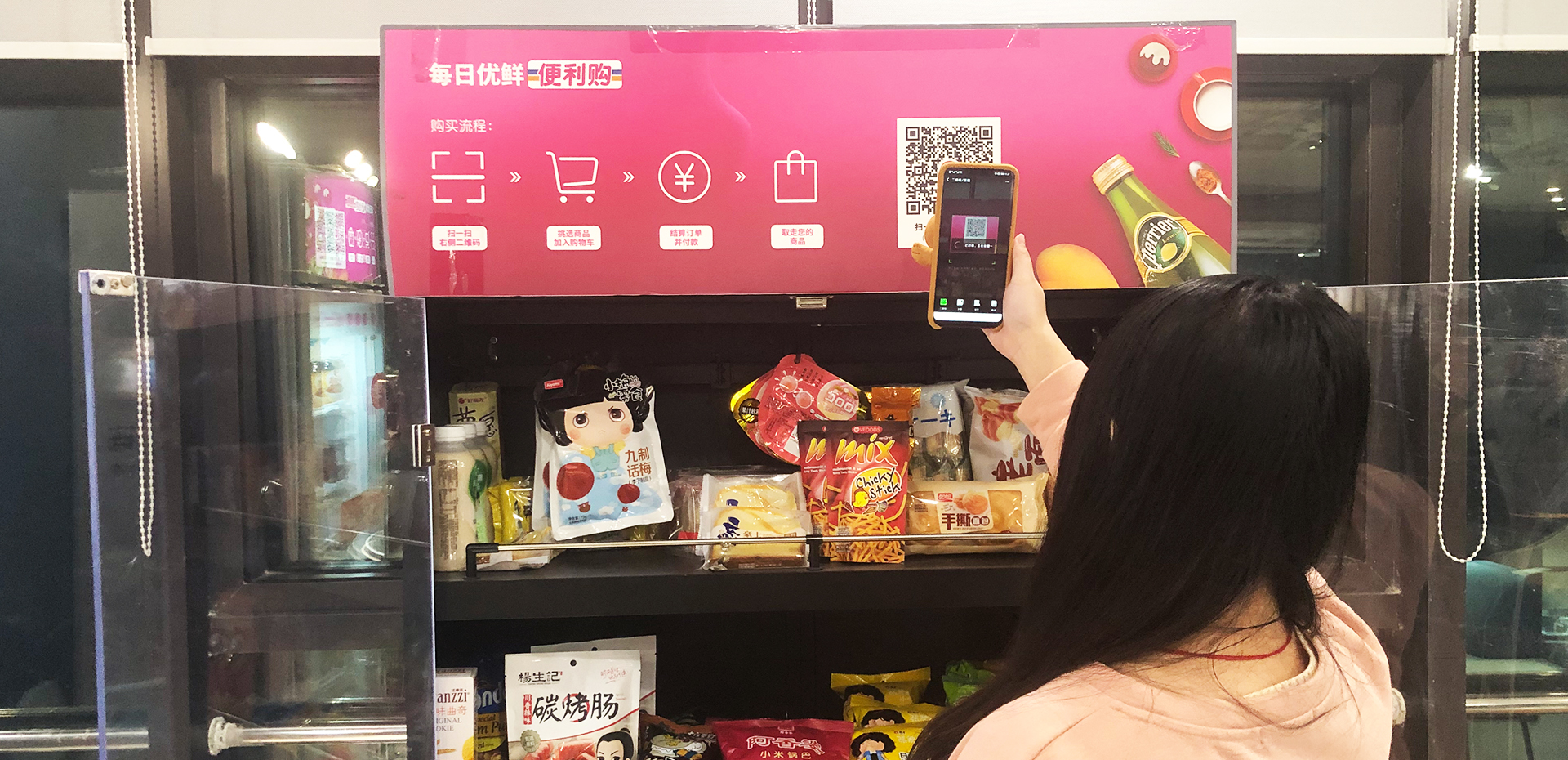
Once the darling of investors, unmanned shelf startups are going through a hard time in China
Startups are being forced to transform their business models to survive
China bets on road-vehicle coordination for the mass adoption of autonomous driving cars by 2025
Money pours in as China pushes sector to be the next growth engine, and both self-driving startups and their investors are optimistic about their commercialization attempts

Exclusive: Patamar Capital to raise US$150 million, eyes Series B investments
The impact investment VC recently scored an exit at Indonesian online-to-offline group buying startup Mapan, when it was bought over by Go-Jek

Covid-19: A closer look at how China's businesses and consumer behavior have changed
The lockdown in China has reshaped how people work and live. Some of the changes may be short-term, but others probably have become a part of life

China's Yuanfudao now the world's most valuable edtech with $2.2bn new funding
Yuanfudao’s second tranche of its Series G funding follows the $1bn it raised in March, bringing its valuation to $15.5bn

Sorry, we couldn’t find any matches for “Bank of China”.
POPULAR DATABASE