Early Charm Ventures
-
DATABASE (533)
-
ARTICLES (456)
Based in Amsterdam, BC Begin Capital Limited was established in April 2019 by Alexey Menn as managing partner in Moscow. The VC has invested in five startups. In 2019, it invested in e-grocery food delivery service Samokat that was acquired by Mail.Ru Group.In February 2020, the international firm was lead investor for Finnish fashion marketplace Zadaa, raising €3.5m for its Series A round. Both Begin Capital and Bulgaria’s BrightCap Ventures were lead investors for Woom, raising €2m in May. The two investments are the biggest so far, compared to previous fundraisers for startups like Bulbshare in March 2020.


Based in Amsterdam, BC Begin Capital Limited was established in April 2019 by Alexey Menn as managing partner in Moscow. The VC has invested in five startups. In 2019, it invested in e-grocery food delivery service Samokat that was acquired by Mail.Ru Group.In February 2020, the international firm was lead investor for Finnish fashion marketplace Zadaa, raising €3.5m for its Series A round. Both Begin Capital and Bulgaria’s BrightCap Ventures were lead investors for Woom, raising €2m in May. The two investments are the biggest so far, compared to previous fundraisers for startups like Bulbshare in March 2020.
Diego Ballesteros is one of Spain's most prominent serial entrepreneurs and business angels, backing some of the most successful acquisitions in Spain and Latin America. He made his first disclosed investment in 2016, as an angel investor of Spanish femtech WOOM’s pre-seed and seed funding rounds. He is currently the sole founder of Bewe SaaS for beauty and wellness professionals.Ballesteros started his first enterprise in 1997, an online classified ads platform Ocioteca.com and also MundoSalud that was acquired by Sanitas of Bupa Group. Cabify and co-investments with Seaya Ventures also form part of his investment portfolio. One of his biggest successes is on-demand food delivery platform SinDelantal with operations in Spain and Mexico. In 2013, the Spanish delivery company was acquired by Just Eat that later also bought the Mexican company in 2015.

Diego Ballesteros is one of Spain's most prominent serial entrepreneurs and business angels, backing some of the most successful acquisitions in Spain and Latin America. He made his first disclosed investment in 2016, as an angel investor of Spanish femtech WOOM’s pre-seed and seed funding rounds. He is currently the sole founder of Bewe SaaS for beauty and wellness professionals.Ballesteros started his first enterprise in 1997, an online classified ads platform Ocioteca.com and also MundoSalud that was acquired by Sanitas of Bupa Group. Cabify and co-investments with Seaya Ventures also form part of his investment portfolio. One of his biggest successes is on-demand food delivery platform SinDelantal with operations in Spain and Mexico. In 2013, the Spanish delivery company was acquired by Just Eat that later also bought the Mexican company in 2015.
Based in Linz, Klaus Hofbauer is an angel investor via his investment vehicle HOKL Ventures and the co-founder and CEO of Austria’s leading career job portal Karriere.at, established in 2004. As an angel investor, Hofbauer’s investments have included agriculture marketplace Markta, second-hand electronics marketplace Refurbed and leisure fishing booking site Hejfish. As a shareholder, he joined Refurbed as a board member in 2020.

Based in Linz, Klaus Hofbauer is an angel investor via his investment vehicle HOKL Ventures and the co-founder and CEO of Austria’s leading career job portal Karriere.at, established in 2004. As an angel investor, Hofbauer’s investments have included agriculture marketplace Markta, second-hand electronics marketplace Refurbed and leisure fishing booking site Hejfish. As a shareholder, he joined Refurbed as a board member in 2020.
Yamaha Motor Ventures & Laboratory Silicon Valley
The investment arm of Yamaha Motor Group (Japan) was founded in 2015 and is headquartered in Palo Alto, California. It focuses on industrial automation and transportation technology, and on smart and automated solutions in particular. Recent investments include automated strawberry picker Advanced Farm Technologies' US$7.5m Series A round and drone and robotics startup Exyn Technology's US$16m Series A round.

The investment arm of Yamaha Motor Group (Japan) was founded in 2015 and is headquartered in Palo Alto, California. It focuses on industrial automation and transportation technology, and on smart and automated solutions in particular. Recent investments include automated strawberry picker Advanced Farm Technologies' US$7.5m Series A round and drone and robotics startup Exyn Technology's US$16m Series A round.
Norfund is the sovereign investment fund of Norway, established by the parliament in 1997 and owned by the Ministry of Foreign Affairs. The company has committed NOK 28.4bn in investments into 170 projects in developing countries as of 2020. Norfund has regional offices in Thailand, Costa Rica, Kenya, Mozambique and Ghana to support its activities in Asia, Africa and Latin America. In Asia, its core investment targets are Indonesia, Cambodia, Laos, Vietnam, Myanmar, Bangladesh and Sri Lanka. Norfund primarily invests in three key areas: clean energy, agriculture and fintech. The fund has invested in solar power projects and various food companies in India and various African countries. In Asia, Norfund has invested in Amartha, an Indonesian P2P lending fintech company providing loans to women-led microbusinesses. Norfund also invests in other venture funds, such as Southeast Asia-focused Openspace Ventures Fund III, to expand and diversify their portfolio.

Norfund is the sovereign investment fund of Norway, established by the parliament in 1997 and owned by the Ministry of Foreign Affairs. The company has committed NOK 28.4bn in investments into 170 projects in developing countries as of 2020. Norfund has regional offices in Thailand, Costa Rica, Kenya, Mozambique and Ghana to support its activities in Asia, Africa and Latin America. In Asia, its core investment targets are Indonesia, Cambodia, Laos, Vietnam, Myanmar, Bangladesh and Sri Lanka. Norfund primarily invests in three key areas: clean energy, agriculture and fintech. The fund has invested in solar power projects and various food companies in India and various African countries. In Asia, Norfund has invested in Amartha, an Indonesian P2P lending fintech company providing loans to women-led microbusinesses. Norfund also invests in other venture funds, such as Southeast Asia-focused Openspace Ventures Fund III, to expand and diversify their portfolio.
Born in 1973, Li graduated from the School of Philosophy at Renmin University of China in 1997. After graduating, he worked as an IT journalist for China Youth Daily, where he interviewed tech giants such as Jack Ma. In early 2003, Li became chief editor of the IT section of web portal Sohu and then joined web portal NetEase as chief editor of its IT section later that year. In 2005, he resigned from NetEase and founded gaming portal Duowan. In 2008, Li founded YY Inc., a live streaming social media platform that went public on Nasdaq in 2012.

Born in 1973, Li graduated from the School of Philosophy at Renmin University of China in 1997. After graduating, he worked as an IT journalist for China Youth Daily, where he interviewed tech giants such as Jack Ma. In early 2003, Li became chief editor of the IT section of web portal Sohu and then joined web portal NetEase as chief editor of its IT section later that year. In 2005, he resigned from NetEase and founded gaming portal Duowan. In 2008, Li founded YY Inc., a live streaming social media platform that went public on Nasdaq in 2012.
Beyond Investing is a Geneva-based firm investing in early-stage venture capital and equity growth startups mainly in European developed markets. With average investments of €200,000, the firm’s core investment strategy focuses on sustainability with an investment period lasting 5–10 years.The impact investor targets innovative startups involved in vegan, cruelty-free and plant-based alternatives; biotechnologies, foodtech, new materials, clothing and lifestyle sectors. Successful portfolio foodtechs include Mosa Meat, BlueNalu and Shiok Meats.With a team of vegan finance professionals in the US and Europe, Beyond Investing listed the first US Vegan Climate ETF (VEGN) on the New York Stock Exchange in September 2019. The ETF tracks Beyond Investing’s US Vegan Climate Index which covers an index of 495 of the largest-capitalization companies in the US stock market. The ethical investment option aims to exclude stocks in companies with activities that are not aligned with its vegan-themed, cruelty-free and fossil-fuel-free investing ethos.

Beyond Investing is a Geneva-based firm investing in early-stage venture capital and equity growth startups mainly in European developed markets. With average investments of €200,000, the firm’s core investment strategy focuses on sustainability with an investment period lasting 5–10 years.The impact investor targets innovative startups involved in vegan, cruelty-free and plant-based alternatives; biotechnologies, foodtech, new materials, clothing and lifestyle sectors. Successful portfolio foodtechs include Mosa Meat, BlueNalu and Shiok Meats.With a team of vegan finance professionals in the US and Europe, Beyond Investing listed the first US Vegan Climate ETF (VEGN) on the New York Stock Exchange in September 2019. The ETF tracks Beyond Investing’s US Vegan Climate Index which covers an index of 495 of the largest-capitalization companies in the US stock market. The ethical investment option aims to exclude stocks in companies with activities that are not aligned with its vegan-themed, cruelty-free and fossil-fuel-free investing ethos.
The British F1 racing driver and five-time FIA Formula One World Champion Lewis Hamilton has started to promote veganism and sustainable lifestyles, investing in several technology startups that develop solutions in that field.In 2019 he launched Neat Meat, the British vegan fast casual chain, in collaboration with The Cream Group, UNICEF Ambassadors and early investor in Beyond Meat Tommaso Chiabra. More recently he participated in a Series D funding round backing NotCo, the first Chilean unicorn selling plant-based food and beverage products across Latin America and the US.Hamilton is actively fighting to promote sustainable and eco-friendly practices across industries. In 2019 he also pushed Mercedes-Benz to discuss the possibility of including animal-free interiors in their cars. On that he said: I want to be part of a system that is going to help heal the world and do something positive for the future.”

The British F1 racing driver and five-time FIA Formula One World Champion Lewis Hamilton has started to promote veganism and sustainable lifestyles, investing in several technology startups that develop solutions in that field.In 2019 he launched Neat Meat, the British vegan fast casual chain, in collaboration with The Cream Group, UNICEF Ambassadors and early investor in Beyond Meat Tommaso Chiabra. More recently he participated in a Series D funding round backing NotCo, the first Chilean unicorn selling plant-based food and beverage products across Latin America and the US.Hamilton is actively fighting to promote sustainable and eco-friendly practices across industries. In 2019 he also pushed Mercedes-Benz to discuss the possibility of including animal-free interiors in their cars. On that he said: I want to be part of a system that is going to help heal the world and do something positive for the future.”
Bamboo Capital Partners is an impact investment company that focuses on supporting energy access, finance and healthcare-related ventures in developing countries. The company manages 10 investment funds across Asia, Africa, and Latin America, with companies in Indonesia, India, Kyrgyz Republic, and Brazil having received investments from this company. Bamboo Capital Partners states that their portfolio healthcare companies have served 3.4m patients, and 9.68m metric tons of CO2 emissions have been avoided through the use of solar panels and green energy championed by their startups.Bamboo Capital Partners have worked with governments and major investment groups to support the fulfillment of SDG goals through startup investing. In 2020, Bamboo Capital Partners was appointed by the government of Madagascar and the World Bank as the fund manager for the $40m Off-Grid Market Development Fund. Bamboo is also a partner of the Palladium Group, which owns a minority stake in the VC.

Bamboo Capital Partners is an impact investment company that focuses on supporting energy access, finance and healthcare-related ventures in developing countries. The company manages 10 investment funds across Asia, Africa, and Latin America, with companies in Indonesia, India, Kyrgyz Republic, and Brazil having received investments from this company. Bamboo Capital Partners states that their portfolio healthcare companies have served 3.4m patients, and 9.68m metric tons of CO2 emissions have been avoided through the use of solar panels and green energy championed by their startups.Bamboo Capital Partners have worked with governments and major investment groups to support the fulfillment of SDG goals through startup investing. In 2020, Bamboo Capital Partners was appointed by the government of Madagascar and the World Bank as the fund manager for the $40m Off-Grid Market Development Fund. Bamboo is also a partner of the Palladium Group, which owns a minority stake in the VC.
The Stanford Management Company (SMC) invests through the Merged Pool that oversees the majority of its investable assets. Its portfolio includes diverse equity-oriented strategies: domestic and foreign public equities (27%), real estate (8%), natural resources (7%) and private equity (30%). Private equity is maintained at 30% of the Merged Pool based on its risk-return criteria. The Merged Pool was valued at $29.6 bn as of June 30, 2019.The private equity division operates through selected external partners for early and later-stage investments. According to the university’s latest investment report, the SMC is working to improve its investment portfolio that has become over diversified during the last four years, making it difficult to maintain quality and drive superior returns. The number of active partners has been reduced to 75 including 37 new ones added in the last four years. The new partners have generated a net internal rate of return of 29.3% over the last four years.

The Stanford Management Company (SMC) invests through the Merged Pool that oversees the majority of its investable assets. Its portfolio includes diverse equity-oriented strategies: domestic and foreign public equities (27%), real estate (8%), natural resources (7%) and private equity (30%). Private equity is maintained at 30% of the Merged Pool based on its risk-return criteria. The Merged Pool was valued at $29.6 bn as of June 30, 2019.The private equity division operates through selected external partners for early and later-stage investments. According to the university’s latest investment report, the SMC is working to improve its investment portfolio that has become over diversified during the last four years, making it difficult to maintain quality and drive superior returns. The number of active partners has been reduced to 75 including 37 new ones added in the last four years. The new partners have generated a net internal rate of return of 29.3% over the last four years.
P101, which stands for Programma 101, the first PC ever made in history, is an Italian VC focused on early-stage investments founded and headed by Managing Partner Andrea Di Camillo. As of January 2021, the firm has between €70m and €100m available for investments. The fund is backed by The European Investment Fund, the Italian Investment Fund SGR, and Azimut, an Italian asset manager operating since 1989 and parent company of Azimut Holding, listed on the Milan Stock Exchange (AZM.IM).Headquartered in Milan, P101 has invested in international startups through its two funds, P101 and P102. It usually co-invests maintaining a lead investor role. According to Di Camillo, the P102 fund has a higher investment ticket, ranging between €2m–5m, with the possibility of increasing to up to €10m in a single company. The firm also manages Ita500, a €40m fund established in partnership with Azimut in January 2020. With a 10-year term, Ita500 will co-invest with P101’s first and second funds in startups with revenues of up to €5m and SMEs with a turnover range of €5m–50m.

P101, which stands for Programma 101, the first PC ever made in history, is an Italian VC focused on early-stage investments founded and headed by Managing Partner Andrea Di Camillo. As of January 2021, the firm has between €70m and €100m available for investments. The fund is backed by The European Investment Fund, the Italian Investment Fund SGR, and Azimut, an Italian asset manager operating since 1989 and parent company of Azimut Holding, listed on the Milan Stock Exchange (AZM.IM).Headquartered in Milan, P101 has invested in international startups through its two funds, P101 and P102. It usually co-invests maintaining a lead investor role. According to Di Camillo, the P102 fund has a higher investment ticket, ranging between €2m–5m, with the possibility of increasing to up to €10m in a single company. The firm also manages Ita500, a €40m fund established in partnership with Azimut in January 2020. With a 10-year term, Ita500 will co-invest with P101’s first and second funds in startups with revenues of up to €5m and SMEs with a turnover range of €5m–50m.
Mark Pincus is the US co-founder of online social game maker Zynga, known for the mobile app games Words With Friends, Mafia Wars and FarmVille. He is also the managing member and co-founder of VC firm Reinvent Capital and a prolific angel investor worth $1.6bn, with early investments in Facebook and Twitter. To date, Pincus has invested in more than 50 startups and managed numerous successful exits including the aforementioned social media giants. His most recent investments include participation in the April 2021 $10m Series A round of US gaming app Underdog Fantasy and in the April 2021 €23.1m Series B round of Finland’s Yousician, the world’s largest music edtech.

Mark Pincus is the US co-founder of online social game maker Zynga, known for the mobile app games Words With Friends, Mafia Wars and FarmVille. He is also the managing member and co-founder of VC firm Reinvent Capital and a prolific angel investor worth $1.6bn, with early investments in Facebook and Twitter. To date, Pincus has invested in more than 50 startups and managed numerous successful exits including the aforementioned social media giants. His most recent investments include participation in the April 2021 $10m Series A round of US gaming app Underdog Fantasy and in the April 2021 €23.1m Series B round of Finland’s Yousician, the world’s largest music edtech.
H&M’s first shop was founded 74 years ago in Sweden by Erling Persson under the name “Hennes”, Swedish for "hers" since the shop was selling only women's apparel. In 1968, Persson expanded into menswear by acquiring Swedish retailer Mauritz Widforss. Hence the rebranding of the company into Hennes & Mauritz (H&M). In 1974, H&M was listed on the Stockholm Stock Exchange. Since then, H&M has expanding internationally opening its first store in London and the rest of Europe and also to the US in early 2000.In 2008, the company also moved into the home furnishings segment and launched H&M Home stores worldwide. The fashion chain can now be found across Europe, the US, Asia and the Middle East. The group expanded further by acquiring fast-fashion brands like Weekday, Monki and Cheap Monday. In April 2021, H&M Group announced a collaboration with textile cleantech Infinited Fiber to launch proof-of-concept denim created wholly from regenerated textile waste as part of its commitment to use only recycled or sustainably sourced materials by 2030.

H&M’s first shop was founded 74 years ago in Sweden by Erling Persson under the name “Hennes”, Swedish for "hers" since the shop was selling only women's apparel. In 1968, Persson expanded into menswear by acquiring Swedish retailer Mauritz Widforss. Hence the rebranding of the company into Hennes & Mauritz (H&M). In 1974, H&M was listed on the Stockholm Stock Exchange. Since then, H&M has expanding internationally opening its first store in London and the rest of Europe and also to the US in early 2000.In 2008, the company also moved into the home furnishings segment and launched H&M Home stores worldwide. The fashion chain can now be found across Europe, the US, Asia and the Middle East. The group expanded further by acquiring fast-fashion brands like Weekday, Monki and Cheap Monday. In April 2021, H&M Group announced a collaboration with textile cleantech Infinited Fiber to launch proof-of-concept denim created wholly from regenerated textile waste as part of its commitment to use only recycled or sustainably sourced materials by 2030.
Based in San Francisco, the Mulago Foundation is a philanthropic foundation designed to carry on the life work of pediatrician Rainer Arnhold who died in 1993 while working in the mountains of Bolivia. He originally set up the Mulago Foundation in 1968, naming it after a hospital in Uganda. His Jewish family, bankers for generations, continued to support the foundation for impact investing across diverse sectors and geographies, with scalable solutions to alleviate poverty.It has invested in 61 companies to date. Successful ventures include: Kenya’s Komaza that raised $28m in its 2020 Series B and Myanmar’s Proximity Finance, a fintech for small-holder farmers that raised $14m in 2020. Komaza helps poor families turn dry land into small-scale, income-generating tree farms, benefiting more than 2m farmers in Sub-Saharan Africa.

Based in San Francisco, the Mulago Foundation is a philanthropic foundation designed to carry on the life work of pediatrician Rainer Arnhold who died in 1993 while working in the mountains of Bolivia. He originally set up the Mulago Foundation in 1968, naming it after a hospital in Uganda. His Jewish family, bankers for generations, continued to support the foundation for impact investing across diverse sectors and geographies, with scalable solutions to alleviate poverty.It has invested in 61 companies to date. Successful ventures include: Kenya’s Komaza that raised $28m in its 2020 Series B and Myanmar’s Proximity Finance, a fintech for small-holder farmers that raised $14m in 2020. Komaza helps poor families turn dry land into small-scale, income-generating tree farms, benefiting more than 2m farmers in Sub-Saharan Africa.
Famous techpreneur Li Yinan (b. 1970) is the former CTO of Baidu and former CEO of Wuxian Xunqi, a China Mobile subsidiary. After Li graduated from Huazhong University of Science & Technology with a master’s degree in Optics Engineering, he joined Huawei and was promoted to vice-president of its Central Research Department in just six months; in 1997 Li because the youngest vice-president at Huawei. In 2001, Li quit Huawei and started his own data communication company, Harbour Networks, which followed the same structure of Huawei and soon became its main competitor. In 2005, Harbour Networks lost in its intense battle with Huawei and was acquired by the larger player. Even though Li rejoined Huawei after the acquisition, he was never able to re-enter the core management team because of his damaged relationship with Ren Zhengfei, the founder and president of Huawei. In April 2015, Li founded his smart e-scooter company, NIU Smart Scooters. Li began investing in 2010 and joined GSR Ventures in 2011. Up to June 2015, Li had invested in more than 10 companies from the TMT sector. Li stood trial for insider trading in March 2016, according to news reports.

Famous techpreneur Li Yinan (b. 1970) is the former CTO of Baidu and former CEO of Wuxian Xunqi, a China Mobile subsidiary. After Li graduated from Huazhong University of Science & Technology with a master’s degree in Optics Engineering, he joined Huawei and was promoted to vice-president of its Central Research Department in just six months; in 1997 Li because the youngest vice-president at Huawei. In 2001, Li quit Huawei and started his own data communication company, Harbour Networks, which followed the same structure of Huawei and soon became its main competitor. In 2005, Harbour Networks lost in its intense battle with Huawei and was acquired by the larger player. Even though Li rejoined Huawei after the acquisition, he was never able to re-enter the core management team because of his damaged relationship with Ren Zhengfei, the founder and president of Huawei. In April 2015, Li founded his smart e-scooter company, NIU Smart Scooters. Li began investing in 2010 and joined GSR Ventures in 2011. Up to June 2015, Li had invested in more than 10 companies from the TMT sector. Li stood trial for insider trading in March 2016, according to news reports.
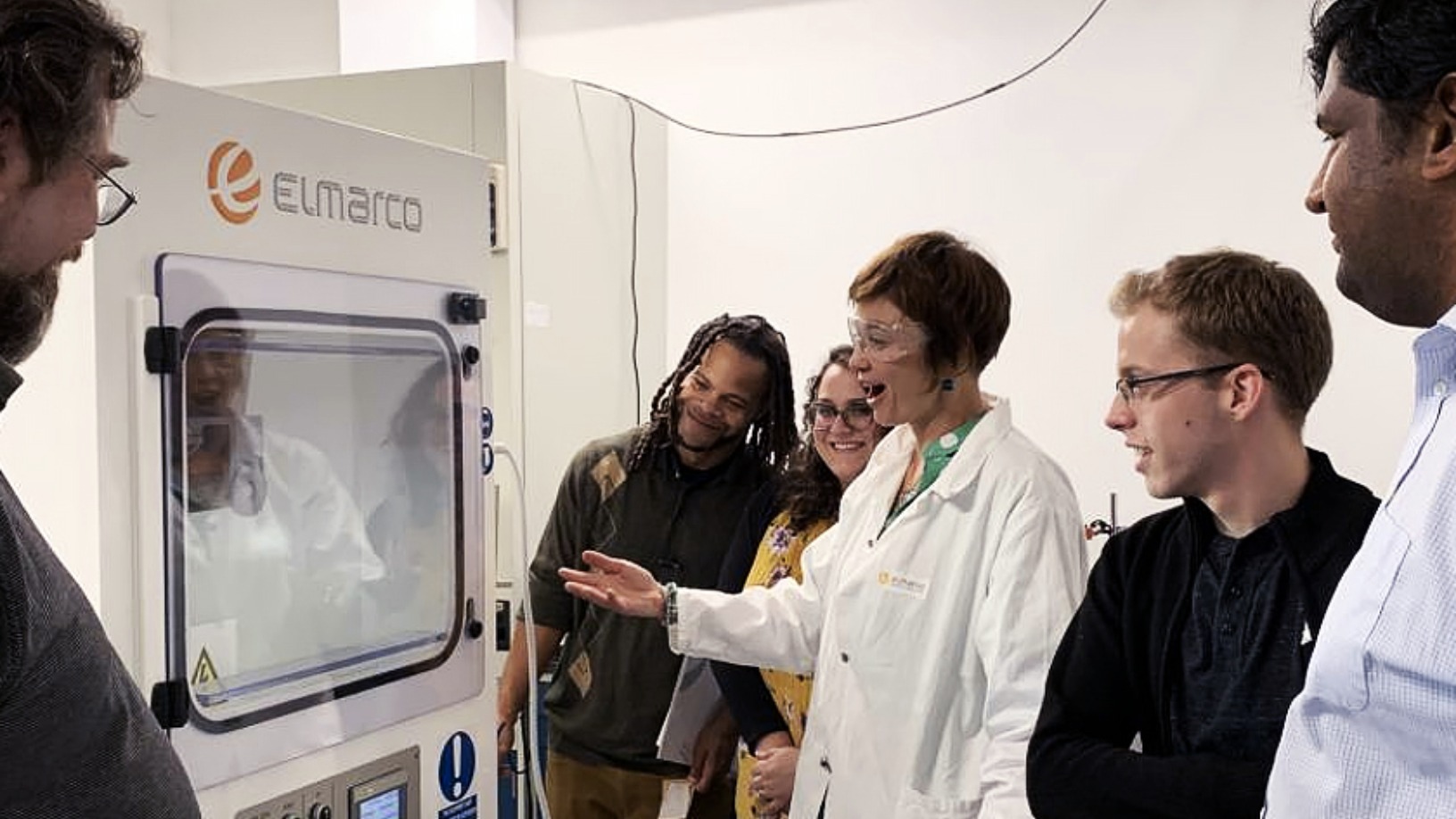
Early Charm Ventures: Taking research from the labs to the real world
Instead of investing money, the venture studio gets hands-on, co-running companies with top scientists and their cutting-edge research
Luo Yonghao: Maverick founder who gave Smartisan its allure, but couldn't build a winner
The Smartisan founder and internet celebrity is making a comeback with live commerce, after failing to sell enough smartphones at his own company

The charm of Jike: From search engine to popular social network
App's success shows enthusiasm for a personalized, community-based content and search platform, emulated even by Tencent

In China, e-commerce platforms and brands bet big on live commerce
Retailers embrace shopping via livestreaming, where social media influencers hawk products and get rapid sales

South Summit 2021: European seed investment is booming post-Covid
Investors from The Fund, Northzone and Pale Blue Dot highlight climate change, consumer credit and business tools as hot areas to follow

Psquared: Providing flexible workplaces to help early-stage startups
The Barcelona-based startup converts a variety of buildings to hybrid office spaces for flexible work brought about by Covid-19, includes a reservations system to manage desk and meeting spaces

MioTech: Early mover in China ESG data and analytics for investing, corporate reporting
Hong Kong-based fintech uses AI technologies to monitor ESG data and risks in real time, turn unstructured data into reliable insights

New Ventures Innovation: Prasetiya Mulya University takes on student entrepreneurship
To prepare a new generation of startup founders, Prasetiya Mulya University combines theoretical education with real-life exposure to the startup world
Beatriz González: Seaya Ventures head and Spanish tech VC trailblazer
From Cabify to Glovo, the only woman to head a Spanish VC firm has backed some of the country’s most successful startups to date

Taronga Ventures takes RealTechX to Singapore; plans Japan, US growth
The Australian proptech investor to focus on ESG in its acceleration program, including women under-representation and site safety

ID Capital CEO & founder Isabelle Decitre, an early mover investing in Asian agrifood startups
An early backer of Ynsect, one of the best-funded insect protein startups to date, Decitre sees growing interest in agrifood tech startups, but notes they still need to offer exit opportunities

eShop Ventures: A costly spending spree to create the Spanish Amazon
Behind the downfall of one of Spain's most promising startups

Intudo Ventures: Grooming returning overseas talent for an Indonesia-only bet
Combining the experience and networks of foreign-educated Indonesians with local distribution channels, Intudo’s hyperlocal strategy has attracted $200m in managed assets

Despite early promise, China's on-demand bus services hit potholes on the road to profit
High costs – not a lack of customers – have forced promising on-demand bus service startups like DuduBus to shift their focus to corporate shuttle services

Alpha JWC Ventures bets on Indonesian fintech, analytics startups for big impact
A commitment to mentoring and supporting its portfolio companies also lies at the core of its business

Sorry, we couldn’t find any matches for “Early Charm Ventures”.
POPULAR DATABASE