Sequoia Capital India
-
DATABASE (756)
-
ARTICLES (401)
PICC Capital Equity Investment Company
PICC Capital Equity Investment Company was founded in 2009 as a subsidiary of Chinese listed insurer PICC.In 2018, it set up a RMB 300m fund targeting health and elderly-care sectors. In 2020, the VC set up another fund to invest in cutting-edge technologies like biotech, integrated circuit, etc.


PICC Capital Equity Investment Company was founded in 2009 as a subsidiary of Chinese listed insurer PICC.In 2018, it set up a RMB 300m fund targeting health and elderly-care sectors. In 2020, the VC set up another fund to invest in cutting-edge technologies like biotech, integrated circuit, etc.
CEO and founder of Les Noveaux Affineurs
Nour Akbaraly completed a master’s in engineering at Centrale Lille and also a master’s in applied mathematics at Lille University in 2010. In 2011, Akbaraly joined industrial manufacturing consultancy firm Avencore as a consultant in Paris.The avid photographer and F&B enthusiast also went to various tea-tasting classes at a tea specialist college until 2015. Passionate about gastronomy, he began exploring alt-protein alternatives to address the environmental and ethical challenges of food supply chains.In 2016, he went on an engineering training course for agronomy and agri-food at AgroSup Dijon, the National Institute of Agronomic, Food and Environmental Sciences.A year later, he founded Les Noveaux Affineurs, a startup specializing in plant-based alternatives to cheese. His ambition is to create a new range of French gastronomic vegan cheese products for consumers in France and overseas.Since 2010, Akbaraly is also a volunteer at the Action Contre la Faim, a Paris-based international NGO founded in 1979. The “Action Against Hunger” projects include running awareness campaigns on food security issues in colleges and schools in France and other countries like India and Sudan.

Nour Akbaraly completed a master’s in engineering at Centrale Lille and also a master’s in applied mathematics at Lille University in 2010. In 2011, Akbaraly joined industrial manufacturing consultancy firm Avencore as a consultant in Paris.The avid photographer and F&B enthusiast also went to various tea-tasting classes at a tea specialist college until 2015. Passionate about gastronomy, he began exploring alt-protein alternatives to address the environmental and ethical challenges of food supply chains.In 2016, he went on an engineering training course for agronomy and agri-food at AgroSup Dijon, the National Institute of Agronomic, Food and Environmental Sciences.A year later, he founded Les Noveaux Affineurs, a startup specializing in plant-based alternatives to cheese. His ambition is to create a new range of French gastronomic vegan cheese products for consumers in France and overseas.Since 2010, Akbaraly is also a volunteer at the Action Contre la Faim, a Paris-based international NGO founded in 1979. The “Action Against Hunger” projects include running awareness campaigns on food security issues in colleges and schools in France and other countries like India and Sudan.
Early-stage-focused VC firm with a €24m first fund mainly investing in B2B and B2C digital startups headquartered in Spain. Initial investment amounts range between €70,000 and €300,000, and followup investment amounts go up to €1m per company. Describing themselves as “momentum investors” seeking quick time-to-market projects, Encomenda Smart Capital was founded in 2017 and managed by renowned Spanish angel investors Carlos Blanco, Oriol Juncosa and Miguel Sanz Sanchez, along with a network of angel investors Encomenda supports the growth of startups' portfolios and helps startups to scale at national and international levels. Encomenda invests 30% in SaaS and in projects with a recurring income model; 20% are fintech, and they also bet on the human resources, edtech and healthcare. Just two out of 25 investments have folded up between 2017 and 2020, with half the fund monies committed. Encomenda is seeking to launch a second fund in 2022 focusing on Spanish and Portuguese startups, of €40m–€50m, and multi-stage, by starting in the early-stage investments, with follow-through investments in subsequent stages.

Early-stage-focused VC firm with a €24m first fund mainly investing in B2B and B2C digital startups headquartered in Spain. Initial investment amounts range between €70,000 and €300,000, and followup investment amounts go up to €1m per company. Describing themselves as “momentum investors” seeking quick time-to-market projects, Encomenda Smart Capital was founded in 2017 and managed by renowned Spanish angel investors Carlos Blanco, Oriol Juncosa and Miguel Sanz Sanchez, along with a network of angel investors Encomenda supports the growth of startups' portfolios and helps startups to scale at national and international levels. Encomenda invests 30% in SaaS and in projects with a recurring income model; 20% are fintech, and they also bet on the human resources, edtech and healthcare. Just two out of 25 investments have folded up between 2017 and 2020, with half the fund monies committed. Encomenda is seeking to launch a second fund in 2022 focusing on Spanish and Portuguese startups, of €40m–€50m, and multi-stage, by starting in the early-stage investments, with follow-through investments in subsequent stages.
Norfund is the sovereign investment fund of Norway, established by the parliament in 1997 and owned by the Ministry of Foreign Affairs. The company has committed NOK 28.4bn in investments into 170 projects in developing countries as of 2020. Norfund has regional offices in Thailand, Costa Rica, Kenya, Mozambique and Ghana to support its activities in Asia, Africa and Latin America. In Asia, its core investment targets are Indonesia, Cambodia, Laos, Vietnam, Myanmar, Bangladesh and Sri Lanka. Norfund primarily invests in three key areas: clean energy, agriculture and fintech. The fund has invested in solar power projects and various food companies in India and various African countries. In Asia, Norfund has invested in Amartha, an Indonesian P2P lending fintech company providing loans to women-led microbusinesses. Norfund also invests in other venture funds, such as Southeast Asia-focused Openspace Ventures Fund III, to expand and diversify their portfolio.
Norfund is the sovereign investment fund of Norway, established by the parliament in 1997 and owned by the Ministry of Foreign Affairs. The company has committed NOK 28.4bn in investments into 170 projects in developing countries as of 2020. Norfund has regional offices in Thailand, Costa Rica, Kenya, Mozambique and Ghana to support its activities in Asia, Africa and Latin America. In Asia, its core investment targets are Indonesia, Cambodia, Laos, Vietnam, Myanmar, Bangladesh and Sri Lanka. Norfund primarily invests in three key areas: clean energy, agriculture and fintech. The fund has invested in solar power projects and various food companies in India and various African countries. In Asia, Norfund has invested in Amartha, an Indonesian P2P lending fintech company providing loans to women-led microbusinesses. Norfund also invests in other venture funds, such as Southeast Asia-focused Openspace Ventures Fund III, to expand and diversify their portfolio.
Former technical development lead and co-founder of Graviky Labs
Nitesh Kadyan (also known as Nitesh Kumar) is a computer scientist, robotics engineer, inventor, maker and hacker. He was one of the three co-founders of Graviky Labs, a startup producing ink from captured carbon emissions. He worked at Graviky Labs from 2016–2018, during which he led its hardware development and prototyping. Currently, he works as a senior creative technologist at Lowe's Innovation Labs India.Kadyan holds a degree in computer science from the International Institute of Information Technology, Bangalore and did a research stint on AI and robotics at Freie University, Berlin. His background includes expertise in machine learning and embedded systems. Kadyan’s past projects include self-driving model cars, autonomous smart wheelchairs, an augmented reality interface for laser cutting, as well as machines that sketch and draw. He also founded a startup that does 3D printing in nearly any material, from plastic and metallic clay to chocolate, playdoh and fabric, and which was incubated at MIT Global Startup Labs 2014.Kadyan was named one of Foreign Policy magazine’s Top 100 Global Thinkers in 2016. He is a recipient of the Campus Diaries 25 Under 25 award, and is a two-time speaker at TEDx.

Nitesh Kadyan (also known as Nitesh Kumar) is a computer scientist, robotics engineer, inventor, maker and hacker. He was one of the three co-founders of Graviky Labs, a startup producing ink from captured carbon emissions. He worked at Graviky Labs from 2016–2018, during which he led its hardware development and prototyping. Currently, he works as a senior creative technologist at Lowe's Innovation Labs India.Kadyan holds a degree in computer science from the International Institute of Information Technology, Bangalore and did a research stint on AI and robotics at Freie University, Berlin. His background includes expertise in machine learning and embedded systems. Kadyan’s past projects include self-driving model cars, autonomous smart wheelchairs, an augmented reality interface for laser cutting, as well as machines that sketch and draw. He also founded a startup that does 3D printing in nearly any material, from plastic and metallic clay to chocolate, playdoh and fabric, and which was incubated at MIT Global Startup Labs 2014.Kadyan was named one of Foreign Policy magazine’s Top 100 Global Thinkers in 2016. He is a recipient of the Campus Diaries 25 Under 25 award, and is a two-time speaker at TEDx.
CEO and founder of Diamond Foundry
Martin Roscheisen is an American-Austrian tech entrepreneur. He is CEO and co-founder of US-based unicorn Diamond Foundry, the first certified carbon-neutral producer of lab-grown diamonds. He has worked there since 2012, prior to the company’s official establishment in 2013.Roscheisen holds a PhD in computer science from Stanford University, where his classmates included Google founders Larry Page and Sergey Brin. He is one of the first generation of internet entrepreneurs, and has been involved in starting a number of companies. Before starting Diamond Foundry, Roscheisen headed the $640m solar startup Nanosolar from 2002–2010 as its CEO and founder. This was Silicon Valley's first solar power tech startup financed by American venture capital and, at the time, the highest-valued solar startup.When Nanosolar closed due to cheaper competition from China, much of its remaining technical expertise and resources went to setting up Diamond Foundry.In addition, Roscheisen was also formerlyCEO and the founder of eGroups. One of the first social media platforms to reach 50m users, the firm was acquired by Yahoo!.CTO and co-founder of enterprise software firm TradingDynamics, which sold to Ariba for $1.2bn.CTO and co-founder of FindLaw, a leading Internet legal site eventually sold to Thomson Reuters.In 2003, Fortune Magazine named Roscheisen one of America’s 40 Under 40, and one of the top 10 entrepreneurs in the country.

Martin Roscheisen is an American-Austrian tech entrepreneur. He is CEO and co-founder of US-based unicorn Diamond Foundry, the first certified carbon-neutral producer of lab-grown diamonds. He has worked there since 2012, prior to the company’s official establishment in 2013.Roscheisen holds a PhD in computer science from Stanford University, where his classmates included Google founders Larry Page and Sergey Brin. He is one of the first generation of internet entrepreneurs, and has been involved in starting a number of companies. Before starting Diamond Foundry, Roscheisen headed the $640m solar startup Nanosolar from 2002–2010 as its CEO and founder. This was Silicon Valley's first solar power tech startup financed by American venture capital and, at the time, the highest-valued solar startup.When Nanosolar closed due to cheaper competition from China, much of its remaining technical expertise and resources went to setting up Diamond Foundry.In addition, Roscheisen was also formerlyCEO and the founder of eGroups. One of the first social media platforms to reach 50m users, the firm was acquired by Yahoo!.CTO and co-founder of enterprise software firm TradingDynamics, which sold to Ariba for $1.2bn.CTO and co-founder of FindLaw, a leading Internet legal site eventually sold to Thomson Reuters.In 2003, Fortune Magazine named Roscheisen one of America’s 40 Under 40, and one of the top 10 entrepreneurs in the country.
Bynd Venture Capital (formerly Busy Angels)
Bynd Venture Capital is a Portuguese seed/early-stage VC firm that changed its name from Busy Angels in 2019 and opened a new €10M investment fund, with Didimo its first recipient. Busy Angels' more than 30-strong portfolio has passed under Bynd's stewardship. Bynd is led by former senior corporate executives and counts among its shareholders former Cabinet minister Luís Mira Amaral and corporate entities Danone, P&G and Pepsi. Busy Angels was founded in 2010 in Lisbon and concentrates on seed and early-stage B2B and B2C startups doing business in Portugal and/or Spain. DefinedCrowd and Zaask! are among its best known portfolio companies.
Bynd Venture Capital is a Portuguese seed/early-stage VC firm that changed its name from Busy Angels in 2019 and opened a new €10M investment fund, with Didimo its first recipient. Busy Angels' more than 30-strong portfolio has passed under Bynd's stewardship. Bynd is led by former senior corporate executives and counts among its shareholders former Cabinet minister Luís Mira Amaral and corporate entities Danone, P&G and Pepsi. Busy Angels was founded in 2010 in Lisbon and concentrates on seed and early-stage B2B and B2C startups doing business in Portugal and/or Spain. DefinedCrowd and Zaask! are among its best known portfolio companies.
R&D and business lead and co-founder of Graviky Labs
Anirudh Sharma is one of three co-founders of Graviky Labs, which makes ink out of carbon that is captured from pollution and purified using proprietary technology. This concept was born from Sharma’s experiments making ink from candle soot while doing his master’s at MIT Materials Lab. He currently leads R&D and business at the firm. Sharma’s interests include augmented reality, wearable computing and environmental projects. Over the years, he has developed and patented various technology products with social and environmental impact. He was formerly CTO and co-founder of India’s first wearable technology company, Ducere Technologies, which was later sold. This company makes Lechal, the world’s first smart haptic device for shoes, initially designed by Sharma as a navigation aid for the visually impaired. Sharma also previously worked for Imagin Group at Hewlett Packard Labs, on a multimodal speech and touch-based computer-aided design interface for large displays.Sharma holds a master's from Massachusetts Institute of Technology and co-led the activities of MIT Media Lab India from 2013–2015. He is a TED and TEDx speaker and has been included in Forbes’ 30 Under 30 for Asia, MIT Technology Review’s 35 Innovators Under 35, and Foreign Policy magazine’s 100 Global Thinkers of 2016.

Anirudh Sharma is one of three co-founders of Graviky Labs, which makes ink out of carbon that is captured from pollution and purified using proprietary technology. This concept was born from Sharma’s experiments making ink from candle soot while doing his master’s at MIT Materials Lab. He currently leads R&D and business at the firm. Sharma’s interests include augmented reality, wearable computing and environmental projects. Over the years, he has developed and patented various technology products with social and environmental impact. He was formerly CTO and co-founder of India’s first wearable technology company, Ducere Technologies, which was later sold. This company makes Lechal, the world’s first smart haptic device for shoes, initially designed by Sharma as a navigation aid for the visually impaired. Sharma also previously worked for Imagin Group at Hewlett Packard Labs, on a multimodal speech and touch-based computer-aided design interface for large displays.Sharma holds a master's from Massachusetts Institute of Technology and co-led the activities of MIT Media Lab India from 2013–2015. He is a TED and TEDx speaker and has been included in Forbes’ 30 Under 30 for Asia, MIT Technology Review’s 35 Innovators Under 35, and Foreign Policy magazine’s 100 Global Thinkers of 2016.
Co-CEO and Co-founder of Notpla (formerly Skipping Rocks Lab)
Rodrigo García González graduated in Architecture at the Technical University of Madrid (ETSAM) in 2009 and also completed various PhD courses in advanced architecture at his alma mater.In 2006, the architect student joined an EU Asia-Link sustainable humane habitat program that included stints at the Centre for Environmental Planning and Technology (CEPT) University in India. He also won a SMILE scholarship to study industrial design at Pontificia Universidad Católica in Chile for one year. In 2011, he obtained a scholarship to study industrial design and business at Umeå Institute of Design in Sweden. In 2014, he completed two master’s programs in innovation design engineering run by London’s Imperial College and Royal College of Art.In July 2014, he co-founded Skipping Rocks Lab, that was later pivoted into Notpla, a UK-based startup that develops compostable and edible packaging materials made of seaweed and other plants.Since 2007, he has worked with various institutions in Europe, Latin America and the US including Cornell University, CEPT, Imperial College and Royal College of Art. In 2016, he became a senior lecturer for a degree program in product and furniture design at Kingston University.He has two patents for his work on structural and deployable systems. His designs have also been featured in prestigious art centers like the Cite de l'Architecture of Paris and the Venice Biennale of Architecture.Other projects include the Hop! suitcase that can follow the user by tracking the signal of the user’s mobile phone and Aer, an artificial cloud that can evaporate “drinkable” water from the sea. He also developed Zipizip, an architectural system that enables the construction of several floors of a building in a few hours.
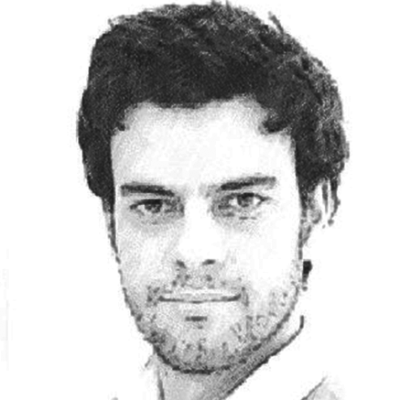
Rodrigo García González graduated in Architecture at the Technical University of Madrid (ETSAM) in 2009 and also completed various PhD courses in advanced architecture at his alma mater.In 2006, the architect student joined an EU Asia-Link sustainable humane habitat program that included stints at the Centre for Environmental Planning and Technology (CEPT) University in India. He also won a SMILE scholarship to study industrial design at Pontificia Universidad Católica in Chile for one year. In 2011, he obtained a scholarship to study industrial design and business at Umeå Institute of Design in Sweden. In 2014, he completed two master’s programs in innovation design engineering run by London’s Imperial College and Royal College of Art.In July 2014, he co-founded Skipping Rocks Lab, that was later pivoted into Notpla, a UK-based startup that develops compostable and edible packaging materials made of seaweed and other plants.Since 2007, he has worked with various institutions in Europe, Latin America and the US including Cornell University, CEPT, Imperial College and Royal College of Art. In 2016, he became a senior lecturer for a degree program in product and furniture design at Kingston University.He has two patents for his work on structural and deployable systems. His designs have also been featured in prestigious art centers like the Cite de l'Architecture of Paris and the Venice Biennale of Architecture.Other projects include the Hop! suitcase that can follow the user by tracking the signal of the user’s mobile phone and Aer, an artificial cloud that can evaporate “drinkable” water from the sea. He also developed Zipizip, an architectural system that enables the construction of several floors of a building in a few hours.
Mohit Goel is one of India’s youngest real estate tycoons and an angel investor. He appeared as one of a panel of potential investors on the India reality TV show The Vault, which features start-ups pitching their business ideas to angel investors in order to seek funding. Goel is CEO of Omaxe, a real estate firm based in New Delhi. As the second-generation head of the company, he was credited for structural changes aimed at turning the firm around amidst challenging market conditions and introducing fresh concepts and customer-centric ideas to strengthen the business. Goel is also the north zone head of CREDAI Youth Wing, an industry body bringing together the next generation of leaders in India’s real estate and property developer market. In 2014, he was named Young Male Entrepreneur of the Year at the Infra & Realty Sutra Awards and also received the Young Achiever’s Award at ABP News’ Real Estate Awards.

Mohit Goel is one of India’s youngest real estate tycoons and an angel investor. He appeared as one of a panel of potential investors on the India reality TV show The Vault, which features start-ups pitching their business ideas to angel investors in order to seek funding. Goel is CEO of Omaxe, a real estate firm based in New Delhi. As the second-generation head of the company, he was credited for structural changes aimed at turning the firm around amidst challenging market conditions and introducing fresh concepts and customer-centric ideas to strengthen the business. Goel is also the north zone head of CREDAI Youth Wing, an industry body bringing together the next generation of leaders in India’s real estate and property developer market. In 2014, he was named Young Male Entrepreneur of the Year at the Infra & Realty Sutra Awards and also received the Young Achiever’s Award at ABP News’ Real Estate Awards.
Founded in 1993 by former journalist Hugo Shong (Xiong Xiaoge), a godfather figure in China's VC community, IDG is one of the leading VC firms in China, having invested in some 450 companies (as of end-2015) with over 100 successful exits. Among the biggest names are Tencent, Baidu, Xiaomi, Vancl, Sohu, Ctrip and Qihoo 360.

Founded in 1993 by former journalist Hugo Shong (Xiong Xiaoge), a godfather figure in China's VC community, IDG is one of the leading VC firms in China, having invested in some 450 companies (as of end-2015) with over 100 successful exits. Among the biggest names are Tencent, Baidu, Xiaomi, Vancl, Sohu, Ctrip and Qihoo 360.
Founded in 2003, Ginkgo conducts equity investments in companies from the consumer product and internet sectors (mainly e-commerce, new media and fintech).
Founded in 2003, Ginkgo conducts equity investments in companies from the consumer product and internet sectors (mainly e-commerce, new media and fintech).
Goodwater was founded in San Mateo in 2014 with a team less than 10 by Chi-Hua Chien and Eric J.Kim, who were previously at Kleiner Perkins and Maverick.

Goodwater was founded in San Mateo in 2014 with a team less than 10 by Chi-Hua Chien and Eric J.Kim, who were previously at Kleiner Perkins and Maverick.
Yonghua is a specialized investment company under Yongjin Group. With more than 20 years investment experience, it has invested in more than 100 companies, more than 50 of which are listed. Yonghua focuses on the most competitive companies in industries such as finance, e-commerce, education, healthcare, corporation service, new material and artificial intelligence.
Yonghua is a specialized investment company under Yongjin Group. With more than 20 years investment experience, it has invested in more than 100 companies, more than 50 of which are listed. Yonghua focuses on the most competitive companies in industries such as finance, e-commerce, education, healthcare, corporation service, new material and artificial intelligence.
Founded in 2016, Berlin-based investor BlueYard invests in startups aiming to tackle the planet’s greatest challenges. It typically makes $1m–3m as an initial investment and has no geographical bias. Its most recent investments include in the March 2021 $48m Series A round of Dutch cell-based meat startup Meatable which leverages pluripotent stem cells for the first time in foodtech and in the February 2021 $4m seed round of Next Matter, a German Open Source automation tool for operations teams.

Founded in 2016, Berlin-based investor BlueYard invests in startups aiming to tackle the planet’s greatest challenges. It typically makes $1m–3m as an initial investment and has no geographical bias. Its most recent investments include in the March 2021 $48m Series A round of Dutch cell-based meat startup Meatable which leverages pluripotent stem cells for the first time in foodtech and in the February 2021 $4m seed round of Next Matter, a German Open Source automation tool for operations teams.
Gojek and Tokopedia merge to form GoTo
The new entity, now Indonesia’s largest tech group, plans to go public in Indonesia and the US, targeting a $40bn valuation

Sequoia Capital China holds steady with investments in healthcare, biotech and green economy
China’s most active investor increases bets on sectors beyond the consumer internet and edtech recently hurt by regulatory clampdown

Kopi Kenangan serves up an addictive blend of rapid expansion and profitability
Its recent $109m Series B infusion boosts the Indonesian startup's confidence for sustainability and regional expansion despite the current Covid-19 slowdown

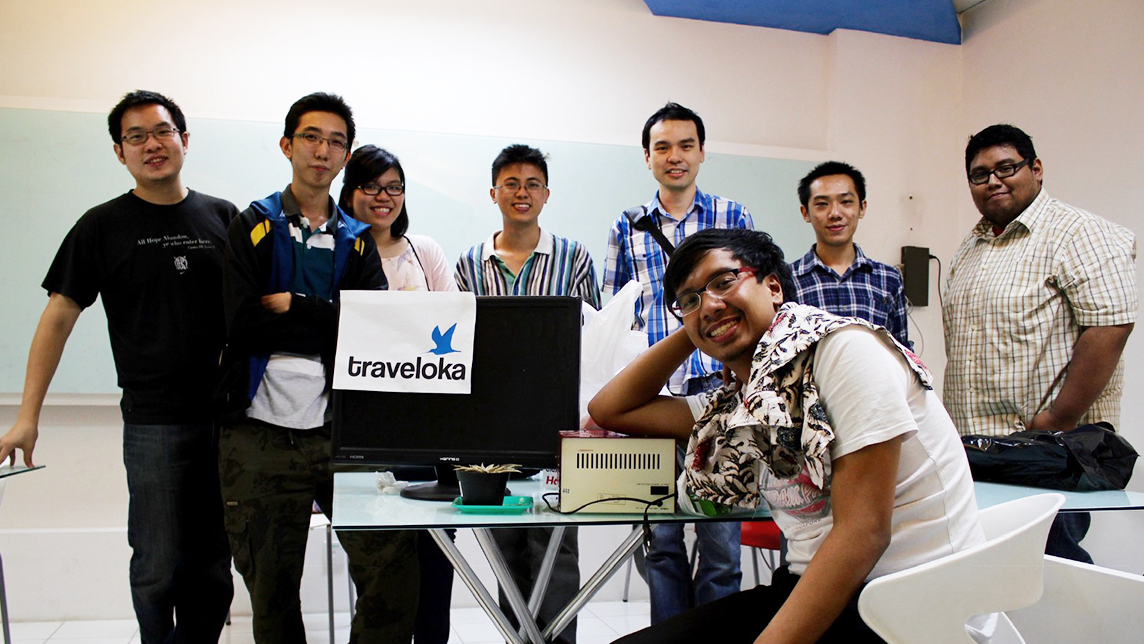
Traveloka CTO Derianto Kusuma resigns
The co-founder cites a changing ecosystem and company direction for his decision, while hinting at a new venture
How Sequoia Capital China is helping its portfolio startups get through the Covid-19 crisis
The renowned investor is also making big bets on the opportunities that lie head

Tokopedia gets hacked, 91m customer records for sale on the dark web
Tokopedia is investigating the breach, and users should change their passwords as soon as possible
Neil Shen: The super unicorn hunter
His bet on ByteDance, the startup that gave the world TikTok, helped Neil Shen top this year's Forbes Midas List. But for Shen, even in that deal he once made the wrong call

Sequoia China Seed Fund: Growing an era of deep-tech startups
Managing Partner Neil Shen wants to help deep-tech and enterprise tech startups get investments more easily, across quantum computing, semiconductors, synthetic biology and more

4D ShoeTech: Digital design platform helps shoemakers to slash production time by over 60%
Armed with new funding, 4D ShoeTech is scaling its Ideation platform to offer digital modelling services to cover other popular products like suitcases

Cautiously opportunistic: How Indonesian VCs are riding out the Covid-19 crisis
Indonesian VCs on how they are doing deals during Covid-19, and their advice to startups, from how to cut costs to M&A

Fresh from $13.5m Series A, Indonesian insurtech Qoala takes the long view amid Covid-19
Backed by capital from VCs like Sequoia Capital India, Qoala wants to grow its income channels, team and partnerships as others hold back

Chinese startups feel the chill of capital winter as VC activities slow
The goods news is investors still have plenty of money. They just become more cautious when making investment decisions

Bob Xu, one of China's first and most successful angel investors
Known for his whimsical investment style, Xu has caught a number of unicorns

Will this one-year-old startup revolutionize traditional industries?
Targeting retail and tourism first, Aibee aims to help traditional businesses keep up with their online counterparts using its all-in-one AI solutions

Exclusive: Patamar Capital to raise US$150 million, eyes Series B investments
The impact investment VC recently scored an exit at Indonesian online-to-offline group buying startup Mapan, when it was bought over by Go-Jek

Sorry, we couldn’t find any matches for “Sequoia Capital India”.