Wechat Work
-
DATABASE (1046)
-
ARTICLES (496)
Co-founder of Xampla
Tuomas Knowles is co-founder of Britain’s Xampla, producer of plant-based biodegradable plastics made from protein, which was founded in 2018 based on his team’s pioneering research. Knowles is a professor of physical chemistry and biophysics at Cambridge University, where he has worked since 2010 and manages the Knowles Lab which focuses on researching protein self-assembly underlying neurodegenerative disorders like Alzheimer's and Parkinson's disease. Knowles holds a PhD in Biophysics from the University of Cambridge and a degree in physics from ETH Zurich, a science and technology university.
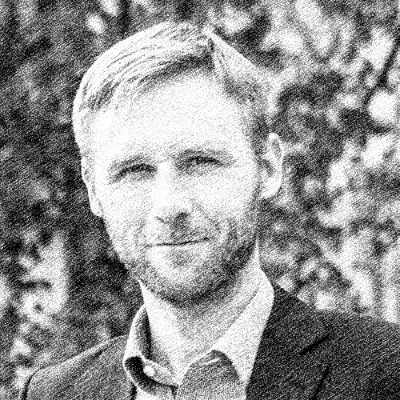
Tuomas Knowles is co-founder of Britain’s Xampla, producer of plant-based biodegradable plastics made from protein, which was founded in 2018 based on his team’s pioneering research. Knowles is a professor of physical chemistry and biophysics at Cambridge University, where he has worked since 2010 and manages the Knowles Lab which focuses on researching protein self-assembly underlying neurodegenerative disorders like Alzheimer's and Parkinson's disease. Knowles holds a PhD in Biophysics from the University of Cambridge and a degree in physics from ETH Zurich, a science and technology university.
Co-founder of Refurbed
Peter Windischhofer graduated with a management degree in 2012 at Vienna University of Economics and Business, including a stint at the University of Hong Kong. Student internships included various roles at McKinsey & Company, Perella Weinberg Partners, Realtreuhand and Raiffeisen Bank.In 2012, he joined CUDOS Group and worked for over a year as a business analyst in Vienna. In 2013, he met Refurbed co-founder Kilian Kaminski during a master’s program run by Hult International Business School. Both men worked in China while studying international business. Windischhofer spent six months running an online “TripAdvisor” review platform for Chinese language schools in Shanghai.In October 2014, Windischhofer joined McKinsey & Company as a management consultant working on digital marketing and product development projects for marketplaces and e-commerce companies in Europe.In 2017, he left McKinsey to co-found Refurbed with Kaminski to build an Amazon-style marketplace for refurbished electronic goods. The idea was inspired by a personal experience when Windischhofer bought a used smartphone after seeing a classified ad. The phone stopped working after two weeks. The incident prompted him to create an e-commerce platform specializing in selling quality refurbished e-products with carbon-neutral credentials like planting a tree for every sales transaction.

Peter Windischhofer graduated with a management degree in 2012 at Vienna University of Economics and Business, including a stint at the University of Hong Kong. Student internships included various roles at McKinsey & Company, Perella Weinberg Partners, Realtreuhand and Raiffeisen Bank.In 2012, he joined CUDOS Group and worked for over a year as a business analyst in Vienna. In 2013, he met Refurbed co-founder Kilian Kaminski during a master’s program run by Hult International Business School. Both men worked in China while studying international business. Windischhofer spent six months running an online “TripAdvisor” review platform for Chinese language schools in Shanghai.In October 2014, Windischhofer joined McKinsey & Company as a management consultant working on digital marketing and product development projects for marketplaces and e-commerce companies in Europe.In 2017, he left McKinsey to co-found Refurbed with Kaminski to build an Amazon-style marketplace for refurbished electronic goods. The idea was inspired by a personal experience when Windischhofer bought a used smartphone after seeing a classified ad. The phone stopped working after two weeks. The incident prompted him to create an e-commerce platform specializing in selling quality refurbished e-products with carbon-neutral credentials like planting a tree for every sales transaction.
CEO and co-founder of Refurbed
Kilian Kaminski graduated in communication and media studies in 2013 at Fresenius University in Cologne, Germany. Kaminski and Peter Windischhofer met during a master’s program at Hult International Business School. The two post-grads also worked in Shanghai in 2014.Kaminski held various business and marketing internship roles at Fiege Far East Holding and pottery-maker ProGreen in Shanghai, Hansa shipping GmbH and Hamburg Sparkasse bank in Germany and also at a music agency in Australia.In December 2014, he joined Amazon Services as an accounts manager in Munich. He also worked as Amazon’s program lead for certified refurbished DE marketplace for over two years.He left in 2017 and co-founded Refurbed with Windischhofer in Austria. In 2019, the CEO of Vienna-based refurbished electronics marketplace became an expert member of the Consumer Insight Action Panel, an EU initiative designed to support the transition to the circular economy.

Kilian Kaminski graduated in communication and media studies in 2013 at Fresenius University in Cologne, Germany. Kaminski and Peter Windischhofer met during a master’s program at Hult International Business School. The two post-grads also worked in Shanghai in 2014.Kaminski held various business and marketing internship roles at Fiege Far East Holding and pottery-maker ProGreen in Shanghai, Hansa shipping GmbH and Hamburg Sparkasse bank in Germany and also at a music agency in Australia.In December 2014, he joined Amazon Services as an accounts manager in Munich. He also worked as Amazon’s program lead for certified refurbished DE marketplace for over two years.He left in 2017 and co-founded Refurbed with Windischhofer in Austria. In 2019, the CEO of Vienna-based refurbished electronics marketplace became an expert member of the Consumer Insight Action Panel, an EU initiative designed to support the transition to the circular economy.
CEO and Founder of ScentRealm
CEO and founder of ScentRealm, Huang Jianwei worked at Alibaba from 2004 to 2011. In 2012, he founded ScentRealm and received seed funding from Wang Gang. He also tried to create a business around QR codes, then tried to build an internet finance business. The latter was a success for a while, but Huang decided to shut it down. In 2015, he pivoted the company to build ScentRealm.
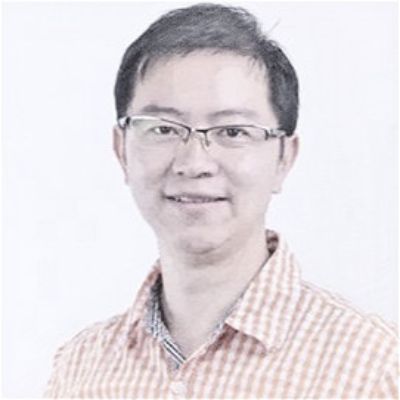
CEO and founder of ScentRealm, Huang Jianwei worked at Alibaba from 2004 to 2011. In 2012, he founded ScentRealm and received seed funding from Wang Gang. He also tried to create a business around QR codes, then tried to build an internet finance business. The latter was a success for a while, but Huang decided to shut it down. In 2015, he pivoted the company to build ScentRealm.
CTO and co-founder of X1 Wind / PivotBuoy
Carlos Casanova is the CTO and co-founder of X1 Wind, a company developing a downwind turbine technology to reduce the Levelized Cost of Energy (LCOE) in offshore wind plants, named the PivotBuoy system. He conceived the concept that paved the way for PivotBuoy in 2012 during his MSc studies in Mechanical Engineering at the Massachusetts Institute of Technology (MIT). Prior to X1 Wind, Casanova worked as an engineer in companies developing similar solutions in the field of wind turbines and floating offshore systems, including Bluewater and Adwen Offshore.From 2012 to 2014, Casanova also was Research Assistant at MIT, investigating floating wind turbine advanced controls.
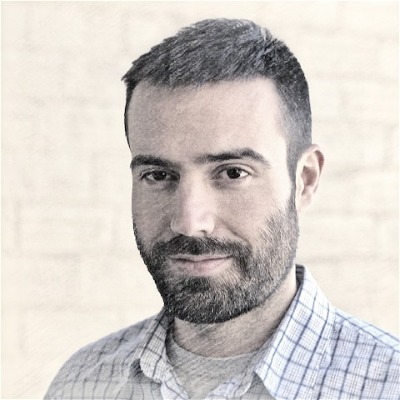
Carlos Casanova is the CTO and co-founder of X1 Wind, a company developing a downwind turbine technology to reduce the Levelized Cost of Energy (LCOE) in offshore wind plants, named the PivotBuoy system. He conceived the concept that paved the way for PivotBuoy in 2012 during his MSc studies in Mechanical Engineering at the Massachusetts Institute of Technology (MIT). Prior to X1 Wind, Casanova worked as an engineer in companies developing similar solutions in the field of wind turbines and floating offshore systems, including Bluewater and Adwen Offshore.From 2012 to 2014, Casanova also was Research Assistant at MIT, investigating floating wind turbine advanced controls.
Co-founder of Infinited Fiber
Ali Harlin completed two doctorates in chemical engineering and in polymer science in 1995 and 1996 respectively. He spent 11 years developing the Borstar technology related to bimodal PE and PP. He has also worked as a research director for packaging materials and cable machinery. He currently works as a research professor and lecturer at two local universities in Finland. In 2003, he joined Tampere University of Technology as a professor for fiber materials and technical textiles. In 2014, he also started lecturing at LUT University as a professor specializing in packaging and polymeric materials.Since 2005, the industrial biomaterial specialist has also been working at the Technical Research Centre of Finland VTT where he became the product R&D team leader for Infinited Fiber, a startup he co-founded in 2016 with CEO Petri Alava.
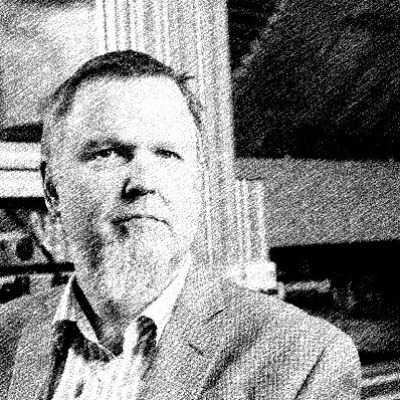
Ali Harlin completed two doctorates in chemical engineering and in polymer science in 1995 and 1996 respectively. He spent 11 years developing the Borstar technology related to bimodal PE and PP. He has also worked as a research director for packaging materials and cable machinery. He currently works as a research professor and lecturer at two local universities in Finland. In 2003, he joined Tampere University of Technology as a professor for fiber materials and technical textiles. In 2014, he also started lecturing at LUT University as a professor specializing in packaging and polymeric materials.Since 2005, the industrial biomaterial specialist has also been working at the Technical Research Centre of Finland VTT where he became the product R&D team leader for Infinited Fiber, a startup he co-founded in 2016 with CEO Petri Alava.
Co-founder, CEO of Meatable
Krijn De Nood is the Dutch co-founder and CEO at cell-based meat startup Meatable, the first to claim a highly scalable culture technology with the use of pluripotent stem cells, where he has worked since 2018. He previously worked at McKinsey for six-and-a-half years in Amsterdam, New York and in Kenya. Prior to that, he worked as an equity derivatives trader at derivative trading company All Options after a short stint at Barclays Capital.De Nood holds two first degrees from the University of Amsterdam, in philosophy and in economics and finance.

Krijn De Nood is the Dutch co-founder and CEO at cell-based meat startup Meatable, the first to claim a highly scalable culture technology with the use of pluripotent stem cells, where he has worked since 2018. He previously worked at McKinsey for six-and-a-half years in Amsterdam, New York and in Kenya. Prior to that, he worked as an equity derivatives trader at derivative trading company All Options after a short stint at Barclays Capital.De Nood holds two first degrees from the University of Amsterdam, in philosophy and in economics and finance.
Co-founder, CTO of Meatable
Daan Luining is the Dutch co-founder and CTO at cell-based meat startup Meatable, the first to claim a highly scalable culture technology, where he has worked since 2018. He is also a research director at the Cellular Agriculture Society in Leiden, a joint initiative for cell-based startups to share knowledge and to collaborate on projects to further scale the sector. Luining is also on the board of directors at the not-for-profit Cultured Meat Foundation that promotes sector innovation. His past posts have all been in the area of research, either as a researcher or a technician, and at the same time as completing studies. His last job was as a research strategist at New York-based New Harvest, a callular food rsearch funding body, where he worked for a year and met Dr. Kotter, the inventor of Meatable’s cellular technology. His research positions from 2009–15 were in the area of cell culture, mass spectrometry and DNA sequencing at the Maastricht University, University Medical Center Amsterdam, Utrecht University and Leiden University. Luining holds a master’s in biological sciences from Leiden University in the Netherlands.

Daan Luining is the Dutch co-founder and CTO at cell-based meat startup Meatable, the first to claim a highly scalable culture technology, where he has worked since 2018. He is also a research director at the Cellular Agriculture Society in Leiden, a joint initiative for cell-based startups to share knowledge and to collaborate on projects to further scale the sector. Luining is also on the board of directors at the not-for-profit Cultured Meat Foundation that promotes sector innovation. His past posts have all been in the area of research, either as a researcher or a technician, and at the same time as completing studies. His last job was as a research strategist at New York-based New Harvest, a callular food rsearch funding body, where he worked for a year and met Dr. Kotter, the inventor of Meatable’s cellular technology. His research positions from 2009–15 were in the area of cell culture, mass spectrometry and DNA sequencing at the Maastricht University, University Medical Center Amsterdam, Utrecht University and Leiden University. Luining holds a master’s in biological sciences from Leiden University in the Netherlands.
CTO and co-founder of Xendit
Bo Chen is a talented programmer specializing in web development. He graduated from the University of California with a double degree in electrical engineering and computer science. He worked as a web development intern at various companies while studying in the US. He graduated in 2014 and worked briefly at web marketing firm Brandcast and fintech startup Ripple. In 2015, he joined fellow UC Berkeley alumnus Moses Lo to establish Xendit, a payment platform for Southeast Asia.

Bo Chen is a talented programmer specializing in web development. He graduated from the University of California with a double degree in electrical engineering and computer science. He worked as a web development intern at various companies while studying in the US. He graduated in 2014 and worked briefly at web marketing firm Brandcast and fintech startup Ripple. In 2015, he joined fellow UC Berkeley alumnus Moses Lo to establish Xendit, a payment platform for Southeast Asia.
Principal Software Engineer and co-founder of Xendit
Juan Gonzalez is a software and web developer based in San Francisco. He graduated from the University of California with a Computer Science degree in 2013 and worked as a software engineer at Expedia Inc, where he received an award for stellar performance. However, he left Expedia in 2015 to build a P2P payments platform for the Southeast Asian market. He is both co-founder and principal software engineer at Xendit.

Juan Gonzalez is a software and web developer based in San Francisco. He graduated from the University of California with a Computer Science degree in 2013 and worked as a software engineer at Expedia Inc, where he received an award for stellar performance. However, he left Expedia in 2015 to build a P2P payments platform for the Southeast Asian market. He is both co-founder and principal software engineer at Xendit.
Co-founder of Meatable
Mark Kotter is the Austrian co-founder at Dutch cell-based meat startup Meatable, the first to use pluripotent stem cells and claim a highly scalable culture technology, which was developed by Kotter prior to founding the startup in 2018. He is also founder at his biotech startup, bit.bio, which is based in Cambridge, UK, since 2016, where he applies his cellular technological innovation to human stem cell research and has raised investments totaling $42m. His main full-time position is at the University of Cambridge, where he has worked since 2009. He has spent more than five years as a clinician-scientist in stem cell research and was previously a lecturer in neurosurgery. Kotter also lectures at Paris Descartes University and is a team leader at the UK’s National Institute for Health Research’s Brain Injury MedTech Co-operative. He also founded Myelopathy.org to raise awareness of cervical myelopathy. His past positions were as a research group leader at the Max Planck Institute for Experimental Medicine for one year, and for two years spent at the Medical University of Vienna. Kotter holds two doctorates; one in philosophy from the University of Cambridge and the other in medicine from the University of Graz in Austria. Kotter also holds a master’s in philosophy from the University of Cambridge.

Mark Kotter is the Austrian co-founder at Dutch cell-based meat startup Meatable, the first to use pluripotent stem cells and claim a highly scalable culture technology, which was developed by Kotter prior to founding the startup in 2018. He is also founder at his biotech startup, bit.bio, which is based in Cambridge, UK, since 2016, where he applies his cellular technological innovation to human stem cell research and has raised investments totaling $42m. His main full-time position is at the University of Cambridge, where he has worked since 2009. He has spent more than five years as a clinician-scientist in stem cell research and was previously a lecturer in neurosurgery. Kotter also lectures at Paris Descartes University and is a team leader at the UK’s National Institute for Health Research’s Brain Injury MedTech Co-operative. He also founded Myelopathy.org to raise awareness of cervical myelopathy. His past positions were as a research group leader at the Max Planck Institute for Experimental Medicine for one year, and for two years spent at the Medical University of Vienna. Kotter holds two doctorates; one in philosophy from the University of Cambridge and the other in medicine from the University of Graz in Austria. Kotter also holds a master’s in philosophy from the University of Cambridge.
Founder of TreeFrog Therapeutics
Maxime Feyeux is President, CSO and co-founder of TreeFrog Therapeutics whose proprietory C-Stem technology mass-produces high-quality pluripotent stem cells in a 3D environment. Prior to founding TreeFrog in 2018, Feyeux worked as a maturation engineer at Aquitaine Science Transfert and completed a post-doctoral degree at Bordeaux’s Institut des Maladies Neurodégénératives. He also has a post-doctoral degree from the University of Geneva and completed his PhD in neurobiology and neurosciences at the Université d’Evry-Val d’Essone.
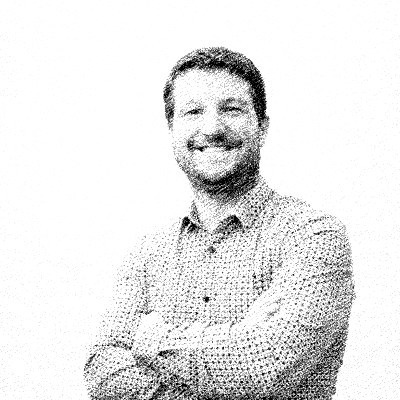
Maxime Feyeux is President, CSO and co-founder of TreeFrog Therapeutics whose proprietory C-Stem technology mass-produces high-quality pluripotent stem cells in a 3D environment. Prior to founding TreeFrog in 2018, Feyeux worked as a maturation engineer at Aquitaine Science Transfert and completed a post-doctoral degree at Bordeaux’s Institut des Maladies Neurodégénératives. He also has a post-doctoral degree from the University of Geneva and completed his PhD in neurobiology and neurosciences at the Université d’Evry-Val d’Essone.
Advisor, board member, co-founder of NovoNutrients
Brian Sefton has been co-founder, a board member and a part-time advisor at NovoNutrients, a San Francisco-based biotech manufacturer of alt-protein produced from fermentation and CO2 since it was founded in 2017. In 2009, he co-founded research entity Oakbio, from which NovoNutrients evolved, and was its President and CTO. Sefton was CTO and President at NovoNutrients and also co-CEO and Chief Scientist at Oakbio until 2021 when he became the CEO at San Francisco-based fermentation commercialization startup Sincarne. Between 2005 and 2011, Sefton was also CEO at pharma research company Pharmadyn, working on drugs development for Alzheimer's Disease, and, for three of those years, was also Managing Partner of Stratsyn, a consultancy specializing in creation, development, management and fund raising for not-for-profit organizations. Sefton’s earlier posts include: directing nanotechnology commercialization and investment company Nanosig for three years, CEO of Silicon Valley’s Fastlane, a high-profile pioneer in real-time network traffic and security analysis for six years; and, simultaneously, being CEO at Bluebox Communications, developing high-end network security applications and appliances for Fortune 500 companies and the US government.Sefton holds an MBA from Santa Clara University in California and a bachelor’s degree in biochemistry from the University of California, Berkeley

Brian Sefton has been co-founder, a board member and a part-time advisor at NovoNutrients, a San Francisco-based biotech manufacturer of alt-protein produced from fermentation and CO2 since it was founded in 2017. In 2009, he co-founded research entity Oakbio, from which NovoNutrients evolved, and was its President and CTO. Sefton was CTO and President at NovoNutrients and also co-CEO and Chief Scientist at Oakbio until 2021 when he became the CEO at San Francisco-based fermentation commercialization startup Sincarne. Between 2005 and 2011, Sefton was also CEO at pharma research company Pharmadyn, working on drugs development for Alzheimer's Disease, and, for three of those years, was also Managing Partner of Stratsyn, a consultancy specializing in creation, development, management and fund raising for not-for-profit organizations. Sefton’s earlier posts include: directing nanotechnology commercialization and investment company Nanosig for three years, CEO of Silicon Valley’s Fastlane, a high-profile pioneer in real-time network traffic and security analysis for six years; and, simultaneously, being CEO at Bluebox Communications, developing high-end network security applications and appliances for Fortune 500 companies and the US government.Sefton holds an MBA from Santa Clara University in California and a bachelor’s degree in biochemistry from the University of California, Berkeley
Chairman of the Board, co-founder, co-inventor of NovoNutrients
Russell J. Howard has been co-founder and chairman of the board at NovoNutrients, a San Francisco biotech manufacturer of alt-protein produced using fermentation and CO2, and the research company Oakbio, since the latter’s foundation in 2009. During this period, for a year, Howard also worked as head of commercial strategy at Genome.One, a genetics startup. Howard is also on the board of executives of two Australian pharma companies, Immutep and NeuClone. Previously, between 1997 and 2009, he was CEO at California-based Maxygen, dedicated to the commercialization of molecular breeding and gene shuffling in protein. The year before that, Howard was president and scientific director at global pharma giant GSK in Santa Clara, and between 1994 and 1996, he held the same position at AFFYMAX Research Institute, working on new drugs research. Howard also held long-term research positions, heading up the laboratory at Palo Alto’s DNAX Research Institute of Molecular & Cellular Biology for six years, and earlier spent nine years at Bethesda’s National Institute of Allergy and Infectious Diseases (NIAID) working on identifying new malarial pathogens. The doctor of biochemistry from the University of Melbourne has over 140 peer-reviewed publications. Following his studies, Howard spent three years undertaking postdoctoral research at Australia’s WEHI (formerly the Walter and Eliza Hall Institute of Medical Research).

Russell J. Howard has been co-founder and chairman of the board at NovoNutrients, a San Francisco biotech manufacturer of alt-protein produced using fermentation and CO2, and the research company Oakbio, since the latter’s foundation in 2009. During this period, for a year, Howard also worked as head of commercial strategy at Genome.One, a genetics startup. Howard is also on the board of executives of two Australian pharma companies, Immutep and NeuClone. Previously, between 1997 and 2009, he was CEO at California-based Maxygen, dedicated to the commercialization of molecular breeding and gene shuffling in protein. The year before that, Howard was president and scientific director at global pharma giant GSK in Santa Clara, and between 1994 and 1996, he held the same position at AFFYMAX Research Institute, working on new drugs research. Howard also held long-term research positions, heading up the laboratory at Palo Alto’s DNAX Research Institute of Molecular & Cellular Biology for six years, and earlier spent nine years at Bethesda’s National Institute of Allergy and Infectious Diseases (NIAID) working on identifying new malarial pathogens. The doctor of biochemistry from the University of Melbourne has over 140 peer-reviewed publications. Following his studies, Howard spent three years undertaking postdoctoral research at Australia’s WEHI (formerly the Walter and Eliza Hall Institute of Medical Research).
CEO and Co-founder of Kuaishou
Su Hua quit his PhD studies at China’s prestigious Tsinghua University. In 2006, he joined Google as an engineer working on ads search. In October 2008, he left Google and started over 33 projects but all failed.A year later, he joined Baidu and worked for over two years as a core engineer and team leader for its search engine marketing system Fengchao. He left Baidu to establish search engine startup One Box that was acquired by Alibaba.In June 2013, Su was introduced to Cheng Yixiao who had already founded GIF Kuaishou in 2011. They decided to join forces and pivot GIF Kuaishou into a video-sharing app, with Su as CEO and Cheng as CPO.
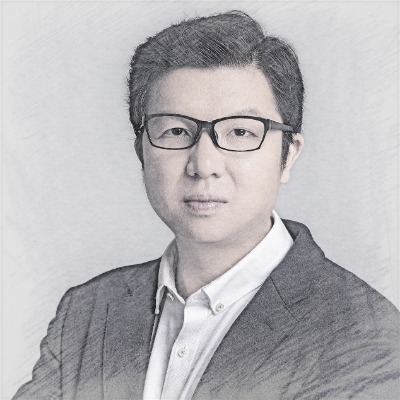
Su Hua quit his PhD studies at China’s prestigious Tsinghua University. In 2006, he joined Google as an engineer working on ads search. In October 2008, he left Google and started over 33 projects but all failed.A year later, he joined Baidu and worked for over two years as a core engineer and team leader for its search engine marketing system Fengchao. He left Baidu to establish search engine startup One Box that was acquired by Alibaba.In June 2013, Su was introduced to Cheng Yixiao who had already founded GIF Kuaishou in 2011. They decided to join forces and pivot GIF Kuaishou into a video-sharing app, with Su as CEO and Cheng as CPO.
Allen Zhang: Father of WeChat and its string of innovations
Get to know the man behind the app in every Chinese user's smartphone

Worktile sells an easier, more efficient approach to teamwork
Employees no longer have to switch between different apps to complete projects, thanks to this collaborative SaaS for enterprises

Haoyiku makes it possible to offer genuine products at lower prices
When e-commerce is combined with social media, everybody wins

QinLin Tech gets advertisers to pay for your local security systems
Besides keeping residents safe from intruders, QinLin’s smart community business model also offers essential home services, social activities and group-buying discounts

The summer LinkedIn got pummeled in China
Or how the startup Maimai cracked Chinese professional networking

Get.AI: Using artificial intelligence to help humans write more efficiently
Writing productivity tool Get.AI automates mundane tasks, such as tracking the latest trending topics and speeding up research, improving writers' efficiency by as much as 70%

In this shipping container, you can work out and save money
By eliminating the need to pay for an expensive gym membership, ParkBox is good news for gym buffs

This Tencent-backed startup helps content creators make real money with their own e-shops in WeChat

Xiaoe Tech: Capitalizing on China’s pay-for-knowledge fever
In just two years, this startup has helped its clients sell RMB 2.2 billion worth of knowledge-based content online

Du'Anyam: Empowering rural women to work independently and learn financial planning skills
Du’Anyam had to cancel bulk orders to survive the Covid-19 downturn, pivoting to B2C online sales, until the tourism and hospitality sectors recover

This app lets you show off your cat on social media
Is Meowcard the next big thing or a flash in the pan?

Despite early promise, China's on-demand bus services hit potholes on the road to profit
High costs – not a lack of customers – have forced promising on-demand bus service startups like DuduBus to shift their focus to corporate shuttle services

"Spot" your friends, live chat and share music with this social mapping app
Spot, a new challenger to China's WeChat, is using pop-up song lyrics to entice youths to live chat and play games

Xiangwushuo’s platform finds a new home for secondhand goods
This WeChat mini program doesn’t yet have a monetization strategy, but has still received over US$110 million in funding in one year

Alipay opens its platform to speed up digitalization of Chinese service providers amid Covid-19
As Alipay continues to battle WeChat for super-app supremacy, it's created a stronghold in China’s services industry, where 80% of businesses still operate under brick-and-mortar models
Sorry, we couldn’t find any matches for “Wechat Work”.
POPULAR DATABASE