Fintech
-
DATABASE (153)
-
ARTICLES (100)
Based in San Mateo California, KBW Ventures was founded by HRH Prince Khaled bin Alwaleed bin Talal Al Saud. The asset management firm’s CEO is also the chairman of KBW Investments that was founded in 2013 in Dubai in the United Arab Emirates (UAE).KBW Ventures is part of the KBW Group and mainly invests in companies involved in sustainable food, artificial intelligence, blockchain technologies and fintech. In 2019, the VC had already invested in 24 companies in sectors like e-gaming, drones, e-commerce and plant-based proteins. Recently, it also increased its stakes in two Californian biotechs BlueNalu and TurtleTree Labs. The aim is to open up the Middle East markets to global tech companies.

Based in San Mateo California, KBW Ventures was founded by HRH Prince Khaled bin Alwaleed bin Talal Al Saud. The asset management firm’s CEO is also the chairman of KBW Investments that was founded in 2013 in Dubai in the United Arab Emirates (UAE).KBW Ventures is part of the KBW Group and mainly invests in companies involved in sustainable food, artificial intelligence, blockchain technologies and fintech. In 2019, the VC had already invested in 24 companies in sectors like e-gaming, drones, e-commerce and plant-based proteins. Recently, it also increased its stakes in two Californian biotechs BlueNalu and TurtleTree Labs. The aim is to open up the Middle East markets to global tech companies.
David Spector is the president and co-founder of the online lingerie company ThirdLove. A former partner at Sequioa Capital, he is a prolific angel investor with investments in around 30 startups across different geographies and market segments. Spector’s most recent disclosed investments are from 2020 and include participation in the $4.6m seed round of US fintech provider CapChase and in the $70m Series C round of US mobile marketing company Attentive.

David Spector is the president and co-founder of the online lingerie company ThirdLove. A former partner at Sequioa Capital, he is a prolific angel investor with investments in around 30 startups across different geographies and market segments. Spector’s most recent disclosed investments are from 2020 and include participation in the $4.6m seed round of US fintech provider CapChase and in the $70m Series C round of US mobile marketing company Attentive.
Based in the Netherlands, Prosus is a global investor in consumer tech and Internet companies. It is a subsidiary of South African tech investment company Naspers. In August 2021 the two companies completed a cross-holding agreement in which Naspers owns 57% of Prosus while Prosus owns 49% of Naspers. The two companies share a single board.Prosus is the largest shareholder in Chinese tech giant Tencent and Russian tech platform Mail.ru. Meanwhile, its venture division invests in a variety of fintech, food delivery, and other consumer tech companies. In Indonesia, it has invested in Bibit, a stock and mutual funds investment platform, as well as fishery trading and community development startup Aruna. It has also invested in edtech platforms like Indian executive learning platform Eruditus, and US-based coding education company SoloLearn.

Based in the Netherlands, Prosus is a global investor in consumer tech and Internet companies. It is a subsidiary of South African tech investment company Naspers. In August 2021 the two companies completed a cross-holding agreement in which Naspers owns 57% of Prosus while Prosus owns 49% of Naspers. The two companies share a single board.Prosus is the largest shareholder in Chinese tech giant Tencent and Russian tech platform Mail.ru. Meanwhile, its venture division invests in a variety of fintech, food delivery, and other consumer tech companies. In Indonesia, it has invested in Bibit, a stock and mutual funds investment platform, as well as fishery trading and community development startup Aruna. It has also invested in edtech platforms like Indian executive learning platform Eruditus, and US-based coding education company SoloLearn.
CEO and co-founder of OLIO
Tessa Clarke is the British CEO and co-founder of food-sharing app OLIO that was inspired by her experience of having to throw away perfectly good unused food when she was packing up to move from Switzerland back to the UK in 2014.After graduating with a first-class degree in social and political sciences at the University of Cambridge in UK in 1997, she worked for three years at the Boston Consulting Group as a junior associate. She joined an MBA program at Stanford University Graduate School of Business in 2002 and met Saasha Celestial-One, who was also studying for an MBA at Stanford. In 2015, Clarke and Celestial-One decided to use their savings to create a food-sharing app OLIO after successfully testing the idea as a private WhatsApp group in North London.Before becoming an entrepreneur in 2015, Clarke has held various senior management roles since completing her MBA in 2004. She worked for global business publisher EMAP from 2005 until 2009, when she joined Dyson Inc as e-commerce managing director (MD). In 2013, she left Dyson to become MD of fintech PayLater based in Switzerland run by the Wonga payday loan company. Known then as Tessa Cook, she later became Wonga’s MD for eight months when she was tasked with “cleaning up” the tarnished reputation of the high interest loan company. From 2013 to 2021, she was also chair of the management board of St George’s Palace, a boutique apart-hotel and spa complex in Bansko, Bulgaria.In 2018, she became a fellow at Unreasonable, an organization that supports social and environmental entrepreneurship. For two years until 2021, Clarke was ambassador for the Meaningful Business 100 global event that advocates the achievement of the UN’s Sustainable Development Goals. She was also a board member for six years at Contentive, a global B2B media and information company. In 2021, her busy schedule now includes becoming a business mentor for not-for-profit Virgin Startup.

Tessa Clarke is the British CEO and co-founder of food-sharing app OLIO that was inspired by her experience of having to throw away perfectly good unused food when she was packing up to move from Switzerland back to the UK in 2014.After graduating with a first-class degree in social and political sciences at the University of Cambridge in UK in 1997, she worked for three years at the Boston Consulting Group as a junior associate. She joined an MBA program at Stanford University Graduate School of Business in 2002 and met Saasha Celestial-One, who was also studying for an MBA at Stanford. In 2015, Clarke and Celestial-One decided to use their savings to create a food-sharing app OLIO after successfully testing the idea as a private WhatsApp group in North London.Before becoming an entrepreneur in 2015, Clarke has held various senior management roles since completing her MBA in 2004. She worked for global business publisher EMAP from 2005 until 2009, when she joined Dyson Inc as e-commerce managing director (MD). In 2013, she left Dyson to become MD of fintech PayLater based in Switzerland run by the Wonga payday loan company. Known then as Tessa Cook, she later became Wonga’s MD for eight months when she was tasked with “cleaning up” the tarnished reputation of the high interest loan company. From 2013 to 2021, she was also chair of the management board of St George’s Palace, a boutique apart-hotel and spa complex in Bansko, Bulgaria.In 2018, she became a fellow at Unreasonable, an organization that supports social and environmental entrepreneurship. For two years until 2021, Clarke was ambassador for the Meaningful Business 100 global event that advocates the achievement of the UN’s Sustainable Development Goals. She was also a board member for six years at Contentive, a global B2B media and information company. In 2021, her busy schedule now includes becoming a business mentor for not-for-profit Virgin Startup.
Kaszek Ventures is an Argentinian VC co-founded in 2011 by Hernan Kazah and Nicolas Szekasy, both hailing from Latin America’s e-commerce success story MercadoLibre. Starting with $95m, the VC made its first investment in Brazilian fintech, Nubank. The VC now has over 159 investments and has managed 21 exits. It mainly focuses on B2C solutions, mobile, healthcare technology, retail and media.The most recent Kaszek investment is in Latin America’s leading crypto platform Bitso, co-leading Bitso’s $62m Series B round with QED Investors. Managing partner Szekasy has also joined Bitso’s board. Existing shareholders Coinbase Ventures and Pantera Capital joined the Bitso round.In 2019, Kaszek raised two new funds securing a total of $600m to invest in later-growth stage companies to tap into Latin America’s rapidly maturing tech ecosystems. The rollout of 4G has also helped to speed up the adoption of new technologies across the region, according to Kazah.
Kaszek Ventures is an Argentinian VC co-founded in 2011 by Hernan Kazah and Nicolas Szekasy, both hailing from Latin America’s e-commerce success story MercadoLibre. Starting with $95m, the VC made its first investment in Brazilian fintech, Nubank. The VC now has over 159 investments and has managed 21 exits. It mainly focuses on B2C solutions, mobile, healthcare technology, retail and media.The most recent Kaszek investment is in Latin America’s leading crypto platform Bitso, co-leading Bitso’s $62m Series B round with QED Investors. Managing partner Szekasy has also joined Bitso’s board. Existing shareholders Coinbase Ventures and Pantera Capital joined the Bitso round.In 2019, Kaszek raised two new funds securing a total of $600m to invest in later-growth stage companies to tap into Latin America’s rapidly maturing tech ecosystems. The rollout of 4G has also helped to speed up the adoption of new technologies across the region, according to Kazah.
Founded over 110 years ago from several small agricultural cooperative banks, the Dutch commercial banking group Rabobank has over 10m customers across 47 countries. The banking group’s Rabo Investments vehicle manages Rabo Ventures with a €120m fund investing globally in early-stage fintech and agtech startups. There is also a €30m fund-of-funds to partner with leading VCs in other funding rounds like the $12m funding round of Dutch e-scooter company GO Sharing.The Rabobank Food & Agri Innovation Fund specializes in supporting enterprises involved in creating sustainable solutions for diverse food and agricultural sectors including livestock farms. Rabo F&A Innovation Fund currently has 11 agri-foodtech startups in its portfolio, including participation in a $12m Series A round of Vence, US-based virtual fencing tech company for livestock management.

Founded over 110 years ago from several small agricultural cooperative banks, the Dutch commercial banking group Rabobank has over 10m customers across 47 countries. The banking group’s Rabo Investments vehicle manages Rabo Ventures with a €120m fund investing globally in early-stage fintech and agtech startups. There is also a €30m fund-of-funds to partner with leading VCs in other funding rounds like the $12m funding round of Dutch e-scooter company GO Sharing.The Rabobank Food & Agri Innovation Fund specializes in supporting enterprises involved in creating sustainable solutions for diverse food and agricultural sectors including livestock farms. Rabo F&A Innovation Fund currently has 11 agri-foodtech startups in its portfolio, including participation in a $12m Series A round of Vence, US-based virtual fencing tech company for livestock management.
Based in San Francisco, the Mulago Foundation is a philanthropic foundation designed to carry on the life work of pediatrician Rainer Arnhold who died in 1993 while working in the mountains of Bolivia. He originally set up the Mulago Foundation in 1968, naming it after a hospital in Uganda. His Jewish family, bankers for generations, continued to support the foundation for impact investing across diverse sectors and geographies, with scalable solutions to alleviate poverty.It has invested in 61 companies to date. Successful ventures include: Kenya’s Komaza that raised $28m in its 2020 Series B and Myanmar’s Proximity Finance, a fintech for small-holder farmers that raised $14m in 2020. Komaza helps poor families turn dry land into small-scale, income-generating tree farms, benefiting more than 2m farmers in Sub-Saharan Africa.

Based in San Francisco, the Mulago Foundation is a philanthropic foundation designed to carry on the life work of pediatrician Rainer Arnhold who died in 1993 while working in the mountains of Bolivia. He originally set up the Mulago Foundation in 1968, naming it after a hospital in Uganda. His Jewish family, bankers for generations, continued to support the foundation for impact investing across diverse sectors and geographies, with scalable solutions to alleviate poverty.It has invested in 61 companies to date. Successful ventures include: Kenya’s Komaza that raised $28m in its 2020 Series B and Myanmar’s Proximity Finance, a fintech for small-holder farmers that raised $14m in 2020. Komaza helps poor families turn dry land into small-scale, income-generating tree farms, benefiting more than 2m farmers in Sub-Saharan Africa.
Founded in 2013 by Ramanan Raghavendran and John Kim, Amasia is a venture capital investment firm based in San Francisco and Singapore. The VC promotes environmental and sustainable innovations that help to reduce consumption, boost recycling and upcycling. Eco-investments include Finch, Treedots and Joro. Finch provides information about a product’s environmental impact to consumers while TreeDots connects grocery suppliers directly with businesses and households. Joro advises users on actionable steps to reduce their carbon footprints.Amasia primarily invests in startups from seed stage up to Series B, but it has also participated in later-stage investments. The VC also aims to encourage conventional offline businesses to go online and optimize supply chain activities. In October 2020, Amasia participated in a $100m Series E round raised by Dialpad, a remote working communication software firm. In September 2021, the VC took a stake in Indonesian fintech Xendit’s $150m Series C round. Tokopedia also joined the Amasia stable in 2016 when the e-commerce platform became Indonesia’s first tech unicorn after the $147m funding round.Other investments include Super, a social commerce platform that improves FMCG distribution to tier-2 and tier-3 cities in Indonesia, online education firm SkillShare and Rainforest Life that acquires and aggregates direct-to-consumer e-commerce brands.

Founded in 2013 by Ramanan Raghavendran and John Kim, Amasia is a venture capital investment firm based in San Francisco and Singapore. The VC promotes environmental and sustainable innovations that help to reduce consumption, boost recycling and upcycling. Eco-investments include Finch, Treedots and Joro. Finch provides information about a product’s environmental impact to consumers while TreeDots connects grocery suppliers directly with businesses and households. Joro advises users on actionable steps to reduce their carbon footprints.Amasia primarily invests in startups from seed stage up to Series B, but it has also participated in later-stage investments. The VC also aims to encourage conventional offline businesses to go online and optimize supply chain activities. In October 2020, Amasia participated in a $100m Series E round raised by Dialpad, a remote working communication software firm. In September 2021, the VC took a stake in Indonesian fintech Xendit’s $150m Series C round. Tokopedia also joined the Amasia stable in 2016 when the e-commerce platform became Indonesia’s first tech unicorn after the $147m funding round.Other investments include Super, a social commerce platform that improves FMCG distribution to tier-2 and tier-3 cities in Indonesia, online education firm SkillShare and Rainforest Life that acquires and aggregates direct-to-consumer e-commerce brands.
Early-stage-focused VC firm with a €24m first fund mainly investing in B2B and B2C digital startups headquartered in Spain. Initial investment amounts range between €70,000 and €300,000, and followup investment amounts go up to €1m per company. Describing themselves as “momentum investors” seeking quick time-to-market projects, Encomenda Smart Capital was founded in 2017 and managed by renowned Spanish angel investors Carlos Blanco, Oriol Juncosa and Miguel Sanz Sanchez, along with a network of angel investors Encomenda supports the growth of startups' portfolios and helps startups to scale at national and international levels. Encomenda invests 30% in SaaS and in projects with a recurring income model; 20% are fintech, and they also bet on the human resources, edtech and healthcare. Just two out of 25 investments have folded up between 2017 and 2020, with half the fund monies committed. Encomenda is seeking to launch a second fund in 2022 focusing on Spanish and Portuguese startups, of €40m–€50m, and multi-stage, by starting in the early-stage investments, with follow-through investments in subsequent stages.

Early-stage-focused VC firm with a €24m first fund mainly investing in B2B and B2C digital startups headquartered in Spain. Initial investment amounts range between €70,000 and €300,000, and followup investment amounts go up to €1m per company. Describing themselves as “momentum investors” seeking quick time-to-market projects, Encomenda Smart Capital was founded in 2017 and managed by renowned Spanish angel investors Carlos Blanco, Oriol Juncosa and Miguel Sanz Sanchez, along with a network of angel investors Encomenda supports the growth of startups' portfolios and helps startups to scale at national and international levels. Encomenda invests 30% in SaaS and in projects with a recurring income model; 20% are fintech, and they also bet on the human resources, edtech and healthcare. Just two out of 25 investments have folded up between 2017 and 2020, with half the fund monies committed. Encomenda is seeking to launch a second fund in 2022 focusing on Spanish and Portuguese startups, of €40m–€50m, and multi-stage, by starting in the early-stage investments, with follow-through investments in subsequent stages.
Future Positive Capital is a Paris-based VC with a second office in London. Its investments cover deep-technology companies applying AI, biotechnology, synthetic biology, as well as robotics. Co-funded in 2016 by ex-Index Ventures associate Sofia Hmich along with Alexandre Terrien and Michael Rosen; it has made 18 investments to date. In 2019 Future Positive raised over $57m pan-European impact investment fund, claiming that most European VCs are continuing to staying focused on sectors, such as consumer, fintech, and marketing, or web and mobile technologies. Future Positive’s belief is that there is instead, a long-tail of investment opportunities to back businesses that actually tackle “the world’s most pressing problems”.Through this fund, it will back throughout Seed and Series A stages, with the possibility to follow up on Series B investing between around €300,000 and €5m. Since then the company has backed startups in the like of BioBeats, an AI company focused on preventative mental health, cell-based startup Meatable, and more recently NotCo, the Chilean unicorn disrupting the food and beverage sector with AI-enabled plant-based products.The team counts on an extensive network of mentors, innovators, impact angel investors and entrepreneurs such as F1 pilots Nico Rosberg, the MD of Alibaba France Sebastien Badault, the Omid Ashtari the President of Citymapper amongst others.

Future Positive Capital is a Paris-based VC with a second office in London. Its investments cover deep-technology companies applying AI, biotechnology, synthetic biology, as well as robotics. Co-funded in 2016 by ex-Index Ventures associate Sofia Hmich along with Alexandre Terrien and Michael Rosen; it has made 18 investments to date. In 2019 Future Positive raised over $57m pan-European impact investment fund, claiming that most European VCs are continuing to staying focused on sectors, such as consumer, fintech, and marketing, or web and mobile technologies. Future Positive’s belief is that there is instead, a long-tail of investment opportunities to back businesses that actually tackle “the world’s most pressing problems”.Through this fund, it will back throughout Seed and Series A stages, with the possibility to follow up on Series B investing between around €300,000 and €5m. Since then the company has backed startups in the like of BioBeats, an AI company focused on preventative mental health, cell-based startup Meatable, and more recently NotCo, the Chilean unicorn disrupting the food and beverage sector with AI-enabled plant-based products.The team counts on an extensive network of mentors, innovators, impact angel investors and entrepreneurs such as F1 pilots Nico Rosberg, the MD of Alibaba France Sebastien Badault, the Omid Ashtari the President of Citymapper amongst others.
Aspex Management was founded in 2018 by Hermes Li Ho Kei who was previously the executive MD and Head of Asia Equities at Och-Ziff Capital Management, aka OZ Management. Prior to joining OZ in 2011 Li worked at Goldman, Sachs & Co in Hong Kong.The London School of Economics graduate is now the chief investment officer at Aspex. The Hong Kong firm focuses on equity investments in Pan-Asia, specializing in sectors with long-term market growth potential and companies undergoing structural changes.Aspex led the $64m funding round for South Korean fintech unicorn Toss in August 2019. The P2P money transfer service platform Toss is created by Viva Republica backed by PayPal. Other participants in the round included existing Toss investors Kleiner Perkins, Altos Ventures, Singapore's GIC, Sequoia Capital China, Goodwater Capital and Bessemer Venture Partners.In May 2020, Aspex also invested in another startup Market Kurly, a grocery-delivery service provider that became South Korea’s latest unicorn via the Series E funding round that secured $328m led by DST Global. In July, Aspex also joined the $900m Series C+ funding round of Xpeng Motors, Tesla’s EV rival in China.

Aspex Management was founded in 2018 by Hermes Li Ho Kei who was previously the executive MD and Head of Asia Equities at Och-Ziff Capital Management, aka OZ Management. Prior to joining OZ in 2011 Li worked at Goldman, Sachs & Co in Hong Kong.The London School of Economics graduate is now the chief investment officer at Aspex. The Hong Kong firm focuses on equity investments in Pan-Asia, specializing in sectors with long-term market growth potential and companies undergoing structural changes.Aspex led the $64m funding round for South Korean fintech unicorn Toss in August 2019. The P2P money transfer service platform Toss is created by Viva Republica backed by PayPal. Other participants in the round included existing Toss investors Kleiner Perkins, Altos Ventures, Singapore's GIC, Sequoia Capital China, Goodwater Capital and Bessemer Venture Partners.In May 2020, Aspex also invested in another startup Market Kurly, a grocery-delivery service provider that became South Korea’s latest unicorn via the Series E funding round that secured $328m led by DST Global. In July, Aspex also joined the $900m Series C+ funding round of Xpeng Motors, Tesla’s EV rival in China.
Co-founder and CEO of Mambu
Ukraine-born entrepreneur Eugene Danilkis holds a bachelor’s in Computer Science from the University of British Columbia and a master’s in Human-Computer Interaction from Carnegie Mellon University. His expertise in design and technology kickstarted his career. From 2005 to 2008, Danilkis designed NASA-approved software for the International Space Station at Canadian spacetech MDA. He now designs software for fintechs and banks through Mambu, a Berlin-based startup he co-founded in 2011, of which he is also CEO. Danilkis has also been employed by both Carnegie Mellon University and the University of British Columbia to work in software and web development.

Ukraine-born entrepreneur Eugene Danilkis holds a bachelor’s in Computer Science from the University of British Columbia and a master’s in Human-Computer Interaction from Carnegie Mellon University. His expertise in design and technology kickstarted his career. From 2005 to 2008, Danilkis designed NASA-approved software for the International Space Station at Canadian spacetech MDA. He now designs software for fintechs and banks through Mambu, a Berlin-based startup he co-founded in 2011, of which he is also CEO. Danilkis has also been employed by both Carnegie Mellon University and the University of British Columbia to work in software and web development.
Co-founder and Managing Director of Indexa Capital
Ramón Blanco Duelo worked for Banco Santander before founding Selftrade.es in 1999. Selftrade.es, one of the first Spanish online brokers, was sold to Boursorama Banque in 2002. Blanco was awarded a Fulbright scholarship and has an MBA from the Harvard Business School in USA. A specialist in corporate digital transformation processes, he currently has roles as CEO, Executive Chairman and investor in several fintechs and other companies involved in internet banking, brokerage and e-commerce.

Ramón Blanco Duelo worked for Banco Santander before founding Selftrade.es in 1999. Selftrade.es, one of the first Spanish online brokers, was sold to Boursorama Banque in 2002. Blanco was awarded a Fulbright scholarship and has an MBA from the Harvard Business School in USA. A specialist in corporate digital transformation processes, he currently has roles as CEO, Executive Chairman and investor in several fintechs and other companies involved in internet banking, brokerage and e-commerce.
Formerly known as Tribeca Angels, the New York-based Tribeca Early Stage Partners was established in 2014 by John McEvoy. The firm's network of 50 entrepreneurs and business leaders specialize in institutional finance and enterprise technology. Tribeca focuses on early-stage investments in fintechs and ERPs, especially those based in the New York area. Initial investment per startup ranges from US$500,000 to US$1 million. It has invested in 15 startups and managed two exits, Cola and James.

Formerly known as Tribeca Angels, the New York-based Tribeca Early Stage Partners was established in 2014 by John McEvoy. The firm's network of 50 entrepreneurs and business leaders specialize in institutional finance and enterprise technology. Tribeca focuses on early-stage investments in fintechs and ERPs, especially those based in the New York area. Initial investment per startup ranges from US$500,000 to US$1 million. It has invested in 15 startups and managed two exits, Cola and James.
Jojonomic's fintech PaaS helps corporates automate reimbursement, prevent fraud
Jojonomic is used by big companies including Pertamina Patra Niaga, Lazada, Tokopedia and Gojek

After insurtech and fintech, Newralers applies AI to winemaking
Newralers expects strong demand for its disruptive AI solutions that test the cognitive value of information, with clients from listed companies to SMEs
Growing together: a look at the Indonesia Fintech Association (Aftech)
The Indonesia Fintech Association sets an example of how professional associations can help new industries grow faster and better
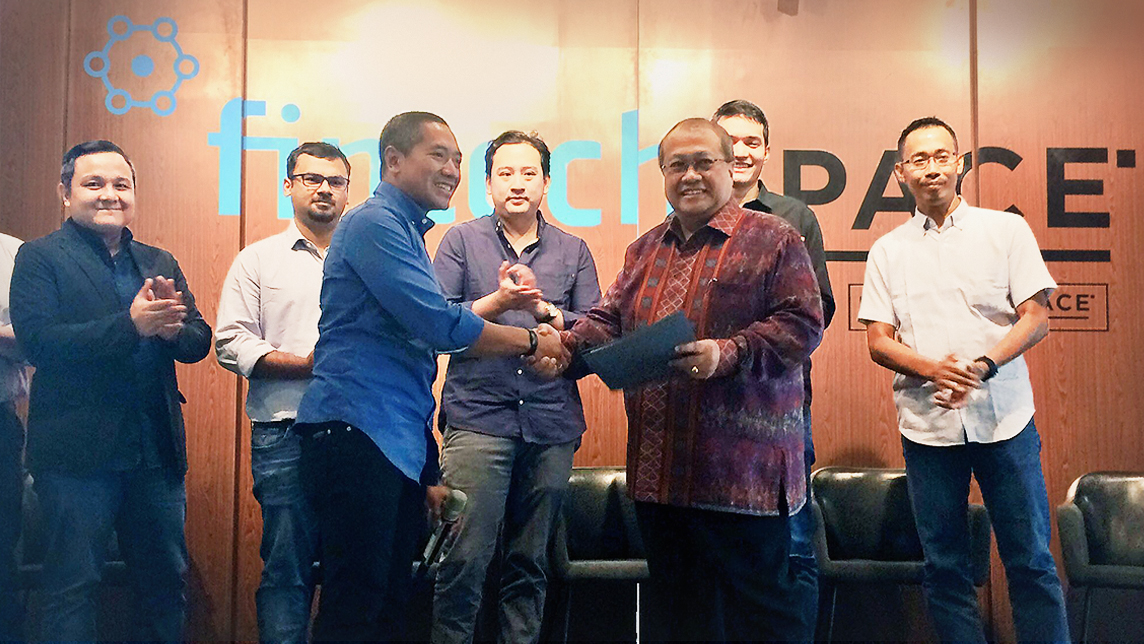
Alpha JWC Ventures bets on Indonesian fintech, analytics startups for big impact
A commitment to mentoring and supporting its portfolio companies also lies at the core of its business
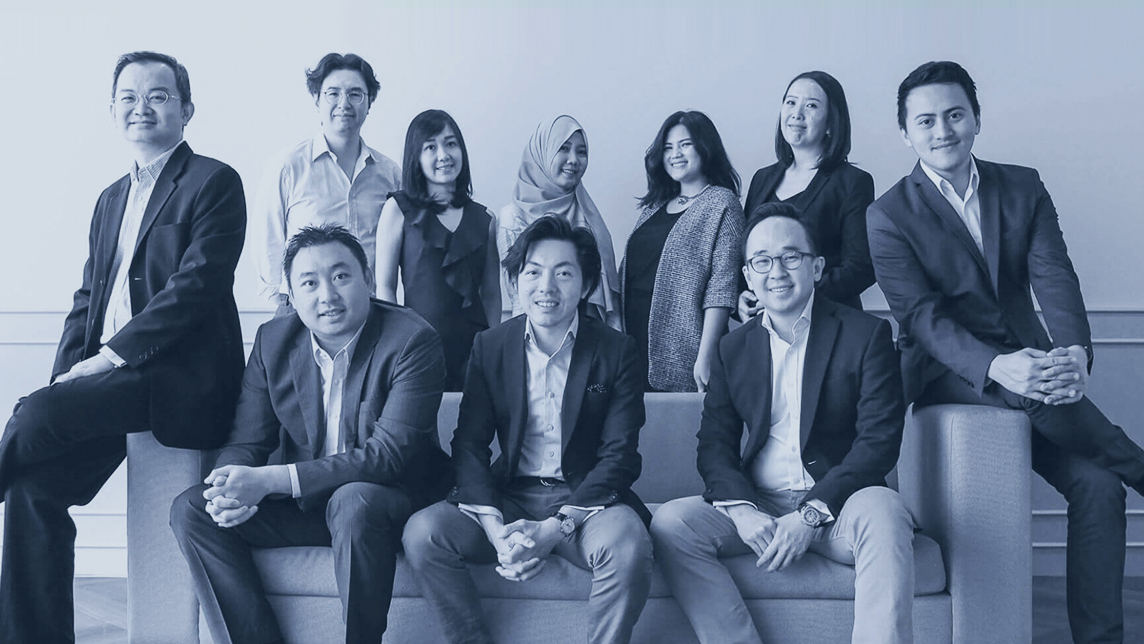
Investing in Indonesia: The fintech companies driving a new influx of capital
With 66% of Indonesians not owning a bank account, fintech startups have come up with myriad innovative products to entice a new generation of retail investors

Gojek acquires Indonesian POS startup Moka, gains greater share of SME fintech market
Deal reportedly worth $120m will add Moka's network of over 30,000 merchants to Gojek's reach

Fintech startup Xendit launches aid program for Indonesian businesses amid Covid-19 crisis
Xendit is helping more SMEs go online by waiving transaction fees for its digital payments solution for the first month

Pintek: Fintech offers wide variety of loans to improve Indonesians' access to education
Pintek is expanding into Islamic finance with new Sharia-compliant loans for students at Islamic schools and universities

Indonesian unicorn Traveloka aims for US listing via SPAC
The online travel aggregator reported revenue drops and layoffs in 2020 but became profitable late last year, led by recoveries in Vietnam and Thailand

Financial planning startup Halofina raises pre-Series A from Mandiri Capital, Finch Capital
The funding is meant to “bridge” the company toward a 2020 Series A round as it launches a new subscription plan and works with financial advisors
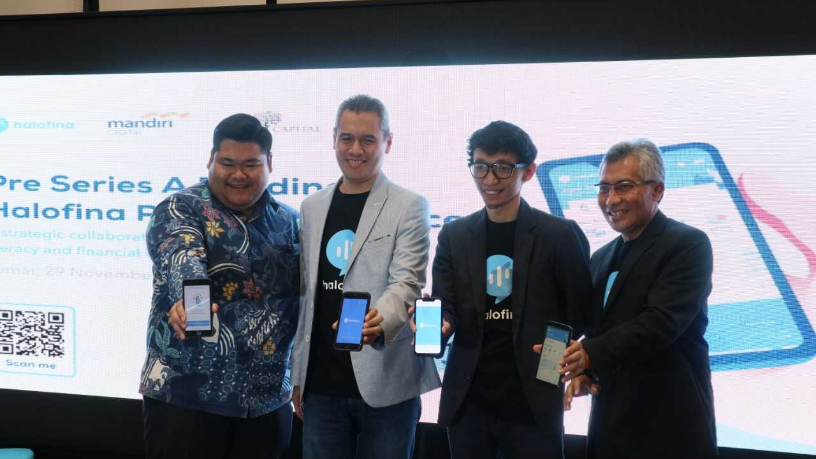
James, an AI-powered tool for faster, more accurate credit risk assessment
Capable of analyzing over 7,000 types of data, the award-winning credit risk tool for financial institutions is also quick to install and roll out

Indonesian fintechs plug payday gaps, help workers stay away from loan sharks
Cash advance or “earned wage access” programs, already popular employee benefits in the US and Europe, are attracting investors and diverse clients in Indonesia

P2P financing platform Investree raises Series C, with $23.5m in first tranche
Indonesia's Investree closes key funding amid Covid-19 crisis; is applying for licenses in Thailand and the Philippines in regional expansion

Quant Group makes personal loans safer, easier in China
Using big data and AI, Chinese fintech startup Quant Group simplifies and accelerates loan processing, and assures monetary security for financial institutions

Halofina brings wealth management to millennials
Indonesian startup extends service once reserved for the rich to a wider market so the young can invest toward their life goals
Sorry, we couldn’t find any matches for “Fintech”.
POPULAR DATABASE