Kenya
-
DATABASE (13)
-
ARTICLES (9)
Co-founder, CEO of Meatable
Krijn De Nood is the Dutch co-founder and CEO at cell-based meat startup Meatable, the first to claim a highly scalable culture technology with the use of pluripotent stem cells, where he has worked since 2018. He previously worked at McKinsey for six-and-a-half years in Amsterdam, New York and in Kenya. Prior to that, he worked as an equity derivatives trader at derivative trading company All Options after a short stint at Barclays Capital.De Nood holds two first degrees from the University of Amsterdam, in philosophy and in economics and finance.

Krijn De Nood is the Dutch co-founder and CEO at cell-based meat startup Meatable, the first to claim a highly scalable culture technology with the use of pluripotent stem cells, where he has worked since 2018. He previously worked at McKinsey for six-and-a-half years in Amsterdam, New York and in Kenya. Prior to that, he worked as an equity derivatives trader at derivative trading company All Options after a short stint at Barclays Capital.De Nood holds two first degrees from the University of Amsterdam, in philosophy and in economics and finance.
Founder and CEO of Alodokter
A graduate with a master’s in Management and Business Strategy from the ESSEC Business School Paris, Nathanael Faibis had worked for two years as a project manager in France, Kenya and Morocco for a pharmaceutical market research company Sanisphere. In 2012, he worked for Lazada in Vietnam and Indonesia before becoming the head of production and user experience of Lazada Southeast Asia. However, he left Lazada in March 2013 to rejoin Sanisphere in Jakarta as the country head and global head of data management. Finally in April 2014, he decided to set up an Indonesian health portal Alodokter.

A graduate with a master’s in Management and Business Strategy from the ESSEC Business School Paris, Nathanael Faibis had worked for two years as a project manager in France, Kenya and Morocco for a pharmaceutical market research company Sanisphere. In 2012, he worked for Lazada in Vietnam and Indonesia before becoming the head of production and user experience of Lazada Southeast Asia. However, he left Lazada in March 2013 to rejoin Sanisphere in Jakarta as the country head and global head of data management. Finally in April 2014, he decided to set up an Indonesian health portal Alodokter.
Founded in 1999, TLCOM Capital now has offices in Kenya, Nigeria and the UK. Originally a global VC investor, its key investment objective now is to tackle Africa’s greatest challenges via its TIDE Africa Fund that was established in 2017.Total funding to date stands at $300m and investments range from $500,000 to $10m. It currently has 12 portfolio companies and has managed 13 exits. Recent investments include the $6m Series A round of Kenyan agro-focused insurtech PULA and the $7.5m Series A round of Nigerian edtech uLesson Education.


Founded in 1999, TLCOM Capital now has offices in Kenya, Nigeria and the UK. Originally a global VC investor, its key investment objective now is to tackle Africa’s greatest challenges via its TIDE Africa Fund that was established in 2017.Total funding to date stands at $300m and investments range from $500,000 to $10m. It currently has 12 portfolio companies and has managed 13 exits. Recent investments include the $6m Series A round of Kenyan agro-focused insurtech PULA and the $7.5m Series A round of Nigerian edtech uLesson Education.
Using big data and predictive risk analysis, Pula is helping 4.4m farmers to boost yields, get insurance to protect their livelihoods against environmental hazards.

Using big data and predictive risk analysis, Pula is helping 4.4m farmers to boost yields, get insurance to protect their livelihoods against environmental hazards.
Norfund is the sovereign investment fund of Norway, established by the parliament in 1997 and owned by the Ministry of Foreign Affairs. The company has committed NOK 28.4bn in investments into 170 projects in developing countries as of 2020. Norfund has regional offices in Thailand, Costa Rica, Kenya, Mozambique and Ghana to support its activities in Asia, Africa and Latin America. In Asia, its core investment targets are Indonesia, Cambodia, Laos, Vietnam, Myanmar, Bangladesh and Sri Lanka. Norfund primarily invests in three key areas: clean energy, agriculture and fintech. The fund has invested in solar power projects and various food companies in India and various African countries. In Asia, Norfund has invested in Amartha, an Indonesian P2P lending fintech company providing loans to women-led microbusinesses. Norfund also invests in other venture funds, such as Southeast Asia-focused Openspace Ventures Fund III, to expand and diversify their portfolio.
Norfund is the sovereign investment fund of Norway, established by the parliament in 1997 and owned by the Ministry of Foreign Affairs. The company has committed NOK 28.4bn in investments into 170 projects in developing countries as of 2020. Norfund has regional offices in Thailand, Costa Rica, Kenya, Mozambique and Ghana to support its activities in Asia, Africa and Latin America. In Asia, its core investment targets are Indonesia, Cambodia, Laos, Vietnam, Myanmar, Bangladesh and Sri Lanka. Norfund primarily invests in three key areas: clean energy, agriculture and fintech. The fund has invested in solar power projects and various food companies in India and various African countries. In Asia, Norfund has invested in Amartha, an Indonesian P2P lending fintech company providing loans to women-led microbusinesses. Norfund also invests in other venture funds, such as Southeast Asia-focused Openspace Ventures Fund III, to expand and diversify their portfolio.
Co-founded by Fabrice Grinder, a French tech entrepreneur and former consultant at McKinsey & Company, FJ Labs is a New York-based VC firm focused on online marketplaces. Co-founder Jose Marin is based in London. With the mantra “Entrepreneurs funding entrepreneurs,” FJ Labs does not take board seats. It has backed over 500 entrepreneurs, built over 20 companies and managed dozens of exits.To date, 58% of its investment portfolio companies are based in the US and Canada (mostly the US), 25% in Europe, 6% in Brazil, 2% in India and 9% in other countries. The VC is also increasing its presence in Brazil and India, as well as looking at smaller markets in Columbia, Algeria and Kenya. FJ Labs currently has 488 active investments, mainly at seed and pre-seed level, typically investing $390,000 at seed level and $220,000 at pre-seed level. Recent investments in August 2021 include participation in the $8m Series A round of Brazilian corporate benefits marketplace Caju and the $23m funding round of Nigerian vehicle marketplace and financing startup Moove.
Co-founded by Fabrice Grinder, a French tech entrepreneur and former consultant at McKinsey & Company, FJ Labs is a New York-based VC firm focused on online marketplaces. Co-founder Jose Marin is based in London. With the mantra “Entrepreneurs funding entrepreneurs,” FJ Labs does not take board seats. It has backed over 500 entrepreneurs, built over 20 companies and managed dozens of exits.To date, 58% of its investment portfolio companies are based in the US and Canada (mostly the US), 25% in Europe, 6% in Brazil, 2% in India and 9% in other countries. The VC is also increasing its presence in Brazil and India, as well as looking at smaller markets in Columbia, Algeria and Kenya. FJ Labs currently has 488 active investments, mainly at seed and pre-seed level, typically investing $390,000 at seed level and $220,000 at pre-seed level. Recent investments in August 2021 include participation in the $8m Series A round of Brazilian corporate benefits marketplace Caju and the $23m funding round of Nigerian vehicle marketplace and financing startup Moove.
Co-CEO and co-founder of Pula
Dutch-born Rosa Goslinga has spent most of her career working in Africa and speaks five languages, including Swahili. She graduated in business, economics and international development at the University of Amsterdam in 2004. She also completed a master’s in political economy of development at the School for Oriental and African Studies (SOAS) in London in 2005.In 2006, she worked as an economist at the Ministry of Agriculture and Animal Resources in Rwanda where she realized there was an urgent need for small-scale farming insurance to protect the local farmers’ livelihoods against natural hazards.In 2008, she joined Syngenta Foundation for Sustainable Agriculture (SFSA) in Kenya, where she initiated a pilot Kilimo Salama in Nairobi as program director. The program was a success, starting with 185 farmers taking up index insurance and growing to be the largest in Africa with over 185,000 participants. Goslinga also met and started working with Thomas Njeru, the lead actuary for UAP Insurance for the Kilimo project.In 2013, with investors backing her project, she developed and patented a system and method for providing a site-related weather insurance contract. She left SFSA in 2014 and went on to set up Kenya’s pioneering insurtech Pula with Njeru as co-founder in 2015.Both are now co-CEOs of the Nairobi-based startup, education and helping over 4m small-scale farmers to protect their livelihoods from environmental hazards with tailor-made micro-finance and insurance products.

Dutch-born Rosa Goslinga has spent most of her career working in Africa and speaks five languages, including Swahili. She graduated in business, economics and international development at the University of Amsterdam in 2004. She also completed a master’s in political economy of development at the School for Oriental and African Studies (SOAS) in London in 2005.In 2006, she worked as an economist at the Ministry of Agriculture and Animal Resources in Rwanda where she realized there was an urgent need for small-scale farming insurance to protect the local farmers’ livelihoods against natural hazards.In 2008, she joined Syngenta Foundation for Sustainable Agriculture (SFSA) in Kenya, where she initiated a pilot Kilimo Salama in Nairobi as program director. The program was a success, starting with 185 farmers taking up index insurance and growing to be the largest in Africa with over 185,000 participants. Goslinga also met and started working with Thomas Njeru, the lead actuary for UAP Insurance for the Kilimo project.In 2013, with investors backing her project, she developed and patented a system and method for providing a site-related weather insurance contract. She left SFSA in 2014 and went on to set up Kenya’s pioneering insurtech Pula with Njeru as co-founder in 2015.Both are now co-CEOs of the Nairobi-based startup, education and helping over 4m small-scale farmers to protect their livelihoods from environmental hazards with tailor-made micro-finance and insurance products.
Co-CEO and co-founder of Pula
Kenyan-born Thomas Njeru co-founded insurtech Pula in 2015 and became its co-CEO in June 2017. Providing insurance to smallholder farmers was a key objective for Njeru, who grew up in a small farming community.After his education at Mangu High School, Njeru went on to graduate in actuarial science at the University of Nairobi in 2009. He became a fellow of the Institute of Actuaries in December 2011. He also completed a CFA financial analysis qualification in 2015 and MBA from Strathmore Business School in 2018.He worked at UAP Insurance for almost four years before joining Deloitte in South Africa in 2012 as a consulting actuary. In 2014, he was promoted to become director of actuarial and insurance advisory. He left in 2018 to focus on his work at Pula as co-CEO.

Kenyan-born Thomas Njeru co-founded insurtech Pula in 2015 and became its co-CEO in June 2017. Providing insurance to smallholder farmers was a key objective for Njeru, who grew up in a small farming community.After his education at Mangu High School, Njeru went on to graduate in actuarial science at the University of Nairobi in 2009. He became a fellow of the Institute of Actuaries in December 2011. He also completed a CFA financial analysis qualification in 2015 and MBA from Strathmore Business School in 2018.He worked at UAP Insurance for almost four years before joining Deloitte in South Africa in 2012 as a consulting actuary. In 2014, he was promoted to become director of actuarial and insurance advisory. He left in 2018 to focus on his work at Pula as co-CEO.
LeapFrog Investments is an impact-focused investor, managing over $1.6bn in assets mainly investing in Africa and Asia. Its “profit with purpose” has led to investments in startups that provide healthcare, financial services and insurance for low-income consumers. Since it was founded in 2007, LeapFrog has attracted funds from Prudential, AXA, Swiss Re and Omidyar Network, becoming the first impact investor in the world to reach the $1bn milestone. It’s headquartered in South Africa and Singapore.LeapFrog is best known for its investments in the insurance sector. One of the most prominent companies in its portfolio is BIMA, the mobile-based insurance provider that has provided coverage in Ghana, Bangladesh, Cambodia and many other countries. In 2020, LeapFrog invested in Indonesian startup PasarPolis, which is a broker for a wide range of microinsurance products. In the healthcare and biotechnology sectors, LeapFrog has funded Indian genetic diagnostics company MedGenome, as well as Goodlife Pharmacy, a Kenyan company providing access to affordable medicine in the East African country.
LeapFrog Investments is an impact-focused investor, managing over $1.6bn in assets mainly investing in Africa and Asia. Its “profit with purpose” has led to investments in startups that provide healthcare, financial services and insurance for low-income consumers. Since it was founded in 2007, LeapFrog has attracted funds from Prudential, AXA, Swiss Re and Omidyar Network, becoming the first impact investor in the world to reach the $1bn milestone. It’s headquartered in South Africa and Singapore.LeapFrog is best known for its investments in the insurance sector. One of the most prominent companies in its portfolio is BIMA, the mobile-based insurance provider that has provided coverage in Ghana, Bangladesh, Cambodia and many other countries. In 2020, LeapFrog invested in Indonesian startup PasarPolis, which is a broker for a wide range of microinsurance products. In the healthcare and biotechnology sectors, LeapFrog has funded Indian genetic diagnostics company MedGenome, as well as Goodlife Pharmacy, a Kenyan company providing access to affordable medicine in the East African country.
Founded in Nairobi in 2017, Chandaria Capital invests in African tech and non-tech startups across market segments. It currently has 13 companies in its portfolio. Recent investments include Kenyan diagnostics medtech startup Ilhara Health’s $3.8m Series A round in 2020 and $735,000 seed funding in 2019. The VC has also joined the seed investment round for Kenyan food and beverage startup Savannah Brand in 2019.

Founded in Nairobi in 2017, Chandaria Capital invests in African tech and non-tech startups across market segments. It currently has 13 companies in its portfolio. Recent investments include Kenyan diagnostics medtech startup Ilhara Health’s $3.8m Series A round in 2020 and $735,000 seed funding in 2019. The VC has also joined the seed investment round for Kenyan food and beverage startup Savannah Brand in 2019.
Mercy Corps’ Social Venture Fund
Mercy Corps’ Social Venture Fund is a seed and early-stage social impact fund operated by not-for-profit humanitarian organization Mercy Corps. The US-based organization is increasingly moving into tech investments, with key interests in agtech and fintech solutions creating social impact. FinX, a platform designed to accelerate financial inclusion worldwide, was also launched recently. Distributed ledgers, digital assets, cryptocurrencies and other digital financial solutions will be deployed to alleviate poverty in local communities. The fund has invested in 16 companies at the seed stage. Investments in the February 2021 included a pre-seed round for Kenyan healthcare fintech platform ImaliPay. In December 2020, it joined a $5.3m seed round for Colombian remittance tech Valiu.

Mercy Corps’ Social Venture Fund is a seed and early-stage social impact fund operated by not-for-profit humanitarian organization Mercy Corps. The US-based organization is increasingly moving into tech investments, with key interests in agtech and fintech solutions creating social impact. FinX, a platform designed to accelerate financial inclusion worldwide, was also launched recently. Distributed ledgers, digital assets, cryptocurrencies and other digital financial solutions will be deployed to alleviate poverty in local communities. The fund has invested in 16 companies at the seed stage. Investments in the February 2021 included a pre-seed round for Kenyan healthcare fintech platform ImaliPay. In December 2020, it joined a $5.3m seed round for Colombian remittance tech Valiu.
Based in San Francisco, the Mulago Foundation is a philanthropic foundation designed to carry on the life work of pediatrician Rainer Arnhold who died in 1993 while working in the mountains of Bolivia. He originally set up the Mulago Foundation in 1968, naming it after a hospital in Uganda. His Jewish family, bankers for generations, continued to support the foundation for impact investing across diverse sectors and geographies, with scalable solutions to alleviate poverty.It has invested in 61 companies to date. Successful ventures include: Kenya’s Komaza that raised $28m in its 2020 Series B and Myanmar’s Proximity Finance, a fintech for small-holder farmers that raised $14m in 2020. Komaza helps poor families turn dry land into small-scale, income-generating tree farms, benefiting more than 2m farmers in Sub-Saharan Africa.

Based in San Francisco, the Mulago Foundation is a philanthropic foundation designed to carry on the life work of pediatrician Rainer Arnhold who died in 1993 while working in the mountains of Bolivia. He originally set up the Mulago Foundation in 1968, naming it after a hospital in Uganda. His Jewish family, bankers for generations, continued to support the foundation for impact investing across diverse sectors and geographies, with scalable solutions to alleviate poverty.It has invested in 61 companies to date. Successful ventures include: Kenya’s Komaza that raised $28m in its 2020 Series B and Myanmar’s Proximity Finance, a fintech for small-holder farmers that raised $14m in 2020. Komaza helps poor families turn dry land into small-scale, income-generating tree farms, benefiting more than 2m farmers in Sub-Saharan Africa.
Established in New York in 1979, Women's World Banking is a not-for-profit dedicated to financing initiatives for low-income women in developing nations. Its Capital Partners Fund is a private equity limited partnership that makes direct equity investments in women-focused financial institutions.To date, the fund has invested in 12 organizations, mostly banks offering micro-credits, in 10 developing nations. Investments for the first quarter of 2021 included participation in Colombian fintech Aflore’s $6.5m investment round and Kenyan insurtech Pula’s $2m Series A round.

Established in New York in 1979, Women's World Banking is a not-for-profit dedicated to financing initiatives for low-income women in developing nations. Its Capital Partners Fund is a private equity limited partnership that makes direct equity investments in women-focused financial institutions.To date, the fund has invested in 12 organizations, mostly banks offering micro-credits, in 10 developing nations. Investments for the first quarter of 2021 included participation in Colombian fintech Aflore’s $6.5m investment round and Kenyan insurtech Pula’s $2m Series A round.
Pula: Pioneering insurtech helps to improve Africa's food security
With Kenyan insurtech Pula’s micro-insurance products, millions of farmers no longer have to bear the full risk of losses from natural disasters and crop failures

Liquidstar: Bringing decentralized renewable energy to off-grid communities
Using a blockchain-based platform, Liquidstar wants to use smart, modular batteries to power remote, off-grid communities as well as homes, offices and EVs in cities

Alodokter wants personalised healthcare on tap
The Indonesian healthcare startup recently got a US$9 million Series B funding for expansion.

ClimateTrade: Using blockchain to spur climate change action that can make a difference
ClimateTrade is a decentralized carbon trading platform that democratizes the financing of SDG initiatives and provides traceability of carbon credit purchases and emission offsets
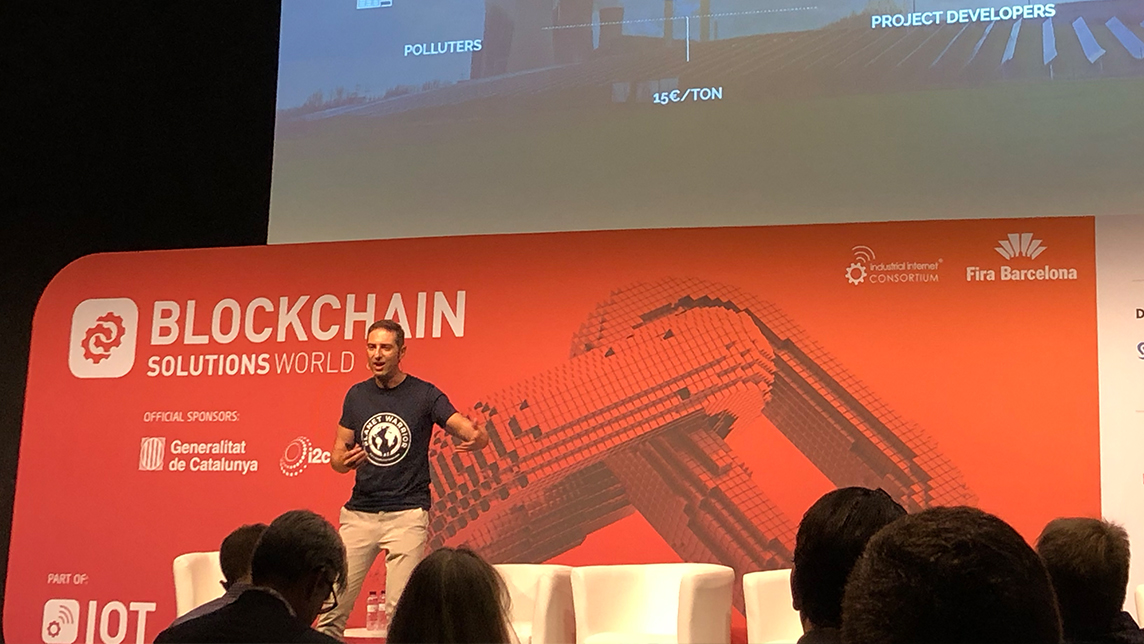
Circular economy: Discarded goods get a new lease of life in Spain
From e-chargers inside phone booths, recycling chatbots to refurbished stadium seats from Atlético Madrid, the offbeat magic of the circular economy is fast becoming a lucrative business in Spain

Refurbed: Electronics recycling marketplace gets $54m for EU consolidation, overseas expansion
Consumers can reduce their carbon footprints by shifting toward a circular economy, become carbon-neutral by planting one tree with every purchase from Refurbed

Kobo360: Nigeria's Uber-style logistics startup turns pan-African dream into reality
Riding on Africa’s new free trade deal, Kobo360 aims to be the continent’s next unicorn by digitalizing logistics ops to transport goods quickly, reliably and more cheaply

Solatom plans overseas expansion with backing from energy giants, impact investor
With a US patent in hand, the Valencian startup is banking on international sales of its concentrated solar power modules, targeting €1m in revenue by end-2021

ChainGo is using Ethereum to boost the €2.7-trillion logistics sector
Co-founders Andres Garrido and Jordan Sorensen are using Ethereum to help the unwieldy ocean freight industry to become more efficient, transparent and secure through the blockchain's decentralized system.
Sorry, we couldn’t find any matches for “Kenya”.