Grow Asia
-
DATABASE (211)
-
ARTICLES (392)
H&M’s first shop was founded 74 years ago in Sweden by Erling Persson under the name “Hennes”, Swedish for "hers" since the shop was selling only women's apparel. In 1968, Persson expanded into menswear by acquiring Swedish retailer Mauritz Widforss. Hence the rebranding of the company into Hennes & Mauritz (H&M). In 1974, H&M was listed on the Stockholm Stock Exchange. Since then, H&M has expanding internationally opening its first store in London and the rest of Europe and also to the US in early 2000.In 2008, the company also moved into the home furnishings segment and launched H&M Home stores worldwide. The fashion chain can now be found across Europe, the US, Asia and the Middle East. The group expanded further by acquiring fast-fashion brands like Weekday, Monki and Cheap Monday. In April 2021, H&M Group announced a collaboration with textile cleantech Infinited Fiber to launch proof-of-concept denim created wholly from regenerated textile waste as part of its commitment to use only recycled or sustainably sourced materials by 2030.


H&M’s first shop was founded 74 years ago in Sweden by Erling Persson under the name “Hennes”, Swedish for "hers" since the shop was selling only women's apparel. In 1968, Persson expanded into menswear by acquiring Swedish retailer Mauritz Widforss. Hence the rebranding of the company into Hennes & Mauritz (H&M). In 1974, H&M was listed on the Stockholm Stock Exchange. Since then, H&M has expanding internationally opening its first store in London and the rest of Europe and also to the US in early 2000.In 2008, the company also moved into the home furnishings segment and launched H&M Home stores worldwide. The fashion chain can now be found across Europe, the US, Asia and the Middle East. The group expanded further by acquiring fast-fashion brands like Weekday, Monki and Cheap Monday. In April 2021, H&M Group announced a collaboration with textile cleantech Infinited Fiber to launch proof-of-concept denim created wholly from regenerated textile waste as part of its commitment to use only recycled or sustainably sourced materials by 2030.
LeapFrog Investments is an impact-focused investor, managing over $1.6bn in assets mainly investing in Africa and Asia. Its “profit with purpose” has led to investments in startups that provide healthcare, financial services and insurance for low-income consumers. Since it was founded in 2007, LeapFrog has attracted funds from Prudential, AXA, Swiss Re and Omidyar Network, becoming the first impact investor in the world to reach the $1bn milestone. It’s headquartered in South Africa and Singapore.LeapFrog is best known for its investments in the insurance sector. One of the most prominent companies in its portfolio is BIMA, the mobile-based insurance provider that has provided coverage in Ghana, Bangladesh, Cambodia and many other countries. In 2020, LeapFrog invested in Indonesian startup PasarPolis, which is a broker for a wide range of microinsurance products. In the healthcare and biotechnology sectors, LeapFrog has funded Indian genetic diagnostics company MedGenome, as well as Goodlife Pharmacy, a Kenyan company providing access to affordable medicine in the East African country.

LeapFrog Investments is an impact-focused investor, managing over $1.6bn in assets mainly investing in Africa and Asia. Its “profit with purpose” has led to investments in startups that provide healthcare, financial services and insurance for low-income consumers. Since it was founded in 2007, LeapFrog has attracted funds from Prudential, AXA, Swiss Re and Omidyar Network, becoming the first impact investor in the world to reach the $1bn milestone. It’s headquartered in South Africa and Singapore.LeapFrog is best known for its investments in the insurance sector. One of the most prominent companies in its portfolio is BIMA, the mobile-based insurance provider that has provided coverage in Ghana, Bangladesh, Cambodia and many other countries. In 2020, LeapFrog invested in Indonesian startup PasarPolis, which is a broker for a wide range of microinsurance products. In the healthcare and biotechnology sectors, LeapFrog has funded Indian genetic diagnostics company MedGenome, as well as Goodlife Pharmacy, a Kenyan company providing access to affordable medicine in the East African country.
Founded in 1998, Asiaec Partnership is one of the earliest venture capital firms in China, with about 20 funds under management. It has invested in 100+ companies, of which about one-third have gone public, with an IRR of over 35%.

Founded in 1998, Asiaec Partnership is one of the earliest venture capital firms in China, with about 20 funds under management. It has invested in 100+ companies, of which about one-third have gone public, with an IRR of over 35%.
Co-founder and Group CMO of Orami
Shannon Kalayanamitr is an entrepreneur with 17 years of international business experience. In 2012, she founded a women’s e-commerce site Moxy. When Moxy was acquired by WhatsNew Group in 2014, she became the group’s CMO. She remained as CMO after Moxy merged with Bilna to form Orami in 2016.The graduate in Business Administration, from Thammasat University in Thailand, was featured in the 2016 Campaign Asia’s 40 Under 40 list of high achieving individuals in the marketing industry. She has also worked at PwC, Lehman Brothers and Boonrawd Trading International, the global distributor of Singha Beer.

Shannon Kalayanamitr is an entrepreneur with 17 years of international business experience. In 2012, she founded a women’s e-commerce site Moxy. When Moxy was acquired by WhatsNew Group in 2014, she became the group’s CMO. She remained as CMO after Moxy merged with Bilna to form Orami in 2016.The graduate in Business Administration, from Thammasat University in Thailand, was featured in the 2016 Campaign Asia’s 40 Under 40 list of high achieving individuals in the marketing industry. She has also worked at PwC, Lehman Brothers and Boonrawd Trading International, the global distributor of Singha Beer.
Co-founder and CEO of Kioson
Jasin Halim read a master’s in Marketing and Finance at Monash University in 1990, while working as a lecturer in Computer Science. He returned to Indonesia in 1992 to establish a mail order company that was shut down due to the 1998 Asian financial crisis. Undaunted, he went on to establish a TV shopping company and a VOIP company. He also founded PT Mitra Cipta Teknologi, the company behind e-commerce HargaHot in 2012. However, Jasin later decided to quit HargaHot to co-found Kioson in 2015.

Jasin Halim read a master’s in Marketing and Finance at Monash University in 1990, while working as a lecturer in Computer Science. He returned to Indonesia in 1992 to establish a mail order company that was shut down due to the 1998 Asian financial crisis. Undaunted, he went on to establish a TV shopping company and a VOIP company. He also founded PT Mitra Cipta Teknologi, the company behind e-commerce HargaHot in 2012. However, Jasin later decided to quit HargaHot to co-found Kioson in 2015.
Co-founder and CEO of eFishery
Gibran Huzaifah ran a composting business and a catfish farm while reading a degree in Biology at Institut Teknologi Bandung in Indonesia. After graduating in 2012, he teamed up with fellow ITB alumnus Chrisna Aditya to establish an aquaculture tech firm PT Multidaya Teknologi Nusantara, aka Cybreed. In 2013, it launched eFishery, an automatic feeder system for aquaculture farms. In 2017, Gibran’s achievements earned him a spot on Forbes’ 30 Under 30 list of notable Asian figures.

Gibran Huzaifah ran a composting business and a catfish farm while reading a degree in Biology at Institut Teknologi Bandung in Indonesia. After graduating in 2012, he teamed up with fellow ITB alumnus Chrisna Aditya to establish an aquaculture tech firm PT Multidaya Teknologi Nusantara, aka Cybreed. In 2013, it launched eFishery, an automatic feeder system for aquaculture farms. In 2017, Gibran’s achievements earned him a spot on Forbes’ 30 Under 30 list of notable Asian figures.
Co-founder and CEO of PopBox Asia
Adrian Lim is PopBox Asia’s co-founder and CEO, establishing the smart locker startup in 2015. Between 2001 and 2003, Lim worked as an engineer at Lucent Technologies (which merged with Alcatel). He was later a director at the TAK Group, a multinational property conglomerate. He is also an advisor to Block71, the startup incubator run by the National University of Singapore.Lim holds a bachelor’s in Mechanical Engineering from the Imperial College of London, as well as a master’s in the same field from the University of Michigan, USA.

Adrian Lim is PopBox Asia’s co-founder and CEO, establishing the smart locker startup in 2015. Between 2001 and 2003, Lim worked as an engineer at Lucent Technologies (which merged with Alcatel). He was later a director at the TAK Group, a multinational property conglomerate. He is also an advisor to Block71, the startup incubator run by the National University of Singapore.Lim holds a bachelor’s in Mechanical Engineering from the Imperial College of London, as well as a master’s in the same field from the University of Michigan, USA.
Co-founder of Uniplaces, Co-founder of StudentFinance
Armed with Asian and European experience, Miguel Amaro co-founded Uniplaces in 2011. He earned his bachelor’s degree in Finance from the University of Nottingham, and took a course in Chinese Studies at East China Normal University. He obtained his master’s in Management, with a focus on Global Entrepreneurship, from Babson Graduate School. Amaro also spent two months as an analyst at Grameen Bank in Dhaka, Bangladesh. While developing Uniplaces, he was an entrepreneur-in-residence at Picvic Labs (France), Zhejiang University Innovation Institute (China) and Osram (United States). Amaro is currently part of the World Economic Forum’s Global Shapers.

Armed with Asian and European experience, Miguel Amaro co-founded Uniplaces in 2011. He earned his bachelor’s degree in Finance from the University of Nottingham, and took a course in Chinese Studies at East China Normal University. He obtained his master’s in Management, with a focus on Global Entrepreneurship, from Babson Graduate School. Amaro also spent two months as an analyst at Grameen Bank in Dhaka, Bangladesh. While developing Uniplaces, he was an entrepreneur-in-residence at Picvic Labs (France), Zhejiang University Innovation Institute (China) and Osram (United States). Amaro is currently part of the World Economic Forum’s Global Shapers.
Co-founder of Ajaib
During her time as a consultant at McKinsey from 2012 to 2014, Yada Piyajomkwan worked with governments from the Association of South East Asian Nations (ASEAN) on financial inclusion. The topic became her focus of study when she enrolled at the Stanford Graduate School of Business’ MBA program as a Fulbright scholar. After earning her MBA, she and fellow Stanford alumnus Anderson Sumarli established online investment advisory startup Ajaib.

During her time as a consultant at McKinsey from 2012 to 2014, Yada Piyajomkwan worked with governments from the Association of South East Asian Nations (ASEAN) on financial inclusion. The topic became her focus of study when she enrolled at the Stanford Graduate School of Business’ MBA program as a Fulbright scholar. After earning her MBA, she and fellow Stanford alumnus Anderson Sumarli established online investment advisory startup Ajaib.
CEO and co-founder of Xendit
Moses Lo comes from an entrepreneurial family, his father acquired a failing business in Australia and turned it into a successful company. The family business inspired Lo to start his own fashion business in Australia after graduating in finance and commerce at the University of New South Wales in 2010.Lo initially gained work experience as an analyst in 2008 as part of his undergraduate finance and commerce programs in Australia. In 2011, he became an associate at the Boston Consulting Group in Australia. After two years, he was promoted to senior associate but left BCG in 2013 to focus on his menswear ventures until 2014.Lo decided to get first-hand tech startup experience in the Silicon Valley, working at Amazon while completing an MBA program at the University of California, Berkeley. In 2015, he decided to established a P2P payments platform Xendit in Indonesia. The platform has since pivoted into a payment gateway service and became a unicorn in 2021, with Lo as CEO based in California and Jakarta. He was also featured in Forbes’ 30 Under 30 list for Asian figures in finance and venture capital in 2016.

Moses Lo comes from an entrepreneurial family, his father acquired a failing business in Australia and turned it into a successful company. The family business inspired Lo to start his own fashion business in Australia after graduating in finance and commerce at the University of New South Wales in 2010.Lo initially gained work experience as an analyst in 2008 as part of his undergraduate finance and commerce programs in Australia. In 2011, he became an associate at the Boston Consulting Group in Australia. After two years, he was promoted to senior associate but left BCG in 2013 to focus on his menswear ventures until 2014.Lo decided to get first-hand tech startup experience in the Silicon Valley, working at Amazon while completing an MBA program at the University of California, Berkeley. In 2015, he decided to established a P2P payments platform Xendit in Indonesia. The platform has since pivoted into a payment gateway service and became a unicorn in 2021, with Lo as CEO based in California and Jakarta. He was also featured in Forbes’ 30 Under 30 list for Asian figures in finance and venture capital in 2016.
Principal Software Engineer and co-founder of Xendit
Juan Gonzalez is a software and web developer based in San Francisco. He graduated from the University of California with a Computer Science degree in 2013 and worked as a software engineer at Expedia Inc, where he received an award for stellar performance. However, he left Expedia in 2015 to build a P2P payments platform for the Southeast Asian market. He is both co-founder and principal software engineer at Xendit.

Juan Gonzalez is a software and web developer based in San Francisco. He graduated from the University of California with a Computer Science degree in 2013 and worked as a software engineer at Expedia Inc, where he received an award for stellar performance. However, he left Expedia in 2015 to build a P2P payments platform for the Southeast Asian market. He is both co-founder and principal software engineer at Xendit.
The TMT-focused VC manages about RMB 10 billion, in three USD-denominated funds and the Tianjin Chengbai RMB-denominated fund. Founded in 2006 by Tian Suning (Edward), the former CEO of China Netcom Group and co-founder and CEO of AsiaInfo (China's first Internet technology provider) is widely regarded as a founder of China's Internet industry. CBC's key investments include Uber, LinkedIn, Evernote, AirBnB, Dianping and Qihoo 360.

The TMT-focused VC manages about RMB 10 billion, in three USD-denominated funds and the Tianjin Chengbai RMB-denominated fund. Founded in 2006 by Tian Suning (Edward), the former CEO of China Netcom Group and co-founder and CEO of AsiaInfo (China's first Internet technology provider) is widely regarded as a founder of China's Internet industry. CBC's key investments include Uber, LinkedIn, Evernote, AirBnB, Dianping and Qihoo 360.
Formerly Fidelity Growth Partners, the renamed Eight Roads Ventures is the investment arm of Fidelity International Limited. In China for over 20 years, it counts among its successful investments/exits Alibaba, WuXi PharmaTech, AsiaInfo and iSoftStone. It focuses on early- and growth-stage companies across eight broad sectors.

Formerly Fidelity Growth Partners, the renamed Eight Roads Ventures is the investment arm of Fidelity International Limited. In China for over 20 years, it counts among its successful investments/exits Alibaba, WuXi PharmaTech, AsiaInfo and iSoftStone. It focuses on early- and growth-stage companies across eight broad sectors.
H&CK Partners is a private equity firm based in South Korea. Its expertise primarily lies in the South Korean and Southeast Asian markets, with a focus on small to mid-sized deals (US$10-100 million).

H&CK Partners is a private equity firm based in South Korea. Its expertise primarily lies in the South Korean and Southeast Asian markets, with a focus on small to mid-sized deals (US$10-100 million).
Intudo Ventures is an Indonesia-focused venture capital firm. It invests in companies led by returning Southeast Asian entrepreneurs who had studied or worked outside the region for a significant amount of time.

Intudo Ventures is an Indonesia-focused venture capital firm. It invests in companies led by returning Southeast Asian entrepreneurs who had studied or worked outside the region for a significant amount of time.
Singapore, the place to start and grow a cellular agriculture startup
A country that imports over 90% of its food supply, Singapore has turned to foodtech, including cellular agriculture, to safeguard food security, supported by proactive regulators

TreeFrog Therapeutics: Mimicking how stem cells grow in the human body
The French biotech’s proprietory technology to cultivate pluripotent stem cells in a 3D environment can be scaled to mass-produce high-quality cells to treat diseases such as Parkinson’s

Future Food Asia 2021: Regenerative agriculture in Asia
The unique challenges facing regenerative agriculture in Asia require solutions different from those in the West, presenting opportunities for microfinancing and impact investment

China B2B startups still have much room to grow in a trillion-RMB market
Investors favor enterprise tech startups amid slowing deal flow, still foresee strong growth despite competition from tech giants

South Summit 2021: Lessons in expanding to Asia from experts on the ground
Cast aside your Eurocentric mindsets, China-based SOSV’s Oscar Ramos and Brinc’s Heriberto Saldivar tell startups, why they should expand to the region, and how best to do it

Singrow to start selling Singapore-grown strawberries in March, plans $15m Series A this year
Singrow also plans to offer locally grown produce across Southeast Asia, starting with strawberries farmed in energy-efficient greenhouses

Future Food Asia 2021: Potential of pulses in the alt-protein space
Asia presents a unique opportunity for pulses as people in the region, who traditionally fractionated pulses for starch, now see protein as a useful byproduct

String Bio: Asia's first startup to harness methane gas for protein production
Using bacteria to turn the harmful greenhouse gas into a purer form of protein, String Bio is raising Series B funding to scale production

From delivery riders to MSMEs, Igloo aims to make insurance more accessible
Expanding from its origins in e-commerce insurance, Igloo seeks growth in credit insurance and income protection for middle-income groups in Southeast Asia

ID Capital CEO & founder Isabelle Decitre, an early mover investing in Asian agrifood startups
An early backer of Ynsect, one of the best-funded insect protein startups to date, Decitre sees growing interest in agrifood tech startups, but notes they still need to offer exit opportunities

Accelerating Asia's Amra Naidoo: We’re at an inflection point in Southeast Asia
Accelerating Asia’s co-founder Amra Naidoo reveals how the program adapts its curriculum to meet startups’ needs and the challenges accelerator programs face during the pandemic

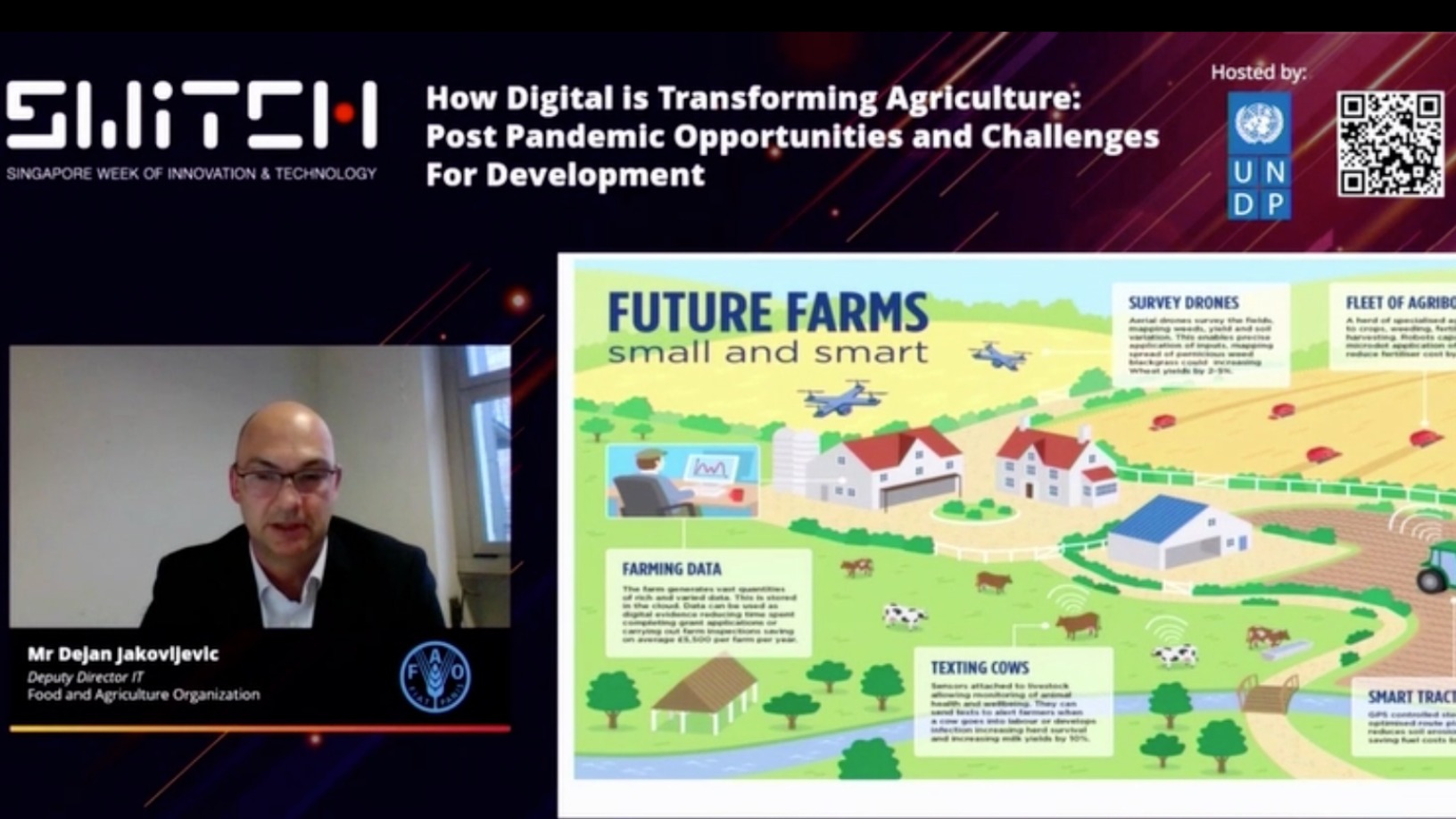
SWITCH Singapore: Race in agrifood tech as a solution to feeding 10bn people
While the potential gains are huge, giving tech solutions to farmers, especially smallholders in developing countries, remains a work in progress
Future Food Asia 2021: Fireside chat with Green Monday's David Yeung
For Chinese startup Green Monday, it’s important to resonate with different local audiences by adapting to local culture and dietary habits and continuously fine-tuning existing products

From Porto to Phnom Penh: Last2Ticket expands to Asia
Their first stop is Cambodia, where tourism-related ticketing is big business yet underserved by technology. Emilía Simões, founder and CEO of the Portuguese e-ticketing startup, tells us more
Future Food Asia 2021 announces finalists for $100,000 prize
Ten startups from agrifood tech and cleantech sectors will pitch during the five-day conference, are also eligible for two more prizes from sponsors Cargill and Thai Wah

Sorry, we couldn’t find any matches for “Grow Asia”.
POPULAR DATABASE