Pony Ma
-
DATABASE (2217)
-
ARTICLES (20)
Founder of NYSE-listed Chinese online classifieds/marketplace giant 58.com, Yao Jinbo graduated from China Ocean University in 1999 with degrees in computer science and chemistry. He founded 58.com in 2005. He has experience in network marketing, network channel development and domain name strategy. Yao also co-founded the Xueda Education Group.

Founder of NYSE-listed Chinese online classifieds/marketplace giant 58.com, Yao Jinbo graduated from China Ocean University in 1999 with degrees in computer science and chemistry. He founded 58.com in 2005. He has experience in network marketing, network channel development and domain name strategy. Yao also co-founded the Xueda Education Group.
CEO and founder of Swan Daojia (formerly 58 Daojia)
Chen received a bachelor’s degree in material formation from Xiangtan University in 2004. While in college, he co-founded 0755.org.cn, one of the earliest online classifieds providers in China. He is also a co-founder of dunsh.org, a nonprofit search engine optimization website in China. After graduation, he served as senior project manager and chief editor at Xiamen Haowei Network Technology. From June–December 2007, Chen served as head of the product department at ganji.com, an online classified site, responsible for product management and customer experience. He then joined 58.com the same year, serving as senior VP of product management and website operation from December 2007 to August 2014.In November 2014, he founded 58 Daojia and has served as CEO since then. In August 2017, 58 Daojia announced a merger with 58 Su Yun and Gogovan, a logistics platform in Southeast Asia, and he became Chairman of the new company. The merger created Asia's largest city-to-city cargo delivery platform. In 2018, 58 Daojia was rebranded as Daojia Group. The group’s 58 Su Yun received $250m funding and was relaunched as Kuaigou Express.

Chen received a bachelor’s degree in material formation from Xiangtan University in 2004. While in college, he co-founded 0755.org.cn, one of the earliest online classifieds providers in China. He is also a co-founder of dunsh.org, a nonprofit search engine optimization website in China. After graduation, he served as senior project manager and chief editor at Xiamen Haowei Network Technology. From June–December 2007, Chen served as head of the product department at ganji.com, an online classified site, responsible for product management and customer experience. He then joined 58.com the same year, serving as senior VP of product management and website operation from December 2007 to August 2014.In November 2014, he founded 58 Daojia and has served as CEO since then. In August 2017, 58 Daojia announced a merger with 58 Su Yun and Gogovan, a logistics platform in Southeast Asia, and he became Chairman of the new company. The merger created Asia's largest city-to-city cargo delivery platform. In 2018, 58 Daojia was rebranded as Daojia Group. The group’s 58 Su Yun received $250m funding and was relaunched as Kuaigou Express.
CEO, co-founder of Teliman
Hawa Traore is CEO and co-founder at Teliman, Mali’s first on-demand mobility startup and one of francophone Africa’s first, where she has worked since its launch in 2018. She initially worked as COO for one year before becoming CEO. Before that, Traore worked as an engineer at one of Europe’s largest nuclear power plants, the European Pressurized Reactor (EPR) Flamanville 3 in France, for 4.5 years in construction planning and in project management. Previously, Traore completed a stint at Zodiac Aerospace as an engineer testing the life cycle of Airbus A320-200 cabins. The Malian national has a degree in mechanical and industrial engineering from Paris’ École Nationale Supérieure d’Arts et Metiers and also holds a bachelor’s degree in mathematics.

Hawa Traore is CEO and co-founder at Teliman, Mali’s first on-demand mobility startup and one of francophone Africa’s first, where she has worked since its launch in 2018. She initially worked as COO for one year before becoming CEO. Before that, Traore worked as an engineer at one of Europe’s largest nuclear power plants, the European Pressurized Reactor (EPR) Flamanville 3 in France, for 4.5 years in construction planning and in project management. Previously, Traore completed a stint at Zodiac Aerospace as an engineer testing the life cycle of Airbus A320-200 cabins. The Malian national has a degree in mechanical and industrial engineering from Paris’ École Nationale Supérieure d’Arts et Metiers and also holds a bachelor’s degree in mathematics.
CTO and co-founder of Bygen
Ben Morton is an Australian entrepreneur and a chemical engineer by training. While serving in the Royal Australian Infantry, he attended Flinders University, pursuing a double honours degree in physics and organic chemistry. After graduating in 2013, Morton briefly worked as a chemist at fertilizer company SprayGro. In 2016, he enrolled at the University of Adelaide to pursue a PhD in Chemical Engineering. There, he joined Philip Kwong’s research group and met fellow PhD student Lewis Dunnigan. Using technology they developed at the research group, in 2017 Morton, and Dunnigan established Bygen, a startup offering a low-cost, novel way process of making activated carbon using various forms of agricultural waste, with Kwong as a technical adviser and fellow co-founder. Morton is now CTO of Bygen.

Ben Morton is an Australian entrepreneur and a chemical engineer by training. While serving in the Royal Australian Infantry, he attended Flinders University, pursuing a double honours degree in physics and organic chemistry. After graduating in 2013, Morton briefly worked as a chemist at fertilizer company SprayGro. In 2016, he enrolled at the University of Adelaide to pursue a PhD in Chemical Engineering. There, he joined Philip Kwong’s research group and met fellow PhD student Lewis Dunnigan. Using technology they developed at the research group, in 2017 Morton, and Dunnigan established Bygen, a startup offering a low-cost, novel way process of making activated carbon using various forms of agricultural waste, with Kwong as a technical adviser and fellow co-founder. Morton is now CTO of Bygen.
CEO and co-founder of Bygen
Lewis Dunnigan is a researcher turned entrepreneur based in Australia. After earning a master’s degree in Chemical Engineering and working as a researcher at the University of Edinburgh in the UK, Dunnigan returned to Australia. He had a brief stint as a visiting researcher and earned his PhD in Chemical Engineering at the University of Adelaide.During his PhD, Dunnigan was a part of Philip Kwong’s research laboratory. His PhD project involved developing a system to generate activated charcoal and renewable energy from biomass. In 2017, Dunnigan, Kwong, and fellow PhD student Ben Morton decided to commercialize this technology and established a spin-off company called Bygen, which developed a low-cost, novel way to make activated carbon more sustainably using various forms of agricultural waste. Dunnigan is now the CEO of Bygen.

Lewis Dunnigan is a researcher turned entrepreneur based in Australia. After earning a master’s degree in Chemical Engineering and working as a researcher at the University of Edinburgh in the UK, Dunnigan returned to Australia. He had a brief stint as a visiting researcher and earned his PhD in Chemical Engineering at the University of Adelaide.During his PhD, Dunnigan was a part of Philip Kwong’s research laboratory. His PhD project involved developing a system to generate activated charcoal and renewable energy from biomass. In 2017, Dunnigan, Kwong, and fellow PhD student Ben Morton decided to commercialize this technology and established a spin-off company called Bygen, which developed a low-cost, novel way to make activated carbon more sustainably using various forms of agricultural waste. Dunnigan is now the CEO of Bygen.
Technical advisor and co-founder of Bygen
Philip Kwong is a lecturer and researcher at the University of Adelaide’s School of Chemical Engineering and Advanced Materials. He joined the university in 2009 and focuses on developing low-cost technologies that can facilitate a transition from fossil fuels to renewable energy. One of his ongoing research projects primarily deals with the conversion of agricultural waste into biochar, a form of charcoal that can act as a feedstock for making activated carbon and for sequestering carbon.In 2017, Kwong and two PhD students in his research group, Ben Morton and Lewis Dunnigan, began commercialization of the waste-to-activated carbon technology they had developed. A spin-off company called Bygen was established, with Dunnigan and Morton leading the startup. Kwong is a co-founder and technical advisor of the company.

Philip Kwong is a lecturer and researcher at the University of Adelaide’s School of Chemical Engineering and Advanced Materials. He joined the university in 2009 and focuses on developing low-cost technologies that can facilitate a transition from fossil fuels to renewable energy. One of his ongoing research projects primarily deals with the conversion of agricultural waste into biochar, a form of charcoal that can act as a feedstock for making activated carbon and for sequestering carbon.In 2017, Kwong and two PhD students in his research group, Ben Morton and Lewis Dunnigan, began commercialization of the waste-to-activated carbon technology they had developed. A spin-off company called Bygen was established, with Dunnigan and Morton leading the startup. Kwong is a co-founder and technical advisor of the company.
CTO and co-founder of The Not Company (NotCo)
Karim Pichara has a PhD in Computer Science from the Catholic University of Chile where he has been working for over 10 years since 2010. From 2011, Karim Pichara has also been working as a research associate at the Institute of Applied Computer Science, Harvard University, specializing in data mining and machine learning for astronomy. In November 2015, while at Harvard, Pichara and Matías Muchnick co-founded a plant-based foodtech, The Not Company (NotCo). Pichara became the CTO and headed the development of NotCo’s algorithm called “Giuseppe” that can analyze molecular structures of animal-based food to create similar plant-based food that cater to the human perception of taste and texture.

Karim Pichara has a PhD in Computer Science from the Catholic University of Chile where he has been working for over 10 years since 2010. From 2011, Karim Pichara has also been working as a research associate at the Institute of Applied Computer Science, Harvard University, specializing in data mining and machine learning for astronomy. In November 2015, while at Harvard, Pichara and Matías Muchnick co-founded a plant-based foodtech, The Not Company (NotCo). Pichara became the CTO and headed the development of NotCo’s algorithm called “Giuseppe” that can analyze molecular structures of animal-based food to create similar plant-based food that cater to the human perception of taste and texture.
Senior Scientific Advisor and co-founder of The Not Company (NotCo)
Pablo Zamora is a biotechnologist from the University of Santiago, where he worked as a professor and research scientist until 2008. In 2009, he started his postdoctoral research on Mexico’s maize genetics at UC Davis Life Science Innovation Center. He worked there as a senior scientist and associate until 2014. In 2015, he was appointed the center’s Chief Science Officer based in Chile, a position he was in till January 2018.From 2013–2015, he also worked on various plant and microbe genomics projects as a senior scientist in Mars Advanced Research Institute. He was also an editor from 2012–2017 at the Journal of Technology Management & Innovation and worked at the non-profit PIPRA from 2010–2018 as international alliance manager in Sacramento, University of California.In 2015, he co-founded The Not Company (NotCo) based in Santiago. He was appointed CSO in February 2018, a role he led until March 2020, when he left the company to focus on a new project, AptaBuilder, a $60m program that promotes R&D for Chilean technology-based ventures. Zamora still consults as NotCo’s senior scientific advisor.
Pablo Zamora is a biotechnologist from the University of Santiago, where he worked as a professor and research scientist until 2008. In 2009, he started his postdoctoral research on Mexico’s maize genetics at UC Davis Life Science Innovation Center. He worked there as a senior scientist and associate until 2014. In 2015, he was appointed the center’s Chief Science Officer based in Chile, a position he was in till January 2018.From 2013–2015, he also worked on various plant and microbe genomics projects as a senior scientist in Mars Advanced Research Institute. He was also an editor from 2012–2017 at the Journal of Technology Management & Innovation and worked at the non-profit PIPRA from 2010–2018 as international alliance manager in Sacramento, University of California.In 2015, he co-founded The Not Company (NotCo) based in Santiago. He was appointed CSO in February 2018, a role he led until March 2020, when he left the company to focus on a new project, AptaBuilder, a $60m program that promotes R&D for Chilean technology-based ventures. Zamora still consults as NotCo’s senior scientific advisor.
Co-Founder & CEO of Bipi
Hans Christ has worked internationally across Latin America, Europe and the USA. He is the co-founder of transport technology startup Bipi, a Spanish on-demand car rental app and Lollo Mobility, Bipi’s parent company and transport app company. He co-founded Colombia Cave Box Crossfit in 2013 and was previously Groupon Iberia’s Head of Goods, where he helped established its product department. Christ started his career as a Credit Manager in Walls Cargo Bank. Christ holds a Business Administration degree from Southern Methodist University (SMU) and an MBA in Marketing from the University of Dallas.

Hans Christ has worked internationally across Latin America, Europe and the USA. He is the co-founder of transport technology startup Bipi, a Spanish on-demand car rental app and Lollo Mobility, Bipi’s parent company and transport app company. He co-founded Colombia Cave Box Crossfit in 2013 and was previously Groupon Iberia’s Head of Goods, where he helped established its product department. Christ started his career as a Credit Manager in Walls Cargo Bank. Christ holds a Business Administration degree from Southern Methodist University (SMU) and an MBA in Marketing from the University of Dallas.
Co-Founder of Bipi
Fernando Jamie-Fernández is the co-founder of Bipi, a Spanish on-demand car rental app startup. He previously co-founded Colombia Acuanto, which offers alternative loans to small and medium enterprises (SMEs) and individuals. Jamie-Fernández is currently on Bipi’s Board of Directors and is a Managing Partner at Avianta Capital in Monterrey, Mexico.

Fernando Jamie-Fernández is the co-founder of Bipi, a Spanish on-demand car rental app startup. He previously co-founded Colombia Acuanto, which offers alternative loans to small and medium enterprises (SMEs) and individuals. Jamie-Fernández is currently on Bipi’s Board of Directors and is a Managing Partner at Avianta Capital in Monterrey, Mexico.
CEO and Co-founder of Cobee
Borja Aranguren Herrera has a MSc in Industrial Engineering specializing in both mechanical engineering and business administration. In 2012, he received a scholarship for an exchange program at the San Diego State University in California which he successfully completed with the best possible grades.Since 2018, he has been the CEO and co-founder of Cobee, a fast growing fintech app that helps companies manage employee benefits. Prior to this, Aranguren Herrera worked for several years as a consultant at McKinsey and late led strategy and business expansion at OnTruck, one of the most promising logistics startups in Spain.

Borja Aranguren Herrera has a MSc in Industrial Engineering specializing in both mechanical engineering and business administration. In 2012, he received a scholarship for an exchange program at the San Diego State University in California which he successfully completed with the best possible grades.Since 2018, he has been the CEO and co-founder of Cobee, a fast growing fintech app that helps companies manage employee benefits. Prior to this, Aranguren Herrera worked for several years as a consultant at McKinsey and late led strategy and business expansion at OnTruck, one of the most promising logistics startups in Spain.
Co-CEO and Co-founder of Notpla (formerly Skipping Rocks Lab)
Currently based in London, French national Pierre Yves Paslier completed a master’s in materials science and engineering from INSA in Lyon in 2010. In 2012, he went on to complete a master’s in industrial and product design at the Royal College of Art in London. He also studied innovation design engineering at Imperial College.After graduating in 2014, Paslier and university alumnus Rodrigo García González co-founded Skipping Rocks Lab that was pivoted as Notpla in 2019. Both are co-CEOs of the UK-based startup that develops compostable and edible packaging material made of seaweed and other plants.Before becoming an entrepreneur, Paslier worked as a packaging engineer for L’Oréal from 2010 to 2012. He has been invited to speak at TEDx conferences in Athens and Warwick to share his experience and innovative projects in packaging and product design. In 2020, he became an industrial advisory board member at Imperial College London Dyson School of Design Engineering. In 2019, he also became a fellow of the Royal Academy of Engineering Enterprise Hub.

Currently based in London, French national Pierre Yves Paslier completed a master’s in materials science and engineering from INSA in Lyon in 2010. In 2012, he went on to complete a master’s in industrial and product design at the Royal College of Art in London. He also studied innovation design engineering at Imperial College.After graduating in 2014, Paslier and university alumnus Rodrigo García González co-founded Skipping Rocks Lab that was pivoted as Notpla in 2019. Both are co-CEOs of the UK-based startup that develops compostable and edible packaging material made of seaweed and other plants.Before becoming an entrepreneur, Paslier worked as a packaging engineer for L’Oréal from 2010 to 2012. He has been invited to speak at TEDx conferences in Athens and Warwick to share his experience and innovative projects in packaging and product design. In 2020, he became an industrial advisory board member at Imperial College London Dyson School of Design Engineering. In 2019, he also became a fellow of the Royal Academy of Engineering Enterprise Hub.
Co-CEO and Co-founder of Notpla (formerly Skipping Rocks Lab)
Rodrigo García González graduated in Architecture at the Technical University of Madrid (ETSAM) in 2009 and also completed various PhD courses in advanced architecture at his alma mater.In 2006, the architect student joined an EU Asia-Link sustainable humane habitat program that included stints at the Centre for Environmental Planning and Technology (CEPT) University in India. He also won a SMILE scholarship to study industrial design at Pontificia Universidad Católica in Chile for one year. In 2011, he obtained a scholarship to study industrial design and business at Umeå Institute of Design in Sweden. In 2014, he completed two master’s programs in innovation design engineering run by London’s Imperial College and Royal College of Art.In July 2014, he co-founded Skipping Rocks Lab, that was later pivoted into Notpla, a UK-based startup that develops compostable and edible packaging materials made of seaweed and other plants.Since 2007, he has worked with various institutions in Europe, Latin America and the US including Cornell University, CEPT, Imperial College and Royal College of Art. In 2016, he became a senior lecturer for a degree program in product and furniture design at Kingston University.He has two patents for his work on structural and deployable systems. His designs have also been featured in prestigious art centers like the Cite de l'Architecture of Paris and the Venice Biennale of Architecture.Other projects include the Hop! suitcase that can follow the user by tracking the signal of the user’s mobile phone and Aer, an artificial cloud that can evaporate “drinkable” water from the sea. He also developed Zipizip, an architectural system that enables the construction of several floors of a building in a few hours.

Rodrigo García González graduated in Architecture at the Technical University of Madrid (ETSAM) in 2009 and also completed various PhD courses in advanced architecture at his alma mater.In 2006, the architect student joined an EU Asia-Link sustainable humane habitat program that included stints at the Centre for Environmental Planning and Technology (CEPT) University in India. He also won a SMILE scholarship to study industrial design at Pontificia Universidad Católica in Chile for one year. In 2011, he obtained a scholarship to study industrial design and business at Umeå Institute of Design in Sweden. In 2014, he completed two master’s programs in innovation design engineering run by London’s Imperial College and Royal College of Art.In July 2014, he co-founded Skipping Rocks Lab, that was later pivoted into Notpla, a UK-based startup that develops compostable and edible packaging materials made of seaweed and other plants.Since 2007, he has worked with various institutions in Europe, Latin America and the US including Cornell University, CEPT, Imperial College and Royal College of Art. In 2016, he became a senior lecturer for a degree program in product and furniture design at Kingston University.He has two patents for his work on structural and deployable systems. His designs have also been featured in prestigious art centers like the Cite de l'Architecture of Paris and the Venice Biennale of Architecture.Other projects include the Hop! suitcase that can follow the user by tracking the signal of the user’s mobile phone and Aer, an artificial cloud that can evaporate “drinkable” water from the sea. He also developed Zipizip, an architectural system that enables the construction of several floors of a building in a few hours.
CFO and co-founder of Scoobic Urban Mobility
José Enrique Díaz Buzón graduated in law at the University of Seville in 1999. He has a qualification in EU law, and a master’s in business consultancy. In 2005, he also studied labor relations at IE Business School in Madrid.In 1999, Díaz began practicing as a lawyer, specializing in commercial and corporate law and business consultancy. In 2016, he became the CFO, business development manager and co-founder of Scoobic Urban Mobility. The Spanish mobility startup and the co-founding team’s Passion Motorbike Factory aim to provide three-wheeled EVs and sustainable last-mile delivery solutions.

José Enrique Díaz Buzón graduated in law at the University of Seville in 1999. He has a qualification in EU law, and a master’s in business consultancy. In 2005, he also studied labor relations at IE Business School in Madrid.In 1999, Díaz began practicing as a lawyer, specializing in commercial and corporate law and business consultancy. In 2016, he became the CFO, business development manager and co-founder of Scoobic Urban Mobility. The Spanish mobility startup and the co-founding team’s Passion Motorbike Factory aim to provide three-wheeled EVs and sustainable last-mile delivery solutions.
Co-founder and Chief General Affairs Officer of Aruna
While studying at Telkom University in Indonesia, Utari Octavianty worked in the marketing department of the telecoms company Telkom and also as a secretary at the university. She graduated with a Business degree in 2015 and co-founded PasarLaut.com. She later became the Chief General Affairs Officer of Aruna, a fishery tech startup that evolved from PasarLaut.com.

While studying at Telkom University in Indonesia, Utari Octavianty worked in the marketing department of the telecoms company Telkom and also as a secretary at the university. She graduated with a Business degree in 2015 and co-founded PasarLaut.com. She later became the Chief General Affairs Officer of Aruna, a fishery tech startup that evolved from PasarLaut.com.
Allen Zhang: Father of WeChat and its string of innovations
Get to know the man behind the app in every Chinese user's smartphone


Neil Shen: The super unicorn hunter
His bet on ByteDance, the startup that gave the world TikTok, helped Neil Shen top this year's Forbes Midas List. But for Shen, even in that deal he once made the wrong call

Li Bin: Aiming for more than a Chinese copy of Tesla
Good at making and investing money, he founded two companies that went on to list on the NYSE and invested in over 40 startups

Modoo: Reducing stillbirth risk with fetal heart monitoring wearable
Weighing just 15g, the world’s smallest wearable “patch” with passive fetal monitoring technology by Modoo seeks to offer a safer alternative to ultrasound devices

Pony.ai repurposes its robotaxi fleet for last-mile delivery amid the Covid-19 pandemic
Pony.ai is seeking more ways to commercialize its versatile autonomous driving technology, transforming mobility and logistics

This AI startup helps Tencent, Xiaomi chatbots “think” and “talk” like humans
Trio.AI makes communicating with machines easier and more effective – even fun

This AI-powered "pony" could usher us into an autonomous driving future
Despite all the red tape and public anxiety around self-driving cars, California- and Guangzhou-based Pony.ai is advancing steadily in its mission to bring autonomous vehicles to China

Trudy Dai: Alibaba’s jane of all trades
Dai has played a pivotal role in the success of the world’s biggest e-commerce platform; now the tech giant is trusting her to run its VC arm

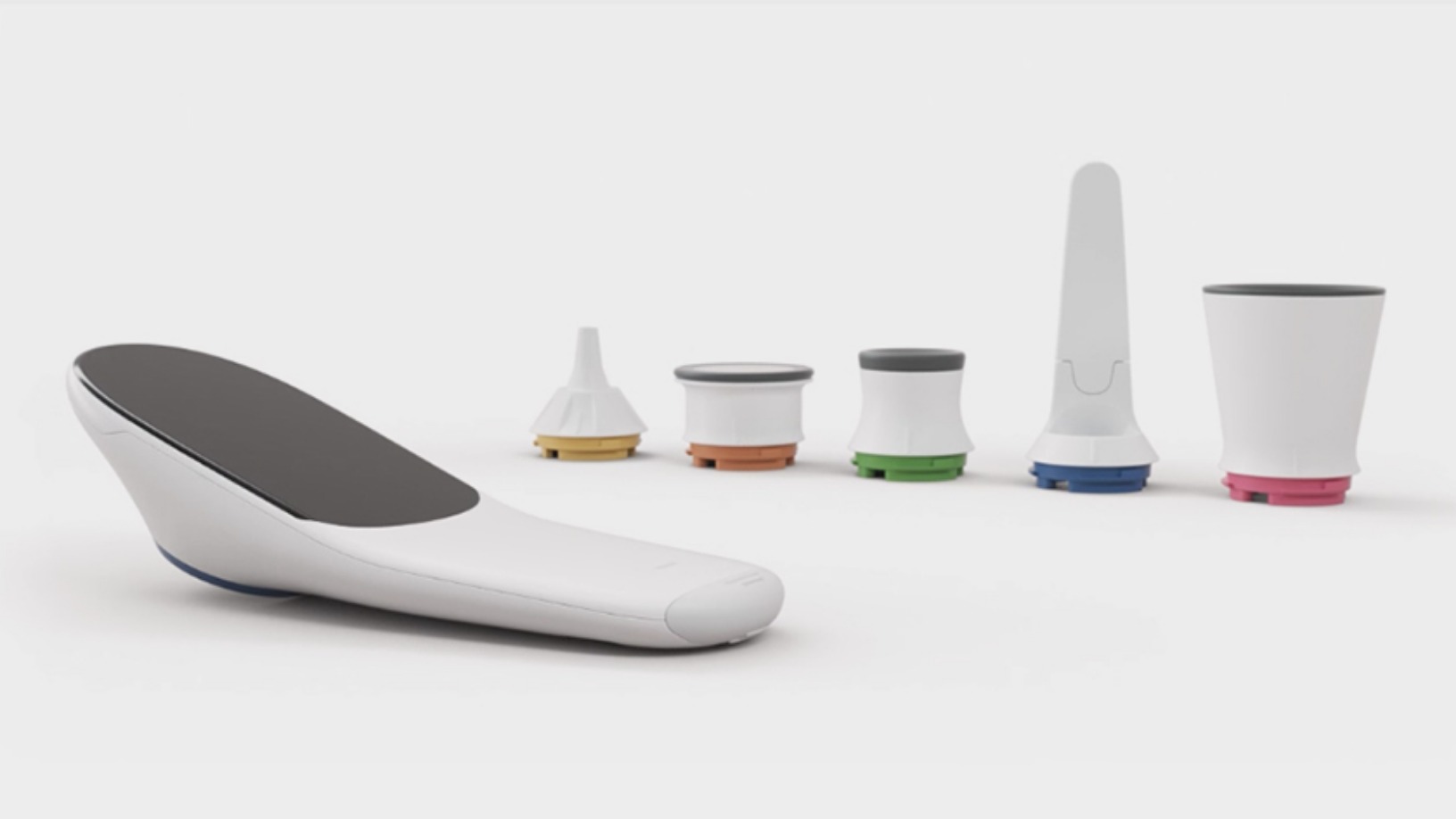
HigoSense launching advanced mobile device for self-triage and diagnosis, boosting telemedicine
The Polish medtech has developed a five-in-one diagnostic device for throat, ear, heart checks and more, with diagnosis in four minutes and compatible with diagnostic equipment
Lalibela Global-Networks: A mission to digitalize, move Africa's healthcare system to the cloud
This year’s Web Summit winner, Lalibela Global-Networks, is digitalizing Africa’s paper-based healthcare system in a low-cost, low-code way to save lives and make healthcare affordable

DataHunter helps businesses navigate the data deluge
This startup helps translate business data into easily understandable charts and graphs, enabling managers to make better informed decisions

Bye to 12-hour workdays? aiXcoder’s AI-based programming tool is here to help developers
Used by Alibaba, this startup's predictive code lines let programmers spend less time searching online and more time being creative

China bets on road-vehicle coordination for the mass adoption of autonomous driving cars by 2025
Money pours in as China pushes sector to be the next growth engine, and both self-driving startups and their investors are optimistic about their commercialization attempts

Bobobobo: Indonesian luxury at a click
Amid a booming local e-commerce market, this startup carves a niche for itself in upscale trending goods and experiences influenced by Indonesia’s rich traditions

Intracity delivery startup Fengxiansheng takes on the Middle East
Backed by the most popular online shopping platform in the Middle East, Hangzhou's No. 1 intracity delivery startup Fengxiansheng (“Mr Wind”) is expanding to the region

- 1
- 2
Sorry, we couldn’t find any matches for “Pony Ma”.
POPULAR DATABASE