US-China trade war
-
DATABASE (1049)
-
ARTICLES (688)
Founded in 1972, Kleiner Perkins, formerly Kleiner Perkins Caufield & Byers (KPCB) is one of the world’s largest venture capital firms.The firm has raised $10bn through 20 venture funds and four growth funds and has invested in over 850 companies worldwide. Its China advisory team was founded in 2007 with a fund of $360m. It has invested in many of China’s star enterprises, including one of the country’s largest e-commerce platform JD.com.


Founded in 1972, Kleiner Perkins, formerly Kleiner Perkins Caufield & Byers (KPCB) is one of the world’s largest venture capital firms.The firm has raised $10bn through 20 venture funds and four growth funds and has invested in over 850 companies worldwide. Its China advisory team was founded in 2007 with a fund of $360m. It has invested in many of China’s star enterprises, including one of the country’s largest e-commerce platform JD.com.
With a specific focus on clean energy, Innogy Innovation Hub was established in 2014 and currently has 53 startups in its portfolio spanning from Austria to Bangladesh. Recent investments include HypeLabs' US$3m seed round and the €4m Series A round of augmented and mixed reality solutions provider Holo-Light.

With a specific focus on clean energy, Innogy Innovation Hub was established in 2014 and currently has 53 startups in its portfolio spanning from Austria to Bangladesh. Recent investments include HypeLabs' US$3m seed round and the €4m Series A round of augmented and mixed reality solutions provider Holo-Light.
Formation Group aims to create a bridge between Silicon Valley and Asian technology companies. It currently has three offices, in the US, South Korea and Singapore. So far it only has six known portfolio companies, including ride-hailing firm Gojek, grocery shopping company Honestbee, and retail experience technology firm Memebox.

Formation Group aims to create a bridge between Silicon Valley and Asian technology companies. It currently has three offices, in the US, South Korea and Singapore. So far it only has six known portfolio companies, including ride-hailing firm Gojek, grocery shopping company Honestbee, and retail experience technology firm Memebox.
Founder and CEO of Mobvoi
Ex-Googler Li Zhifei ("Watch Bro") is founder and CEO of advanced voice recognition tech startup Mobvoi, producer of the bestselling TicWatch smartwatch. After graduating from Nanjing University of Science and Technology, Li worked at MobileSoft on WAP and Bluetooth-related projects from 1999-2002. He received his PhD in Computer Science from Johns Hopkins University in 2010. At JHU, he built Joshua, an open-source software for machine translation. Li joined Google in 2010, where he helped create Google's mobile offline translation system. Inspired by the launch and success of Siri released in 2012, he left Google and returned to China to found Mobvoi end-2012.

Ex-Googler Li Zhifei ("Watch Bro") is founder and CEO of advanced voice recognition tech startup Mobvoi, producer of the bestselling TicWatch smartwatch. After graduating from Nanjing University of Science and Technology, Li worked at MobileSoft on WAP and Bluetooth-related projects from 1999-2002. He received his PhD in Computer Science from Johns Hopkins University in 2010. At JHU, he built Joshua, an open-source software for machine translation. Li joined Google in 2010, where he helped create Google's mobile offline translation system. Inspired by the launch and success of Siri released in 2012, he left Google and returned to China to found Mobvoi end-2012.
CPO and Co-founder of Kuaishou
Cheng Yixiao began his career as a software engineer at HP in Dalian where he met Kuaishou co-founder Yang Yuanxi. Cheng left HP to join Renren as an iPhone client software developer.In 2011, Cheng started a photo-sharing platform GIF Kuaishou and obtained some seed funding. In 2013, he was introduced to a successful entrepreneur Su Hua. They decided to pivot GIF Kuaishou into a video-sharing app, with Cheng as CPO and Su as CEO.Many believe that his earlier experiences of living in Tieling, a county in northeast China, and later in Beijing’s suburb Tiantongyuan, have helped him to identify business opportunities and develop social media tools for the grassroots. He has quite a reputation for his creativity and passion for product development in tech circles.

Cheng Yixiao began his career as a software engineer at HP in Dalian where he met Kuaishou co-founder Yang Yuanxi. Cheng left HP to join Renren as an iPhone client software developer.In 2011, Cheng started a photo-sharing platform GIF Kuaishou and obtained some seed funding. In 2013, he was introduced to a successful entrepreneur Su Hua. They decided to pivot GIF Kuaishou into a video-sharing app, with Cheng as CPO and Su as CEO.Many believe that his earlier experiences of living in Tieling, a county in northeast China, and later in Beijing’s suburb Tiantongyuan, have helped him to identify business opportunities and develop social media tools for the grassroots. He has quite a reputation for his creativity and passion for product development in tech circles.
Lei Ming graduated from Peking University (PKU) with a master's degree in Computer Science. While at university, he was a member of the PKU Sky Network search engine program. In 2000, Lei became one of the seven founding members of Baidu, where he led the search engine design and development team. Lei received his MBA from Stanford Business School in 2003. In 2005, he returned to China and started Kuwo Music, now one of the largest music platforms in China. As an angel investor, Lei focuses on the sectors of AI, consumption, education, medical services and entertainment.

Lei Ming graduated from Peking University (PKU) with a master's degree in Computer Science. While at university, he was a member of the PKU Sky Network search engine program. In 2000, Lei became one of the seven founding members of Baidu, where he led the search engine design and development team. Lei received his MBA from Stanford Business School in 2003. In 2005, he returned to China and started Kuwo Music, now one of the largest music platforms in China. As an angel investor, Lei focuses on the sectors of AI, consumption, education, medical services and entertainment.
UCommune is a Chinese coworking space operator, best known for its UrWork brand. As of November 2018, it has raised over US$650 million and has most recently completed series D funding. UCommune has also invested in Chinese companies Danke Apartment and Huodongxing, as well as Indonesian coworking space operator Rework (now GoWork).
UCommune is a Chinese coworking space operator, best known for its UrWork brand. As of November 2018, it has raised over US$650 million and has most recently completed series D funding. UCommune has also invested in Chinese companies Danke Apartment and Huodongxing, as well as Indonesian coworking space operator Rework (now GoWork).
A prolific investor, Eddy Chan has been involved in venture investments for US companies like Paypal, SpaceX, and Palantir, as well as Indonesian ones like coworking space EV Hive (now CoHive), BeliMobilGue (used car marketplace) and Kata.ai (chatbot builder). He is also the founding partner of Intudo Ventures, an "Indonesia-only" VC firm.

A prolific investor, Eddy Chan has been involved in venture investments for US companies like Paypal, SpaceX, and Palantir, as well as Indonesian ones like coworking space EV Hive (now CoHive), BeliMobilGue (used car marketplace) and Kata.ai (chatbot builder). He is also the founding partner of Intudo Ventures, an "Indonesia-only" VC firm.
The VC arm of Tsinghua University, THG Ventures was founded in 2015. It is managed by the investment team from the state-owned Tsinghua Holdings Ltd., which has specialized in venture capital investments since 1999 and is one of the first China teams focused on RMB investment. The team also founded TusPark Incubator and TusPark Ventures.
The VC arm of Tsinghua University, THG Ventures was founded in 2015. It is managed by the investment team from the state-owned Tsinghua Holdings Ltd., which has specialized in venture capital investments since 1999 and is one of the first China teams focused on RMB investment. The team also founded TusPark Incubator and TusPark Ventures.
Founded in 2016, SDICVC is a fund management company under State Development & Investment Corp, dedicating itself to promoting the industrialization of advanced technology and innovation in China, with key focus in Clean Technology, New Energy, Advanced Biotechnology, Advanced IT & Electronic Science. SDICVC currently manages 3 major funds, namely, National Science and Technology Major Project Fund, JingJinJi (Beijing, Tianjin, Hebei) Special Fund and High-Tech (Shenzhen) Startup Fund, backing up 30 Chinese startups in the related fields.
Founded in 2016, SDICVC is a fund management company under State Development & Investment Corp, dedicating itself to promoting the industrialization of advanced technology and innovation in China, with key focus in Clean Technology, New Energy, Advanced Biotechnology, Advanced IT & Electronic Science. SDICVC currently manages 3 major funds, namely, National Science and Technology Major Project Fund, JingJinJi (Beijing, Tianjin, Hebei) Special Fund and High-Tech (Shenzhen) Startup Fund, backing up 30 Chinese startups in the related fields.
Orient Hontai Capital is a subsidiary of Shanghai Orient Securities Capital. HQ is in Beijing.Founded in 2014, it has invested in many companies both in and outside China and mainly focuses on TMT and healthcare areas. Cases closed includes: 1. Invest Shanda games, $430MM, 23% shares, Sep. 2014;2. Acquire CMGE and delist it from Nasdaq, $365MM, 48% shares, July 2015;3. Acquire FunPlus game business, $288MM, 32% shares, Sep. 2015;

Orient Hontai Capital is a subsidiary of Shanghai Orient Securities Capital. HQ is in Beijing.Founded in 2014, it has invested in many companies both in and outside China and mainly focuses on TMT and healthcare areas. Cases closed includes: 1. Invest Shanda games, $430MM, 23% shares, Sep. 2014;2. Acquire CMGE and delist it from Nasdaq, $365MM, 48% shares, July 2015;3. Acquire FunPlus game business, $288MM, 32% shares, Sep. 2015;
Founded in 2012, BAIC Capital is the investment arm of China's state-owned carmaker, BAIC Group. Headquartered in Beijing, it has branches in six cities across China and has two subsidiaries in Frankfurt and Silicon Valley. It currently manages over 40 funds, worth RMB 30bn. With a focus on connected cars and mobility services, it has invested in more than 100 companies including EV manufacturer BAIC BJEV, battery manufacturer and technology company CATL and ride-hailing giant Didi Chuxing.
Founded in 2012, BAIC Capital is the investment arm of China's state-owned carmaker, BAIC Group. Headquartered in Beijing, it has branches in six cities across China and has two subsidiaries in Frankfurt and Silicon Valley. It currently manages over 40 funds, worth RMB 30bn. With a focus on connected cars and mobility services, it has invested in more than 100 companies including EV manufacturer BAIC BJEV, battery manufacturer and technology company CATL and ride-hailing giant Didi Chuxing.
CICFH was co-founded in 2013 by China Investment Securities, ZhongCai Financial Holding Investment and other companies. Based in Tianjin, the VC manages multiple funds worth over RMB 80bn in total.CICFH focuses on M&A in emerging industries and mainly invests in sectors of media, arts, entertainment, healthcare, fintech and environmental technology through multiple funds established with other enterprises. It has also set up multiple FoFs, partnering with provincial governments to spur the development of certain industries.
CICFH was co-founded in 2013 by China Investment Securities, ZhongCai Financial Holding Investment and other companies. Based in Tianjin, the VC manages multiple funds worth over RMB 80bn in total.CICFH focuses on M&A in emerging industries and mainly invests in sectors of media, arts, entertainment, healthcare, fintech and environmental technology through multiple funds established with other enterprises. It has also set up multiple FoFs, partnering with provincial governments to spur the development of certain industries.
Founded in 2010, Runa Capital is an early-stage VC that invests across North America, Asia and Europe. It manages funds worth US$270m and has invested in more than 40 companies, primarily in the healthcare, fintech, B2B SaaS and education sectors. The firm invested in Capptain, an app management platform acquired by Microsoft in 2014.

Founded in 2010, Runa Capital is an early-stage VC that invests across North America, Asia and Europe. It manages funds worth US$270m and has invested in more than 40 companies, primarily in the healthcare, fintech, B2B SaaS and education sectors. The firm invested in Capptain, an app management platform acquired by Microsoft in 2014.
Yueyin Venture Capital was founded in 2015 in Beijing. It manages total assets worth US$300m, with investments in 22 companies. The VC focuses mainly in the healthcare, pharmaceutical and biotech sectors.

Yueyin Venture Capital was founded in 2015 in Beijing. It manages total assets worth US$300m, with investments in 22 companies. The VC focuses mainly in the healthcare, pharmaceutical and biotech sectors.
China’s startups have much to gain from the US-China trade war
The prolonged trade conflict may be exactly what Chinese startups need to strengthen their technological capabilities

Will Shanghai's new tech board be home to China’s next BAT?
As China’s new Nasdaq-style board speeds to welcome its first IPOs, here’s a look at what’s changed for Chinese tech firms listing in the mainland, and if it could be pivotal in the emerging tech cold war

Lu Qi: Before Baidu and Y Combinator, there was Bing
The AI legend was also an impoverished child, whose ambition was to become a shipyard worker

Chinese startups feel the chill of capital winter as VC activities slow
The goods news is investors still have plenty of money. They just become more cautious when making investment decisions

New sectors, strategies come into play as investors respond to China's Big Tech curbs
Amid the crackdown on China’s tech giants, some investors are sussing out less risky sectors, while heavyweights like BlackRock and Fidelity stay in for the long haul

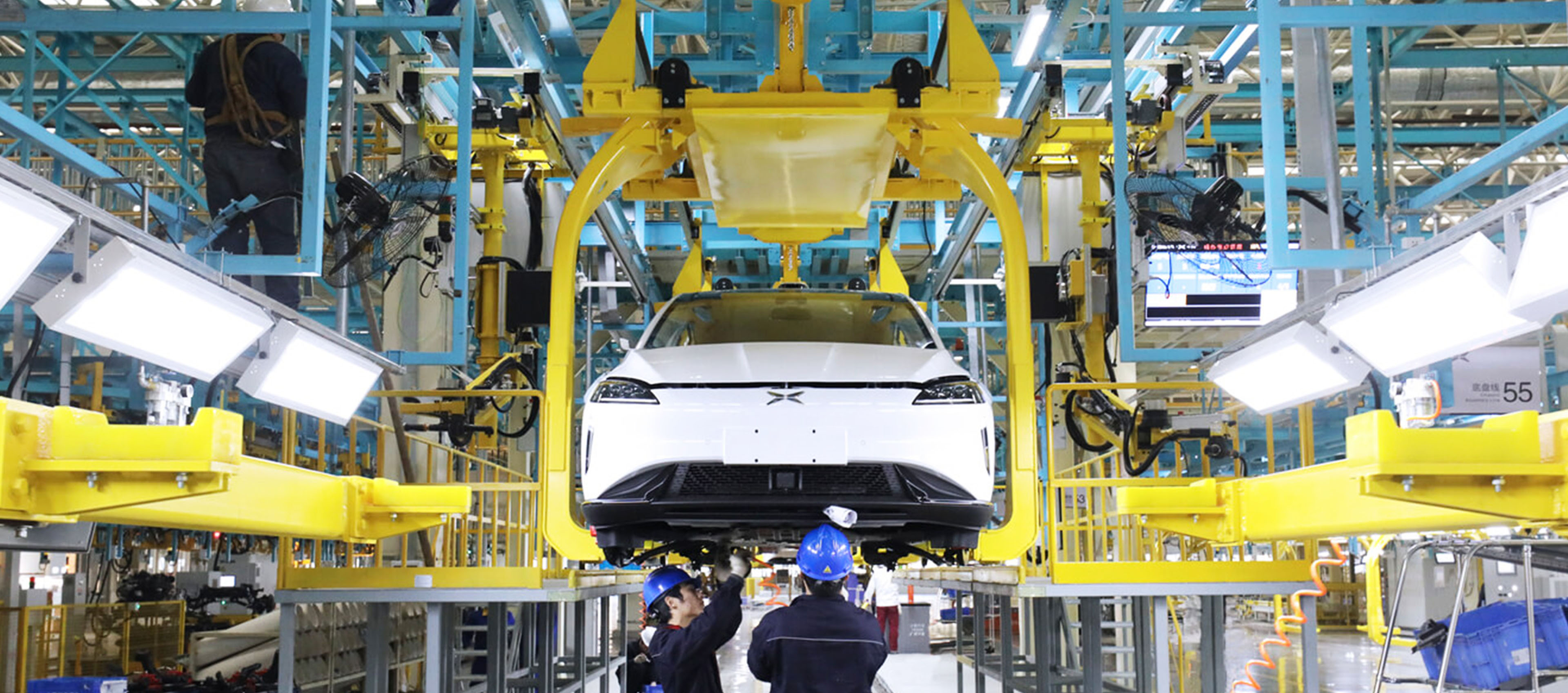
Chinese EV startups feel the heat as Tesla slashes prices, market subsidies ending
Tesla's recent price cuts and upcoming Shanghai plant for producing cheaper cars are increasing pressure on its Chinese rivals
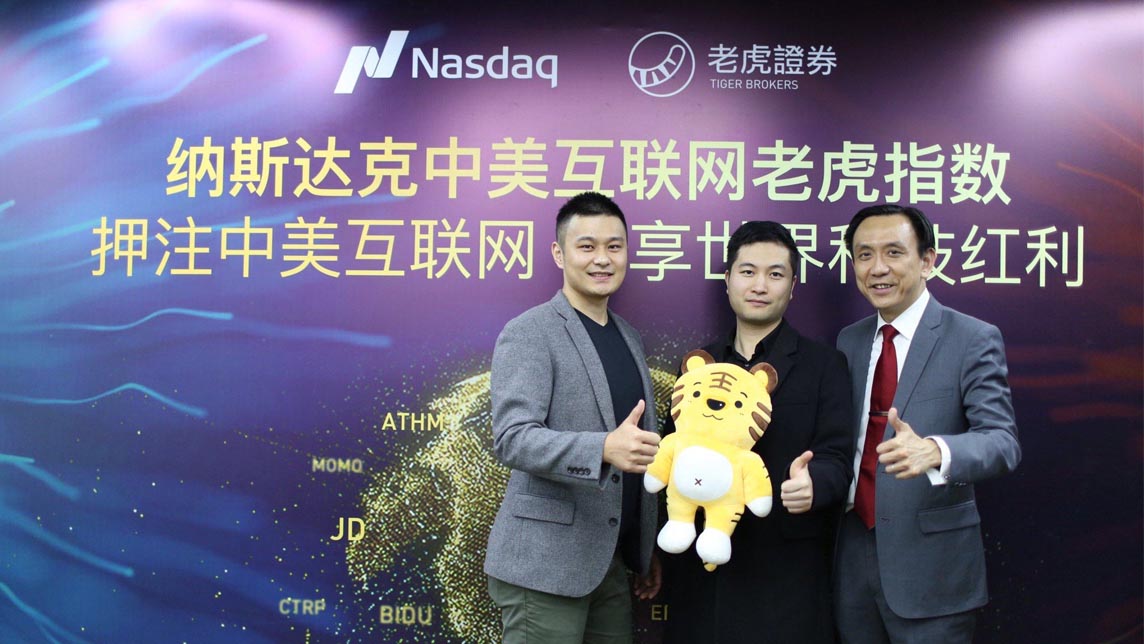
Tiger Brokers, a Chinese online brokerage for trading foreign stocks, announces US IPO
The Jim Rogers-backed fintech startup wants to raise US$150 million as it sees growing demand from younger Chinese investors
After a Covid-led boom in 2020, what next for China's K-12 edtech?
Unicorns Yuanfudao and Zuoyebang raised more than $6bn combined last year as demand for online learning continues to grow, but some smaller players are running out of cash

More than desire: When resale sneakers become objects of speculation
Sneaker resale platforms like Poizon and Nice feel the heat as China regulators panned such trading for getting out of control

Now called Wanwu Xinsheng, the startup recycles over 70,000 used electronic goods in China daily, clocking over RMB 2bn of transactions every month

SoccerDream: World's first VR soccer training platform to launch in China, US
SoccerDream uses virtual reality to boost trainee players' performance on the field by 36% compared to their peers

From China, Clever Home to build “Home Depot” marts in Africa
Combining B2B2C and O2O models, Clever Home is turning its 40,000sqm trade center in Nigeria into the "Yiwu marketplace" for Chinese companies looking to set up shop in Africa

Tiger Brokers: At the right place, at the right time
China’s new middle-class elite is educated and tech-savvy – and they want to put their money in US stocks. A fintech app is cashing in on this

Mobike founder Hu Weiwei: A crazy idea that touched millions of lives
In just three years, Hu Weiwei has changed the way over 150 million people travel in the city with her company’s dockless bikes

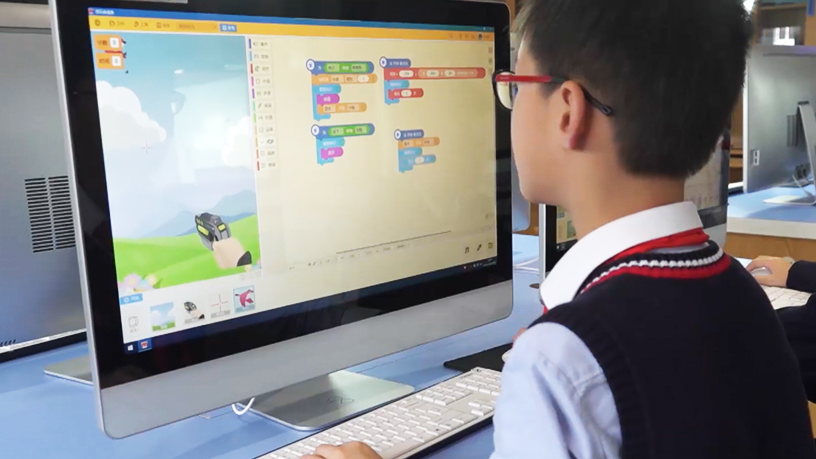
Codemao, China's pioneer in online coding lessons for kids, targets IPO
Codemao has taught over 30m children in China how to code with its proprietary online tools, including cartoons, mobile apps and curriculum, even its own coding language
Sorry, we couldn’t find any matches for “US-China trade war”.
POPULAR DATABASE