the Arison Group
-
DATABASE (2970)
-
ARTICLES (812)
Ensures sustainable land management and supply chains for multinationals by identifying deforestation, fire risks using real-time optical and radar satellite information, enabled by AI algorithms.


Ensures sustainable land management and supply chains for multinationals by identifying deforestation, fire risks using real-time optical and radar satellite information, enabled by AI algorithms.
Revolutionizing the world of food traceability, SwissDeCode’s DNA technology allows anyone to test for contaminants and provide certifications in minutes, automatically or offline.
Revolutionizing the world of food traceability, SwissDeCode’s DNA technology allows anyone to test for contaminants and provide certifications in minutes, automatically or offline.
A famous angel investor in the healthcare sector, Shao Hui founded Youxiang, the first cross-border medical tourism player in China in 2006, targeting the Chinese upper class. In 2001, he participated in the venture-stage funding of Beijing Nanshan Ski Village, now the most popular ski village in China.

A famous angel investor in the healthcare sector, Shao Hui founded Youxiang, the first cross-border medical tourism player in China in 2006, targeting the Chinese upper class. In 2001, he participated in the venture-stage funding of Beijing Nanshan Ski Village, now the most popular ski village in China.
IDEPA is the governmental Agency for Economic Development of the Principality of Asturias, under the Ministry of Employment, Industry, and Economic Promition, founded in 1983. Its only disclosed tech startup investment to date was in the 2021 $1.8m seed round of Asturias-based Triditive the first automated additive manufacturing technology.
IDEPA is the governmental Agency for Economic Development of the Principality of Asturias, under the Ministry of Employment, Industry, and Economic Promition, founded in 1983. Its only disclosed tech startup investment to date was in the 2021 $1.8m seed round of Asturias-based Triditive the first automated additive manufacturing technology.
Beta-i was established in 2010 as a Portuguese accelerator, incubator and event organizer to boost the Portuguese tech ecosystem. Beta-i is well-known for organizing some of Portugal's most successful accelerators and the annual tech startup event Lisbon Investment Summit. In 2019, it made its first investment in a startup Didimo by joining the seed round for the 3D digital twin designer platform.The company's best known acceleration program Lisbon Challenge is a twice yearly event open to all tech sectors, attracting around 10 participants based in Portugal and overseas. Its two-month programs have accelerated more than 200 startups, with about 75% coming from abroad. Beta-i also organizes the international energy accelerator Free Electrons, with EDP as one of its sponsors. Free Electrons has already accelerated 27 startups and is now running its third edition with 15 startups, five of which are Portugal-based. All the selected participants will have the chance to work for one year with at least one of the 10 global energy utilities that form the Free Electrons consortium. Another Beta-i event is The Journey, the first accelerator in Portugal dedicated to tourism tech startups from all over the world. Launched in partnership with the government's Portugal Tourism in 2017, the Lisbon-based program is part of the national Tourism 4.0 plan. The five-month program is now in its third edition and gives successful applicants the opportunity to develop pilot projects with Portuguese companies like the Vila Galé hotel chain, Barraqueiro transport company and Parques de Sintra, a UNESCO World Heritage site.
Beta-i was established in 2010 as a Portuguese accelerator, incubator and event organizer to boost the Portuguese tech ecosystem. Beta-i is well-known for organizing some of Portugal's most successful accelerators and the annual tech startup event Lisbon Investment Summit. In 2019, it made its first investment in a startup Didimo by joining the seed round for the 3D digital twin designer platform.The company's best known acceleration program Lisbon Challenge is a twice yearly event open to all tech sectors, attracting around 10 participants based in Portugal and overseas. Its two-month programs have accelerated more than 200 startups, with about 75% coming from abroad. Beta-i also organizes the international energy accelerator Free Electrons, with EDP as one of its sponsors. Free Electrons has already accelerated 27 startups and is now running its third edition with 15 startups, five of which are Portugal-based. All the selected participants will have the chance to work for one year with at least one of the 10 global energy utilities that form the Free Electrons consortium. Another Beta-i event is The Journey, the first accelerator in Portugal dedicated to tourism tech startups from all over the world. Launched in partnership with the government's Portugal Tourism in 2017, the Lisbon-based program is part of the national Tourism 4.0 plan. The five-month program is now in its third edition and gives successful applicants the opportunity to develop pilot projects with Portuguese companies like the Vila Galé hotel chain, Barraqueiro transport company and Parques de Sintra, a UNESCO World Heritage site.
The Stanford Management Company (SMC) invests through the Merged Pool that oversees the majority of its investable assets. Its portfolio includes diverse equity-oriented strategies: domestic and foreign public equities (27%), real estate (8%), natural resources (7%) and private equity (30%). Private equity is maintained at 30% of the Merged Pool based on its risk-return criteria. The Merged Pool was valued at $29.6 bn as of June 30, 2019.The private equity division operates through selected external partners for early and later-stage investments. According to the university’s latest investment report, the SMC is working to improve its investment portfolio that has become over diversified during the last four years, making it difficult to maintain quality and drive superior returns. The number of active partners has been reduced to 75 including 37 new ones added in the last four years. The new partners have generated a net internal rate of return of 29.3% over the last four years.

The Stanford Management Company (SMC) invests through the Merged Pool that oversees the majority of its investable assets. Its portfolio includes diverse equity-oriented strategies: domestic and foreign public equities (27%), real estate (8%), natural resources (7%) and private equity (30%). Private equity is maintained at 30% of the Merged Pool based on its risk-return criteria. The Merged Pool was valued at $29.6 bn as of June 30, 2019.The private equity division operates through selected external partners for early and later-stage investments. According to the university’s latest investment report, the SMC is working to improve its investment portfolio that has become over diversified during the last four years, making it difficult to maintain quality and drive superior returns. The number of active partners has been reduced to 75 including 37 new ones added in the last four years. The new partners have generated a net internal rate of return of 29.3% over the last four years.
Entrepreneur First is a global entrepreneur incubator program and early-startup investor. The incubator is an intensive six-month program for founders and aspiring entrepreneurs to help them develop ideas that can go into building their own companies. The program is held in six cities around the world: Bangalore; Berlin, London, Paris, Singapore and Toronto (Canada).Participants do not need to have a startup or a specific business idea to participate, and those who have established their own companies can seek partners or co-founders at the program. Roughly 40-50% of the cohort reach the “Launch” phase, where the participants have established their own companies and received investments from Entrepreneur First and potentially other VCs. Entrepreneur First can invest in a startup built by program participants in exchange for 10% equity. The exact amount invested varies: £80,000 for the European programs; S$75,000 for the Singapore and Bangalore programs; and C$100,000 for the Canada program.

Entrepreneur First is a global entrepreneur incubator program and early-startup investor. The incubator is an intensive six-month program for founders and aspiring entrepreneurs to help them develop ideas that can go into building their own companies. The program is held in six cities around the world: Bangalore; Berlin, London, Paris, Singapore and Toronto (Canada).Participants do not need to have a startup or a specific business idea to participate, and those who have established their own companies can seek partners or co-founders at the program. Roughly 40-50% of the cohort reach the “Launch” phase, where the participants have established their own companies and received investments from Entrepreneur First and potentially other VCs. Entrepreneur First can invest in a startup built by program participants in exchange for 10% equity. The exact amount invested varies: £80,000 for the European programs; S$75,000 for the Singapore and Bangalore programs; and C$100,000 for the Canada program.
DSM Venturing is the investment arm of major Dutch biotech company DSM that has been investing in startups since 2006. The company currently has 36 startups in its portfolio across geographies and has managed three exits to date. It typically invests between €100,000 and €5m, with a lifetime investment varying from €1m–20m and usually requires board membership alongside investment. It has offices in the Netherlands and the US, both on the east and west coast. Its recent investments include in the March 2021 $48m Series A round of Dutch cell-based meat startup Meatable which leverages pluripotent stem cells for the first time in foodtech, and in the same month, in the $8m Series A round of British anti-pollution biotech Deep Branch Biotechnology.
DSM Venturing is the investment arm of major Dutch biotech company DSM that has been investing in startups since 2006. The company currently has 36 startups in its portfolio across geographies and has managed three exits to date. It typically invests between €100,000 and €5m, with a lifetime investment varying from €1m–20m and usually requires board membership alongside investment. It has offices in the Netherlands and the US, both on the east and west coast. Its recent investments include in the March 2021 $48m Series A round of Dutch cell-based meat startup Meatable which leverages pluripotent stem cells for the first time in foodtech, and in the same month, in the $8m Series A round of British anti-pollution biotech Deep Branch Biotechnology.
An experienced entrepreneur in internet business, Wen Chu founded the online community for media professionals No4media.com in 2001, the Guangzhou-based Click.com.cn in 2003, and the mobile entertainment website Moabc.com in 2005. Click.com.cn was acquired by the NASDAQ-listed company PACT in 2004. In March 2008, he founded the Great Wall Club (GWC), a communication platform for entrepreneurs and startups that has initiated and organized events such as the annual Global Mobile Internet Conference (GMIC) since 2008 and the startup competition G-Startup Worldwide. He currently is the president and CEO of GWC. He invested Xpeng Motors as an angel investor in 2014.

An experienced entrepreneur in internet business, Wen Chu founded the online community for media professionals No4media.com in 2001, the Guangzhou-based Click.com.cn in 2003, and the mobile entertainment website Moabc.com in 2005. Click.com.cn was acquired by the NASDAQ-listed company PACT in 2004. In March 2008, he founded the Great Wall Club (GWC), a communication platform for entrepreneurs and startups that has initiated and organized events such as the annual Global Mobile Internet Conference (GMIC) since 2008 and the startup competition G-Startup Worldwide. He currently is the president and CEO of GWC. He invested Xpeng Motors as an angel investor in 2014.
Pedro Luis Uriarte Santamarina
Pedro Luis Uriarte Santamarina was the CEO of Spanish multinational bank BBVA from 1994 to 2001. He was also the Regional Minister-Economy & Finance of the first autonomous government of the Basque Country region in Spain. After being one of the creators of the Basque Agency for Innovation, Uriarte became an early investor of Indexa Capital and Bewa7er, both of which are co-founded by Unai Asenjo Barra.

Pedro Luis Uriarte Santamarina was the CEO of Spanish multinational bank BBVA from 1994 to 2001. He was also the Regional Minister-Economy & Finance of the first autonomous government of the Basque Country region in Spain. After being one of the creators of the Basque Agency for Innovation, Uriarte became an early investor of Indexa Capital and Bewa7er, both of which are co-founded by Unai Asenjo Barra.
RWA Invest GmbH is the wholesale company and service provider of the Raiffeisen Lagerhaus cooperatives, with over 1,000 distribution points and more than 120,000 cooperative members.The company also launched the Agro Innovation Lab (AIL) acceleration program focused on taking a leading role in cutting-edge technologies and innovation for agritech companies in the European region. The second cohort will involve activities in Austria and Germany.
RWA Invest GmbH is the wholesale company and service provider of the Raiffeisen Lagerhaus cooperatives, with over 1,000 distribution points and more than 120,000 cooperative members.The company also launched the Agro Innovation Lab (AIL) acceleration program focused on taking a leading role in cutting-edge technologies and innovation for agritech companies in the European region. The second cohort will involve activities in Austria and Germany.
GU Ventures is the Swedish venture capital agency of University of Gothenburg. The VC also runs incubator programs to support tech and science-related projects within the university and its alumni network.Founded in 1995, GU has backed more than 150 companies and projects, including 30 exits and 11 filed IPOs. According to the firm, 87% of its portfolio companies are contributing to the sustainable development goals set by the UN.
GU Ventures is the Swedish venture capital agency of University of Gothenburg. The VC also runs incubator programs to support tech and science-related projects within the university and its alumni network.Founded in 1995, GU has backed more than 150 companies and projects, including 30 exits and 11 filed IPOs. According to the firm, 87% of its portfolio companies are contributing to the sustainable development goals set by the UN.
Mass media empire Condé Nast was established in 1909 by Condé Montrose Nast. The company’s portfolio includes some of the most well-known titles in media: Vogue, GQ, The New Yorker and Vanity Fair. Initially print-focused, the company ventured into film, television and digital video programming with the launch of Condé Nast Entertainment in 2011.
Mass media empire Condé Nast was established in 1909 by Condé Montrose Nast. The company’s portfolio includes some of the most well-known titles in media: Vogue, GQ, The New Yorker and Vanity Fair. Initially print-focused, the company ventured into film, television and digital video programming with the launch of Condé Nast Entertainment in 2011.
Banco Espirito Santo was once the largest Portuguese bank by market value, and controlled by the Espirito Santo family. In August 2014, the country’s central bank took over the control of Banco Espirito Santo in a US$6.6 billion rescue.
Banco Espirito Santo was once the largest Portuguese bank by market value, and controlled by the Espirito Santo family. In August 2014, the country’s central bank took over the control of Banco Espirito Santo in a US$6.6 billion rescue.
Hike Capital was founded in December 2015 by Mark Yang, the founder of Ganji.com and Guazi.com, and Anna Xu, former general manager of the mobile internet department at NetEase and founder of the NetEase News app. The firm invests mainly in early-stage startups in the technological innovation, transaction platform, entertainment and lifestyle fields.
Hike Capital was founded in December 2015 by Mark Yang, the founder of Ganji.com and Guazi.com, and Anna Xu, former general manager of the mobile internet department at NetEase and founder of the NetEase News app. The firm invests mainly in early-stage startups in the technological innovation, transaction platform, entertainment and lifestyle fields.
BeeHero: Agritech for bee health and better crop pollination
Combining AI, smart sensors and the world’s largest bee database, BeeHero accurately predicts disorders in colonies, helping beekeepers reduce the mortality rate of bees vital for crop pollination

Quant Group makes personal loans safer, easier in China
Using big data and AI, Chinese fintech startup Quant Group simplifies and accelerates loan processing, and assures monetary security for financial institutions

AltStory: Putting the audience in the director's chair
The Chinese startup has taken interactivity to another level by letting TV and movie viewers decide where the action goes, and how it all ends.

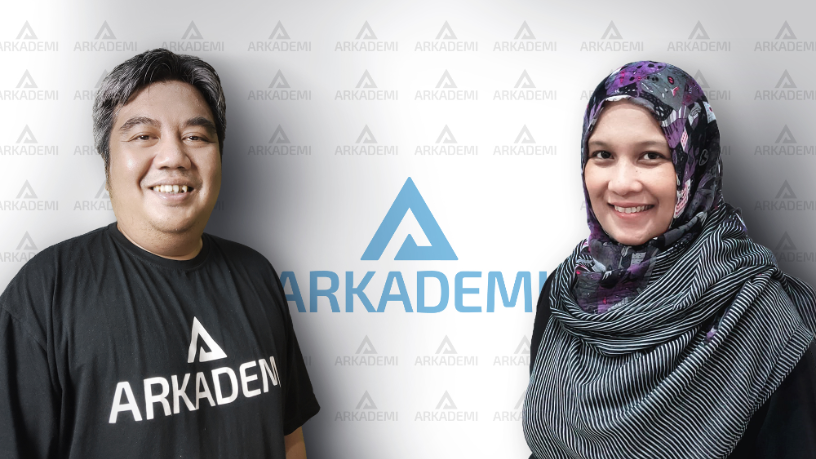
Arkademi wants people "to finish the course, pass the test and get the certificate they need"
Adopting a mobile-first focus, Indonesian MOOC Arkademi sets out to meet the needs of professionals and graduates for affordable courses that have ready applicability
Bobobobo: Indonesian luxury at a click
Amid a booming local e-commerce market, this startup carves a niche for itself in upscale trending goods and experiences influenced by Indonesia’s rich traditions

Tiger Brokers: At the right place, at the right time
China’s new middle-class elite is educated and tech-savvy – and they want to put their money in US stocks. A fintech app is cashing in on this

Portofolio: Showing rookie investors the ropes without the rip-offs
Through investment education and the guidance of master traders, Portofolio aims to show aspiring forex and derivatives traders and investors how to avoid scams and stabilize their returns

CrowdDana: Taking the equity crowdfunding hype into the real estate sector
Beginning with boarding house projects, CrowdDana's new business model aims to more efficiently connect Indonesian SMEs needing funding with a growing pool of investors

SWITCH Singapore: Embracing a circular economy, the whys and the hows
Its benefits for the environment aside, going circular could also lead to new economic growth, better public health and higher value-add employment, experts say

Xtrem Biotech, an agritech startup from Granada, seeks global expansion
With its research roots in the University of Granada, Xtrem Biotech was named one of the world's most innovative agtech spin-offs by accelerator TERRA Food & AgTech

Gojek and Tokopedia merge to form GoTo
The new entity, now Indonesia’s largest tech group, plans to go public in Indonesia and the US, targeting a $40bn valuation

Atomian: The powerful cognitive software that thinks, works like the human brain
Combining natural language processing with big data, Atomian enables easy, quick and real-time access to information in databases and documents

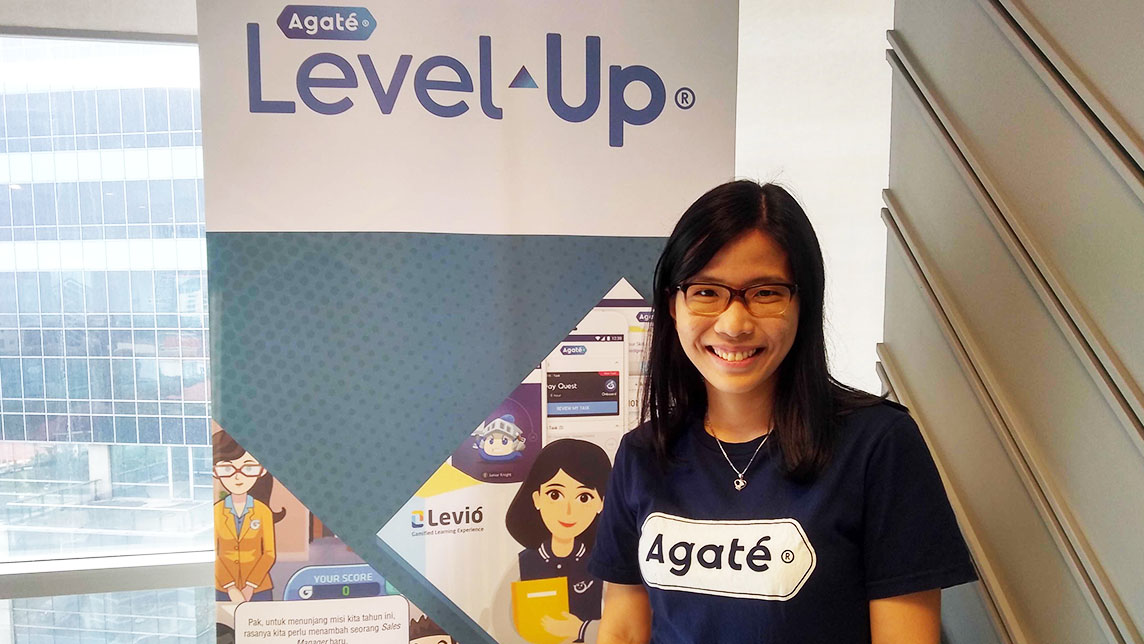
Agate learns it's not all about the games – it's about the fun
Agate has evolved into one of the biggest game development companies in Indonesia over the past decade. We learned how it got there from Shieny Aprilia, Agate's Vice President of Enterprise Business
Early Charm Ventures: Taking research from the labs to the real world
Instead of investing money, the venture studio gets hands-on, co-running companies with top scientists and their cutting-edge research
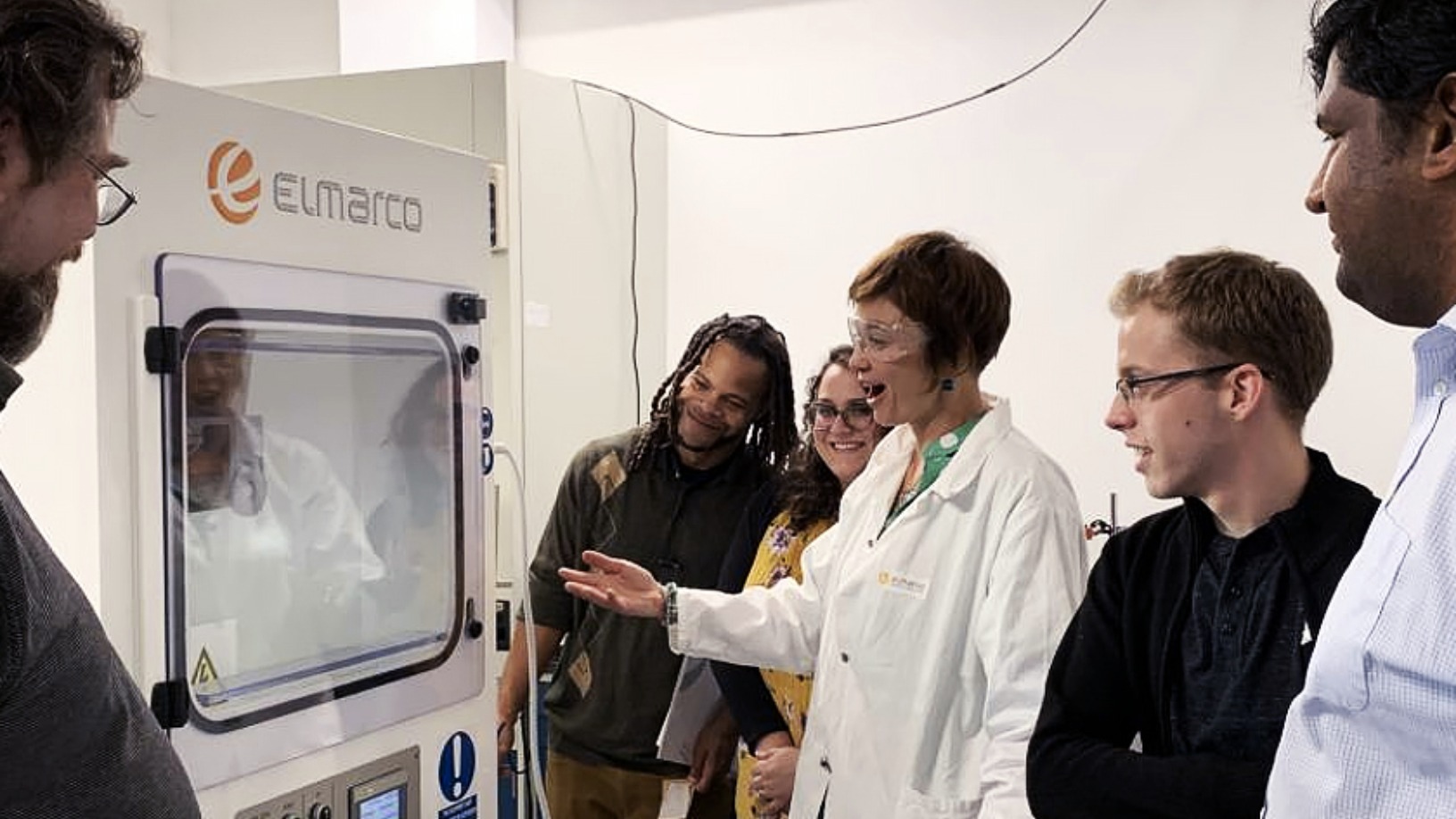
Plant-based eggs: The next big thing in the alternative protein market
Plant-based eggs may be the fastest growing segment in plant-based foods, but hacking the formula for a perfect egg substitute is proving a hurdle. Are alt-protein startups up for the challenge?

Sorry, we couldn’t find any matches for “the Arison Group”.