Girls in Tech
-
DATABASE (3094)
-
ARTICLES (812)
CEO and co-founder of SmartAHC
Lan Song completed a PhD in integrated circuit design at Nanyang Technological University in Singapore. He worked as a research engineer at Rolls-Royce@NTU Corporate Lab, a joint corporate research venture in Singapore.His family used to be in the husbandry business that partly inspired Lan to co-found SmartAHC with classmates in 2014. He currently serves as CEO at SmartAHC.

Lan Song completed a PhD in integrated circuit design at Nanyang Technological University in Singapore. He worked as a research engineer at Rolls-Royce@NTU Corporate Lab, a joint corporate research venture in Singapore.His family used to be in the husbandry business that partly inspired Lan to co-found SmartAHC with classmates in 2014. He currently serves as CEO at SmartAHC.
Co-founder, CEO and CTO of Trax Center
Hadi Darmanto is a software developer with over 10 years of experience. He graduated in 2001, with a degree in Information Technology from the Universitas Padjadjaran in Indonesia. In 2005, Hadi co-founded Asta Global Informatika, a custom software and hardware development company. He also joined Hendy Wijaya and Ganjar Satyanegara to establish the vehicle tracking app Trax Center in 2014. Hadi then left Asta Global Informatika to become the CEO and CTO of Trax Center in 2016.

Hadi Darmanto is a software developer with over 10 years of experience. He graduated in 2001, with a degree in Information Technology from the Universitas Padjadjaran in Indonesia. In 2005, Hadi co-founded Asta Global Informatika, a custom software and hardware development company. He also joined Hendy Wijaya and Ganjar Satyanegara to establish the vehicle tracking app Trax Center in 2014. Hadi then left Asta Global Informatika to become the CEO and CTO of Trax Center in 2016.
Co-founder, CIO of Datary
Fernando Díaz co-founded data exchange marketplace Datary in 2014. He was Datary's CEO before relinquishing the position to become Datary's CTO and subsequently assuming his current CIO role. At Comillas Pontifical University in Spain, he had joined a bachelor's program in Computer Science before dropping out in his final year to enrol in a double-degree program in Law and Business Administration. He is committed to developing disruptive technologies that influence the way people work with data on a daily basis.

Fernando Díaz co-founded data exchange marketplace Datary in 2014. He was Datary's CEO before relinquishing the position to become Datary's CTO and subsequently assuming his current CIO role. At Comillas Pontifical University in Spain, he had joined a bachelor's program in Computer Science before dropping out in his final year to enrol in a double-degree program in Law and Business Administration. He is committed to developing disruptive technologies that influence the way people work with data on a daily basis.
Co-founder of Xpeng Motors
In 2011, Yang earned his master’s degree in Control Science and Engineering from the Harbin Institute of Technology. From 2011 until January 2015, he worked as an electric vehicle project manager at Guangzhou Automobile Group Co., Ltd. In June 2014, he co-founded Xpeng Motors with He Xiaopeng, Xia Heng and He Tao in Guangzhou. After leaving Xpeng Motors in 2017, Yang joined Qeebike, an electric bike-sharing startup based in Hangzhou, and has served as its CTO ever since.

In 2011, Yang earned his master’s degree in Control Science and Engineering from the Harbin Institute of Technology. From 2011 until January 2015, he worked as an electric vehicle project manager at Guangzhou Automobile Group Co., Ltd. In June 2014, he co-founded Xpeng Motors with He Xiaopeng, Xia Heng and He Tao in Guangzhou. After leaving Xpeng Motors in 2017, Yang joined Qeebike, an electric bike-sharing startup based in Hangzhou, and has served as its CTO ever since.
CEO and co-founder of Blox
Bruno Berchielli has a master’s in AI and digital technology management from the University of Bologna. He also completed a bachelor’s degree in business administration at Brazil’s Insper business school that included studying in Canada.In 2017, Berchielli and brother Leandro started testing the idea for the Blox edtech platform in São Paulo. After spending one year developing the curriculum management platform, Blox was officially launched in 2019. The AI specialist is also a member of São Paulo’s Entrepreneur Circle.

Bruno Berchielli has a master’s in AI and digital technology management from the University of Bologna. He also completed a bachelor’s degree in business administration at Brazil’s Insper business school that included studying in Canada.In 2017, Berchielli and brother Leandro started testing the idea for the Blox edtech platform in São Paulo. After spending one year developing the curriculum management platform, Blox was officially launched in 2019. The AI specialist is also a member of São Paulo’s Entrepreneur Circle.
Founder and CEO of Brain Cyb
Chen Xiaosu holds a master’s degree in Physics from Tsinghua University. He worked as a computational scientist at ClusterTech, an advanced computing technology provider based in Hong Kong, from September 2013 to December 2016. In May 2017, he founded Brain Cyb in Beijing.

Chen Xiaosu holds a master’s degree in Physics from Tsinghua University. He worked as a computational scientist at ClusterTech, an advanced computing technology provider based in Hong Kong, from September 2013 to December 2016. In May 2017, he founded Brain Cyb in Beijing.
Founder and Former CEO of CekAja
International relations graduate, John Patrick Ellis worked in East Indonesia for two years with ViA-Volunteers Asia in 2005. He has picked up some Manggarai dialect along the way and also speaks Indonesian. In 2011, John created Harpoon Mobile, a maptech software that was later sold to a North American online marketing company in 2013. He went on to co-found C88 Financial Technologies Pte Ltd in Singapore that acquired CekAja and Otobro in Indonesia. John became the Group CEO of C88. The group’s other co-founder and chairman Karl Knoflach is based in the Philippines.

International relations graduate, John Patrick Ellis worked in East Indonesia for two years with ViA-Volunteers Asia in 2005. He has picked up some Manggarai dialect along the way and also speaks Indonesian. In 2011, John created Harpoon Mobile, a maptech software that was later sold to a North American online marketing company in 2013. He went on to co-found C88 Financial Technologies Pte Ltd in Singapore that acquired CekAja and Otobro in Indonesia. John became the Group CEO of C88. The group’s other co-founder and chairman Karl Knoflach is based in the Philippines.
CEO and Founder of 3D Click
Débora Alasraki is an architect by profession and an MBA graduate from the Nimbas-Utrecht Management School. She gained experience as an architect in Germany and moved to Barcelona in 2002 to work as project manager for the 2004 Architecture Forum.She is committed to exploring technology applications in architecture and in 1996, she founded Concern GmbR, the first visual search engine for contemporary architects in Cologne. In 2007, she co-founded Urban Media 3D and its spin-off 3D Click was started in 2016. She is the CEO of 3D Click, an online collaborative platform for 3D packaging and printing.

Débora Alasraki is an architect by profession and an MBA graduate from the Nimbas-Utrecht Management School. She gained experience as an architect in Germany and moved to Barcelona in 2002 to work as project manager for the 2004 Architecture Forum.She is committed to exploring technology applications in architecture and in 1996, she founded Concern GmbR, the first visual search engine for contemporary architects in Cologne. In 2007, she co-founded Urban Media 3D and its spin-off 3D Click was started in 2016. She is the CEO of 3D Click, an online collaborative platform for 3D packaging and printing.
Former co-founder of Qiscus
Serial entrepreneur Amin Nordin is the co-founder and ex-CEO of Qiscus. He left Qiscus in 2015 to work as the Chief Growth Engineer at marketing agency PaperToaster. In April 2019, he also started working as the Head of Growth at social influencer platform Vybes based in Singapore.After his national service as an army sergeant in Singapore, Amin went to Nanyang Technological Institute and graduated in 2010 with a bachelor's in Mechanical Engineering. He has worked for various companies including a Malaysian Islamic real estate crowdfunding platform Ethis Crowd and creative digital agency 1.618 Pte Ltd in Singapore.

Serial entrepreneur Amin Nordin is the co-founder and ex-CEO of Qiscus. He left Qiscus in 2015 to work as the Chief Growth Engineer at marketing agency PaperToaster. In April 2019, he also started working as the Head of Growth at social influencer platform Vybes based in Singapore.After his national service as an army sergeant in Singapore, Amin went to Nanyang Technological Institute and graduated in 2010 with a bachelor's in Mechanical Engineering. He has worked for various companies including a Malaysian Islamic real estate crowdfunding platform Ethis Crowd and creative digital agency 1.618 Pte Ltd in Singapore.
Co-founder and CEO of Allozymes
Peyman Salehian is an Iranian-born entrepreneur trained in chemical and biomolecular engineering. He founded his first company in 2010 after developing a custom material, and sold his stake in the company in 2013 before pursuing a PhD in Chemical and Biomolecular engineering at the National University of Singapore (NUS).Salehian graduated from the PhD program in 2017 and worked as a research fellow before embarking on one-year stints at two Singapore companies. In late 2019, he and fellow NUS researcher Akbar Vahidi established Allozymes, a startup offering enzyme engineering services using NUS-developed technology under license, with Salehian as CEO and Vahidi as CTO.

Peyman Salehian is an Iranian-born entrepreneur trained in chemical and biomolecular engineering. He founded his first company in 2010 after developing a custom material, and sold his stake in the company in 2013 before pursuing a PhD in Chemical and Biomolecular engineering at the National University of Singapore (NUS).Salehian graduated from the PhD program in 2017 and worked as a research fellow before embarking on one-year stints at two Singapore companies. In late 2019, he and fellow NUS researcher Akbar Vahidi established Allozymes, a startup offering enzyme engineering services using NUS-developed technology under license, with Salehian as CEO and Vahidi as CTO.
Co-CEO and Co-founder of Notpla (formerly Skipping Rocks Lab)
Rodrigo García González graduated in Architecture at the Technical University of Madrid (ETSAM) in 2009 and also completed various PhD courses in advanced architecture at his alma mater.In 2006, the architect student joined an EU Asia-Link sustainable humane habitat program that included stints at the Centre for Environmental Planning and Technology (CEPT) University in India. He also won a SMILE scholarship to study industrial design at Pontificia Universidad Católica in Chile for one year. In 2011, he obtained a scholarship to study industrial design and business at Umeå Institute of Design in Sweden. In 2014, he completed two master’s programs in innovation design engineering run by London’s Imperial College and Royal College of Art.In July 2014, he co-founded Skipping Rocks Lab, that was later pivoted into Notpla, a UK-based startup that develops compostable and edible packaging materials made of seaweed and other plants.Since 2007, he has worked with various institutions in Europe, Latin America and the US including Cornell University, CEPT, Imperial College and Royal College of Art. In 2016, he became a senior lecturer for a degree program in product and furniture design at Kingston University.He has two patents for his work on structural and deployable systems. His designs have also been featured in prestigious art centers like the Cite de l'Architecture of Paris and the Venice Biennale of Architecture.Other projects include the Hop! suitcase that can follow the user by tracking the signal of the user’s mobile phone and Aer, an artificial cloud that can evaporate “drinkable” water from the sea. He also developed Zipizip, an architectural system that enables the construction of several floors of a building in a few hours.

Rodrigo García González graduated in Architecture at the Technical University of Madrid (ETSAM) in 2009 and also completed various PhD courses in advanced architecture at his alma mater.In 2006, the architect student joined an EU Asia-Link sustainable humane habitat program that included stints at the Centre for Environmental Planning and Technology (CEPT) University in India. He also won a SMILE scholarship to study industrial design at Pontificia Universidad Católica in Chile for one year. In 2011, he obtained a scholarship to study industrial design and business at Umeå Institute of Design in Sweden. In 2014, he completed two master’s programs in innovation design engineering run by London’s Imperial College and Royal College of Art.In July 2014, he co-founded Skipping Rocks Lab, that was later pivoted into Notpla, a UK-based startup that develops compostable and edible packaging materials made of seaweed and other plants.Since 2007, he has worked with various institutions in Europe, Latin America and the US including Cornell University, CEPT, Imperial College and Royal College of Art. In 2016, he became a senior lecturer for a degree program in product and furniture design at Kingston University.He has two patents for his work on structural and deployable systems. His designs have also been featured in prestigious art centers like the Cite de l'Architecture of Paris and the Venice Biennale of Architecture.Other projects include the Hop! suitcase that can follow the user by tracking the signal of the user’s mobile phone and Aer, an artificial cloud that can evaporate “drinkable” water from the sea. He also developed Zipizip, an architectural system that enables the construction of several floors of a building in a few hours.
CTO and co-founder of Carbo Culture
US native Christopher Carstens graduated in mechanical engineering in 2002 at the University of California, Berkeley. He started his career as a technology analyst at The Spark Group in San Francisco.In 2004, the engineer co-founded Solid Gas Technologies to build a methane hydrate production system. Carstens also founded Homeland Fuels to construct a bioreactor using ethanol. He exited both companies in 2006 and went to work at World Waste Technologies in California as project manager and engineer. In 2012, he started working at Graphene Technologies as R&D engineer.In 2013, he joined an innovation accelerator program at Singularity University where he met Finnish participant Henrietta Moon. They co-founded Finnish startup Carbo Culture in 2016 with Carstens as CTO based at the California plant.The serial entrepreneur and inventor also founded Hydrate Dynamics as CTO in 2015 to develop gas storage and transportation facilities using clathrate hydrates technology. In 2018, he was appointed by the US Department of Energy to be a member of the Methane Hydrate Advisory Committee until January 2020.

US native Christopher Carstens graduated in mechanical engineering in 2002 at the University of California, Berkeley. He started his career as a technology analyst at The Spark Group in San Francisco.In 2004, the engineer co-founded Solid Gas Technologies to build a methane hydrate production system. Carstens also founded Homeland Fuels to construct a bioreactor using ethanol. He exited both companies in 2006 and went to work at World Waste Technologies in California as project manager and engineer. In 2012, he started working at Graphene Technologies as R&D engineer.In 2013, he joined an innovation accelerator program at Singularity University where he met Finnish participant Henrietta Moon. They co-founded Finnish startup Carbo Culture in 2016 with Carstens as CTO based at the California plant.The serial entrepreneur and inventor also founded Hydrate Dynamics as CTO in 2015 to develop gas storage and transportation facilities using clathrate hydrates technology. In 2018, he was appointed by the US Department of Energy to be a member of the Methane Hydrate Advisory Committee until January 2020.
Co-founder and CTO of Quintal
Pieter Jontera Lius joined Quintal as CTO in July 2015, after working as Director of Information Technology at PT MarketPlays Digital Ventura. Prior to returning to Indonesia, he had worked as a software analyst and developer at iConsult in Singapore for almost two years.Pieter graduated in 2012, with a bachelor’s degree in Computer Software Engineering at the University of New South Wales in Australia.

Pieter Jontera Lius joined Quintal as CTO in July 2015, after working as Director of Information Technology at PT MarketPlays Digital Ventura. Prior to returning to Indonesia, he had worked as a software analyst and developer at iConsult in Singapore for almost two years.Pieter graduated in 2012, with a bachelor’s degree in Computer Software Engineering at the University of New South Wales in Australia.
Co-founder and Director of Operations of Fabelio
Sista Srinivas studied Mathematics and Engineering at the Birla Institute of Technology in India. After obtaining a master’s in 2012, he became a market analyst for one year at Fractal Analytics in Mumbai, India, before joining Indonesia’s Lazada Group in November 2013. He left his job as a consultant for home appliances at Lazada in March 2015 to become a co-founder and director of operations at Fabelio.

Sista Srinivas studied Mathematics and Engineering at the Birla Institute of Technology in India. After obtaining a master’s in 2012, he became a market analyst for one year at Fractal Analytics in Mumbai, India, before joining Indonesia’s Lazada Group in November 2013. He left his job as a consultant for home appliances at Lazada in March 2015 to become a co-founder and director of operations at Fabelio.
Co-founder and CTO of Trio.AI
Co-founder and CTO of Trio.AI. Qi has worked in the field of Natural Language Processing since 2004. After graduating with a master’s in Computer Science from the University of Science and Technology Liaoning in 2007, he worked at Alibaba, Tencent, Microsoft and Baidu.As a technology initiator, he helped with the development of Microsoft’s chatbot XiaoIce in 2014 and Baidu’s Xiaodu robot in 2015.

Co-founder and CTO of Trio.AI. Qi has worked in the field of Natural Language Processing since 2004. After graduating with a master’s in Computer Science from the University of Science and Technology Liaoning in 2007, he worked at Alibaba, Tencent, Microsoft and Baidu.As a technology initiator, he helped with the development of Microsoft’s chatbot XiaoIce in 2014 and Baidu’s Xiaodu robot in 2015.
Girls in Tech Indonesia: Inspiring the geek in every girl
Girls in Tech Indonesia aims to put the country's women at the forefront of its tech and startup world

SOURCE Global's solar-run panels turn air into drinking water
The US startup’s adapted solar panels extract water vapor from the air to produce potable water, a vital resource for distressed communities in disaster zones and remote areas

Allen Zhang: Father of WeChat and its string of innovations
Get to know the man behind the app in every Chinese user's smartphone


In Indonesia, Ramadan goes hi-tech
From consumption to charity, tech startups have come to play a key role in Ramadan traditions in Indonesia

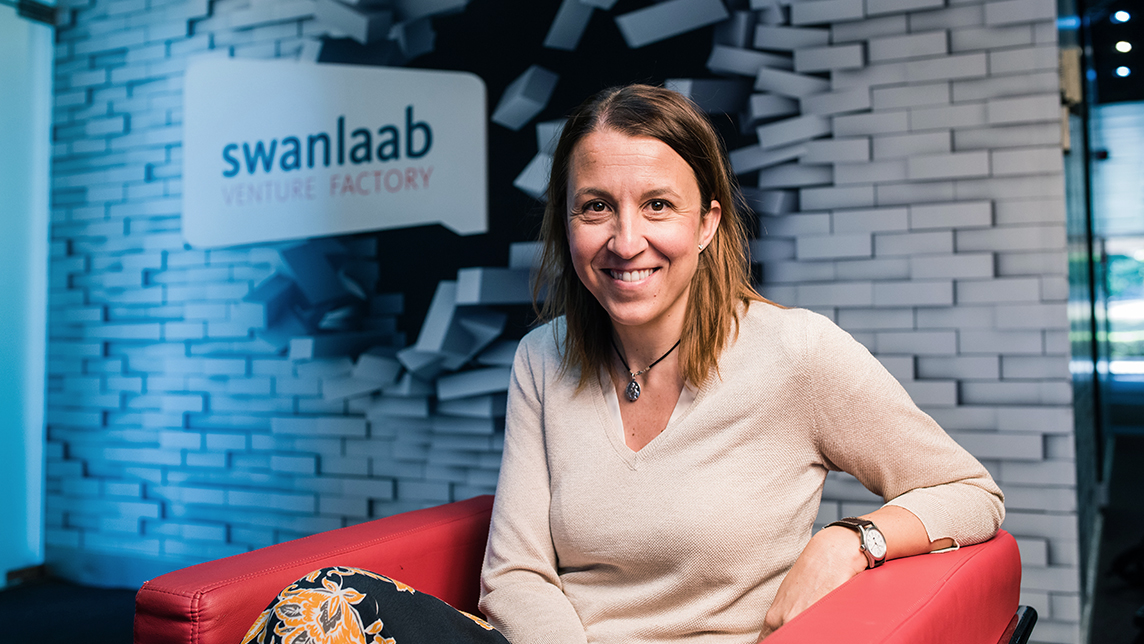
Swanlaab Venture Factory: €40 million funding chest to give power to the people
The female co-founder of Swanlaab Venture Factory believes that diversity enriches decision-making and drives performance. CompassList recently caught up with Verónica Trapa Díaz-Obregón to find out what's in store for Spain's first Israeli-backed VC fund
In Portugal tourism tech gets disrupted, in time for post-Covid-19 era
As Portugal reopens to tourists early next month, the sector is banking on a new generation of tourism tech startups to enable safety and reassure visitors

Insights on tech and the Indonesian diaspora in Silicon Valley
Navigating the different diaspora communities, one tech event at a time

Haishen Tech: Scan image and find your product in one second
Haishen Tech's AI vending machines will revive unmanned retail economy and tap into growing on-demand consumerism worldwide

Capaball: Empowering employees to upskill in tech as more businesses digitalize
The Spanish edtech platform for Fortune 500 clients and professionals is focused on developing new markets in Latin America

In depth: The business ecosystems China’s tech giants and unicorns build
Startups could accept to join Alibaba, Tencent or other tech giants in their ecosystems and scale quickly. Or they could say no and keep their independence. But do they really have a choice?

Shiheng Tech: The brains behind Starbucks' online delivery success in China
Using real-time data analytics to optimize last-mile delivery, Shiheng Tech offers the perfect on-demand recipe for F&B businesses

Bound4Blue’s aeronautical tech propels first sustainable shipping vessel in the Pacific
Winning €5m fresh funding, Bound4Blue also scores with its EC-backed pilot, the first of its kind, offering new possibilities to cargo vessels seeking sustainable transportation

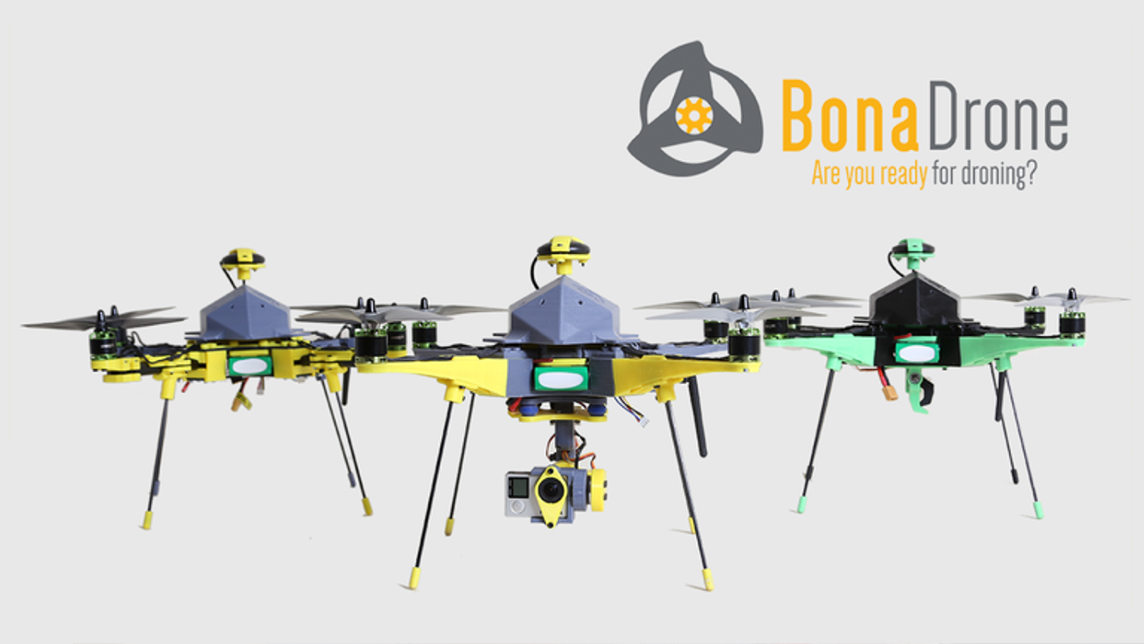
In Spain, DIY drones help entice students to study science and tech
Spanish startup Bonadrone aims to revolutionize the way science, math and technology are taught in schools and is disrupting the drone sector by enabling users to customize their own 3D-printed drones
Amid Covid-19 gloom, some bright spots in Portugal's tech startup scene
Despite a recession and doubling of the unemployment rate forecast this year, it's not all bad news for the Portuguese tech ecosystem

Dipole Tech: Using blockchain to democratize access to renewable energy in Asia
Having established key markets in the Philippines and Thailand, China’s Dipole Tech is next gaining ground at home for its energy trading app

Sorry, we couldn’t find any matches for “Girls in Tech”.
POPULAR DATABASE