University of Barcelona
-
DATABASE (2773)
-
ARTICLES (812)
Yangtze Delta Region Institute of Tsinghua University, Zhejiang
Yangtze Delta Region Research Institute of Tsinghua University, Zhejiang was co-founded by the provincial government of Zhejiang and Tsinghua University in 2003 for tech transfer. It has set up over 50 R&D platforms in the areas of life sciences, digital creativity, information technology and ecological environment and 11 offshore incubators in the US, UK, Germany and Australia. The institute manages over RMB 7.5bn of assets and also makes investments through its sub-funds with a total size of more than RMB 10bn. So far, it has incubated and invested in over 2,500 companies, 35 of whom have gone public or been acquired by listed companies.

Yangtze Delta Region Research Institute of Tsinghua University, Zhejiang was co-founded by the provincial government of Zhejiang and Tsinghua University in 2003 for tech transfer. It has set up over 50 R&D platforms in the areas of life sciences, digital creativity, information technology and ecological environment and 11 offshore incubators in the US, UK, Germany and Australia. The institute manages over RMB 7.5bn of assets and also makes investments through its sub-funds with a total size of more than RMB 10bn. So far, it has incubated and invested in over 2,500 companies, 35 of whom have gone public or been acquired by listed companies.
The Stanford Management Company (SMC) invests through the Merged Pool that oversees the majority of its investable assets. Its portfolio includes diverse equity-oriented strategies: domestic and foreign public equities (27%), real estate (8%), natural resources (7%) and private equity (30%). Private equity is maintained at 30% of the Merged Pool based on its risk-return criteria. The Merged Pool was valued at $29.6 bn as of June 30, 2019.The private equity division operates through selected external partners for early and later-stage investments. According to the university’s latest investment report, the SMC is working to improve its investment portfolio that has become over diversified during the last four years, making it difficult to maintain quality and drive superior returns. The number of active partners has been reduced to 75 including 37 new ones added in the last four years. The new partners have generated a net internal rate of return of 29.3% over the last four years.

The Stanford Management Company (SMC) invests through the Merged Pool that oversees the majority of its investable assets. Its portfolio includes diverse equity-oriented strategies: domestic and foreign public equities (27%), real estate (8%), natural resources (7%) and private equity (30%). Private equity is maintained at 30% of the Merged Pool based on its risk-return criteria. The Merged Pool was valued at $29.6 bn as of June 30, 2019.The private equity division operates through selected external partners for early and later-stage investments. According to the university’s latest investment report, the SMC is working to improve its investment portfolio that has become over diversified during the last four years, making it difficult to maintain quality and drive superior returns. The number of active partners has been reduced to 75 including 37 new ones added in the last four years. The new partners have generated a net internal rate of return of 29.3% over the last four years.
Stanford Graduate School of Business
Launched in 2015, the Stanford GSB Impact Fund invests globally in innovators and tech startups whether connected with the university or not and within the area of social impact in seven market segments: education, energy and the environment, fintech, food and agriculture, justice, healthcare, and urban development. The university-owned fund invests from the pre-seed to Series A rounds and makes investments mostly from January to April. It currently has 11 startups in its portfolio.

Launched in 2015, the Stanford GSB Impact Fund invests globally in innovators and tech startups whether connected with the university or not and within the area of social impact in seven market segments: education, energy and the environment, fintech, food and agriculture, justice, healthcare, and urban development. The university-owned fund invests from the pre-seed to Series A rounds and makes investments mostly from January to April. It currently has 11 startups in its portfolio.
Francesc Riverola is a business angel and the chairman of FXStreet. He launched FXStreet in 2000 while working as an e-Research Manager at PwC and at the IESE e-Business Center. He was CEO of the worldwide forex reference portal until 2012.He is also an investor at Lanta Digital Ventures, a Barcelona-based VC for early-stage startups in Spain and Europe. Born in Palo Alto in California USA, he moved to Barcelona as a child. He has an Economics degree from the University of Barcelona and a PDD in management development for company directors run by IESE Business School.

Francesc Riverola is a business angel and the chairman of FXStreet. He launched FXStreet in 2000 while working as an e-Research Manager at PwC and at the IESE e-Business Center. He was CEO of the worldwide forex reference portal until 2012.He is also an investor at Lanta Digital Ventures, a Barcelona-based VC for early-stage startups in Spain and Europe. Born in Palo Alto in California USA, he moved to Barcelona as a child. He has an Economics degree from the University of Barcelona and a PDD in management development for company directors run by IESE Business School.
The Bank of China is one of four major state-owned banks in China. It provides financial services to China as well as 51 other countries and regions. The BOC makes direct investments and conducts investment management through its wholly owned subsidiary Bank of China Group Investment Ltd. It invests primarily in its clients and focuses on the fields of finance, consumption, medicine and energy sources.

The Bank of China is one of four major state-owned banks in China. It provides financial services to China as well as 51 other countries and regions. The BOC makes direct investments and conducts investment management through its wholly owned subsidiary Bank of China Group Investment Ltd. It invests primarily in its clients and focuses on the fields of finance, consumption, medicine and energy sources.
A co-founder and angel investor of HomeRun, Cheng Xiaohua graduated with a major in Automation at Changsha Railway University in 1983. The university is now known as Railway Campus, Central South University. From 1984 to 1988, he spent his postgraduate years at Graduate School, University of Chinese Academy of Sciences and earned a master’s degree in Automation. He co-founded Netac with Deng Guoshun in 1999 and became the chairman in September 2010.

A co-founder and angel investor of HomeRun, Cheng Xiaohua graduated with a major in Automation at Changsha Railway University in 1983. The university is now known as Railway Campus, Central South University. From 1984 to 1988, he spent his postgraduate years at Graduate School, University of Chinese Academy of Sciences and earned a master’s degree in Automation. He co-founded Netac with Deng Guoshun in 1999 and became the chairman in September 2010.
Founded by Li Shujun, the former CFO of Shengda, in 2006, Trustbridge Partners is a venture capital and private equity firm focusing on growth-stage and expansion-stage investments in Chinese companies in new energy, environmental protection, new materials, new media, retailing, healthcare, education, e-commerce, etc. The sources of its funds come mainly from university foundations in the US (such as Columbia University, Stanford University, New York University), world-renowned investment firms (Temasek Holdings, Kerry Group, etc.), and private investors.

Founded by Li Shujun, the former CFO of Shengda, in 2006, Trustbridge Partners is a venture capital and private equity firm focusing on growth-stage and expansion-stage investments in Chinese companies in new energy, environmental protection, new materials, new media, retailing, healthcare, education, e-commerce, etc. The sources of its funds come mainly from university foundations in the US (such as Columbia University, Stanford University, New York University), world-renowned investment firms (Temasek Holdings, Kerry Group, etc.), and private investors.
Gerard Olivé is a serial entrepreneur based in Barcelona. He is currently the co-CEO and co-founder of Antai Venture Builder, in charge of a multimillion-euro advertising inventory. He graduated in Audiovisual Communications at Barcelona's Ramon Llull University. As an angel investor, Olivé made his first disclosed investment in 2016 when he participated in the pre-seed and subsequent seed funding rounds of Spanish femtech WOOM. He founded BeRepublic, a strategic consulting firm specializing in digital businesses in southern Europe and Latin America. In 2015, he co-founded BeAgency, an interactive marketing agency with offices in Barcelona and Madrid. He is also a co-founder and mentor of Connector Startup Accelerator. He has also co-founded startups like Wallapop, Glovo, CornerJob, Deliberry, Shoppiday, Shopery, BePretty, Mascoteros, Marmota, Havet, Prontopiso, Medox and Trendier.

Gerard Olivé is a serial entrepreneur based in Barcelona. He is currently the co-CEO and co-founder of Antai Venture Builder, in charge of a multimillion-euro advertising inventory. He graduated in Audiovisual Communications at Barcelona's Ramon Llull University. As an angel investor, Olivé made his first disclosed investment in 2016 when he participated in the pre-seed and subsequent seed funding rounds of Spanish femtech WOOM. He founded BeRepublic, a strategic consulting firm specializing in digital businesses in southern Europe and Latin America. In 2015, he co-founded BeAgency, an interactive marketing agency with offices in Barcelona and Madrid. He is also a co-founder and mentor of Connector Startup Accelerator. He has also co-founded startups like Wallapop, Glovo, CornerJob, Deliberry, Shoppiday, Shopery, BePretty, Mascoteros, Marmota, Havet, Prontopiso, Medox and Trendier.
Inspired by community-supported agriculture (CSA), Thousands of Farmers provides an e-commerce platform enabling consumers to subscribe to farm harvests in advance and share their profits.

Inspired by community-supported agriculture (CSA), Thousands of Farmers provides an e-commerce platform enabling consumers to subscribe to farm harvests in advance and share their profits.
Mari Elka Pangestu is the first female Chinese Indonesian to hold a cabinet position. She was the Minister of Trade from 2004 to 2011 and the Minister of Tourism from 2011 to 2014. She holds a doctorate in Economics from the University of California, USA. Returning to academia at the University of Indonesia, the professor is also part of the Indonesian network of angel investors ANGIN.

Mari Elka Pangestu is the first female Chinese Indonesian to hold a cabinet position. She was the Minister of Trade from 2004 to 2011 and the Minister of Tourism from 2011 to 2014. She holds a doctorate in Economics from the University of California, USA. Returning to academia at the University of Indonesia, the professor is also part of the Indonesian network of angel investors ANGIN.
GU Ventures is the Swedish venture capital agency of University of Gothenburg. The VC also runs incubator programs to support tech and science-related projects within the university and its alumni network.Founded in 1995, GU has backed more than 150 companies and projects, including 30 exits and 11 filed IPOs. According to the firm, 87% of its portfolio companies are contributing to the sustainable development goals set by the UN.
GU Ventures is the Swedish venture capital agency of University of Gothenburg. The VC also runs incubator programs to support tech and science-related projects within the university and its alumni network.Founded in 1995, GU has backed more than 150 companies and projects, including 30 exits and 11 filed IPOs. According to the firm, 87% of its portfolio companies are contributing to the sustainable development goals set by the UN.
Javier Llorente Moral has extensive experience in managing and investing in internet startups and currently manages an investment portfolio of over 30 startups through his own investment company, Valderaduey Investments. A graduate in clinical psychology from the University of Barcelona, and in management from IESE Business School, he was a founding partner of Grupo Intercom in 1995.Since 1999, he has been a prolific investor in some of Spain's most successful internet businesses after his 10-year investment in Infojobs, until its acquisition by Schibsted. His other exited companies include Softonic and Bodas.net. He is also an investor in other startups including Emagister, Verticales Intercom, Buy Yourself, Red Points, Mailtrack and Camaloon, as well as in the startup investment platform Startupxplore.

Javier Llorente Moral has extensive experience in managing and investing in internet startups and currently manages an investment portfolio of over 30 startups through his own investment company, Valderaduey Investments. A graduate in clinical psychology from the University of Barcelona, and in management from IESE Business School, he was a founding partner of Grupo Intercom in 1995.Since 1999, he has been a prolific investor in some of Spain's most successful internet businesses after his 10-year investment in Infojobs, until its acquisition by Schibsted. His other exited companies include Softonic and Bodas.net. He is also an investor in other startups including Emagister, Verticales Intercom, Buy Yourself, Red Points, Mailtrack and Camaloon, as well as in the startup investment platform Startupxplore.
Armed with Asian and European experience, Miguel Amaro co-founded Uniplaces in 2011. He earned his bachelor’s degree in Finance from the University of Nottingham, and took a course in Chinese Studies at East China Normal University. He obtained his master’s in Management, with a concentration in Global Entrepreneurship, from Babson Graduate School. Amaro also spent two months as an analyst at Grameen Bank in Dhaka, Bangladesh. While developing Uniplaces, he was an entrepreneur-in-residence at Picvic Labs (France), Zhejiang University Innovation Institute (China) and Osram (United States). Amaro is currently part of the World Economic Forum’s Global Shapers. As an investor, to date, he has only invested in Portuguese healthy food service EatTasty and part funding the company's angel, pre-seed and seed rounds, with undisclosed investments.

Armed with Asian and European experience, Miguel Amaro co-founded Uniplaces in 2011. He earned his bachelor’s degree in Finance from the University of Nottingham, and took a course in Chinese Studies at East China Normal University. He obtained his master’s in Management, with a concentration in Global Entrepreneurship, from Babson Graduate School. Amaro also spent two months as an analyst at Grameen Bank in Dhaka, Bangladesh. While developing Uniplaces, he was an entrepreneur-in-residence at Picvic Labs (France), Zhejiang University Innovation Institute (China) and Osram (United States). Amaro is currently part of the World Economic Forum’s Global Shapers. As an investor, to date, he has only invested in Portuguese healthy food service EatTasty and part funding the company's angel, pre-seed and seed rounds, with undisclosed investments.
Veteran Portuguese investor Diamantino Costa, aka Dino, is the founder and managing partner of DCVentures and Ganexa Capital. He is also the chairman and CEO of Intelligent Sensing Anywhere (ISA), an IoT firm in energy, oil and gas. He is a former chairman of the Portuguese Aerospace Industry Association (PEMAS).Costa has a master’s in Computer Science from the University of Coimbra. He co-founded and exited Critical Software, one of Portugal’s first startups. The business application development company has its roots at the University of Coimbra and secured NASA as its first client.

Veteran Portuguese investor Diamantino Costa, aka Dino, is the founder and managing partner of DCVentures and Ganexa Capital. He is also the chairman and CEO of Intelligent Sensing Anywhere (ISA), an IoT firm in energy, oil and gas. He is a former chairman of the Portuguese Aerospace Industry Association (PEMAS).Costa has a master’s in Computer Science from the University of Coimbra. He co-founded and exited Critical Software, one of Portugal’s first startups. The business application development company has its roots at the University of Coimbra and secured NASA as its first client.
Founding partner of China Bridge Capital, Zeng Qiang used to be nominated the Most Influential Chinese IT Leader by TIME in 1998. He founded Sparkice, one of the first B2B e-commerce platforms in China, in 1996. He co-founded LeTV CBC Buyout Fund, Wumei CBC Buyout Fund, iCarbonX CBC Buyout Fund, E-China Alliance, and Yabuli China Entrepreneurs Forum. Zeng Qiang received his Master of Economic Management in Tsinghua University and Master of Financial Economics in The University of Toronto. He also serves as the guest professor at the Business School of Tsinghua.

Founding partner of China Bridge Capital, Zeng Qiang used to be nominated the Most Influential Chinese IT Leader by TIME in 1998. He founded Sparkice, one of the first B2B e-commerce platforms in China, in 1996. He co-founded LeTV CBC Buyout Fund, Wumei CBC Buyout Fund, iCarbonX CBC Buyout Fund, E-China Alliance, and Yabuli China Entrepreneurs Forum. Zeng Qiang received his Master of Economic Management in Tsinghua University and Master of Financial Economics in The University of Toronto. He also serves as the guest professor at the Business School of Tsinghua.
Lawtech startup Reclamador.es takes negligent companies to task
Reclamador.es’ team of top-notch lawyers has seen a 98% success rate in their fight for consumers’ rights, though scaling up has been difficult

Beatriz González: Seaya Ventures head and Spanish tech VC trailblazer
From Cabify to Glovo, the only woman to head a Spanish VC firm has backed some of the country’s most successful startups to date

After insurtech and fintech, Newralers applies AI to winemaking
Newralers expects strong demand for its disruptive AI solutions that test the cognitive value of information, with clients from listed companies to SMEs

ZiCare: Digitalizing Indonesia's healthcare system, one hospital at a time
Supported by the health ministry, ZiCare is raising $1.5m to attract more hospitals and clinics to use its platform for administration, patient records and insurance claims

Ecojoko: Using AI, real-time data to save electricity
The French startup’s energy-saving assistant and mobile app show how much electricity is being used and how much can be saved for every household appliance

Agricool: Growing fresh strawberries in shipping containers
Paris-based Agricool grows fresh produce in urban aeroponics farms within shipping containers for sale at downtown supermarkets, aims to supply more large cities by 2030

Using sensors and machine learning, Jejak.in wants to make conservation programs count
Launched this year, Jejak.in is helping big corporates like Danone-Aqua in environmental projects and a major B2C carbon-offsetting partnership is next

4D ShoeTech: Digital design platform helps shoemakers to slash production time by over 60%
Armed with new funding, 4D ShoeTech is scaling its Ideation platform to offer digital modelling services to cover other popular products like suitcases

8villages to refocus business, shelve B2C agri-ecommerce ops as Covid boost proves short-lived
Despite a spike in B2C demand during Indonesia’s initial lockdowns, 8villages customers returned to shopping offline once restrictions eased

Meatable joins Royal DSM to create growth media specific for cell-based meat tech
The R&D between the biotech startup and fellow Dutch nutrition conglomerate could help scale and drive the commercial viability of lab-grown meat

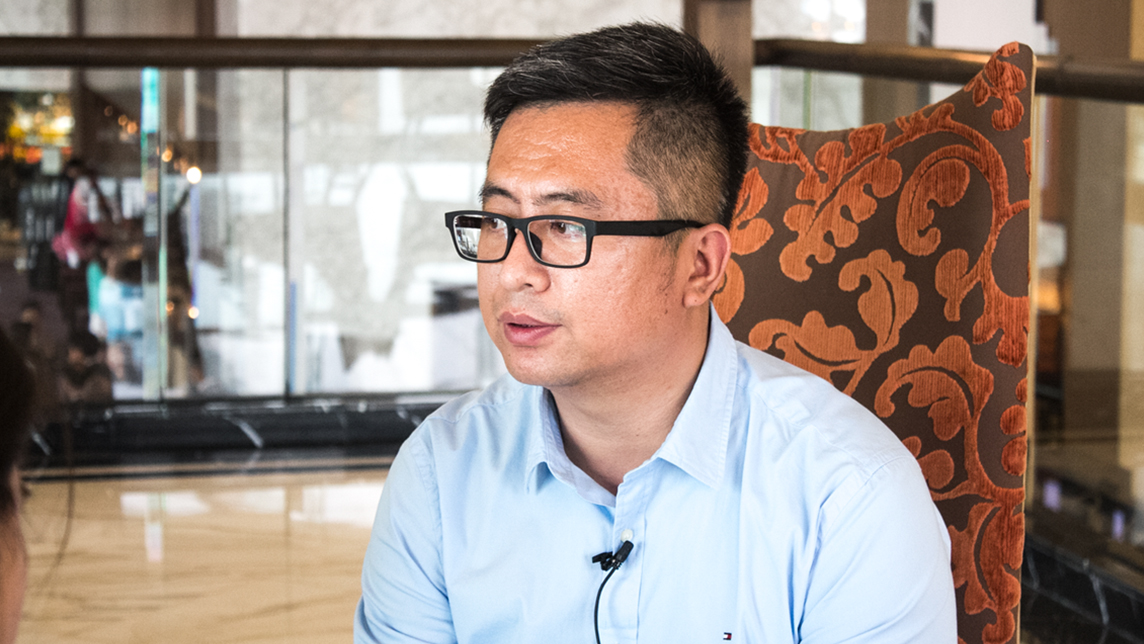
Founder and CEO Gao Lufeng on Ninebot's acquisition of American motorized scooter maker Segway, China’s rise in technology and innovation, and the company’s plans for the US market
Future Food Asia by ID Capital: Introducing Asia's agrifood startups to the world
More than a meeting of startups and investors, the conference showcases ID Capital’s investment thesis and Big Ag’s support for agrifood tech in the world’s most populous region

Chinese startups join the race to address chip shortage amid funding boom
Would an overheated semiconductor startup scene and the ability to design cutting-edge chips be enough to help China achieve chip self-sufficiency?

Huidu Environmental: Creating a circular economy to ease online retail's parcel waste woes
China's billion-dollar courier industry finds much-needed solution in Huidu's eco-friendly, low-cost boxes and smart recycling system

TOPDOX relaunched: from consumer to corporate
Half a million users later, productivity software startup TOPDOX made the jump to B2B. Its co-founder and CEO, Nelson Pereira, tells us why

Sorry, we couldn’t find any matches for “University of Barcelona”.
POPULAR DATABASE