china’s
-
DATABASE (87)
-
ARTICLES (84)
Founded in June 2015, Horizon Robotics is an AI solutions provider. Devices carrying its AI systems have been widely applied in smart driving, smart city and smart retail scenarios. Horizon developed China’s first embedded AI processors for computer vision tasks: the Sunrise 1.0 Processor, which is used in smart cameras, and the Journey 1.0 Processor, which is used in autonomous vehicles.

Founded in June 2015, Horizon Robotics is an AI solutions provider. Devices carrying its AI systems have been widely applied in smart driving, smart city and smart retail scenarios. Horizon developed China’s first embedded AI processors for computer vision tasks: the Sunrise 1.0 Processor, which is used in smart cameras, and the Journey 1.0 Processor, which is used in autonomous vehicles.
With New Hope Group, one of China’s biggest agriculture and food businesses, as its cornerstone investor, HosenCare Brothers had operated as a PE arm within the group for nearly a decade. In 2017, it began to operate under its current name. It currently manages assets worth more than RMB 3bn, and mainly invests in sectors of medtech, healthcare, biotechnology and smart manufacturing.
With New Hope Group, one of China’s biggest agriculture and food businesses, as its cornerstone investor, HosenCare Brothers had operated as a PE arm within the group for nearly a decade. In 2017, it began to operate under its current name. It currently manages assets worth more than RMB 3bn, and mainly invests in sectors of medtech, healthcare, biotechnology and smart manufacturing.
Co-founder and CFO of Farm Friend
With a bachelor’s degree in Management from Peking University’s Guanghua School of Management and an MBA degree of Stanford University, Hou Xiaoxiao began her investment career as an investment banker at Goldman Sachs. In 2015, when researching China’s macro economy, she spotted the huge market potential of the country’s agriculture sector, given changes in China's population policy (the one-child policy was soon ended).In 2016, she left Goldman Sachs to found Farm Friend with Yu Yang and Meng Fanqi.Hou was named to the 2017 Forbes China 30 elites under 30 list.

With a bachelor’s degree in Management from Peking University’s Guanghua School of Management and an MBA degree of Stanford University, Hou Xiaoxiao began her investment career as an investment banker at Goldman Sachs. In 2015, when researching China’s macro economy, she spotted the huge market potential of the country’s agriculture sector, given changes in China's population policy (the one-child policy was soon ended).In 2016, she left Goldman Sachs to found Farm Friend with Yu Yang and Meng Fanqi.Hou was named to the 2017 Forbes China 30 elites under 30 list.
Founder, CEO and Chairman of Momo
From Hunan to Beijing, in 17 years Tang Yan has transformed from being a riotous youth from a working-class family to the CEO of Momo, China’s top social networking app worth US$7.9 billion.Prior to founding Momo Technology, he was the chief editor of Netease from 2003 to 2011.Tang is now the CEO and chairman of Momo. He was named by Fortune magazine to its “40 Under 40” list of the most powerful business elites under the age of 40 in October 2014.

From Hunan to Beijing, in 17 years Tang Yan has transformed from being a riotous youth from a working-class family to the CEO of Momo, China’s top social networking app worth US$7.9 billion.Prior to founding Momo Technology, he was the chief editor of Netease from 2003 to 2011.Tang is now the CEO and chairman of Momo. He was named by Fortune magazine to its “40 Under 40” list of the most powerful business elites under the age of 40 in October 2014.
CEO and Founder of Tigerobo
Founder and CEO of Tigerobo, Chen Ye holds a PhD in Information Systems and Computer Science from the University of Wisconsin-Madison (2004–2007). From 2007–2015, he worked in the US as research scientist in Microsoft, eBay and Yahoo. During this period, he published over 20 papers. In 2015, he returned to China. Before founding Tigerobo in 2017, he was senior vice-president of products and marketing at Meituan-Dianping, China’s largest on-demand online service provider, heading its advertisement team for three years, raising its annual advertisement revenue from RMB 10m to RMB 4bn.

Founder and CEO of Tigerobo, Chen Ye holds a PhD in Information Systems and Computer Science from the University of Wisconsin-Madison (2004–2007). From 2007–2015, he worked in the US as research scientist in Microsoft, eBay and Yahoo. During this period, he published over 20 papers. In 2015, he returned to China. Before founding Tigerobo in 2017, he was senior vice-president of products and marketing at Meituan-Dianping, China’s largest on-demand online service provider, heading its advertisement team for three years, raising its annual advertisement revenue from RMB 10m to RMB 4bn.
Co-founder of 4D ShoeTech
Feng Zifeng read Engineering at South China Agricultural University in 2014. In 2015, he incorporated the idea of emerging 3D printing technology into his college innovation project. He and a few friends created a 3-in-1 printer with 3D printing and scanning functions.In 2016, he led the team to conduct research to apply 3D printing technology in the footwear industry. He met Zhou Zhiheng, China’s general manager for footwear brand Michael Antonio. He decided to focus on using 3D printing technology in footwear industry and became a co-founder of 4D ShoeTech.

Feng Zifeng read Engineering at South China Agricultural University in 2014. In 2015, he incorporated the idea of emerging 3D printing technology into his college innovation project. He and a few friends created a 3-in-1 printer with 3D printing and scanning functions.In 2016, he led the team to conduct research to apply 3D printing technology in the footwear industry. He met Zhou Zhiheng, China’s general manager for footwear brand Michael Antonio. He decided to focus on using 3D printing technology in footwear industry and became a co-founder of 4D ShoeTech.
co-founder and CEO of YITU Healthcare
Leo Zhu received his PhD in Statistics from the University of California, Los Angeles, where he specialized in statistical modeling of computer vision and artificial intelligence (AI), He was a student of Professor Alan Yuille whose PhD in theoretical physics was supervised by Dr Stephen Hawking. Prior to co-founding and becoming the CEO of China’s leading AI technology startup YITU Healthcare, he was a postdoctoral fellow at Massachusetts Institute of Technology’s AI laboratory and a research fellow at the Courant Institute of Mathematical Sciences, New York University.
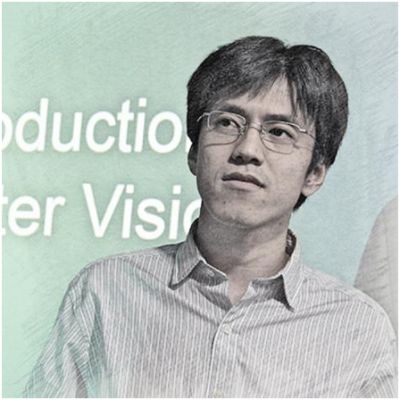
Leo Zhu received his PhD in Statistics from the University of California, Los Angeles, where he specialized in statistical modeling of computer vision and artificial intelligence (AI), He was a student of Professor Alan Yuille whose PhD in theoretical physics was supervised by Dr Stephen Hawking. Prior to co-founding and becoming the CEO of China’s leading AI technology startup YITU Healthcare, he was a postdoctoral fellow at Massachusetts Institute of Technology’s AI laboratory and a research fellow at the Courant Institute of Mathematical Sciences, New York University.
Shenzhen-listed Oceanwide Holdings is part of the China Oceanwide empire founded and controlled by Lu Zhiqiang, one of China’s wealthiest billionaires. Oceanwide is also the founding and controlling shareholder of Minsheng Bank, the first private sector-backed commercial bank in China, and the third-largest shareholder of Legend Holdings, the investment group behind Lenovo. Its interests span globally across financial services, energy, culture and media, and real estate.
Shenzhen-listed Oceanwide Holdings is part of the China Oceanwide empire founded and controlled by Lu Zhiqiang, one of China’s wealthiest billionaires. Oceanwide is also the founding and controlling shareholder of Minsheng Bank, the first private sector-backed commercial bank in China, and the third-largest shareholder of Legend Holdings, the investment group behind Lenovo. Its interests span globally across financial services, energy, culture and media, and real estate.
Founded in 2012, Heyi Group was established via the merger of China’s two leading internet video channels, Youku and Tudou. The group promotes the creation of original video content through IP licensing, native content production and collaborating with users to generate content. In August 2015, it announced a plan to invest RMB 10 billion in content projects. It was acquired by Alibaba Group in 2016.

Founded in 2012, Heyi Group was established via the merger of China’s two leading internet video channels, Youku and Tudou. The group promotes the creation of original video content through IP licensing, native content production and collaborating with users to generate content. In August 2015, it announced a plan to invest RMB 10 billion in content projects. It was acquired by Alibaba Group in 2016.
Taihecap (formerly TH Capital)
Taihecap is an investment bank established in 2012. As a financial advisor, it has served over 200 startups, including 40 unicorns, to raise more than $25bn in the primary market. Taihecap's long-term clients include the social commerce platform Pinduoduo, China’s largest used-car transaction platform Guazi.com, and the online K12 education platform Zuoyebang. Since 2019, Taihecap has started its overseas expansion into markets such as Southeast Asia and India.

Taihecap is an investment bank established in 2012. As a financial advisor, it has served over 200 startups, including 40 unicorns, to raise more than $25bn in the primary market. Taihecap's long-term clients include the social commerce platform Pinduoduo, China’s largest used-car transaction platform Guazi.com, and the online K12 education platform Zuoyebang. Since 2019, Taihecap has started its overseas expansion into markets such as Southeast Asia and India.
Founder & CEO of Shuimu / Peinikan
Dubbed “star performer” in angel investor Leo Wang (Wang Lijie)’s portfolio. Big on social networks, Liu was part of China’s first social media generation. She worked in 13 different jobs before founding Shuimu. Her first “startup” experience was at aged 15, running an online store selling cut-out CDs on the then three-month-old Taobao, using her uncle’s Internet connection in a rural village in Shaanxi. Liu proclaims herself as “the most movie-savvy person in the internet circle, plus the most internet-savvy person in the movie circle” – i.e., the first to connect the two worlds in China.

Dubbed “star performer” in angel investor Leo Wang (Wang Lijie)’s portfolio. Big on social networks, Liu was part of China’s first social media generation. She worked in 13 different jobs before founding Shuimu. Her first “startup” experience was at aged 15, running an online store selling cut-out CDs on the then three-month-old Taobao, using her uncle’s Internet connection in a rural village in Shaanxi. Liu proclaims herself as “the most movie-savvy person in the internet circle, plus the most internet-savvy person in the movie circle” – i.e., the first to connect the two worlds in China.
Founder and CEO of ePeizhen
However, by July 2016 he had left the company, and joined Phoenix Television as a vice-president and the general manager of Phoenix News Services. ePeizhen was acquired by Paiyipai (a online healthcare company) in September that year. In January 2015, he founded ePeizhen, a mobile healthcare startup. With 15 years of experience in the Chinese internet industry, Yue Jianxiong was the general manager of Sohu News at the peak of his career, committing years to building it into one of China’s top online news sites. He left Sohu in August 2014.
However, by July 2016 he had left the company, and joined Phoenix Television as a vice-president and the general manager of Phoenix News Services. ePeizhen was acquired by Paiyipai (a online healthcare company) in September that year. In January 2015, he founded ePeizhen, a mobile healthcare startup. With 15 years of experience in the Chinese internet industry, Yue Jianxiong was the general manager of Sohu News at the peak of his career, committing years to building it into one of China’s top online news sites. He left Sohu in August 2014.
Established in Beijing on January 12, 1996, China Minsheng Banking Corporation Limited was China’s first national joint-stock commercial bank established mainly by non-state-owned enterprises. As of June 2017, it had total assets worth RMB 5767.2 billion. The firm now employs around 57,000 people at nearly 3,000 branches, sub-branches and outlets. It was listed on the Shanghai Stock Exchange in 2000 and the Hong Kong Stock Exchange in 2009.

Established in Beijing on January 12, 1996, China Minsheng Banking Corporation Limited was China’s first national joint-stock commercial bank established mainly by non-state-owned enterprises. As of June 2017, it had total assets worth RMB 5767.2 billion. The firm now employs around 57,000 people at nearly 3,000 branches, sub-branches and outlets. It was listed on the Shanghai Stock Exchange in 2000 and the Hong Kong Stock Exchange in 2009.
Founded in 1972, Kleiner Perkins, formerly Kleiner Perkins Caufield & Byers (KPCB) is one of the world’s largest venture capital firms.The firm has raised $10bn through 20 venture funds and four growth funds and has invested in over 850 companies worldwide. Its China advisory team was founded in 2007 with a fund of $360m. It has invested in many of China’s star enterprises, including one of the country’s largest e-commerce platform JD.com.

Founded in 1972, Kleiner Perkins, formerly Kleiner Perkins Caufield & Byers (KPCB) is one of the world’s largest venture capital firms.The firm has raised $10bn through 20 venture funds and four growth funds and has invested in over 850 companies worldwide. Its China advisory team was founded in 2007 with a fund of $360m. It has invested in many of China’s star enterprises, including one of the country’s largest e-commerce platform JD.com.
Founder and CTO of Dorabot
The person who introduced the concept of “maker” to China – even coining its Chinese translation (“chuangke”), which has since taken root in the Chinese language. Today, Zhang Hao (b. 1987) is founder and CTO of logistics robotics startup Dorabot.After studying robotics at the University of Electronic Science and Technology of China, he joined leading MOOC platform Guokr as a Science and Technology editor. He then became Puzzlebox’s chief hardware architect in San Francisco, later overseeing the manufacturing of Puzzlebox Orbit in Shenzhen. In 2014, he started Dorabot. Zhang was featured in Forbes China’s 30 Under 30 in 2017.
The person who introduced the concept of “maker” to China – even coining its Chinese translation (“chuangke”), which has since taken root in the Chinese language. Today, Zhang Hao (b. 1987) is founder and CTO of logistics robotics startup Dorabot.After studying robotics at the University of Electronic Science and Technology of China, he joined leading MOOC platform Guokr as a Science and Technology editor. He then became Puzzlebox’s chief hardware architect in San Francisco, later overseeing the manufacturing of Puzzlebox Orbit in Shenzhen. In 2014, he started Dorabot. Zhang was featured in Forbes China’s 30 Under 30 in 2017.
Xiaoe Tech: Capitalizing on China’s pay-for-knowledge fever
In just two years, this startup has helped its clients sell RMB 2.2 billion worth of knowledge-based content online

China’s medical exoskeleton startups take on a promising but challenging market
It was not until 2018 that the first China-made lower limb exoskeleton got regulatory clearance at home, around the same time the first Chinese rehabilitation robot got US FDA approval

Will Shanghai's new tech board be home to China’s next BAT?
As China’s new Nasdaq-style board speeds to welcome its first IPOs, here’s a look at what’s changed for Chinese tech firms listing in the mainland, and if it could be pivotal in the emerging tech cold war

In depth: The business ecosystems China’s tech giants and unicorns build
Startups could accept to join Alibaba, Tencent or other tech giants in their ecosystems and scale quickly. Or they could say no and keep their independence. But do they really have a choice?

China’s startups have much to gain from the US-China trade war
The prolonged trade conflict may be exactly what Chinese startups need to strengthen their technological capabilities

Nongguanjia: Housekeeper of Chinese farmers' fortunes
Combining fintech and e-commerce, Nongguanjia started by monetizing land circulation, to help hundreds of millions of Chinese farmers get financing and thrive

VUE Vlog: Short-video editing app wants to be China’s Instagram of vlogs
From starting as a short-video editing tool to a vlogging community today, VUE is talking to potential advertisers to help its vloggers make money

China’s online mutual aid market: A new battleground for tech giants and startups
Startups spotted the opportunity and tech giants too have entered a market seen tripling by 2025. But profitability is still in doubt amid regulatory uncertainty

In a nascent market, one-year-old Starfield has brought its offerings to around 3,000 F&B outlets and generated RMB 10m in revenue

Xu Jinghong: Champion of young entrepreneurs and high-tech startups
Under Xu Jinghong’s leadership, Tsinghua Holdings grew its assets sevenfold and incubated over 10,000 businesses. In his new role as VC investor, Xu wants to nurture startups into future global leaders

Kathy Xu stays ahead of the curve in China's VC scene
Dubbed “Queen of VC” in China, Xu has spotted great companies that others were not quite interested in, like Chinese online retail giant JD.com

Promising market, but China’s DTC genetic testing startups have to first overcome a few hurdles
Genetic information is being used for everything from predicting health risks to personalizing exercise and dietary regimes. China represents a huge potential market for direct-to-consumer (DTC) genetic testing

New sectors, strategies come into play as investors respond to China's Big Tech curbs
Amid the crackdown on China’s tech giants, some investors are sussing out less risky sectors, while heavyweights like BlackRock and Fidelity stay in for the long haul

Sequoia Capital China holds steady with investments in healthcare, biotech and green economy
China’s most active investor increases bets on sectors beyond the consumer internet and edtech recently hurt by regulatory clampdown

China a “positive environment” for uptake of cultured meat, researcher tells Future Food Asia
But for interested cultured meat companies, China-based Chloe Dempsey suggests it would be better to wait, observe and learn more about the market before trying to tap its massive potential

Sorry, we couldn’t find any matches for “china’s”.
POPULAR DATABASE