A*Star
-
DATABASE (2942)
-
ARTICLES (812)
A spinoff from Chinese investment bank China International Capital Corp, CDH has its roots in private equity. It started in 2002, raising its first fund of US$102 million. As of end-2015, it had over US$15 billion in assets under management, spanning private equity, public equities, real estate and more. It has invested in more than 150 companies, including WH Group, Belle International, Mengniu Dairy, Qihoo 360 and Luye Pharma; and has offices in Beijing, Hong Kong, Shanghai, Shenzhen, Singapore and Jakarta.


A spinoff from Chinese investment bank China International Capital Corp, CDH has its roots in private equity. It started in 2002, raising its first fund of US$102 million. As of end-2015, it had over US$15 billion in assets under management, spanning private equity, public equities, real estate and more. It has invested in more than 150 companies, including WH Group, Belle International, Mengniu Dairy, Qihoo 360 and Luye Pharma; and has offices in Beijing, Hong Kong, Shanghai, Shenzhen, Singapore and Jakarta.
A pioneer of China's IT industry, Zhu Min founded Cybernaut in 2005. To date, the firm has invested over $10bn in Chinese technology companies through 70 funds, in addition to another $10bn jointly managed with its partners outside China. Cybernaut also has about 20 startup incubators (Cybernaut Internet+) across China. Zhu studied at Stanford University in the 1980s and founded web conference solutions provider WebEx Communications Inc., which went public on NASDAQ in 2000, before being sold to Cisco for $3.2bn.

A pioneer of China's IT industry, Zhu Min founded Cybernaut in 2005. To date, the firm has invested over $10bn in Chinese technology companies through 70 funds, in addition to another $10bn jointly managed with its partners outside China. Cybernaut also has about 20 startup incubators (Cybernaut Internet+) across China. Zhu studied at Stanford University in the 1980s and founded web conference solutions provider WebEx Communications Inc., which went public on NASDAQ in 2000, before being sold to Cisco for $3.2bn.
Hongtai Capital Holdings (Aplus Capital)
Well-known entrepreneur Yu Minhong and Sheng Xitai, a senior investment banker, co-founded Aplus Capital in November 2014. In November 2017, Aplus Capital formally changed its name to Hongtai Capital Holdings. By the end of 2018, the assets under its management have amounted to over RMB 20 billion. Hongtai Capital Holdings mainly invests in startups in various stages of growth and focuses on sectors of artificial intelligence, big data, consumer products, entertainment, education, manufacturing and fintech.

Well-known entrepreneur Yu Minhong and Sheng Xitai, a senior investment banker, co-founded Aplus Capital in November 2014. In November 2017, Aplus Capital formally changed its name to Hongtai Capital Holdings. By the end of 2018, the assets under its management have amounted to over RMB 20 billion. Hongtai Capital Holdings mainly invests in startups in various stages of growth and focuses on sectors of artificial intelligence, big data, consumer products, entertainment, education, manufacturing and fintech.
Palladium Capital is a London-based private investment firm, originally established in 2005 as an independent strategic and financial adviser focusing on Central and Eastern Europe.Since 2010, Palladium has expanded activities to include Western Europe, Middle East, North Africa and Turkey. In 2014, the firm started direct private equity investments, acting on behalf of private family-owned funds and strategic investment partners. In February 2018, the advisory business was transferred to the newly formed sister company XPX Partners.

Palladium Capital is a London-based private investment firm, originally established in 2005 as an independent strategic and financial adviser focusing on Central and Eastern Europe.Since 2010, Palladium has expanded activities to include Western Europe, Middle East, North Africa and Turkey. In 2014, the firm started direct private equity investments, acting on behalf of private family-owned funds and strategic investment partners. In February 2018, the advisory business was transferred to the newly formed sister company XPX Partners.
Lenovo Accelerator was co-founded by Lenovo Capital and Incubator Group and Hong Kong-based business park Cyberport in Hong Kong in May 2016. It invests mainly in early-stage startups specialized in cutting-edge technologies and TMT. It is Lenovo Group's first startup accelerator in China. Each startup selected by Lenovo Accelerator receives RMB 500,000 to RMB 1m in funding from Lenovo Group.

Lenovo Accelerator was co-founded by Lenovo Capital and Incubator Group and Hong Kong-based business park Cyberport in Hong Kong in May 2016. It invests mainly in early-stage startups specialized in cutting-edge technologies and TMT. It is Lenovo Group's first startup accelerator in China. Each startup selected by Lenovo Accelerator receives RMB 500,000 to RMB 1m in funding from Lenovo Group.
Prometheus Capital was founded in 2012 as a family fund of Wang Jianlin, founder and chairman of the Dalian Wanda Group, China's biggest real estate conglomerate, and his son Wang Sicong. It is now owned and controlled by Wang Sicong. With over US$1 billion assets under management, the firm invests mainly in early- and growth-stage startups in the real estate, consumer products, entertainment and fintech sectors around the world. It has made investments worth RMB 3 billion in total.
Prometheus Capital was founded in 2012 as a family fund of Wang Jianlin, founder and chairman of the Dalian Wanda Group, China's biggest real estate conglomerate, and his son Wang Sicong. It is now owned and controlled by Wang Sicong. With over US$1 billion assets under management, the firm invests mainly in early- and growth-stage startups in the real estate, consumer products, entertainment and fintech sectors around the world. It has made investments worth RMB 3 billion in total.
HATCH is an aquaculture-tech-focused accelerator program initiated by the aquaculture-focused seed VC investor Alimentos Ventures to help related startups reach commercialization and access further funding. Its inaugural program was held in Bergen, Norway, followed by a second batch in Cork, Ireland. Successful applicants get €50,000 cash and possible subsequent funding, plus free office space for up to 12 months in either of HATCH's offices in Bergen and Singapore. Its international partners include food corporates, state entities and aquaculture groups.

HATCH is an aquaculture-tech-focused accelerator program initiated by the aquaculture-focused seed VC investor Alimentos Ventures to help related startups reach commercialization and access further funding. Its inaugural program was held in Bergen, Norway, followed by a second batch in Cork, Ireland. Successful applicants get €50,000 cash and possible subsequent funding, plus free office space for up to 12 months in either of HATCH's offices in Bergen and Singapore. Its international partners include food corporates, state entities and aquaculture groups.
Focus Technology was founded in 1996 and headquartered in Nanjing, following a state policy to strengthen and develop the industrialization and digitalization of China. In 2013, the company expanded to the US and started its cross-border e-commerce business.Focus is mainly involved in Internet Plus, bringing digitalization to overseas trading, insurance, business procurement, education and medical services. Made-in-China.com, Abiz.com and xyz.cn are the main e-commerce platforms of Focus.
Focus Technology was founded in 1996 and headquartered in Nanjing, following a state policy to strengthen and develop the industrialization and digitalization of China. In 2013, the company expanded to the US and started its cross-border e-commerce business.Focus is mainly involved in Internet Plus, bringing digitalization to overseas trading, insurance, business procurement, education and medical services. Made-in-China.com, Abiz.com and xyz.cn are the main e-commerce platforms of Focus.
José Neves is best known as the CEO and co-founder of fashion unicorn Farfetch, one of Portugal's most successful startups to date. London-based Neves is also a non-executive director at the British Fashion Council. He has set up his own foundation to spend two-thirds of Farfetch's profits on innovation projects. As an angel investor, he has so far invested in two startups: Portuguese fintech StudentFinance and fashion platform asap54.com where he is also an advisor.

José Neves is best known as the CEO and co-founder of fashion unicorn Farfetch, one of Portugal's most successful startups to date. London-based Neves is also a non-executive director at the British Fashion Council. He has set up his own foundation to spend two-thirds of Farfetch's profits on innovation projects. As an angel investor, he has so far invested in two startups: Portuguese fintech StudentFinance and fashion platform asap54.com where he is also an advisor.
Hong Kong-based Unicorn Capital Partners was founded in 2015 by Tommy Yip, former partner of Emerald Hill Capital Partners.Unicorn is a leading FoF platform that focuses on venture capital fund and direct investment opportunities in China and Asia. It mainly invests in technology, media, telecommunications and healthcare. By December 2019, Unicorn had $800m in assets under management. It also raised over $350m for its fourth fund.

Hong Kong-based Unicorn Capital Partners was founded in 2015 by Tommy Yip, former partner of Emerald Hill Capital Partners.Unicorn is a leading FoF platform that focuses on venture capital fund and direct investment opportunities in China and Asia. It mainly invests in technology, media, telecommunications and healthcare. By December 2019, Unicorn had $800m in assets under management. It also raised over $350m for its fourth fund.
New York-based Humboldt Fund invests in startups with the potential to solve critical issues of our time across the areas of food production, healthcare, energy, and construction and manufacturing materials. It currently has 14 companies in its portfolio. Its most recent investments include in the March 2021 $48m Series A round of Dutch cell-based meat startup Meatable which leverages pluripotent stem cells for the first time in foodtech, and in the February 2021 $16m seed round of US biotech Cellino Biotech.

New York-based Humboldt Fund invests in startups with the potential to solve critical issues of our time across the areas of food production, healthcare, energy, and construction and manufacturing materials. It currently has 14 companies in its portfolio. Its most recent investments include in the March 2021 $48m Series A round of Dutch cell-based meat startup Meatable which leverages pluripotent stem cells for the first time in foodtech, and in the February 2021 $16m seed round of US biotech Cellino Biotech.
Famous techpreneur Li Yinan (b. 1970) is the former CTO of Baidu and former CEO of Wuxian Xunqi, a China Mobile subsidiary. After Li graduated from Huazhong University of Science & Technology with a master’s degree in Optics Engineering, he joined Huawei and was promoted to vice-president of its Central Research Department in just six months; in 1997 Li because the youngest vice-president at Huawei. In 2001, Li quit Huawei and started his own data communication company, Harbour Networks, which followed the same structure of Huawei and soon became its main competitor. In 2005, Harbour Networks lost in its intense battle with Huawei and was acquired by the larger player. Even though Li rejoined Huawei after the acquisition, he was never able to re-enter the core management team because of his damaged relationship with Ren Zhengfei, the founder and president of Huawei. In April 2015, Li founded his smart e-scooter company, NIU Smart Scooters. Li began investing in 2010 and joined GSR Ventures in 2011. Up to June 2015, Li had invested in more than 10 companies from the TMT sector. Li stood trial for insider trading in March 2016, according to news reports.

Famous techpreneur Li Yinan (b. 1970) is the former CTO of Baidu and former CEO of Wuxian Xunqi, a China Mobile subsidiary. After Li graduated from Huazhong University of Science & Technology with a master’s degree in Optics Engineering, he joined Huawei and was promoted to vice-president of its Central Research Department in just six months; in 1997 Li because the youngest vice-president at Huawei. In 2001, Li quit Huawei and started his own data communication company, Harbour Networks, which followed the same structure of Huawei and soon became its main competitor. In 2005, Harbour Networks lost in its intense battle with Huawei and was acquired by the larger player. Even though Li rejoined Huawei after the acquisition, he was never able to re-enter the core management team because of his damaged relationship with Ren Zhengfei, the founder and president of Huawei. In April 2015, Li founded his smart e-scooter company, NIU Smart Scooters. Li began investing in 2010 and joined GSR Ventures in 2011. Up to June 2015, Li had invested in more than 10 companies from the TMT sector. Li stood trial for insider trading in March 2016, according to news reports.
Zhongguancun Longmen Investment
Investing in hi-tech IT, advanced manufacturing and biotechnology sectors – key pillars of China’s innovation-focused economy since 2017 – the Beijing government-backed Beijing Zhongguancun Longmen Investment manages about RMB 10bn via its first fund of the same name. The firm is founded and led by Xu Jinghong, former Chairman of Tsinghua Holdings, the investment and tech/R&D transfer arm of China’s most prestigious science and research university, whose R&D capacity was ranked in the third place of China’s top 500 enterprises in 2018. The LPs of the fund include social security funds, Beijing’s municipal government and the Haidian District government. Its portfolio enterprises are generally ranked in the top three of their respective industries. Among them, Qi An Xin Technology, which is listed in Shanghai and one of China’s biggest cybersecurity companies; Joy Wing Mao, one of China’s major fruits supply chain companies. In October of 2020, it invested RMB 100m into Beijing Immunochina Pharmaceutical, which develops innovative gene and cell therapies for curing malignant tumors. Longmen also provides mentoring and other expertise and support to its investee startups, especially those that plan to seek public listing.
Investing in hi-tech IT, advanced manufacturing and biotechnology sectors – key pillars of China’s innovation-focused economy since 2017 – the Beijing government-backed Beijing Zhongguancun Longmen Investment manages about RMB 10bn via its first fund of the same name. The firm is founded and led by Xu Jinghong, former Chairman of Tsinghua Holdings, the investment and tech/R&D transfer arm of China’s most prestigious science and research university, whose R&D capacity was ranked in the third place of China’s top 500 enterprises in 2018. The LPs of the fund include social security funds, Beijing’s municipal government and the Haidian District government. Its portfolio enterprises are generally ranked in the top three of their respective industries. Among them, Qi An Xin Technology, which is listed in Shanghai and one of China’s biggest cybersecurity companies; Joy Wing Mao, one of China’s major fruits supply chain companies. In October of 2020, it invested RMB 100m into Beijing Immunochina Pharmaceutical, which develops innovative gene and cell therapies for curing malignant tumors. Longmen also provides mentoring and other expertise and support to its investee startups, especially those that plan to seek public listing.
Mohit Goel is one of India’s youngest real estate tycoons and an angel investor. He appeared as one of a panel of potential investors on the India reality TV show The Vault, which features start-ups pitching their business ideas to angel investors in order to seek funding. Goel is CEO of Omaxe, a real estate firm based in New Delhi. As the second-generation head of the company, he was credited for structural changes aimed at turning the firm around amidst challenging market conditions and introducing fresh concepts and customer-centric ideas to strengthen the business. Goel is also the north zone head of CREDAI Youth Wing, an industry body bringing together the next generation of leaders in India’s real estate and property developer market. In 2014, he was named Young Male Entrepreneur of the Year at the Infra & Realty Sutra Awards and also received the Young Achiever’s Award at ABP News’ Real Estate Awards.

Mohit Goel is one of India’s youngest real estate tycoons and an angel investor. He appeared as one of a panel of potential investors on the India reality TV show The Vault, which features start-ups pitching their business ideas to angel investors in order to seek funding. Goel is CEO of Omaxe, a real estate firm based in New Delhi. As the second-generation head of the company, he was credited for structural changes aimed at turning the firm around amidst challenging market conditions and introducing fresh concepts and customer-centric ideas to strengthen the business. Goel is also the north zone head of CREDAI Youth Wing, an industry body bringing together the next generation of leaders in India’s real estate and property developer market. In 2014, he was named Young Male Entrepreneur of the Year at the Infra & Realty Sutra Awards and also received the Young Achiever’s Award at ABP News’ Real Estate Awards.
The Chinese affiliate of top Silicon Valley venture capital firm Sequoia Capital was founded in 2005 by Neil Shen (Shen Nanpeng), a co-founder of Ctrip, China's largest travel booking site. With more than US$6 billion under management in 2015, the firm has invested in more than 300 startups in China, including some of the country's biggest brands: Alibaba, JD.com, Didi, DJI, Sina and Qihoo 360. Sequoia, together with China Broadband Capital, also helped to bring to China LinkedIn and AirBnB, companies that both have invested in.

The Chinese affiliate of top Silicon Valley venture capital firm Sequoia Capital was founded in 2005 by Neil Shen (Shen Nanpeng), a co-founder of Ctrip, China's largest travel booking site. With more than US$6 billion under management in 2015, the firm has invested in more than 300 startups in China, including some of the country's biggest brands: Alibaba, JD.com, Didi, DJI, Sina and Qihoo 360. Sequoia, together with China Broadband Capital, also helped to bring to China LinkedIn and AirBnB, companies that both have invested in.
DGene : Star Wars-inspired 3D holograms made affordable for businesses
DGene's mobile-based VR/AR solution using integrated light field cuts the need for 3D modeling, useful for many sectors from retail marketing to conference calls

UBTECH: CES robotics star wants to bring humanoid robots to every family
UBTECH’s next-generation bipedal robot recently made an impressive global debut, and the startup’s founder has once again become the focus of attention

Enoc Armengol: The design and e-commerce 3.0 star inspired by Inspector Gadget
Also a serial entrepreneur, the Spaniard has created a trail of celebrated design products and startups from Singapore to Barcelona

Future Food Asia 2021 announces finalists for $100,000 prize
Ten startups from agrifood tech and cleantech sectors will pitch during the five-day conference, are also eligible for two more prizes from sponsors Cargill and Thai Wah

Digital Union: Fighting fake users in China's mobile app industry
The Beijing-based cybersecurity startup is helping developers spot fake app downloads, so their ad money don’t go to waste
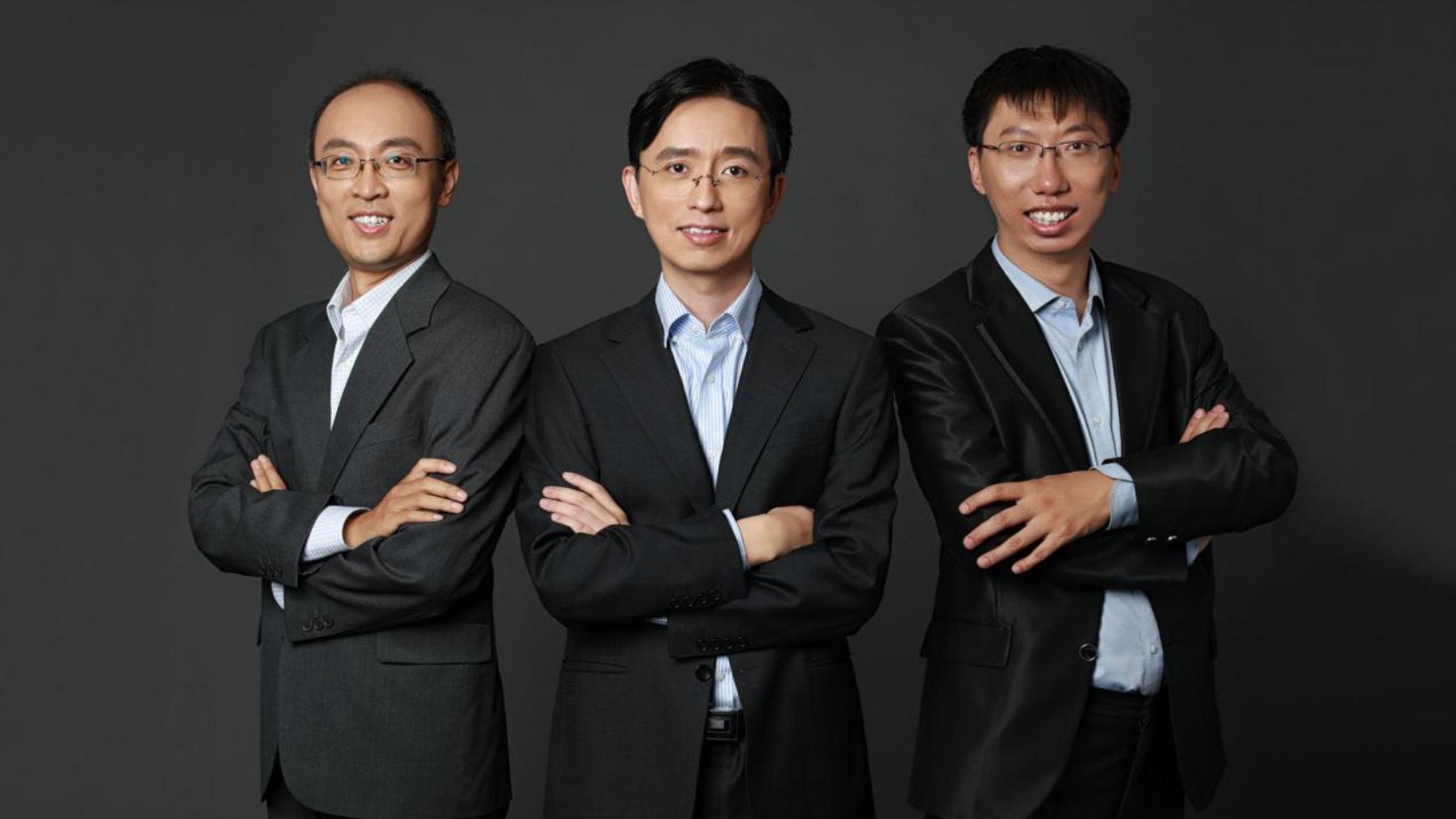
Future Food Asia 2021: Two winners take home $100,000 each
Agrifood startups, corporations and investors urged to collaborate and take action, tackling challenges in nutrition and climate change

Quant Group makes personal loans safer, easier in China
Using big data and AI, Chinese fintech startup Quant Group simplifies and accelerates loan processing, and assures monetary security for financial institutions

Oceanium: Supporting sustainable seaweed farming
Scottish startup Oceanium has developed a proprietary biorefinery and processing model to create seaweed-based compostable materials, alt-protein ingredients and nutraceuticals for use across industry verticals

Plant-based eggs (Part II): The foodtech startups to watch
Here’s a shortlist of the foodtech startups to watch in the global vegan egg market

For your X-ray records, just check the cloud
A Chinese startup has built a digital medical image library on the cloud, bringing ease and cost savings to patients, doctors and hospitals countrywide

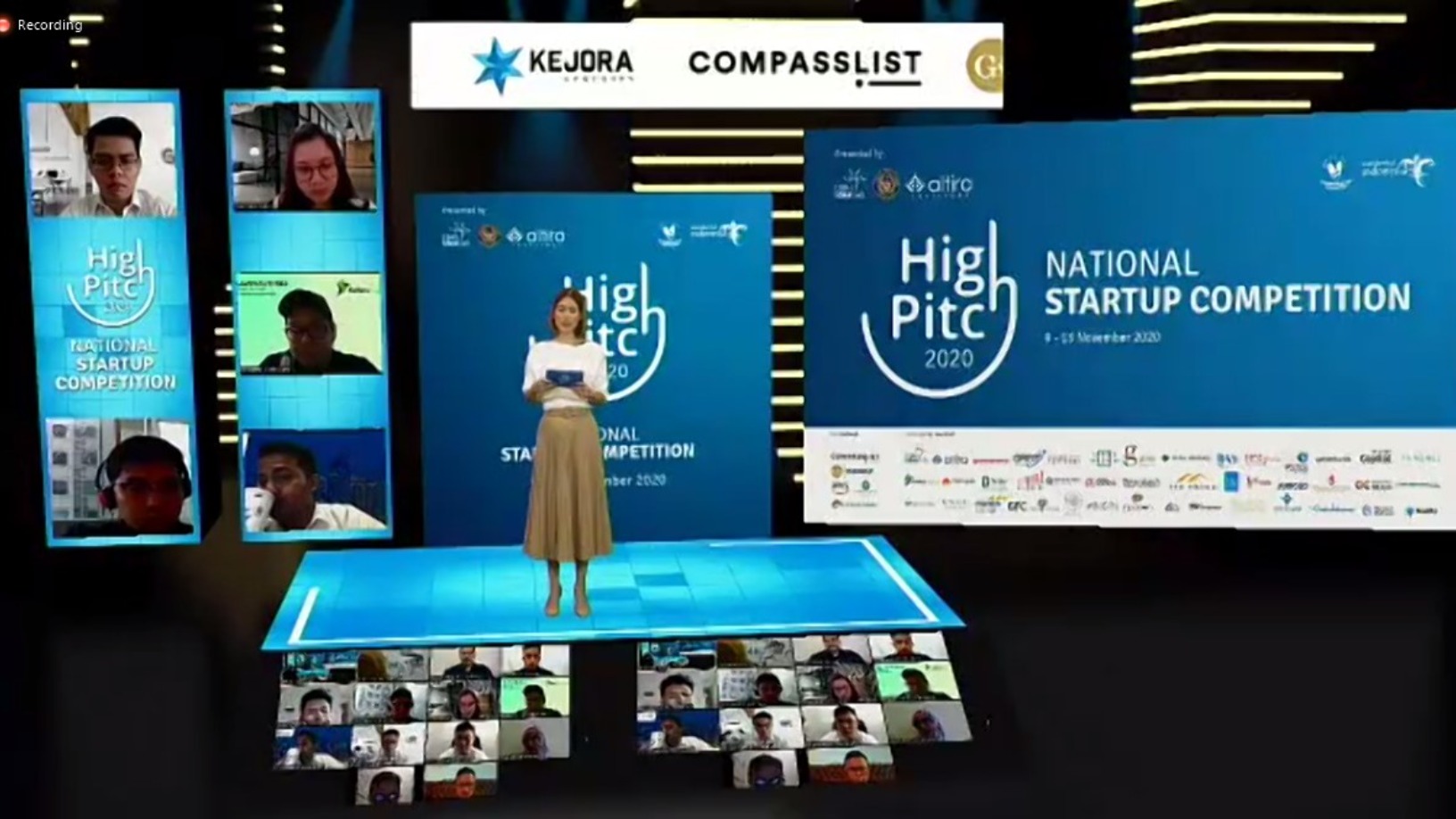
HighPitch: E-grocery marketplace Pasar20 and healthcare edtech Appskep top the Medan chapter
Representing Sumatra’s startup ecosystem in the national finals later in November, Pasar20 and Appskep have ambitious expansion plans in store
BukuWarung: Accounting-payments app targets Indonesia's 60m MSMEs
BukuWarung’s easy-to-use 6MB app designed for lower-end smartphones gets boost from Covid-19-accelerated digitalization

Meatable joins Royal DSM to create growth media specific for cell-based meat tech
The R&D between the biotech startup and fellow Dutch nutrition conglomerate could help scale and drive the commercial viability of lab-grown meat

Inspired by rowdy teenagers: the Musical.ly story
Now better known as TikTok, the original Musical.ly was the only Chinese social app to have cracked the Western market – before it got snapped up by Bytedance and joined its stable of short video apps

Using Reworld’s very own interactive physics engine, even rookie developers can turn their creative ideas into 3D games within two days

Sorry, we couldn’t find any matches for “A*Star”.
POPULAR DATABASE