TAL Education Group
-
DATABASE (644)
-
ARTICLES (356)
Co-founded by Lending Club's Soul Htite, Dianrong is one of China's largest P2P lending platforms, offering lower borrowing costs, higher returns, at relatively low risk.


Co-founded by Lending Club's Soul Htite, Dianrong is one of China's largest P2P lending platforms, offering lower borrowing costs, higher returns, at relatively low risk.
The latest bright idea from Aldi Haryopratomo’s social enterprise success Ruma, the Mapan app gives a unique twist to an Indonesian group-buying culture.

The latest bright idea from Aldi Haryopratomo’s social enterprise success Ruma, the Mapan app gives a unique twist to an Indonesian group-buying culture.
London-based Sustainability Ventures is one of the UK’s leading early-stage investors in Cleantech. It comprises a group of successful entrepreneurs with a track record in building and investing in high-growth start-ups. It has created Europe’s largest ecosystem for cleantech and sustainability startups, as a business founder and investor, provider of accelerator and support services and provider of shared workspaces. Active since 2011, Sustainability Ventures has raised £250m in total equity funds to date. Its focus is on agritech and food, building technology, circular economy, future energy and mobility. It has established 10 companies, invested in 30 and supported the development of over 250 more enterprises as of 2021 and aims to develop 1,000 sustainable startups by 2025.

London-based Sustainability Ventures is one of the UK’s leading early-stage investors in Cleantech. It comprises a group of successful entrepreneurs with a track record in building and investing in high-growth start-ups. It has created Europe’s largest ecosystem for cleantech and sustainability startups, as a business founder and investor, provider of accelerator and support services and provider of shared workspaces. Active since 2011, Sustainability Ventures has raised £250m in total equity funds to date. Its focus is on agritech and food, building technology, circular economy, future energy and mobility. It has established 10 companies, invested in 30 and supported the development of over 250 more enterprises as of 2021 and aims to develop 1,000 sustainable startups by 2025.
The world’s most valuable fintech firm, Ant Financial Services originated from Alipay, the third-party payments platform under the Alibaba Group. Today, it also runs a money-market fund and an online bank. Ant Financial has more than 450 million active users. It has also expanded into foreign markets, including the US, UK, Germany, Thailand and Australia, and expects more than 60% of its transactions to come from outside China by 2026. It targets to serve 2 billion users then.
The world’s most valuable fintech firm, Ant Financial Services originated from Alipay, the third-party payments platform under the Alibaba Group. Today, it also runs a money-market fund and an online bank. Ant Financial has more than 450 million active users. It has also expanded into foreign markets, including the US, UK, Germany, Thailand and Australia, and expects more than 60% of its transactions to come from outside China by 2026. It targets to serve 2 billion users then.
Founded in Beijing in 2015, Frees Fund is an asset management company with a portfolio valued at RMB 3.6bn. Frees primarily invests in early-stage startups in diverse sectors including fintech, education, healthcare, entertainment, hardware, intelligent manufacturing and SaaS. The VC is incorporated as Shanghai Ziyou Investment Management Co Ltd.

Founded in Beijing in 2015, Frees Fund is an asset management company with a portfolio valued at RMB 3.6bn. Frees primarily invests in early-stage startups in diverse sectors including fintech, education, healthcare, entertainment, hardware, intelligent manufacturing and SaaS. The VC is incorporated as Shanghai Ziyou Investment Management Co Ltd.
Founded in 2011, Ankur Capital is an early-stage venture capital fund based in Mumbai. The VC invests in Indian-based startups in diverse sectors like agritech, food, health and education. It has 15 startups in its investment portfolio and has managed one exit to date, Carmel Organics.Recent investments include seed funding for seafood supply chain platform Captain Fresh and agriproduce marketplace Vegrow, as well as participation in the $20m Series C round of predictive farming platform Cropin.

Founded in 2011, Ankur Capital is an early-stage venture capital fund based in Mumbai. The VC invests in Indian-based startups in diverse sectors like agritech, food, health and education. It has 15 startups in its investment portfolio and has managed one exit to date, Carmel Organics.Recent investments include seed funding for seafood supply chain platform Captain Fresh and agriproduce marketplace Vegrow, as well as participation in the $20m Series C round of predictive farming platform Cropin.
Stanford Graduate School of Business
Launched in 2015, the Stanford GSB Impact Fund invests globally in innovators and tech startups whether connected with the university or not and within the area of social impact in seven market segments: education, energy and the environment, fintech, food and agriculture, justice, healthcare, and urban development. The university-owned fund invests from the pre-seed to Series A rounds and makes investments mostly from January to April. It currently has 11 startups in its portfolio.

Launched in 2015, the Stanford GSB Impact Fund invests globally in innovators and tech startups whether connected with the university or not and within the area of social impact in seven market segments: education, energy and the environment, fintech, food and agriculture, justice, healthcare, and urban development. The university-owned fund invests from the pre-seed to Series A rounds and makes investments mostly from January to April. It currently has 11 startups in its portfolio.
Co-Founder and Digital Marketing Strategist of IWAK
Nganjuk native, Rushan Faizal, was also among the few students from the rural regency to pursue tertiary education at the Gadjah Mada University (UGM) in Yogyakarta where he majored in Computer Science. Besides Rushan, only three other students from his village, Kebon Agung, went to college. The economic disparity between urban Yogyakarta and his village inspired him and Nisa to set up IWAK, a crowdfunding platform for fish farms operated by the low income villagers in Kebon Agung. Prior to that, Rushan had also co-founded Meseji, a Web-based app to help SMEs automate their text message (SMS) marketing campaigns.

Nganjuk native, Rushan Faizal, was also among the few students from the rural regency to pursue tertiary education at the Gadjah Mada University (UGM) in Yogyakarta where he majored in Computer Science. Besides Rushan, only three other students from his village, Kebon Agung, went to college. The economic disparity between urban Yogyakarta and his village inspired him and Nisa to set up IWAK, a crowdfunding platform for fish farms operated by the low income villagers in Kebon Agung. Prior to that, Rushan had also co-founded Meseji, a Web-based app to help SMEs automate their text message (SMS) marketing campaigns.
Founder of Jualo
Dutch tech entrepreneur, with a passion for development work, Chaim Fetter has a long history of entrepreneurship and innovation.Originally from a small town north of Utrecht, Netherlands, Chaim has Indonesian roots that brought him to set up the Peduli Anak Foundation that provides shelter, education and healthcare facilities for underprivileged children. After working for eight years at the East Indonesian non-profit organization, Chaim moved to Jakarta in 2013.Inspired by previous childhood experiences of trading in secondhand clothes and trinkets back home, he decided to create a secondhand goods online store, Jualo in 2014.

Dutch tech entrepreneur, with a passion for development work, Chaim Fetter has a long history of entrepreneurship and innovation.Originally from a small town north of Utrecht, Netherlands, Chaim has Indonesian roots that brought him to set up the Peduli Anak Foundation that provides shelter, education and healthcare facilities for underprivileged children. After working for eight years at the East Indonesian non-profit organization, Chaim moved to Jakarta in 2013.Inspired by previous childhood experiences of trading in secondhand clothes and trinkets back home, he decided to create a secondhand goods online store, Jualo in 2014.
Co-founder and CEO of Luoji Siwei
Before co-founding Luoji Siwei with Luo Zhenyu, Li was a regular contributor to several established Chinese business magazines and news outlets, including CEO & CIO, Global Business and Huxiu.com. She has served as a guest lecturer for Tsinghua University’s CEO class and for the New Entrepreneur Development Program, an executive continuing education program run by the State Council Development Research Center and Stanford University. Li is the founding partner of the China Soft Power Research Center, a Chinese corporate services and management consulting firm. She hosts a radio show called Li Tiantian Morning Observations on China National Radio.

Before co-founding Luoji Siwei with Luo Zhenyu, Li was a regular contributor to several established Chinese business magazines and news outlets, including CEO & CIO, Global Business and Huxiu.com. She has served as a guest lecturer for Tsinghua University’s CEO class and for the New Entrepreneur Development Program, an executive continuing education program run by the State Council Development Research Center and Stanford University. Li is the founding partner of the China Soft Power Research Center, a Chinese corporate services and management consulting firm. She hosts a radio show called Li Tiantian Morning Observations on China National Radio.
Co-founder and CEO of Cakap by Squline
Tomy Yunus is co-founder and CEO of Cakap (formerly known as Squline). He graduated from Universitas Bina Nusantara with a bachelor's in Computer Engineering in 2009, after which he pursued further education in China, graduating with a master's in Chinese Economy from Renmin University. While attending Chinese lessons at the Beijing Language and Culture Center, Tomy met future Squline co-founder Yohan Limerta. After working for two years in China, including a short stint as project lead at Pactera, Tomy returned to Indonesia in 2013 to establish Squline, an online language learning platform.

Tomy Yunus is co-founder and CEO of Cakap (formerly known as Squline). He graduated from Universitas Bina Nusantara with a bachelor's in Computer Engineering in 2009, after which he pursued further education in China, graduating with a master's in Chinese Economy from Renmin University. While attending Chinese lessons at the Beijing Language and Culture Center, Tomy met future Squline co-founder Yohan Limerta. After working for two years in China, including a short stint as project lead at Pactera, Tomy returned to Indonesia in 2013 to establish Squline, an online language learning platform.
CEO and co-founder of Tutellus.io
Miguel Caballero is a serial entrepreneur with about 18 years experience building tech companies in the infrastructure, edtech and blockchain ecosystems. He co-founded Neomedia Wireless, an engineering firm specialized in wireless infrastructure, which provided consultancy services to the city councils of Madrid, Barcelona, Valencia, Zaragoza and IT companies like Indra and Orange.Since 2013, he is the founder and CEO of Tutellus.com, an edtech P2P platform in Spanish-speaking countries. More recently, he co-launched Tutellus.io, an innovative, decentralized blockchain-powered edtech platform that tokenizes the education system based on collaborative and incentive-based models.

Miguel Caballero is a serial entrepreneur with about 18 years experience building tech companies in the infrastructure, edtech and blockchain ecosystems. He co-founded Neomedia Wireless, an engineering firm specialized in wireless infrastructure, which provided consultancy services to the city councils of Madrid, Barcelona, Valencia, Zaragoza and IT companies like Indra and Orange.Since 2013, he is the founder and CEO of Tutellus.com, an edtech P2P platform in Spanish-speaking countries. More recently, he co-launched Tutellus.io, an innovative, decentralized blockchain-powered edtech platform that tokenizes the education system based on collaborative and incentive-based models.
CEO and founder of M Mandarin
Dou received her master's degree in International Chinese Language Education from Shandong University in 2014. She worked in the TCSL (Teaching Chinese as a Second Language) sector for over 10 years, including as a TCSL teacher at the Confucius Institute in South Korea, as product manager at the Confucius Institute Headquarters and the Open University of China and as teacher at Shandong University. Before founding Funnybean Technology, parent company of M Mandarin, in 2016, she helped design the app Hello HSK - a platform for foreigners to learn and prepare for the HSK tests.

Dou received her master's degree in International Chinese Language Education from Shandong University in 2014. She worked in the TCSL (Teaching Chinese as a Second Language) sector for over 10 years, including as a TCSL teacher at the Confucius Institute in South Korea, as product manager at the Confucius Institute Headquarters and the Open University of China and as teacher at Shandong University. Before founding Funnybean Technology, parent company of M Mandarin, in 2016, she helped design the app Hello HSK - a platform for foreigners to learn and prepare for the HSK tests.
Shaanxi Culture Industry Investment Group
With RMB 2.2 billion registered capital, this state-owned cultural enterprise was established by Shaanxi province. It receives subsidies from the regional government each year and currently holds total assets of more than RMB 16 billion. The group has 24 subsidiaries, which invest in a range of cultural industries: film and TV, cultural tourism, art, media, etc.
With RMB 2.2 billion registered capital, this state-owned cultural enterprise was established by Shaanxi province. It receives subsidies from the regional government each year and currently holds total assets of more than RMB 16 billion. The group has 24 subsidiaries, which invest in a range of cultural industries: film and TV, cultural tourism, art, media, etc.
Hongtai Capital Holdings (Aplus Capital)
Well-known entrepreneur Yu Minhong and Sheng Xitai, a senior investment banker, co-founded Aplus Capital in November 2014. In November 2017, Aplus Capital formally changed its name to Hongtai Capital Holdings. By the end of 2018, the assets under its management have amounted to over RMB 20 billion. Hongtai Capital Holdings mainly invests in startups in various stages of growth and focuses on sectors of artificial intelligence, big data, consumer products, entertainment, education, manufacturing and fintech.

Well-known entrepreneur Yu Minhong and Sheng Xitai, a senior investment banker, co-founded Aplus Capital in November 2014. In November 2017, Aplus Capital formally changed its name to Hongtai Capital Holdings. By the end of 2018, the assets under its management have amounted to over RMB 20 billion. Hongtai Capital Holdings mainly invests in startups in various stages of growth and focuses on sectors of artificial intelligence, big data, consumer products, entertainment, education, manufacturing and fintech.
After a Covid-led boom in 2020, what next for China's K-12 edtech?
Unicorns Yuanfudao and Zuoyebang raised more than $6bn combined last year as demand for online learning continues to grow, but some smaller players are running out of cash

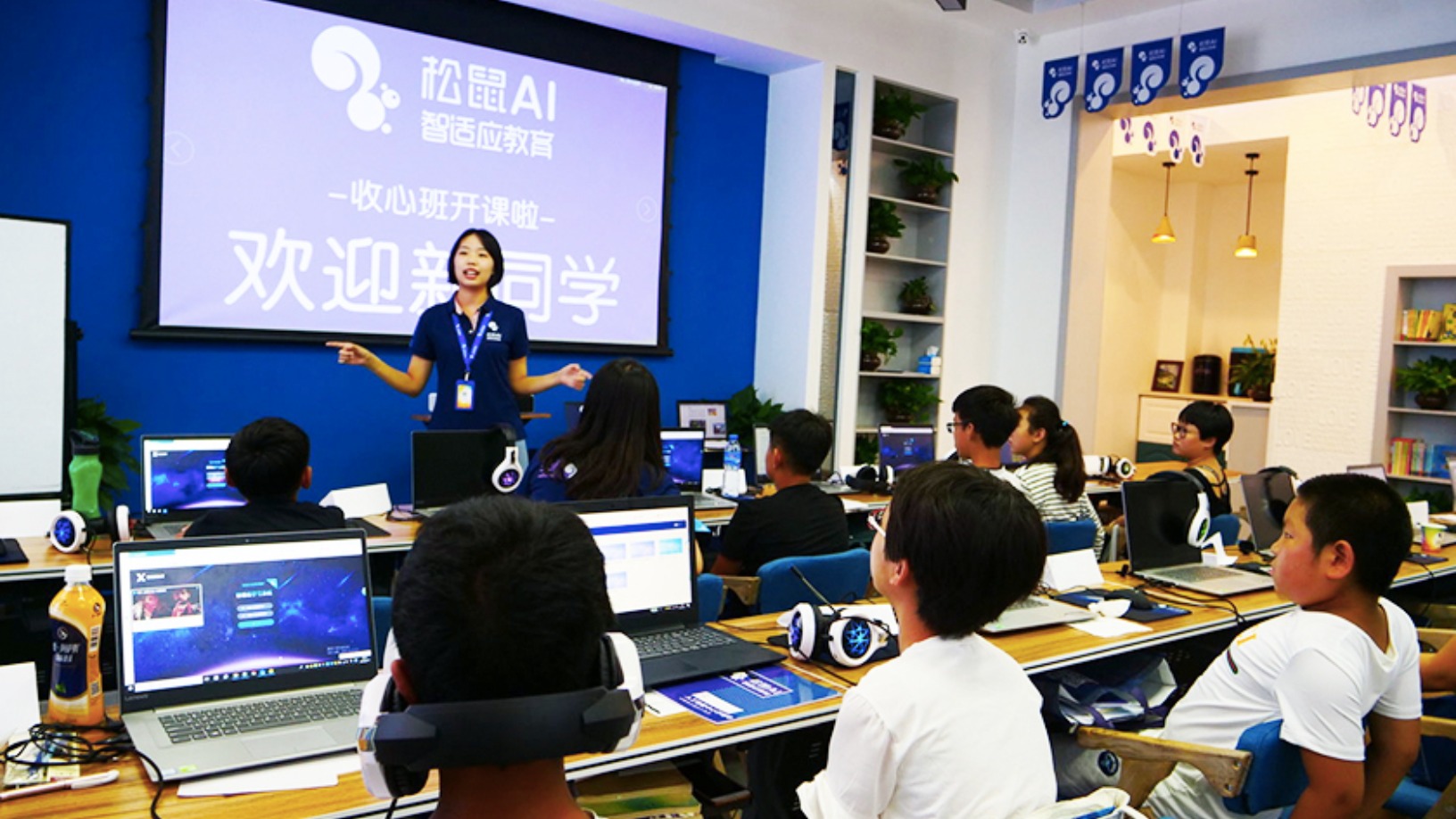
Squirrel AI: Edtech's AI-based personalized tutoring eases load for students and teachers
Used by more than 3m students, unicorn Squirrel AI tracks learning outcomes in real time and adapts teaching, proving more effective than traditional methods
New sectors, strategies come into play as investors respond to China's Big Tech curbs
Amid the crackdown on China’s tech giants, some investors are sussing out less risky sectors, while heavyweights like BlackRock and Fidelity stay in for the long haul

Quant Group makes personal loans safer, easier in China
Using big data and AI, Chinese fintech startup Quant Group simplifies and accelerates loan processing, and assures monetary security for financial institutions

Yu Minhong: Rags-to-riches education guru
When the New Oriental founder was working in the rice paddies as a teenager, it never occurred to him that he would become the richest teacher in China one day

Rainier: Decade-long dedication to VR research bears fruit in edtech market
Beijing-based Rainier is using VR technology to improve safety in lab experiments at universities and high schools, even primary schools

Start with the little things: 5 Indonesian social impact startups
From providing student loans to empowering marginalized groups and farmers, these Indonesian startups are revitalizing local communities

China edtech companies pivot to survive private tutoring crackdown
AI adaptive personalized learning is the bright star, attracting investors and corporates
Tutellus.io: Creating social change by tokenizing education
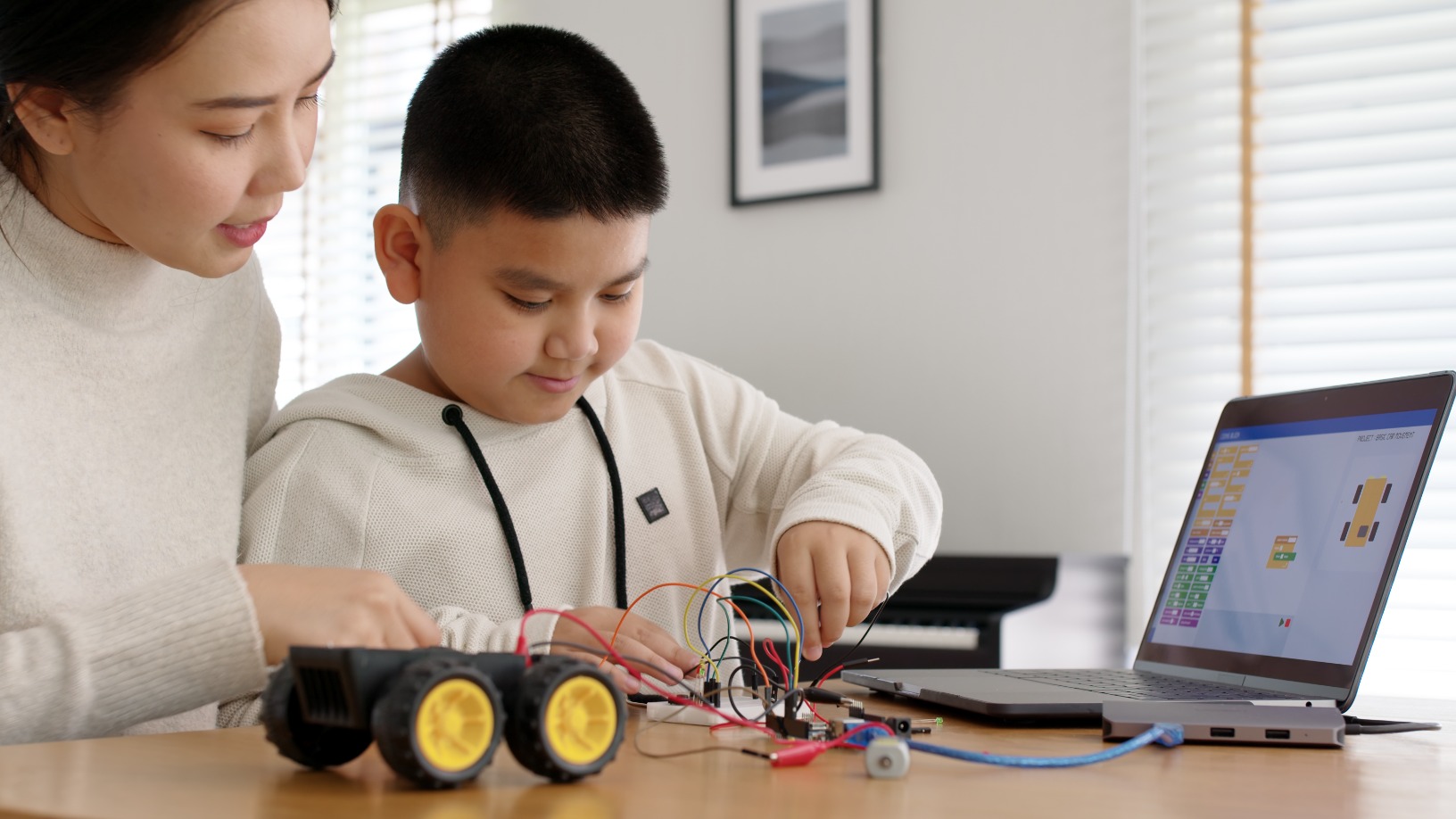
Tutellus.io has built an incentive-based tokenized education system to boost students’ motivation and teachers’ commitment while facilitating global access to education

Venturra Capital's Raditya Pramana: Bear market "very close now"
In an interview, the Indonesian VC firm's newest partner also charts out the course for their new fund, Venturra Discovery
Covid-19 symptoms checker and contact-tracing apps, virtual classrooms and 3D video-conferencing platforms are among the array of solutions for homebound adults and kids

Gojek CEO resigns to join Indonesia's new cabinet; named education minister
Nadiem Makarim was confirmed as Indonesia's education and culture minister and will become "a passive shareholder" in Gojek

For equality in education, Odilo brings books in the cloud free to millions worldwide
The "Amazon for digital content" Spanish edtech startup delivers virtual libraries and classrooms to kids and adults worldwide

Koala Reading: Using AI to help children read, learn better in Chinese
This edtech app matches Chinese students with reading materials based on level, not age or grade in school

Smile and Learn: The “Netflix of education” for three to 12 year olds
Smile and Learn lets schools offer AI-enabled personalized learning to every child in every classroom, for the price of a book
Sorry, we couldn’t find any matches for “TAL Education Group”.
POPULAR DATABASE