A*Star
-
DATABASE (2942)
-
ARTICLES (812)
Founded in 1980, INELCOM is a large Spanish manufacturing company that specializes in hardware, including microelectronics, optoelectronics and digital signal processors. It does not typically invest in tech startups, and, to date, its only declared investment has been in Valencian accessibility hardware and app for the deaf, Visualfy, to which it has contributed pre-seed and seed funding rounds totalling just over €3m. It is the startup’s industrial partner and manufactures its hardware.


Founded in 1980, INELCOM is a large Spanish manufacturing company that specializes in hardware, including microelectronics, optoelectronics and digital signal processors. It does not typically invest in tech startups, and, to date, its only declared investment has been in Valencian accessibility hardware and app for the deaf, Visualfy, to which it has contributed pre-seed and seed funding rounds totalling just over €3m. It is the startup’s industrial partner and manufactures its hardware.
Founded in 2016, Paris-based Future Positive Capital invests in European startups in deep tech and biotechnology to solve major problems, with funding for only 20 portfolio startups. It has backed eight startups to date with its most recent investments being in the April 2021 undisclosed €5.2m funding round of French renewable energytech SWEETCH Energy and in the £7.9m Series A round of British ecosystem restoration technology Dendra Systems in September 2020.

Founded in 2016, Paris-based Future Positive Capital invests in European startups in deep tech and biotechnology to solve major problems, with funding for only 20 portfolio startups. It has backed eight startups to date with its most recent investments being in the April 2021 undisclosed €5.2m funding round of French renewable energytech SWEETCH Energy and in the £7.9m Series A round of British ecosystem restoration technology Dendra Systems in September 2020.
Founded in 1992, Danish state investor Vaekstfonden is a growth fund that has financed more than 9,200 Danish tech and non-tech startups with total funding of 33.8bn Danish krone ($1=6.35DKK, or about €5.8bn), mostly at pre-seed and seed levels. The investor also manages funds from the Danish Ministry of Business, state grants, ordinary loans and green investments. Startup investments are normally carried out in cooperation with other public bodies such as innovation incubators.

Founded in 1992, Danish state investor Vaekstfonden is a growth fund that has financed more than 9,200 Danish tech and non-tech startups with total funding of 33.8bn Danish krone ($1=6.35DKK, or about €5.8bn), mostly at pre-seed and seed levels. The investor also manages funds from the Danish Ministry of Business, state grants, ordinary loans and green investments. Startup investments are normally carried out in cooperation with other public bodies such as innovation incubators.
Since 2003, US-based Wavemaker Partners have invested in more than 150 technology startups. The firm usually start with a US$100,000–$750,000 check and can follow on until US$1 million to US$1.25 million. Its investment portfolio in Asia-Pacific includes Luxola and TradeGecko. In 2016, it acquired Ardent Capital’s VC portfolio, which includes Sale Stock and Happyfresh.

Since 2003, US-based Wavemaker Partners have invested in more than 150 technology startups. The firm usually start with a US$100,000–$750,000 check and can follow on until US$1 million to US$1.25 million. Its investment portfolio in Asia-Pacific includes Luxola and TradeGecko. In 2016, it acquired Ardent Capital’s VC portfolio, which includes Sale Stock and Happyfresh.
Fu was born in Jiangxi province in March 1978. In 2005, he led a team that created free antivirus software Qihoo 360 Security Guard. In 2008, he became vice president at Matrix Partners China. A year later, Fu became CEO and chairman of picture software firm Conew Image, which merged with Kingsoft Security in November 2010 to create Kingsoft Network. Fu has served as CEO of the merged company ever since, which, in March 2014, was renamed Cheetah Mobile. He is also founder and general partner at Purple Cow Startups.

Fu was born in Jiangxi province in March 1978. In 2005, he led a team that created free antivirus software Qihoo 360 Security Guard. In 2008, he became vice president at Matrix Partners China. A year later, Fu became CEO and chairman of picture software firm Conew Image, which merged with Kingsoft Security in November 2010 to create Kingsoft Network. Fu has served as CEO of the merged company ever since, which, in March 2014, was renamed Cheetah Mobile. He is also founder and general partner at Purple Cow Startups.
Lei Ming graduated from Peking University (PKU) with a master's degree in Computer Science. While at university, he was a member of the PKU Sky Network search engine program. In 2000, Lei became one of the seven founding members of Baidu, where he led the search engine design and development team. Lei received his MBA from Stanford Business School in 2003. In 2005, he returned to China and started Kuwo Music, now one of the largest music platforms in China. As an angel investor, Lei focuses on the sectors of AI, consumption, education, medical services and entertainment.

Lei Ming graduated from Peking University (PKU) with a master's degree in Computer Science. While at university, he was a member of the PKU Sky Network search engine program. In 2000, Lei became one of the seven founding members of Baidu, where he led the search engine design and development team. Lei received his MBA from Stanford Business School in 2003. In 2005, he returned to China and started Kuwo Music, now one of the largest music platforms in China. As an angel investor, Lei focuses on the sectors of AI, consumption, education, medical services and entertainment.
VNV Global was originally founded as Vostok Nafta in 1996, with its first investment in Russia. The investment vehicle initially focused on investments in agriculture and natural resources, but began to diversify into early consumer internet companies like Avito and Tinkoff Bank. Shares were listed on NASDAQ OMX and the VC pivoted to high-growth tech investments in 2007. In 2015, the name was changed to Vostok New Ventures and shortened to VNV Global in 2020 to reflect its international strategy to expand outside Europe.The mid-cap NASDAQ Stockholm exchange-listed VNV mainly invests in mobility, medtech and marketplaces. It currently has 31 startups in its portfolio and six exits managed to date. Recent investments led by VNV include the $43m Series B funding of London-based food waste app OLIO in September 2021 and the $1.6m seed round of Vietnamese dating app Fika in October 2021.

VNV Global was originally founded as Vostok Nafta in 1996, with its first investment in Russia. The investment vehicle initially focused on investments in agriculture and natural resources, but began to diversify into early consumer internet companies like Avito and Tinkoff Bank. Shares were listed on NASDAQ OMX and the VC pivoted to high-growth tech investments in 2007. In 2015, the name was changed to Vostok New Ventures and shortened to VNV Global in 2020 to reflect its international strategy to expand outside Europe.The mid-cap NASDAQ Stockholm exchange-listed VNV mainly invests in mobility, medtech and marketplaces. It currently has 31 startups in its portfolio and six exits managed to date. Recent investments led by VNV include the $43m Series B funding of London-based food waste app OLIO in September 2021 and the $1.6m seed round of Vietnamese dating app Fika in October 2021.
Ex-Alibaba executive who is now a key figure in the Zhejiang province internet technology startup scene. In 1999, Li Zhiguo (Frank Li) moved alone to Hangzhou and became the 46th employee of Alibaba. In 2004, he left Alibaba and founded the highly popular life services platform Koubei (later acquired by Alibaba). He is also an active investor, having co-founded early-stage VC fund Ameba Capital in 2011. Li’s investments in Chinese startups include Mogujie, Kuaidadi and Zhaocai.

Ex-Alibaba executive who is now a key figure in the Zhejiang province internet technology startup scene. In 1999, Li Zhiguo (Frank Li) moved alone to Hangzhou and became the 46th employee of Alibaba. In 2004, he left Alibaba and founded the highly popular life services platform Koubei (later acquired by Alibaba). He is also an active investor, having co-founded early-stage VC fund Ameba Capital in 2011. Li’s investments in Chinese startups include Mogujie, Kuaidadi and Zhaocai.
Founded in 2016, SDICVC is a fund management company under State Development & Investment Corp, dedicating itself to promoting the industrialization of advanced technology and innovation in China, with key focus in Clean Technology, New Energy, Advanced Biotechnology, Advanced IT & Electronic Science. SDICVC currently manages 3 major funds, namely, National Science and Technology Major Project Fund, JingJinJi (Beijing, Tianjin, Hebei) Special Fund and High-Tech (Shenzhen) Startup Fund, backing up 30 Chinese startups in the related fields.
Founded in 2016, SDICVC is a fund management company under State Development & Investment Corp, dedicating itself to promoting the industrialization of advanced technology and innovation in China, with key focus in Clean Technology, New Energy, Advanced Biotechnology, Advanced IT & Electronic Science. SDICVC currently manages 3 major funds, namely, National Science and Technology Major Project Fund, JingJinJi (Beijing, Tianjin, Hebei) Special Fund and High-Tech (Shenzhen) Startup Fund, backing up 30 Chinese startups in the related fields.
A member of the family that founded the Zamora Company (which owns Spanish liquor brands Martin Miller, Ramón Bilbao and Licor 43), Ángel Zamora is currently an active entrepreneur, investor and strategy consultant for several European MNCs. He has explored investment opportunities within the Spanish technology ecosystem, backing startups with global ambitions and supporting them in their overseas expansion, especially to Latin American countries. Zamora is an MBA graduate from the Darden Business School in the US.

A member of the family that founded the Zamora Company (which owns Spanish liquor brands Martin Miller, Ramón Bilbao and Licor 43), Ángel Zamora is currently an active entrepreneur, investor and strategy consultant for several European MNCs. He has explored investment opportunities within the Spanish technology ecosystem, backing startups with global ambitions and supporting them in their overseas expansion, especially to Latin American countries. Zamora is an MBA graduate from the Darden Business School in the US.
Caixa Capital Risc is the venture capital branch of CriteriaCaixa, an investment holding company that manages La Caixa's banking funds. It was established in 2004 and has registered capital of €195 million. It is based in Barcelona, Spain and has invested in more than 100 Spanish companies in different sectors. It invests across sectors, requiring the startup to work with market-proven technology in a profitable and innovative proposition.

Caixa Capital Risc is the venture capital branch of CriteriaCaixa, an investment holding company that manages La Caixa's banking funds. It was established in 2004 and has registered capital of €195 million. It is based in Barcelona, Spain and has invested in more than 100 Spanish companies in different sectors. It invests across sectors, requiring the startup to work with market-proven technology in a profitable and innovative proposition.
ESADE Ban is a network of private investors, comprised of ex-alumnae of the Barcelona, Spain-based ESADE Business School. Founded in 2010, the organization consists of 260 business angels, venture capital companies, family firms and senior managers that have invested more than €27 million in 120 startups. The entity won the European Business Angel Network's 2016 award for best performing business angel and hold investment events throughout the year.

ESADE Ban is a network of private investors, comprised of ex-alumnae of the Barcelona, Spain-based ESADE Business School. Founded in 2010, the organization consists of 260 business angels, venture capital companies, family firms and senior managers that have invested more than €27 million in 120 startups. The entity won the European Business Angel Network's 2016 award for best performing business angel and hold investment events throughout the year.
Jerry Ng was the CEO of Indonesian financial institution Bank Tabungan Pensiunan Nasional (BTPN) for a decade until BTPN's merger with Sumitomo Mitsui Indonesia. Ng participated in the seed round of smart retail kiosk startup Warung Pintar in 2017 and again in early 2019 for its Series B funding.

Jerry Ng was the CEO of Indonesian financial institution Bank Tabungan Pensiunan Nasional (BTPN) for a decade until BTPN's merger with Sumitomo Mitsui Indonesia. Ng participated in the seed round of smart retail kiosk startup Warung Pintar in 2017 and again in early 2019 for its Series B funding.
Founded in 2016, Wave Ventures is a student-run Nordic investor supported by VC partners, angel investors and tech founders as advisors. Based in Helsinki, the VC provides pre-seed and early-stage funding to promote startup innovations for future generations. Its current portfolio of 17 startups includes participation in the SEK 2m pre-seed round of Swedish power-bank sharing startup Brick Technology in March 2021 and seed funding of German co-working space proprietor Twostay in January 2021.
Founded in 2016, Wave Ventures is a student-run Nordic investor supported by VC partners, angel investors and tech founders as advisors. Based in Helsinki, the VC provides pre-seed and early-stage funding to promote startup innovations for future generations. Its current portfolio of 17 startups includes participation in the SEK 2m pre-seed round of Swedish power-bank sharing startup Brick Technology in March 2021 and seed funding of German co-working space proprietor Twostay in January 2021.
Stanford Graduate School of Business
Launched in 2015, the Stanford GSB Impact Fund invests globally in innovators and tech startups whether connected with the university or not and within the area of social impact in seven market segments: education, energy and the environment, fintech, food and agriculture, justice, healthcare, and urban development. The university-owned fund invests from the pre-seed to Series A rounds and makes investments mostly from January to April. It currently has 11 startups in its portfolio.

Launched in 2015, the Stanford GSB Impact Fund invests globally in innovators and tech startups whether connected with the university or not and within the area of social impact in seven market segments: education, energy and the environment, fintech, food and agriculture, justice, healthcare, and urban development. The university-owned fund invests from the pre-seed to Series A rounds and makes investments mostly from January to April. It currently has 11 startups in its portfolio.
DGene : Star Wars-inspired 3D holograms made affordable for businesses
DGene's mobile-based VR/AR solution using integrated light field cuts the need for 3D modeling, useful for many sectors from retail marketing to conference calls

UBTECH: CES robotics star wants to bring humanoid robots to every family
UBTECH’s next-generation bipedal robot recently made an impressive global debut, and the startup’s founder has once again become the focus of attention

Enoc Armengol: The design and e-commerce 3.0 star inspired by Inspector Gadget
Also a serial entrepreneur, the Spaniard has created a trail of celebrated design products and startups from Singapore to Barcelona

Future Food Asia 2021 announces finalists for $100,000 prize
Ten startups from agrifood tech and cleantech sectors will pitch during the five-day conference, are also eligible for two more prizes from sponsors Cargill and Thai Wah

Digital Union: Fighting fake users in China's mobile app industry
The Beijing-based cybersecurity startup is helping developers spot fake app downloads, so their ad money don’t go to waste
Future Food Asia 2021: Two winners take home $100,000 each
Agrifood startups, corporations and investors urged to collaborate and take action, tackling challenges in nutrition and climate change
Quant Group makes personal loans safer, easier in China
Using big data and AI, Chinese fintech startup Quant Group simplifies and accelerates loan processing, and assures monetary security for financial institutions

Oceanium: Supporting sustainable seaweed farming
Scottish startup Oceanium has developed a proprietary biorefinery and processing model to create seaweed-based compostable materials, alt-protein ingredients and nutraceuticals for use across industry verticals

Plant-based eggs (Part II): The foodtech startups to watch
Here’s a shortlist of the foodtech startups to watch in the global vegan egg market

For your X-ray records, just check the cloud
A Chinese startup has built a digital medical image library on the cloud, bringing ease and cost savings to patients, doctors and hospitals countrywide

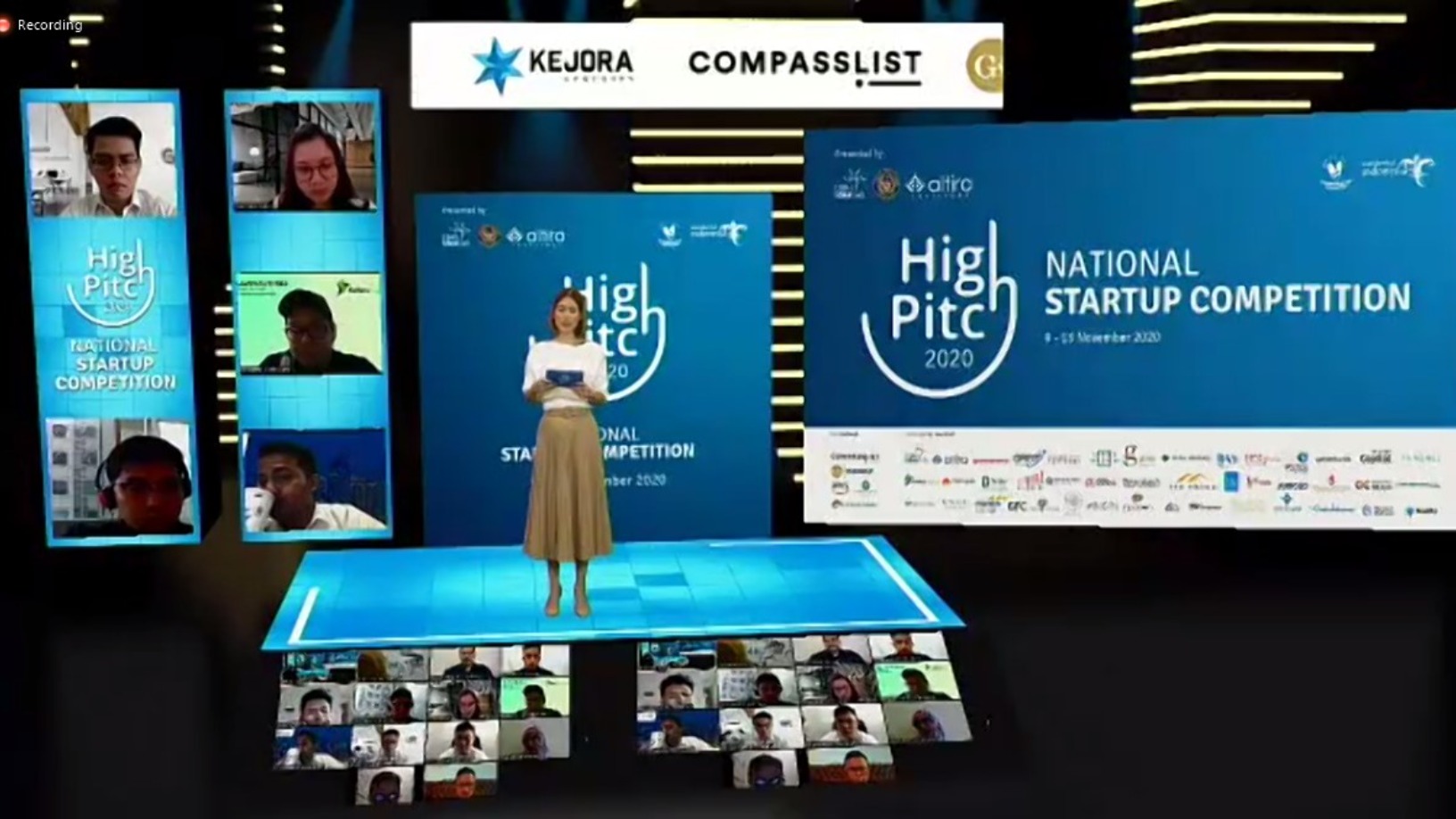
HighPitch: E-grocery marketplace Pasar20 and healthcare edtech Appskep top the Medan chapter
Representing Sumatra’s startup ecosystem in the national finals later in November, Pasar20 and Appskep have ambitious expansion plans in store
BukuWarung: Accounting-payments app targets Indonesia's 60m MSMEs
BukuWarung’s easy-to-use 6MB app designed for lower-end smartphones gets boost from Covid-19-accelerated digitalization

Meatable joins Royal DSM to create growth media specific for cell-based meat tech
The R&D between the biotech startup and fellow Dutch nutrition conglomerate could help scale and drive the commercial viability of lab-grown meat

Inspired by rowdy teenagers: the Musical.ly story
Now better known as TikTok, the original Musical.ly was the only Chinese social app to have cracked the Western market – before it got snapped up by Bytedance and joined its stable of short video apps

Using Reworld’s very own interactive physics engine, even rookie developers can turn their creative ideas into 3D games within two days

Sorry, we couldn’t find any matches for “A*Star”.
POPULAR DATABASE