Medical University of Warsaw
-
DATABASE (2789)
-
ARTICLES (812)
Haier Medical, a health-focused IoT-concept brand, is grouped under Yinkang Life, an arm of the Haier Group Corporation. It is an integrated health platform comprising physical hospitals and online medical services. As to its rehabilitation for intensive illnesses, for example, Haier Medical has rehabilitation hospitals that offer both physical treatment and Internet-based consultation so that patients spend less time there than in a normal medical facility. Besides rehabilitation, Haier Medical also focuses on cancer treatment, aged care services, and family health management services. Overall, it has a network of 16 hospitals with 8,000 beds, serving over 1m people every year.


Haier Medical, a health-focused IoT-concept brand, is grouped under Yinkang Life, an arm of the Haier Group Corporation. It is an integrated health platform comprising physical hospitals and online medical services. As to its rehabilitation for intensive illnesses, for example, Haier Medical has rehabilitation hospitals that offer both physical treatment and Internet-based consultation so that patients spend less time there than in a normal medical facility. Besides rehabilitation, Haier Medical also focuses on cancer treatment, aged care services, and family health management services. Overall, it has a network of 16 hospitals with 8,000 beds, serving over 1m people every year.
Established in 2003, JW Medical Systems (JWMS) is a wholly-owned subsidiary of high-end medical consumables manufacturer Bluesail. It’s an international company focusing on the R&D, manufacturing and marketing of high-tech interventional products. JWMS has offices in Beijing, Shanghai, Guangzhou, Shenyang and Xi'an.

Established in 2003, JW Medical Systems (JWMS) is a wholly-owned subsidiary of high-end medical consumables manufacturer Bluesail. It’s an international company focusing on the R&D, manufacturing and marketing of high-tech interventional products. JWMS has offices in Beijing, Shanghai, Guangzhou, Shenyang and Xi'an.
Yangtze Delta Region Institute of Tsinghua University, Zhejiang
Yangtze Delta Region Research Institute of Tsinghua University, Zhejiang was co-founded by the provincial government of Zhejiang and Tsinghua University in 2003 for tech transfer. It has set up over 50 R&D platforms in the areas of life sciences, digital creativity, information technology and ecological environment and 11 offshore incubators in the US, UK, Germany and Australia. The institute manages over RMB 7.5bn of assets and also makes investments through its sub-funds with a total size of more than RMB 10bn. So far, it has incubated and invested in over 2,500 companies, 35 of whom have gone public or been acquired by listed companies.

Yangtze Delta Region Research Institute of Tsinghua University, Zhejiang was co-founded by the provincial government of Zhejiang and Tsinghua University in 2003 for tech transfer. It has set up over 50 R&D platforms in the areas of life sciences, digital creativity, information technology and ecological environment and 11 offshore incubators in the US, UK, Germany and Australia. The institute manages over RMB 7.5bn of assets and also makes investments through its sub-funds with a total size of more than RMB 10bn. So far, it has incubated and invested in over 2,500 companies, 35 of whom have gone public or been acquired by listed companies.
The Stanford Management Company (SMC) invests through the Merged Pool that oversees the majority of its investable assets. Its portfolio includes diverse equity-oriented strategies: domestic and foreign public equities (27%), real estate (8%), natural resources (7%) and private equity (30%). Private equity is maintained at 30% of the Merged Pool based on its risk-return criteria. The Merged Pool was valued at $29.6 bn as of June 30, 2019.The private equity division operates through selected external partners for early and later-stage investments. According to the university’s latest investment report, the SMC is working to improve its investment portfolio that has become over diversified during the last four years, making it difficult to maintain quality and drive superior returns. The number of active partners has been reduced to 75 including 37 new ones added in the last four years. The new partners have generated a net internal rate of return of 29.3% over the last four years.

The Stanford Management Company (SMC) invests through the Merged Pool that oversees the majority of its investable assets. Its portfolio includes diverse equity-oriented strategies: domestic and foreign public equities (27%), real estate (8%), natural resources (7%) and private equity (30%). Private equity is maintained at 30% of the Merged Pool based on its risk-return criteria. The Merged Pool was valued at $29.6 bn as of June 30, 2019.The private equity division operates through selected external partners for early and later-stage investments. According to the university’s latest investment report, the SMC is working to improve its investment portfolio that has become over diversified during the last four years, making it difficult to maintain quality and drive superior returns. The number of active partners has been reduced to 75 including 37 new ones added in the last four years. The new partners have generated a net internal rate of return of 29.3% over the last four years.
Stanford Graduate School of Business
Launched in 2015, the Stanford GSB Impact Fund invests globally in innovators and tech startups whether connected with the university or not and within the area of social impact in seven market segments: education, energy and the environment, fintech, food and agriculture, justice, healthcare, and urban development. The university-owned fund invests from the pre-seed to Series A rounds and makes investments mostly from January to April. It currently has 11 startups in its portfolio.

Launched in 2015, the Stanford GSB Impact Fund invests globally in innovators and tech startups whether connected with the university or not and within the area of social impact in seven market segments: education, energy and the environment, fintech, food and agriculture, justice, healthcare, and urban development. The university-owned fund invests from the pre-seed to Series A rounds and makes investments mostly from January to April. It currently has 11 startups in its portfolio.
Founded in Hong Kong in 2018, Lake Bleu Capital currently operates in both Hong Kong and Shanghai. With assets worth billions of US dollars under management, it mainly invests in pharmaceuticals, biotech, medical devices and healthcare services companies in Asia, especially Greater China. Its limited partners include sovereign wealth funds, university endowments, foundations, pension funds, and family offices across the world.With a long-term investment strategy, Lake Bleu Capital invests through both public and private equity with a focus on mid- to late-stage companies.

Founded in Hong Kong in 2018, Lake Bleu Capital currently operates in both Hong Kong and Shanghai. With assets worth billions of US dollars under management, it mainly invests in pharmaceuticals, biotech, medical devices and healthcare services companies in Asia, especially Greater China. Its limited partners include sovereign wealth funds, university endowments, foundations, pension funds, and family offices across the world.With a long-term investment strategy, Lake Bleu Capital invests through both public and private equity with a focus on mid- to late-stage companies.
Founder & President of Eimageglobal
As a graduate in Biomedical Engineering from Southeast University as well as Clinical Medicine from Nanjing Medical University, Chai Xueting has always been aware of the issues plaguing the traditional medical imaging system. The exorbitant cost of archiving past records and the lack of a comprehensive medical image sharing system between hospitals for a fully effective diagnosis have long raised concerns in his mind. But it was while taking his young daughter to the hospital for a health checkup, personally experiencing these issues, that Chai became ever more determined to build a cloud-based medical system – hence his founding of Eimageglobal. In 2017, Chai won the “Young Tech Giant” Award by Zhejiang Entrepreneur Committee.

As a graduate in Biomedical Engineering from Southeast University as well as Clinical Medicine from Nanjing Medical University, Chai Xueting has always been aware of the issues plaguing the traditional medical imaging system. The exorbitant cost of archiving past records and the lack of a comprehensive medical image sharing system between hospitals for a fully effective diagnosis have long raised concerns in his mind. But it was while taking his young daughter to the hospital for a health checkup, personally experiencing these issues, that Chai became ever more determined to build a cloud-based medical system – hence his founding of Eimageglobal. In 2017, Chai won the “Young Tech Giant” Award by Zhejiang Entrepreneur Committee.
Co-founder and CEO of Zhuojian
Undergrad medicine, Zhejiang University; PhD, Medical University of South Carolina. Former surgeon at First Affiliated Hospital of Zhejiang University.

Undergrad medicine, Zhejiang University; PhD, Medical University of South Carolina. Former surgeon at First Affiliated Hospital of Zhejiang University.
Founded in 2014, Prosperico Ventures targets the healthcare sector. The VC has invested in nearly 30 startups working on medical devices, pharmaceutical R&D, provision of medical services and precision medicine.

Founded in 2014, Prosperico Ventures targets the healthcare sector. The VC has invested in nearly 30 startups working on medical devices, pharmaceutical R&D, provision of medical services and precision medicine.
Co-founder and COO of ProSehat
After graduating as a doctor at Universitas Katolik Atma Jaya in Indonesia, Agnes Susanto joined Atoma Medical as operations manager in 2011. She completed a master’s in Public Health, Hospital and Healthcare Facilities at the Universitas Gadjah Mada (UGM) in 2016. She also co-founded ProSehat, a medical e-commerce startup as an offshoot of Atoma Medical.

After graduating as a doctor at Universitas Katolik Atma Jaya in Indonesia, Agnes Susanto joined Atoma Medical as operations manager in 2011. She completed a master’s in Public Health, Hospital and Healthcare Facilities at the Universitas Gadjah Mada (UGM) in 2016. She also co-founded ProSehat, a medical e-commerce startup as an offshoot of Atoma Medical.
Head of Product and co-founder of Zipline International
Keenan Wyrobek is a graduate from Stanford University and Johns Hopkins University specializing in medical product design and robotics. He has developed several patents for medical robotics and other high-tech products.He also co-founded the Personal Robotics Program at Willow Garage, where he was involved in launching the Robot Operating System (ROS) and the first personal robot for software application development. In 2014, Wyrobek co-founded Zipline International and became head of product and engineering at the Silicon Valley-based company that makes drones for delivering critical medical supplies to remote parts of the world.

Keenan Wyrobek is a graduate from Stanford University and Johns Hopkins University specializing in medical product design and robotics. He has developed several patents for medical robotics and other high-tech products.He also co-founded the Personal Robotics Program at Willow Garage, where he was involved in launching the Robot Operating System (ROS) and the first personal robot for software application development. In 2014, Wyrobek co-founded Zipline International and became head of product and engineering at the Silicon Valley-based company that makes drones for delivering critical medical supplies to remote parts of the world.
Founder and CEO of HomeRun
Liu Kun holds a master’s in Automatic Control Science and Engineering from the School of Astronautics, Harbin Institute of Technology. Before founding Shenzhen Qianhai HomeRun Technology Co Ltd in 2015, he had worked for 11 years in R&D for analytical instruments for medical and industrial purposes. Previous employers included Toshiba Medical Systems Corporation, Mindray Medical International Co Ltd and German-based process equipment and processing technology provider IKA.

Liu Kun holds a master’s in Automatic Control Science and Engineering from the School of Astronautics, Harbin Institute of Technology. Before founding Shenzhen Qianhai HomeRun Technology Co Ltd in 2015, he had worked for 11 years in R&D for analytical instruments for medical and industrial purposes. Previous employers included Toshiba Medical Systems Corporation, Mindray Medical International Co Ltd and German-based process equipment and processing technology provider IKA.
Headquartered in Shanghai, FC Capital was founded in 2017 to focus on investments in China and the US. The VC mainly invests in medtech sectors like biotechnology, medical devices, medical services and health-related consumer products.

Headquartered in Shanghai, FC Capital was founded in 2017 to focus on investments in China and the US. The VC mainly invests in medtech sectors like biotechnology, medical devices, medical services and health-related consumer products.
The Bank of China is one of four major state-owned banks in China. It provides financial services to China as well as 51 other countries and regions. The BOC makes direct investments and conducts investment management through its wholly owned subsidiary Bank of China Group Investment Ltd. It invests primarily in its clients and focuses on the fields of finance, consumption, medicine and energy sources.

The Bank of China is one of four major state-owned banks in China. It provides financial services to China as well as 51 other countries and regions. The BOC makes direct investments and conducts investment management through its wholly owned subsidiary Bank of China Group Investment Ltd. It invests primarily in its clients and focuses on the fields of finance, consumption, medicine and energy sources.
Co-founder of UpHill
Sequiera is a Portuguese co-founder at UpHill, whose SaaS helps healthcare professionals keep up-to-speed on the latest clinical treatments and protocols using AI. Despite being heavily involved in the development of the software Simulate, Sequiera continues to work in the medical field full-time.He works as a consultant at the SPMS – Shared Services of the Ministry of Health in Portugal – that centralizes, optimizes and rationalizes the procurement of goods and services in the state health service. He also lectures part-time in Leadership and Management in Healthcare at his former university, where UpHill was established.Sequiera has been President of ANEM, the Portuguese Medical Students’ International Committee and for two years helped develop the medical curriculum at the University of Luxembourg. He also holds a postgraduate qualification in Information Management and Business Intelligence in Healthcare from NOVA Information Management School in Lisbon.

Sequiera is a Portuguese co-founder at UpHill, whose SaaS helps healthcare professionals keep up-to-speed on the latest clinical treatments and protocols using AI. Despite being heavily involved in the development of the software Simulate, Sequiera continues to work in the medical field full-time.He works as a consultant at the SPMS – Shared Services of the Ministry of Health in Portugal – that centralizes, optimizes and rationalizes the procurement of goods and services in the state health service. He also lectures part-time in Leadership and Management in Healthcare at his former university, where UpHill was established.Sequiera has been President of ANEM, the Portuguese Medical Students’ International Committee and for two years helped develop the medical curriculum at the University of Luxembourg. He also holds a postgraduate qualification in Information Management and Business Intelligence in Healthcare from NOVA Information Management School in Lisbon.
Glovo’s 2018 rollercoaster ride
The year saw the delivery giant dealing with labor unions, diversification and international expansion

Future Food Asia 2021: Two winners take home $100,000 each
Agrifood startups, corporations and investors urged to collaborate and take action, tackling challenges in nutrition and climate change

Canika: A new app offering more budget-friendly weddings
Canika woos young couples with more flexible prices and options in Indonesia's $7bn wedding planning market

How Sea Water Analytics is using IoT to help keep beaches safe in Covid-19 era
Sea Water Analytics checks water quality, overcrowding, even jelly fish threats in Spanish beaches

Ambit Robotics: Automated crop spraying for Southeast Asia's smallholder farmers
Small, affordable crop-spraying robots can help farmers save on labor costs and protect humans from exposure to harmful chemicals

Insights on tech and the Indonesian diaspora in Silicon Valley
Navigating the different diaspora communities, one tech event at a time

4YFN: Investment booms across Europe during pandemic
Speaking at the recent 4YFN conference, prolific European startup investor Mattias Ljungman provided a highly optimistic assessment of the continent's current ecosystem strength and climate for seed funding

Beyond Leather Materials: Turning apples into alt-leather for sustainable fashion
Through its Leap brand, the Danish startup cuts food waste by turning apples junked in cider factories into affordable vegan leather for the $100bn leather market

Storial: Budding writers test their talent and turn a profit
By helping new authors monetize their work, Storial gives budding literary talent a launching pad

Koinpack tackles Indonesia's sachet waste problem with refillable bottles
Partnering with FMCG companies, Koinpack is making small amounts of household consumables available to lower-income groups without using traditional sachet packaging

In China, e-commerce platforms and brands bet big on live commerce
Retailers embrace shopping via livestreaming, where social media influencers hawk products and get rapid sales

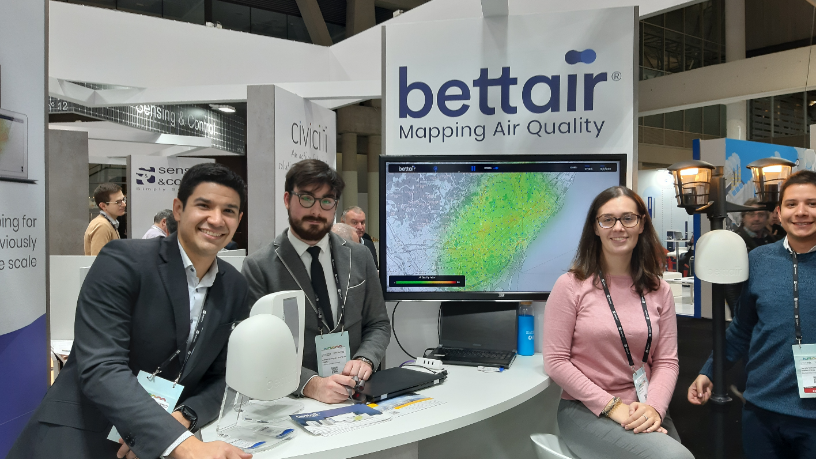
Bettair's air pollution monitoring system for cities promises over 90% accuracy
Combining smart sensors, AI and machine learning, Barcelona-based Bettair has developed a unique, affordable PaaS to accurately measure pollution levels in urban areas
Covid-19 has renewed investors' interest in China's online education sector
Will skyrocketing demand for online education during Covid-19 give China's edtechs that long-awaited push to profitability?

The B2B platform for greater route efficiency and sustainability in trucking raised €17m despite supply chain disruptions, economic uncertainties during Covid-19
Future Food Asia 2021 announces finalists for $100,000 prize
Ten startups from agrifood tech and cleantech sectors will pitch during the five-day conference, are also eligible for two more prizes from sponsors Cargill and Thai Wah

Sorry, we couldn’t find any matches for “Medical University of Warsaw”.
POPULAR DATABASE