sustainable development goals
-
DATABASE (450)
-
ARTICLES (486)
Established in 2002, Hong Kong Stock Exchange-listed NWS Holdings’ main businesses are in infrastructure and service. Its main shareholder is New World Development. Henry Cheng currently serves as chairman and executive director of NWS Holdings. He is the eldest son of Dr Cheng Yu-tung, the founder of New World Development, a Hong Kong-based conglomerate engaged in property development, infrastructure and services.


Established in 2002, Hong Kong Stock Exchange-listed NWS Holdings’ main businesses are in infrastructure and service. Its main shareholder is New World Development. Henry Cheng currently serves as chairman and executive director of NWS Holdings. He is the eldest son of Dr Cheng Yu-tung, the founder of New World Development, a Hong Kong-based conglomerate engaged in property development, infrastructure and services.
CFO and co-founder of Modulous Tech
Sarah Hordern is a co-founder, CFO and Group Development Leader at UK-based Modulous, the first end-to-end generative design and delivery solution for affordable, sustainable and modulized housing, where she has worked since 2019. She is simultaneously a non-executive director at Oxford University Hospitals NHS Foundation Trust and at lenders Newbury Building Society. She was previously executive advisor at the Cambridge Code 2018-19, the first digital tool that measures subconscious drivers of behavior, and spent two years as COO at residential management company Meyrick Estate Management. From 1999 to 2014, she was a joint managing director in the area of property and finance at Newbury Racecourse, one of the UK’s largest horse-racing establishments, where she was responsible for the design and commercial negotiations for a new community of 1,500 homes. Prior to this, Hordern spent five years at PwC in corporate tax management. She holds a Bachelor’s degree from Oxford University in Politics, Philosophy and Economics.

Sarah Hordern is a co-founder, CFO and Group Development Leader at UK-based Modulous, the first end-to-end generative design and delivery solution for affordable, sustainable and modulized housing, where she has worked since 2019. She is simultaneously a non-executive director at Oxford University Hospitals NHS Foundation Trust and at lenders Newbury Building Society. She was previously executive advisor at the Cambridge Code 2018-19, the first digital tool that measures subconscious drivers of behavior, and spent two years as COO at residential management company Meyrick Estate Management. From 1999 to 2014, she was a joint managing director in the area of property and finance at Newbury Racecourse, one of the UK’s largest horse-racing establishments, where she was responsible for the design and commercial negotiations for a new community of 1,500 homes. Prior to this, Hordern spent five years at PwC in corporate tax management. She holds a Bachelor’s degree from Oxford University in Politics, Philosophy and Economics.
SPRI is the Business Development Agency of the Basque Government under the Department of Economic Development and Infrastructures. Established in 1982, the Bilbao-based agency primarily invests in local startups, including non-tech companies from the Spanish Basque Country.
SPRI is the Business Development Agency of the Basque Government under the Department of Economic Development and Infrastructures. Established in 1982, the Bilbao-based agency primarily invests in local startups, including non-tech companies from the Spanish Basque Country.
Aavishkaar (‘invention’ in Hindi) was founded in 2001 as an early stage investor to help build sustainable enterprises in India’s underserved regions. Its VC portfolio, valued at over US$ 155 million, covers key industry sectors including sanitation, healthcare, agriculture and technology. Its Aavishkaar Frontier Fund was created in 2015 to invest in South and Southeast Asian countries like Indonesia, Pakistan and Bangladesh.

Aavishkaar (‘invention’ in Hindi) was founded in 2001 as an early stage investor to help build sustainable enterprises in India’s underserved regions. Its VC portfolio, valued at over US$ 155 million, covers key industry sectors including sanitation, healthcare, agriculture and technology. Its Aavishkaar Frontier Fund was created in 2015 to invest in South and Southeast Asian countries like Indonesia, Pakistan and Bangladesh.
Bamboo Capital Partners is an impact investment company that focuses on supporting energy access, finance and healthcare-related ventures in developing countries. The company manages 10 investment funds across Asia, Africa, and Latin America, with companies in Indonesia, India, Kyrgyz Republic, and Brazil having received investments from this company. Bamboo Capital Partners states that their portfolio healthcare companies have served 3.4m patients, and 9.68m metric tons of CO2 emissions have been avoided through the use of solar panels and green energy championed by their startups.Bamboo Capital Partners have worked with governments and major investment groups to support the fulfillment of SDG goals through startup investing. In 2020, Bamboo Capital Partners was appointed by the government of Madagascar and the World Bank as the fund manager for the $40m Off-Grid Market Development Fund. Bamboo is also a partner of the Palladium Group, which owns a minority stake in the VC.

Bamboo Capital Partners is an impact investment company that focuses on supporting energy access, finance and healthcare-related ventures in developing countries. The company manages 10 investment funds across Asia, Africa, and Latin America, with companies in Indonesia, India, Kyrgyz Republic, and Brazil having received investments from this company. Bamboo Capital Partners states that their portfolio healthcare companies have served 3.4m patients, and 9.68m metric tons of CO2 emissions have been avoided through the use of solar panels and green energy championed by their startups.Bamboo Capital Partners have worked with governments and major investment groups to support the fulfillment of SDG goals through startup investing. In 2020, Bamboo Capital Partners was appointed by the government of Madagascar and the World Bank as the fund manager for the $40m Off-Grid Market Development Fund. Bamboo is also a partner of the Palladium Group, which owns a minority stake in the VC.
CCO and co-founder of Modulous Tech
Reimell Ragnauth is co-founder and Chief Commercial Officer at UK-based Modulous, the first end-to-end generative design and delivery solution for affordable, sustainable and modulized housing, where he has worked since 2019. He also works part-time as a strategic investor to data analysis company iaidō and is a non-executive chairman at construction insulation company PMP Manufacturing.Before Modulous, he was chief business development officer at gold fintech startup Glint for a year and established its US office. He previously worked as the managing director of Spiralite Ductwork in the area of building energy efficiency from 2010-17. Prior to this, all of his positions were in the finance and investment area: at 3i Group as Associated Director of Quoted Private Equity 2007-9; at the Electra Group as a senior associate of the EQMC Fund 2006-7; at consultancy Deloitte as an associate director of private equity transaction services 2004-6; at Orbis Investments 2001-4 working in investment analysis; and as Manager of Business Recovery Services at PwC in London 1996-2000. Ragnauth holds a Master’s in Law from Cambridge University.

Reimell Ragnauth is co-founder and Chief Commercial Officer at UK-based Modulous, the first end-to-end generative design and delivery solution for affordable, sustainable and modulized housing, where he has worked since 2019. He also works part-time as a strategic investor to data analysis company iaidō and is a non-executive chairman at construction insulation company PMP Manufacturing.Before Modulous, he was chief business development officer at gold fintech startup Glint for a year and established its US office. He previously worked as the managing director of Spiralite Ductwork in the area of building energy efficiency from 2010-17. Prior to this, all of his positions were in the finance and investment area: at 3i Group as Associated Director of Quoted Private Equity 2007-9; at the Electra Group as a senior associate of the EQMC Fund 2006-7; at consultancy Deloitte as an associate director of private equity transaction services 2004-6; at Orbis Investments 2001-4 working in investment analysis; and as Manager of Business Recovery Services at PwC in London 1996-2000. Ragnauth holds a Master’s in Law from Cambridge University.
CEO and founder of Koiki
Aitor Ojanguren is an industrial engineer and serial entrepreneur from Bilbao, Spain. He holds an MBA from Bauer University in Boston. He also specialized at the IESE Business School in social entrepreneurship and is an active investor in social impact tech startups.Ojanguren has over 15 years experience in the logistics sector. He founded Celeritas, a leading logistic e-commerce service company. He is CEO of Koiki, an environmentally sustainable last-mile delivery social enterprise that employs vulnerable people in Spain, which he founded in 2015.

Aitor Ojanguren is an industrial engineer and serial entrepreneur from Bilbao, Spain. He holds an MBA from Bauer University in Boston. He also specialized at the IESE Business School in social entrepreneurship and is an active investor in social impact tech startups.Ojanguren has over 15 years experience in the logistics sector. He founded Celeritas, a leading logistic e-commerce service company. He is CEO of Koiki, an environmentally sustainable last-mile delivery social enterprise that employs vulnerable people in Spain, which he founded in 2015.
FlexSystem Hong Kong is an enterprise management software development company in Greater China.

FlexSystem Hong Kong is an enterprise management software development company in Greater China.
Founded in 2011 by Cyril Ebersweiler, partner of the venture capital firm SOSV, HAX has grown into the world’s first and largest hardware accelerator. It currently operates in Shenzhen and San Francisco. Funded by SOSV, HAX selects teams with hardware prototypes and turns them into functional, sustainable companies. In this way, HAX has brought 65 products to the market in the last three years.

Founded in 2011 by Cyril Ebersweiler, partner of the venture capital firm SOSV, HAX has grown into the world’s first and largest hardware accelerator. It currently operates in Shenzhen and San Francisco. Funded by SOSV, HAX selects teams with hardware prototypes and turns them into functional, sustainable companies. In this way, HAX has brought 65 products to the market in the last three years.
EDB Investments (EDBI) is an investment arm of Singapore's Economic Development Board. It has invested in emerging technologies since 1991, with particular focus on healthcare and information/communication tech. EDBI seeks companies with the potential to support Singapore's economy through existing economic pillars or the development of new industry sectors, as well as companies that can potentially go global through Singapore.

EDB Investments (EDBI) is an investment arm of Singapore's Economic Development Board. It has invested in emerging technologies since 1991, with particular focus on healthcare and information/communication tech. EDBI seeks companies with the potential to support Singapore's economy through existing economic pillars or the development of new industry sectors, as well as companies that can potentially go global through Singapore.
Closed Loop Ventures is an early-stage investment fund focused on the development of the circular economy.
Closed Loop Ventures is an early-stage investment fund focused on the development of the circular economy.
The British F1 racing driver and five-time FIA Formula One World Champion Lewis Hamilton has started to promote veganism and sustainable lifestyles, investing in several technology startups that develop solutions in that field.In 2019 he launched Neat Meat, the British vegan fast casual chain, in collaboration with The Cream Group, UNICEF Ambassadors and early investor in Beyond Meat Tommaso Chiabra. More recently he participated in a Series D funding round backing NotCo, the first Chilean unicorn selling plant-based food and beverage products across Latin America and the US.Hamilton is actively fighting to promote sustainable and eco-friendly practices across industries. In 2019 he also pushed Mercedes-Benz to discuss the possibility of including animal-free interiors in their cars. On that he said: I want to be part of a system that is going to help heal the world and do something positive for the future.”

The British F1 racing driver and five-time FIA Formula One World Champion Lewis Hamilton has started to promote veganism and sustainable lifestyles, investing in several technology startups that develop solutions in that field.In 2019 he launched Neat Meat, the British vegan fast casual chain, in collaboration with The Cream Group, UNICEF Ambassadors and early investor in Beyond Meat Tommaso Chiabra. More recently he participated in a Series D funding round backing NotCo, the first Chilean unicorn selling plant-based food and beverage products across Latin America and the US.Hamilton is actively fighting to promote sustainable and eco-friendly practices across industries. In 2019 he also pushed Mercedes-Benz to discuss the possibility of including animal-free interiors in their cars. On that he said: I want to be part of a system that is going to help heal the world and do something positive for the future.”
CEO and founder of Mycorena
Ramkumar Nair graduated in biotechnology at the Cochin University of Science and Technology in Kerala before going to Sweden for postgrad studies in 2013.During his PhD in industrial biotechnology at the University of Borås, he embarked on a research project to create fungi-based proteins from discarded sidestreams generated by food producers. After extensive research in 2017, he founded Mycorena in Gothenburg to produce mycoproteins using fermentation technology.The startup’s first commercial product, Promyc, is now being sold to global food companies as a more sustainable and nutritional alt-protein compared to traditional plant-based proteins.

Ramkumar Nair graduated in biotechnology at the Cochin University of Science and Technology in Kerala before going to Sweden for postgrad studies in 2013.During his PhD in industrial biotechnology at the University of Borås, he embarked on a research project to create fungi-based proteins from discarded sidestreams generated by food producers. After extensive research in 2017, he founded Mycorena in Gothenburg to produce mycoproteins using fermentation technology.The startup’s first commercial product, Promyc, is now being sold to global food companies as a more sustainable and nutritional alt-protein compared to traditional plant-based proteins.
Founded in 1999, Huaxin Century is an investment firm specializing in real estate development and project management.

Founded in 1999, Huaxin Century is an investment firm specializing in real estate development and project management.
Co-CEO and co-founder of Pula
Dutch-born Rosa Goslinga has spent most of her career working in Africa and speaks five languages, including Swahili. She graduated in business, economics and international development at the University of Amsterdam in 2004. She also completed a master’s in political economy of development at the School for Oriental and African Studies (SOAS) in London in 2005.In 2006, she worked as an economist at the Ministry of Agriculture and Animal Resources in Rwanda where she realized there was an urgent need for small-scale farming insurance to protect the local farmers’ livelihoods against natural hazards.In 2008, she joined Syngenta Foundation for Sustainable Agriculture (SFSA) in Kenya, where she initiated a pilot Kilimo Salama in Nairobi as program director. The program was a success, starting with 185 farmers taking up index insurance and growing to be the largest in Africa with over 185,000 participants. Goslinga also met and started working with Thomas Njeru, the lead actuary for UAP Insurance for the Kilimo project.In 2013, with investors backing her project, she developed and patented a system and method for providing a site-related weather insurance contract. She left SFSA in 2014 and went on to set up Kenya’s pioneering insurtech Pula with Njeru as co-founder in 2015.Both are now co-CEOs of the Nairobi-based startup, education and helping over 4m small-scale farmers to protect their livelihoods from environmental hazards with tailor-made micro-finance and insurance products.

Dutch-born Rosa Goslinga has spent most of her career working in Africa and speaks five languages, including Swahili. She graduated in business, economics and international development at the University of Amsterdam in 2004. She also completed a master’s in political economy of development at the School for Oriental and African Studies (SOAS) in London in 2005.In 2006, she worked as an economist at the Ministry of Agriculture and Animal Resources in Rwanda where she realized there was an urgent need for small-scale farming insurance to protect the local farmers’ livelihoods against natural hazards.In 2008, she joined Syngenta Foundation for Sustainable Agriculture (SFSA) in Kenya, where she initiated a pilot Kilimo Salama in Nairobi as program director. The program was a success, starting with 185 farmers taking up index insurance and growing to be the largest in Africa with over 185,000 participants. Goslinga also met and started working with Thomas Njeru, the lead actuary for UAP Insurance for the Kilimo project.In 2013, with investors backing her project, she developed and patented a system and method for providing a site-related weather insurance contract. She left SFSA in 2014 and went on to set up Kenya’s pioneering insurtech Pula with Njeru as co-founder in 2015.Both are now co-CEOs of the Nairobi-based startup, education and helping over 4m small-scale farmers to protect their livelihoods from environmental hazards with tailor-made micro-finance and insurance products.
Impact investing: Spanish startups with a cause and the ecosystem backing them
As more thought and money go into socially and environmentally responsible projects, Spanish entrepreneurs, investors and big businesses are following suit

Forward Fooding: Ranking the world's agrifood startups on success and sustainability
The collaborative platform has opened applications for its FoodTech500 global ranking of agrifood startups; counts over 7,000 startups and scaleups mapped so far
Clear Plate: Anti-food waste AI that rewards the diners who finish their food
Taking little steps to make a big difference in fighting food waste, Clear Plate engages with digital natives to spread the message

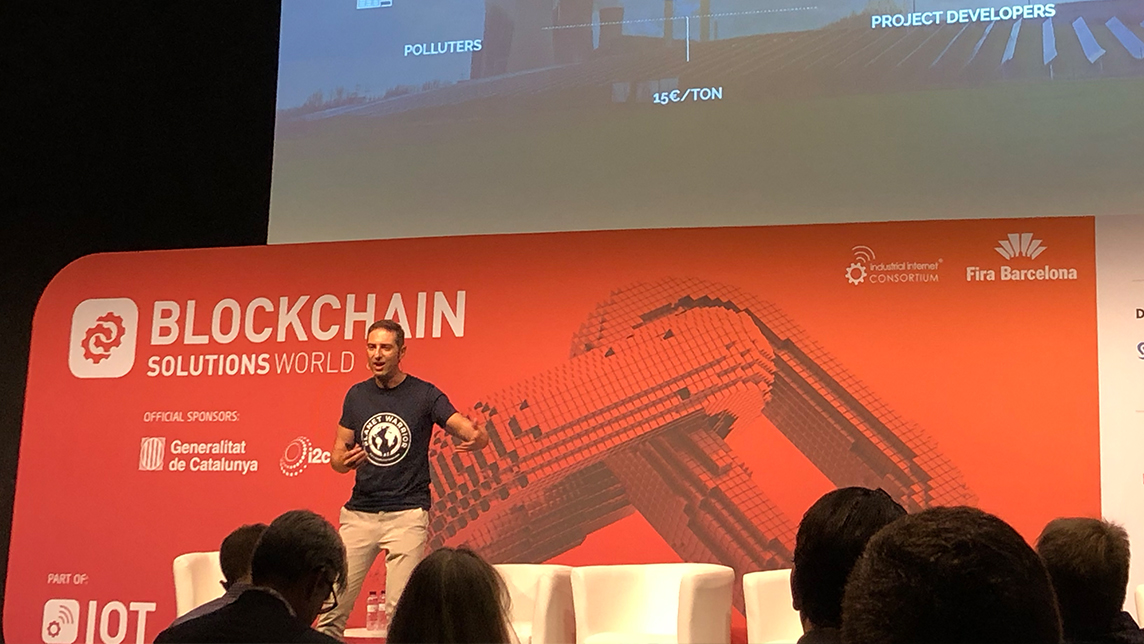
ClimateTrade: Using blockchain to spur climate change action that can make a difference
ClimateTrade is a decentralized carbon trading platform that democratizes the financing of SDG initiatives and provides traceability of carbon credit purchases and emission offsets
Future Food Asia 2021: Impact assessments – getting the metrics right
Common impact measures are useful but each situation requires specific, sometimes subjective considerations. The priority is to gauge if the impact has led to positive changes

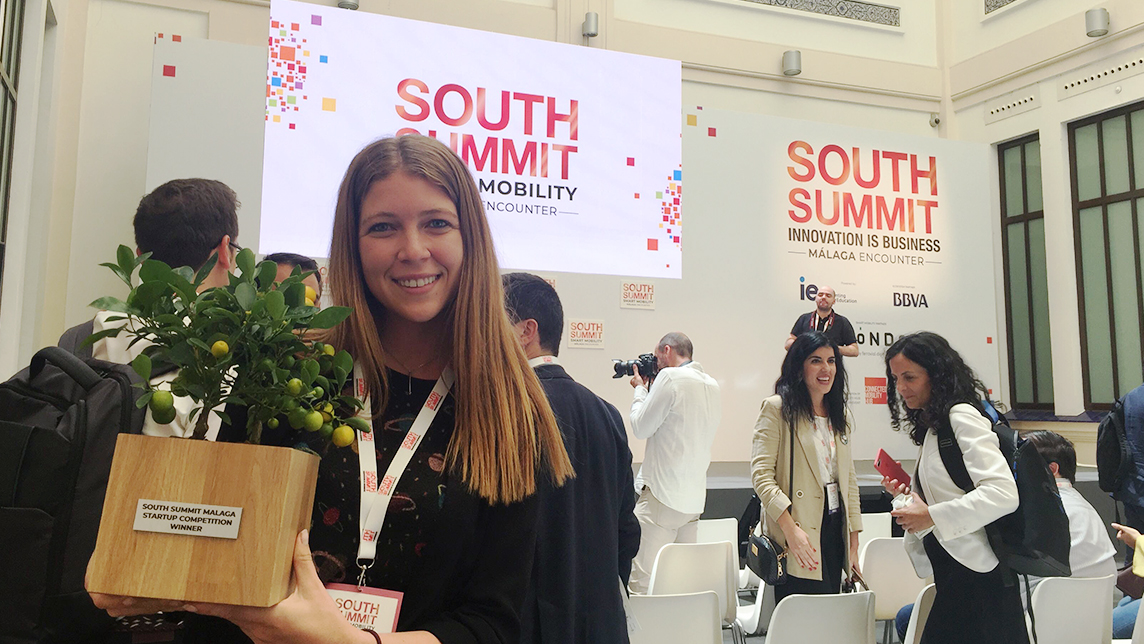
HOOP Carpool: Graduates bootstrap ride-sharing app to facilitate sustainable commuting
South Summit Malaga (Smart Mobility Encounters) winners Nathan Lehoucq and Andrea García Torrijos discuss their ride-sharing app for consumers and corporates
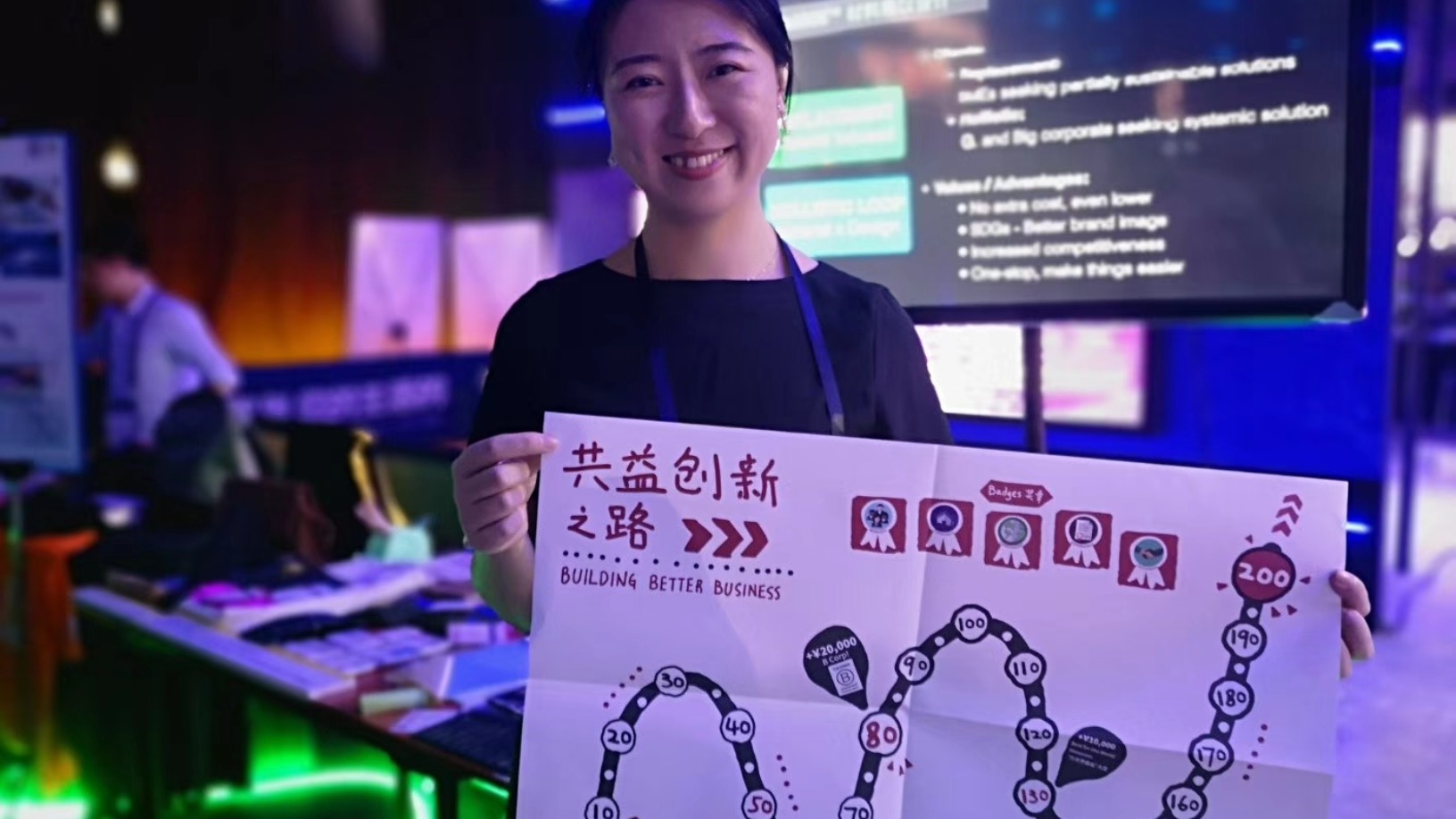
NANOxARCH: Pioneering awareness and use of sustainable materials in China
Founder Lei Yuxi reckons Covid-19 could usher China into a new era of sustainability, as her startup seeks to make sustainable materials more affordable
Teliman: Driver-centered mobility model assisting Malian development
The startup addresses a basic necessity with its on-demand ride-hailing services while supporting the personal and economic progress of its drivers, including empowering women
Future Food Asia 2021: Two winners take home $100,000 each
Agrifood startups, corporations and investors urged to collaborate and take action, tackling challenges in nutrition and climate change

Citibeats, a social trends monitoring tool for governments and businesses, wins €1.4m funding
Citibeats tracks and analyzes what the public is saying online in any language; wants to boost its presence in LatAm and Asia

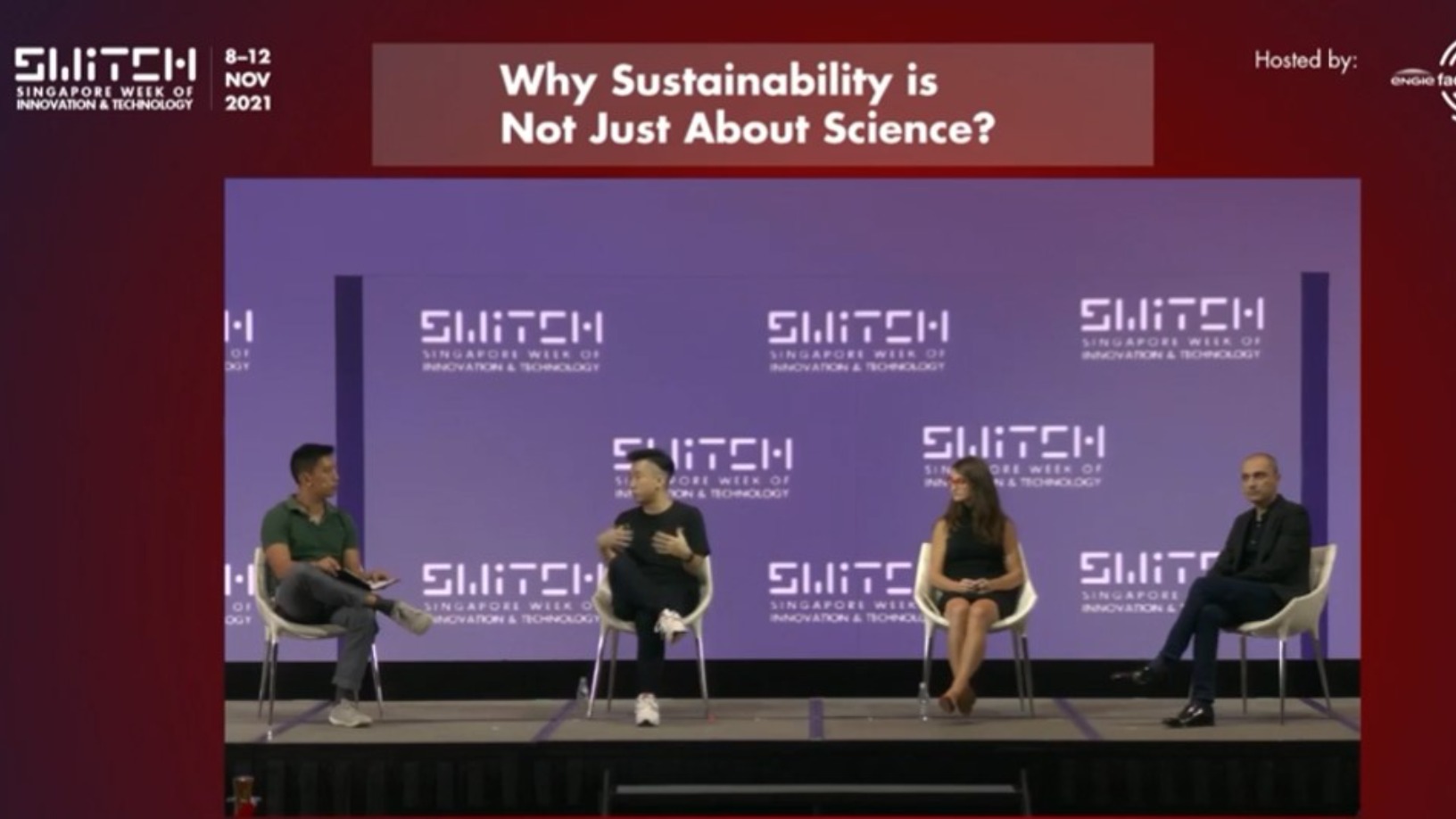
SWITCH Singapore 2021: Driving renewable energy impact through better business models
Startups need to communicate the business benefits of green solutions to their customers, rather than just pitching the hi-tech
Animal AgTech Innovation Summit 2021: Future of aquaculture in the US
With the US Importing over 85% of its seafood, industry experts examine how and why the country should develop a sustainable aquaculture industry

Portugal pumps up to €60m into new initiatives to avert backslide in startup ecosystem
Government funding to ensure the strategically important and social impact startups don't fail, post-Covid

Clarity AI uses machine learning and data analytics to effectively assess and score environmental, social and governance performance of companies and investment portfolios

Agate learns it's not all about the games – it's about the fun
Agate has evolved into one of the biggest game development companies in Indonesia over the past decade. We learned how it got there from Shieny Aprilia, Agate's Vice President of Enterprise Business
Sorry, we couldn’t find any matches for “sustainable development goals”.
POPULAR DATABASE