EU Prize for Women Innovators
-
DATABASE (1626)
-
ARTICLES (812)
BOC International (China) Limited
With the approval of the China Securities Regulatory Commission, BOC International (China) Limited was established in February 2002. It is jointly controlled by BOC International Holdings Limited, China National Petroleum Corporation, State Development & Investment Corporation, Hongta Tobacco Group Corporation, China General Technology (Group) Holding Limited, and Shanghai State-owned Assets Operation Corporation. Headquartered in Shanghai, BOC International (China) Limited has 115 branches in over 80 Chinese cities including Beijing and Shenzhen. BOC International (China) Limited engages in PE investment, alternative investment and futures business through its wholly-owned subsidiaries including BOC International Investment Co., Ltd. It also collaborates with BOC International Holdings Limited, which was established by Bank of China in Hong Kong in 1998, for marketing, risk management, and other business. BOC International (China) Limited went public on Shanghai Stock Exchange in 2020.

With the approval of the China Securities Regulatory Commission, BOC International (China) Limited was established in February 2002. It is jointly controlled by BOC International Holdings Limited, China National Petroleum Corporation, State Development & Investment Corporation, Hongta Tobacco Group Corporation, China General Technology (Group) Holding Limited, and Shanghai State-owned Assets Operation Corporation. Headquartered in Shanghai, BOC International (China) Limited has 115 branches in over 80 Chinese cities including Beijing and Shenzhen. BOC International (China) Limited engages in PE investment, alternative investment and futures business through its wholly-owned subsidiaries including BOC International Investment Co., Ltd. It also collaborates with BOC International Holdings Limited, which was established by Bank of China in Hong Kong in 1998, for marketing, risk management, and other business. BOC International (China) Limited went public on Shanghai Stock Exchange in 2020.
The Craftory is a London-based investment house with a satellite office in San Francisco. Founded in 2018 by retail and media industry veterans Ernesto Schmitt and Ellio Leoni Sceti, the firm has made seven investments in various consumer goods brands. Sceti is also the chairman of London-based family VC firm LSG Holdings, with his brother Patrick as the MD.The Craftory’s $375m fund specializes in building a new investment house of consumer brands, hence its name from the words, “craft" and “factory.” It mainly offers permanent and growth capital to consumer packaged goods (CPG) brands. The Craftory supports CPG challenger brands to help them to grow from “craft” businesses to sustainable, mass CPG brands, offering consumers better choices for everyday products.

The Craftory is a London-based investment house with a satellite office in San Francisco. Founded in 2018 by retail and media industry veterans Ernesto Schmitt and Ellio Leoni Sceti, the firm has made seven investments in various consumer goods brands. Sceti is also the chairman of London-based family VC firm LSG Holdings, with his brother Patrick as the MD.The Craftory’s $375m fund specializes in building a new investment house of consumer brands, hence its name from the words, “craft" and “factory.” It mainly offers permanent and growth capital to consumer packaged goods (CPG) brands. The Craftory supports CPG challenger brands to help them to grow from “craft” businesses to sustainable, mass CPG brands, offering consumers better choices for everyday products.
Launched in 2015 in Brussels, EIT Food was established by the not-for-profit European Institute of Innovation & Technology (EIT) and funded by the European Union as an investor and accelerator. Its aim is to support mainly European startups in foodtech areas ranging from traceability to alternative proteins, with sustainability a key deciding factor in the startups it backs from pre-seed to Series-B level. The organization currently has 55 startups in its portfolio, which raised more than €91m in investments in 2020. Its most recent investments include 700,000 Swiss francs (€637,000) in the seed round in January 2021 of Swiss biotech SwissDeCode, a company that applies DNA testing to food traceability. Another investment was the December 2020 €900,000 seed round of Spanish compostable-packaging tech Food Sourcing Specialists.

Launched in 2015 in Brussels, EIT Food was established by the not-for-profit European Institute of Innovation & Technology (EIT) and funded by the European Union as an investor and accelerator. Its aim is to support mainly European startups in foodtech areas ranging from traceability to alternative proteins, with sustainability a key deciding factor in the startups it backs from pre-seed to Series-B level. The organization currently has 55 startups in its portfolio, which raised more than €91m in investments in 2020. Its most recent investments include 700,000 Swiss francs (€637,000) in the seed round in January 2021 of Swiss biotech SwissDeCode, a company that applies DNA testing to food traceability. Another investment was the December 2020 €900,000 seed round of Spanish compostable-packaging tech Food Sourcing Specialists.
The owner of WeChat, Tencent is China's biggest online entertainment and social network company. While the company is best known for QQ and WeChat (with 846m active users, and counting), online gaming is actually its biggest money-spinner. Within China, Tencent is the distributor of various international online game titles, such as League of Legends and Call of Duty Online. The company also publishes Honor of Kings, known as Arena of Valor outside China, which regularly tops the list of highest-grossing mobile games globally.Tencent has invested in various gaming-related companies, including Epic Games (creator of Fortnite and the Unreal Engine creation framework), PlatinumGames (Japanese game developer), and Riot Games (creator of League of Legends). Outside of video games, it has developed and invested in products related to video streaming, such as bilibili and Kuaishou, music (JOOX), and even healthcare.

The owner of WeChat, Tencent is China's biggest online entertainment and social network company. While the company is best known for QQ and WeChat (with 846m active users, and counting), online gaming is actually its biggest money-spinner. Within China, Tencent is the distributor of various international online game titles, such as League of Legends and Call of Duty Online. The company also publishes Honor of Kings, known as Arena of Valor outside China, which regularly tops the list of highest-grossing mobile games globally.Tencent has invested in various gaming-related companies, including Epic Games (creator of Fortnite and the Unreal Engine creation framework), PlatinumGames (Japanese game developer), and Riot Games (creator of League of Legends). Outside of video games, it has developed and invested in products related to video streaming, such as bilibili and Kuaishou, music (JOOX), and even healthcare.
Crevisse Partners is a South Korean investor and venture builder with an impact focus. Its name stands for “Creative, Visionary and Social Entrepreneurs”. Originally incorporated in 2004, Crevisse claims to be the first impact investor in Korea, even before such terms became commonplace. The company strives to develop businesses in sectors “where the market principle wasn’t working”.Crevisse has internally incubated a number of companies in South Korea, such as reusable drinking cup company BringYourCup, sustainable forestry firm Forest Trust, and fundraising service DONUS. Crevisse Ventures is the company’s dedicated VC arm that manages a $20m fund and a number of blended finance funds through collaborations with government agencies and financial institutions. In particular, Crevisse Ventures focuses on startups that solve problems in four major areas: urban communities; climate and energy; education and welfare; as well as jobs and economic growth.

Crevisse Partners is a South Korean investor and venture builder with an impact focus. Its name stands for “Creative, Visionary and Social Entrepreneurs”. Originally incorporated in 2004, Crevisse claims to be the first impact investor in Korea, even before such terms became commonplace. The company strives to develop businesses in sectors “where the market principle wasn’t working”.Crevisse has internally incubated a number of companies in South Korea, such as reusable drinking cup company BringYourCup, sustainable forestry firm Forest Trust, and fundraising service DONUS. Crevisse Ventures is the company’s dedicated VC arm that manages a $20m fund and a number of blended finance funds through collaborations with government agencies and financial institutions. In particular, Crevisse Ventures focuses on startups that solve problems in four major areas: urban communities; climate and energy; education and welfare; as well as jobs and economic growth.
London-based Sustainability Ventures is one of the UK’s leading early-stage investors in Cleantech. It comprises a group of successful entrepreneurs with a track record in building and investing in high-growth start-ups. It has created Europe’s largest ecosystem for cleantech and sustainability startups, as a business founder and investor, provider of accelerator and support services and provider of shared workspaces. Active since 2011, Sustainability Ventures has raised £250m in total equity funds to date. Its focus is on agritech and food, building technology, circular economy, future energy and mobility. It has established 10 companies, invested in 30 and supported the development of over 250 more enterprises as of 2021 and aims to develop 1,000 sustainable startups by 2025.

London-based Sustainability Ventures is one of the UK’s leading early-stage investors in Cleantech. It comprises a group of successful entrepreneurs with a track record in building and investing in high-growth start-ups. It has created Europe’s largest ecosystem for cleantech and sustainability startups, as a business founder and investor, provider of accelerator and support services and provider of shared workspaces. Active since 2011, Sustainability Ventures has raised £250m in total equity funds to date. Its focus is on agritech and food, building technology, circular economy, future energy and mobility. It has established 10 companies, invested in 30 and supported the development of over 250 more enterprises as of 2021 and aims to develop 1,000 sustainable startups by 2025.
Co-founder and CPO of Billin
As the co-founder and CPO of Billin, Diego Goya Quijano is responsible for the IT team, business and funding strategies. After graduating in Business Administration at CUNEF in 2010, he studied English for a year in California, USA. His first entrepreneurial venture was in 2009 when he co-founded Deyese Soluciones (D+S), a company specializing in cost optimization. He then worked at Smartgroup Telecomunicaciones for almost two years before co-founding Billin in 2013. He has since attended various courses relating to Venture Capital, M&A and Financing Operations at IEB. He then specialized in web development at Ironhack.

As the co-founder and CPO of Billin, Diego Goya Quijano is responsible for the IT team, business and funding strategies. After graduating in Business Administration at CUNEF in 2010, he studied English for a year in California, USA. His first entrepreneurial venture was in 2009 when he co-founded Deyese Soluciones (D+S), a company specializing in cost optimization. He then worked at Smartgroup Telecomunicaciones for almost two years before co-founding Billin in 2013. He has since attended various courses relating to Venture Capital, M&A and Financing Operations at IEB. He then specialized in web development at Ironhack.
Co-founder, CEO and CTO of Arkademi
Hilman Fajrian started learning how to code at the age of six. By the time he reached high school, he was earning money writing software for local businesses in Balikpapan in the East Kalimantan province. He decided to read Law at Universitas Gadjah Mada, but during his time in university he also ran a software development house. After graduating with a bachelor's degree, he returned to East Kalimantan and worked for a local newspaper before starting his own in 2006. Between 2006 and 2017, Hilman also founded a digital marketing company catering to local businesses and briefly worked as a big data consultant for PLN, Indonesia's state-owned power company. He exited all his roles in late 2017 to begin work on Arkademi, a new Massive Online Open Course (MOOC) platform.

Hilman Fajrian started learning how to code at the age of six. By the time he reached high school, he was earning money writing software for local businesses in Balikpapan in the East Kalimantan province. He decided to read Law at Universitas Gadjah Mada, but during his time in university he also ran a software development house. After graduating with a bachelor's degree, he returned to East Kalimantan and worked for a local newspaper before starting his own in 2006. Between 2006 and 2017, Hilman also founded a digital marketing company catering to local businesses and briefly worked as a big data consultant for PLN, Indonesia's state-owned power company. He exited all his roles in late 2017 to begin work on Arkademi, a new Massive Online Open Course (MOOC) platform.
CEO and founder of Lota Digital by Bitcliq
Pedro Araújo Manuel is the Portuguese founder and CEO of software development company Bitcliq, where he has worked since 2013. He also holds the same positions within its two brands launched to date: Lota Digital, an e-marketplace for small-scale fisherman and sustainable fish retailers with blockchain-enabled traceability, and BIG EYE Smart Fishing, a platform for managing fishing fleets and fish traceability. Previously, Manuel was owner, co-founder and managing partner at tech agency MakeWise for nine years. Before 2013, he spent seven years in software and web development and systems administration at three different companies, including Portugal’s national post office. Manuel holds a master’s degree in Information Technology and Computer Engineering from the Polytechnic Institute of Lisbon.

Pedro Araújo Manuel is the Portuguese founder and CEO of software development company Bitcliq, where he has worked since 2013. He also holds the same positions within its two brands launched to date: Lota Digital, an e-marketplace for small-scale fisherman and sustainable fish retailers with blockchain-enabled traceability, and BIG EYE Smart Fishing, a platform for managing fishing fleets and fish traceability. Previously, Manuel was owner, co-founder and managing partner at tech agency MakeWise for nine years. Before 2013, he spent seven years in software and web development and systems administration at three different companies, including Portugal’s national post office. Manuel holds a master’s degree in Information Technology and Computer Engineering from the Polytechnic Institute of Lisbon.
Co-Founder of Cicil
INSEAD graduate Edward Widjonarko holds a bachelor’s degree from Bandung Institute of Technology. As an undergraduate, he was on the Dean’s List for six consecutive semesters, and graduated cum laude in 2008 with a GPA of 3.97. Prior to studying for an MBA at INSEAD in Singapore, Edward worked as a consultant at Arghajata Consulting and then as a project manager at boutique corporate advisory firm AJCapital Advisory. At INSEAD, Edward met Cicil co-founder Leslie Lim.

INSEAD graduate Edward Widjonarko holds a bachelor’s degree from Bandung Institute of Technology. As an undergraduate, he was on the Dean’s List for six consecutive semesters, and graduated cum laude in 2008 with a GPA of 3.97. Prior to studying for an MBA at INSEAD in Singapore, Edward worked as a consultant at Arghajata Consulting and then as a project manager at boutique corporate advisory firm AJCapital Advisory. At INSEAD, Edward met Cicil co-founder Leslie Lim.
Co-founder and CTO of Qiscus
Yogyakarta-born Evan Purnama pursued higher education in Singapore and graduated from Nanyang Technological University (NTU) in 2012 with a degree in Electrical and Electronics Engineering. In 2013, he joined a group of NTU graduates to establish Qiscus, a startup that provides internal communication solutions for businesses and apps. He is the CTO of Qiscus that has now expanded to provide messaging and customer service platforms for a diverse range of corporate clients.

Yogyakarta-born Evan Purnama pursued higher education in Singapore and graduated from Nanyang Technological University (NTU) in 2012 with a degree in Electrical and Electronics Engineering. In 2013, he joined a group of NTU graduates to establish Qiscus, a startup that provides internal communication solutions for businesses and apps. He is the CTO of Qiscus that has now expanded to provide messaging and customer service platforms for a diverse range of corporate clients.
Co-founder and CEO of Magalarva
After graduating in Mechanical Engineering at Universitas Indonesia, Rendria Labde worked for oil and gas firm JGC Indonesia for two years. He left in 2015 to establish PT Magale Sayana Indonesia, a property development company with a unique focus on environmental sustainability. The company completed an eco-living residential complex Sandar Andara and started a new project Magalarva to use insect larvae to process food waste into agricultural products. Rendria became the CEO of Magalarva.

After graduating in Mechanical Engineering at Universitas Indonesia, Rendria Labde worked for oil and gas firm JGC Indonesia for two years. He left in 2015 to establish PT Magale Sayana Indonesia, a property development company with a unique focus on environmental sustainability. The company completed an eco-living residential complex Sandar Andara and started a new project Magalarva to use insect larvae to process food waste into agricultural products. Rendria became the CEO of Magalarva.
Co-founder and CTO of KODI
Imam Teguh Prakoso graduated in Management Informatics at Universitas Pembangunan Nasional Veteran in Jakarta, Indonesia. He started his career as a web developer at PT Webgis Indonesia, staying there for almost three years.In 2016, he started his own software development house Senusa. In 2018, one of Senusa's products KODI became a spin-off digital platform for cooperative businesses. Senusa continues to support the development of KODI and Imam became KODI's chief information technology officer.

Imam Teguh Prakoso graduated in Management Informatics at Universitas Pembangunan Nasional Veteran in Jakarta, Indonesia. He started his career as a web developer at PT Webgis Indonesia, staying there for almost three years.In 2016, he started his own software development house Senusa. In 2018, one of Senusa's products KODI became a spin-off digital platform for cooperative businesses. Senusa continues to support the development of KODI and Imam became KODI's chief information technology officer.
CEO and co-founder of AddVolt
Azevedo is the Portuguese co-founder and CEO at AddVolt, the first renewable energy tech to replace diesel engines for cold chain transport, where he has worked since 2013, when it was still a research project. Prior to that, he founded an IoT company, Sensegate, no longer in existence, and completed an apprenticeship for Mapfre insurance company. He holds a master's degree in electrical and computer engineering and automation from the University of Porto.

Azevedo is the Portuguese co-founder and CEO at AddVolt, the first renewable energy tech to replace diesel engines for cold chain transport, where he has worked since 2013, when it was still a research project. Prior to that, he founded an IoT company, Sensegate, no longer in existence, and completed an apprenticeship for Mapfre insurance company. He holds a master's degree in electrical and computer engineering and automation from the University of Porto.
Co-founder, CEO. of HypeLabs
Carlos Lei Santos is the CEO and co-founder of P2P mesh network platform HypeLabs that was established in 2015. He graduated in Computer Science at the University of Porto in 2014 while working at Simbolo II. Lei has worked for seven years as an IT manager at tech agency Simbolo II, providing assistance to clients like IBM and Banco Santander. He was also a mentor for various tech and startup initiatives.

Carlos Lei Santos is the CEO and co-founder of P2P mesh network platform HypeLabs that was established in 2015. He graduated in Computer Science at the University of Porto in 2014 while working at Simbolo II. Lei has worked for seven years as an IT manager at tech agency Simbolo II, providing assistance to clients like IBM and Banco Santander. He was also a mentor for various tech and startup initiatives.
Women entrepreneurs get ahead faster in Portugal
Still a long way to go for equality, but female founders in Portugal have made significant headstarts as tech innovators

RatedPower: Creating solar power plant designs in minutes
The Spanish startup is helping solar plants expand exponentially worldwide and revolutionizing the sector with its automated software

SOURCE Global's solar-run panels turn air into drinking water
The US startup’s adapted solar panels extract water vapor from the air to produce potable water, a vital resource for distressed communities in disaster zones and remote areas

String Bio: Asia's first startup to harness methane gas for protein production
Using bacteria to turn the harmful greenhouse gas into a purer form of protein, String Bio is raising Series B funding to scale production

The rising Indonesian edtech star wants to help high-school dropouts earn their diploma and learn the relevant skills to find a job – with an innovative solution lauded at this year’s MIT Solve Challenge

Algobash: SaaS for more effective IT hiring in Indonesia
With its remote assessment and automated interview platform, Algobash seeks faster, fairer and more inclusive recruitment and training of coders, to support tech growth in Indonesia
Future Food Asia 2021 announces finalists for $100,000 prize
Ten startups from agrifood tech and cleantech sectors will pitch during the five-day conference, are also eligible for two more prizes from sponsors Cargill and Thai Wah

Refurbed: Electronics recycling marketplace gets $54m for EU consolidation, overseas expansion
Consumers can reduce their carbon footprints by shifting toward a circular economy, become carbon-neutral by planting one tree with every purchase from Refurbed
WOOM: Spanish fertility femtech gets €2m funding to expand into new B2B2C markets
AI fertility app WOOM has also created an English-language version to reach more users in North America, Europe and Asia

Therapixel: Using AI to improve breast cancer detection
Therapixel is raising €15m for commercial expansion of its AI-powered MammoScreen that gives accurate breast cancer screening results within minutes

Didimo: Creator of "digital humans" secures €6.2m in seed funding
Portuguese startup Didimo aims to humanize online interactions with its disruptive 3D technology

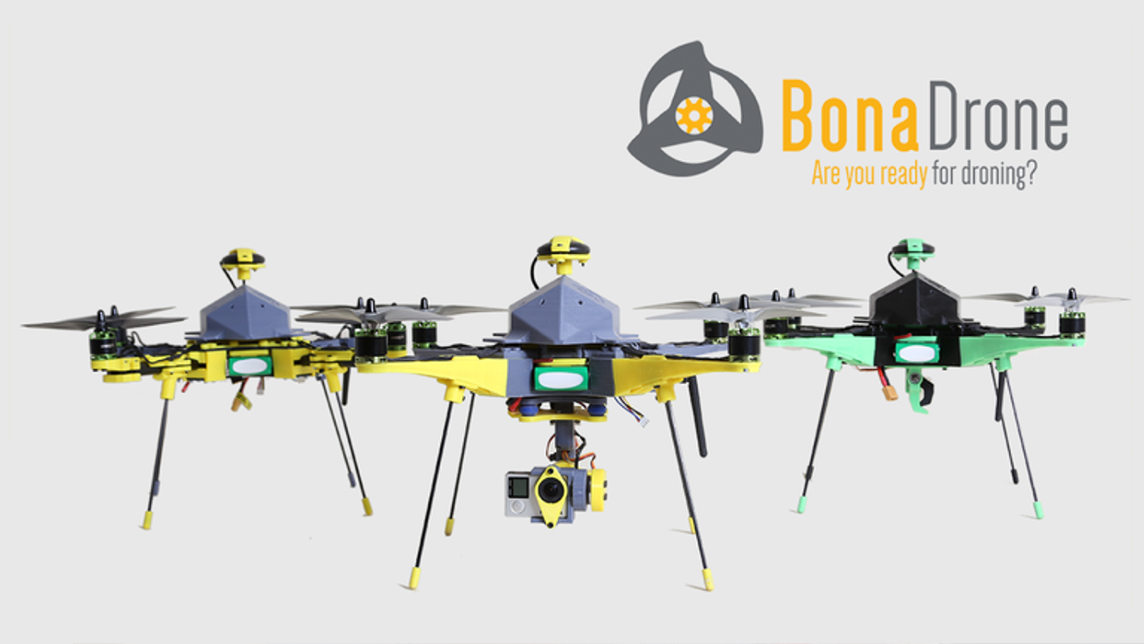
In Spain, DIY drones help entice students to study science and tech
Spanish startup Bonadrone aims to revolutionize the way science, math and technology are taught in schools and is disrupting the drone sector by enabling users to customize their own 3D-printed drones
Its latest project, Cattlechain, is an IoT-blockchain solution for farms to meet the EU's animal welfare standards, fulfilling consumers' demand for sustainable farming and food traceability

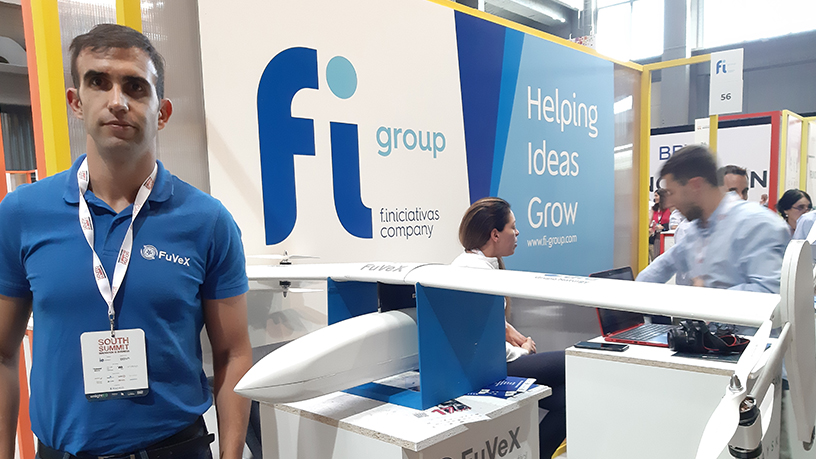
FuVeX: Long-range hybrid-technology drones for multiple business uses
With its innovative hybrid helicopter and airplane technology, FuVeX is poised to take full advantage of the business opportunities afforded by new European regulations governing long-range drones
MIWA Technologies: Reducing food waste and packaging with smart refill vending system
MIWA’s solution lets consumers buy exact refill quantities in personalized containers, eradicating need for single-use plastics throughout the supply chain

Sorry, we couldn’t find any matches for “EU Prize for Women Innovators”.