social mapping
-
DATABASE (211)
-
ARTICLES (280)
CEO and co-founder of Coinscrap
David Conde is a serial entrepreneur from Galicia. He holds an executive MBA, a Fintech certificate from the Massachusetts Institute of Technology and participated in the Oxford Blockchain Strategy Program.He was one of the first European financial planners in Spain and is well-recognized in the financial sector, having over 10 years of experience in private banking roles. In 2015, he co-founded Senseitrade, a revolutionary technology that captures sentiments about the stock market from social networks, predicting stock exchange evolution with a success rate of 87%.Since 2017, he has been CEO and co-founder of Coinscrap, an app that facilitates micro-savings by rounding up purchases made with credit cards to the nearest euro.

David Conde is a serial entrepreneur from Galicia. He holds an executive MBA, a Fintech certificate from the Massachusetts Institute of Technology and participated in the Oxford Blockchain Strategy Program.He was one of the first European financial planners in Spain and is well-recognized in the financial sector, having over 10 years of experience in private banking roles. In 2015, he co-founded Senseitrade, a revolutionary technology that captures sentiments about the stock market from social networks, predicting stock exchange evolution with a success rate of 87%.Since 2017, he has been CEO and co-founder of Coinscrap, an app that facilitates micro-savings by rounding up purchases made with credit cards to the nearest euro.
CEO and co-founder of Zensei
David Martín-Corral is an industrial engineer with a PhD in Mathematical Engineering, focusing on complex systems, viral computing and machine learning.He has worked as an associate lecturer teaching classes in social network analysis, digital health and data visualization, and in R programming for top-notch Spanish universities such as CIFF Business School, the IE Business School and Carlos III University in Madrid.Martín-Corral was also the founder of Polibot, the popular chatbot for Telegram and Facebook. In 2018, he co-founded Zensei with Carlos Hernando, a virtual clinic app aimed at preventing and assisting users in their management of respiratory problems. Both founders are currently mentoring startups as part of the Tetuan Valley Network.

David Martín-Corral is an industrial engineer with a PhD in Mathematical Engineering, focusing on complex systems, viral computing and machine learning.He has worked as an associate lecturer teaching classes in social network analysis, digital health and data visualization, and in R programming for top-notch Spanish universities such as CIFF Business School, the IE Business School and Carlos III University in Madrid.Martín-Corral was also the founder of Polibot, the popular chatbot for Telegram and Facebook. In 2018, he co-founded Zensei with Carlos Hernando, a virtual clinic app aimed at preventing and assisting users in their management of respiratory problems. Both founders are currently mentoring startups as part of the Tetuan Valley Network.
Co-founder, Chief Social Movement Officer of Foods for Tomorrow / Heura Foods
Bernat Añaños Martínez is co-founder and Chief Social Movement Officer of Spanish plant-based meat startup, Foods for Tomorrow, where he has worked since 2017. He was previously CMO and Chief Growth Officer. A committed vegan and environmentalist, Añaños, worked briefly in China's EventBank, the first smart event management cloud platform, and in the European Parliament's press office in Brussels. Añaños has a first degree in Advertising and Public Relations from the University of Barcelona, a master’s in Corporate Communication and Public Relations from the UK’s Leeds University and a postgraduate qualification in Digital Marketing from the Autonomous University of Barcelona.He has volunteered at various NGOs for about 13 years.

Bernat Añaños Martínez is co-founder and Chief Social Movement Officer of Spanish plant-based meat startup, Foods for Tomorrow, where he has worked since 2017. He was previously CMO and Chief Growth Officer. A committed vegan and environmentalist, Añaños, worked briefly in China's EventBank, the first smart event management cloud platform, and in the European Parliament's press office in Brussels. Añaños has a first degree in Advertising and Public Relations from the University of Barcelona, a master’s in Corporate Communication and Public Relations from the UK’s Leeds University and a postgraduate qualification in Digital Marketing from the Autonomous University of Barcelona.He has volunteered at various NGOs for about 13 years.
The owner of WeChat, Tencent is China's biggest online entertainment and social network company. While the company is best known for QQ and WeChat (with 846m active users, and counting), online gaming is actually its biggest money-spinner. Within China, Tencent is the distributor of various international online game titles, such as League of Legends and Call of Duty Online. The company also publishes Honor of Kings, known as Arena of Valor outside China, which regularly tops the list of highest-grossing mobile games globally.Tencent has invested in various gaming-related companies, including Epic Games (creator of Fortnite and the Unreal Engine creation framework), PlatinumGames (Japanese game developer), and Riot Games (creator of League of Legends). Outside of video games, it has developed and invested in products related to video streaming, such as bilibili and Kuaishou, music (JOOX), and even healthcare.


The owner of WeChat, Tencent is China's biggest online entertainment and social network company. While the company is best known for QQ and WeChat (with 846m active users, and counting), online gaming is actually its biggest money-spinner. Within China, Tencent is the distributor of various international online game titles, such as League of Legends and Call of Duty Online. The company also publishes Honor of Kings, known as Arena of Valor outside China, which regularly tops the list of highest-grossing mobile games globally.Tencent has invested in various gaming-related companies, including Epic Games (creator of Fortnite and the Unreal Engine creation framework), PlatinumGames (Japanese game developer), and Riot Games (creator of League of Legends). Outside of video games, it has developed and invested in products related to video streaming, such as bilibili and Kuaishou, music (JOOX), and even healthcare.
Crevisse Partners is a South Korean investor and venture builder with an impact focus. Its name stands for “Creative, Visionary and Social Entrepreneurs”. Originally incorporated in 2004, Crevisse claims to be the first impact investor in Korea, even before such terms became commonplace. The company strives to develop businesses in sectors “where the market principle wasn’t working”.Crevisse has internally incubated a number of companies in South Korea, such as reusable drinking cup company BringYourCup, sustainable forestry firm Forest Trust, and fundraising service DONUS. Crevisse Ventures is the company’s dedicated VC arm that manages a $20m fund and a number of blended finance funds through collaborations with government agencies and financial institutions. In particular, Crevisse Ventures focuses on startups that solve problems in four major areas: urban communities; climate and energy; education and welfare; as well as jobs and economic growth.

Crevisse Partners is a South Korean investor and venture builder with an impact focus. Its name stands for “Creative, Visionary and Social Entrepreneurs”. Originally incorporated in 2004, Crevisse claims to be the first impact investor in Korea, even before such terms became commonplace. The company strives to develop businesses in sectors “where the market principle wasn’t working”.Crevisse has internally incubated a number of companies in South Korea, such as reusable drinking cup company BringYourCup, sustainable forestry firm Forest Trust, and fundraising service DONUS. Crevisse Ventures is the company’s dedicated VC arm that manages a $20m fund and a number of blended finance funds through collaborations with government agencies and financial institutions. In particular, Crevisse Ventures focuses on startups that solve problems in four major areas: urban communities; climate and energy; education and welfare; as well as jobs and economic growth.
Silicon Valley-based Almaz Capital was co-founded in 2008 as a bridge VC fund by Alexander Galitsky, a serial techpreneur and former senior executive at the Soviet Space Agency and Defense Industry. Almaz also has an office in Berlin and partners with interests in the UK, Poland and Ukraine. The global fund has invested in over 30 startups and managed 15 exits within its portfolio.Recent investments in 2021 include co-leading the $54m Series B round of Refurbed with Evli Growth Partners in August. Almaz was also the lead investor for the $6m funding round for US-based precision audio software Sonarworks in July.

Silicon Valley-based Almaz Capital was co-founded in 2008 as a bridge VC fund by Alexander Galitsky, a serial techpreneur and former senior executive at the Soviet Space Agency and Defense Industry. Almaz also has an office in Berlin and partners with interests in the UK, Poland and Ukraine. The global fund has invested in over 30 startups and managed 15 exits within its portfolio.Recent investments in 2021 include co-leading the $54m Series B round of Refurbed with Evli Growth Partners in August. Almaz was also the lead investor for the $6m funding round for US-based precision audio software Sonarworks in July.
CPO and Co-founder of Kuaishou
Cheng Yixiao began his career as a software engineer at HP in Dalian where he met Kuaishou co-founder Yang Yuanxi. Cheng left HP to join Renren as an iPhone client software developer.In 2011, Cheng started a photo-sharing platform GIF Kuaishou and obtained some seed funding. In 2013, he was introduced to a successful entrepreneur Su Hua. They decided to pivot GIF Kuaishou into a video-sharing app, with Cheng as CPO and Su as CEO.Many believe that his earlier experiences of living in Tieling, a county in northeast China, and later in Beijing’s suburb Tiantongyuan, have helped him to identify business opportunities and develop social media tools for the grassroots. He has quite a reputation for his creativity and passion for product development in tech circles.

Cheng Yixiao began his career as a software engineer at HP in Dalian where he met Kuaishou co-founder Yang Yuanxi. Cheng left HP to join Renren as an iPhone client software developer.In 2011, Cheng started a photo-sharing platform GIF Kuaishou and obtained some seed funding. In 2013, he was introduced to a successful entrepreneur Su Hua. They decided to pivot GIF Kuaishou into a video-sharing app, with Cheng as CPO and Su as CEO.Many believe that his earlier experiences of living in Tieling, a county in northeast China, and later in Beijing’s suburb Tiantongyuan, have helped him to identify business opportunities and develop social media tools for the grassroots. He has quite a reputation for his creativity and passion for product development in tech circles.
Born in 1973, Li graduated from the School of Philosophy at Renmin University of China in 1997. After graduating, he worked as an IT journalist for China Youth Daily, where he interviewed tech giants such as Jack Ma. In early 2003, Li became chief editor of the IT section of web portal Sohu and then joined web portal NetEase as chief editor of its IT section later that year. In 2005, he resigned from NetEase and founded gaming portal Duowan. In 2008, Li founded YY Inc., a live streaming social media platform that went public on Nasdaq in 2012.

Born in 1973, Li graduated from the School of Philosophy at Renmin University of China in 1997. After graduating, he worked as an IT journalist for China Youth Daily, where he interviewed tech giants such as Jack Ma. In early 2003, Li became chief editor of the IT section of web portal Sohu and then joined web portal NetEase as chief editor of its IT section later that year. In 2005, he resigned from NetEase and founded gaming portal Duowan. In 2008, Li founded YY Inc., a live streaming social media platform that went public on Nasdaq in 2012.
Formerly known as hoopCHINA.com, Hupu is a sports news portal founded by Yang Bing and Cheng Hang at the end of 2003. Its business has expanded to include social networking, e-commerce and sports marketing. In June 2019, Hupu raised RMB1.26 billion in its pre-IPO funding round from ByteDance, TikTok's parent company. Hupu has incubated e-marketplace for trending sports gears Shihuo and sneakers resale platform Poizon. The latter became an independent business as a spin-off from Hupu in 2018. Poizon became a unicorn when its valuation exceeded US$1 billion in April 2019 due to a Series A funding round led by DST Global.

Formerly known as hoopCHINA.com, Hupu is a sports news portal founded by Yang Bing and Cheng Hang at the end of 2003. Its business has expanded to include social networking, e-commerce and sports marketing. In June 2019, Hupu raised RMB1.26 billion in its pre-IPO funding round from ByteDance, TikTok's parent company. Hupu has incubated e-marketplace for trending sports gears Shihuo and sneakers resale platform Poizon. The latter became an independent business as a spin-off from Hupu in 2018. Poizon became a unicorn when its valuation exceeded US$1 billion in April 2019 due to a Series A funding round led by DST Global.
Founded in 2012 in San Francisco, Joyance invests in the “vectors of happiness” that it classifies as areas of science, including genetics and bioscience, the microbiome, neuroscience, virtual and augmented reality, and foodtech. It also invests in the area of social networking. Its investments are made through its management company, Ataraxia, and many have a European focus. It currently has 115 companies in its portfolio, with recent investments including in the August 2021 $3.6m seed round of Polish bionic limb manufacturer and in the July 2021 $8m Series A round of Israeli sports injury AI platform Zone7.

Founded in 2012 in San Francisco, Joyance invests in the “vectors of happiness” that it classifies as areas of science, including genetics and bioscience, the microbiome, neuroscience, virtual and augmented reality, and foodtech. It also invests in the area of social networking. Its investments are made through its management company, Ataraxia, and many have a European focus. It currently has 115 companies in its portfolio, with recent investments including in the August 2021 $3.6m seed round of Polish bionic limb manufacturer and in the July 2021 $8m Series A round of Israeli sports injury AI platform Zone7.
CEO of Krakakoa
Sabrina Mustopo is the founder and CEO of Krakakoa Chocolate, a "farmer-to-bar" social enterprise that works directly with smallholder cocoa farmers to produce chocolate. She is also an independent consultant with experience in strategy, project management, agriculture and sustainable development. Mustopo previously worked in Singapore as an associate and research analyst for international consultancy McKinsey & Co., where she focused on climate change and agricultural topics and served public sector clients in the Asia-Pacific region and East Africa. She graduated magna cum laude from Cornell University in Ithaca, New York, with a Bachelor of Science degree in International Agriculture and Rural Development.

Sabrina Mustopo is the founder and CEO of Krakakoa Chocolate, a "farmer-to-bar" social enterprise that works directly with smallholder cocoa farmers to produce chocolate. She is also an independent consultant with experience in strategy, project management, agriculture and sustainable development. Mustopo previously worked in Singapore as an associate and research analyst for international consultancy McKinsey & Co., where she focused on climate change and agricultural topics and served public sector clients in the Asia-Pacific region and East Africa. She graduated magna cum laude from Cornell University in Ithaca, New York, with a Bachelor of Science degree in International Agriculture and Rural Development.
Managing Director and co-founder of String Bio
Vinod Kumar originally founded Samrat Wears clothing company in India in 1993 and went on to graduate in mechanical engineering in 1997 at BMS College of Engineering in India.In 2000, he completed a master’s in supply chain management, industrial and manufacturing systems engineering at Ohio University in the US. He started his career at Bell Labs as a product engineer. In 2000, he worked at telco Alcatel-Lucent that later became part of Nokia. In 2008, he held various senior roles and became senior director at tech company Juniper Networks in Silicon Valley. In 2013, he joined his wife Ezhil Subbian to set up String Bio in India. He became a full-time managing director of the company in 2015. In 2019, he became a fellow member at Unreasonable, an investment fund and organization for supporting innovative entrepreneurs to solve social and environmental issues worldwide.

Vinod Kumar originally founded Samrat Wears clothing company in India in 1993 and went on to graduate in mechanical engineering in 1997 at BMS College of Engineering in India.In 2000, he completed a master’s in supply chain management, industrial and manufacturing systems engineering at Ohio University in the US. He started his career at Bell Labs as a product engineer. In 2000, he worked at telco Alcatel-Lucent that later became part of Nokia. In 2008, he held various senior roles and became senior director at tech company Juniper Networks in Silicon Valley. In 2013, he joined his wife Ezhil Subbian to set up String Bio in India. He became a full-time managing director of the company in 2015. In 2019, he became a fellow member at Unreasonable, an investment fund and organization for supporting innovative entrepreneurs to solve social and environmental issues worldwide.
CEO and co-founder of OLIO
Tessa Clarke is the British CEO and co-founder of food-sharing app OLIO that was inspired by her experience of having to throw away perfectly good unused food when she was packing up to move from Switzerland back to the UK in 2014.After graduating with a first-class degree in social and political sciences at the University of Cambridge in UK in 1997, she worked for three years at the Boston Consulting Group as a junior associate. She joined an MBA program at Stanford University Graduate School of Business in 2002 and met Saasha Celestial-One, who was also studying for an MBA at Stanford. In 2015, Clarke and Celestial-One decided to use their savings to create a food-sharing app OLIO after successfully testing the idea as a private WhatsApp group in North London.Before becoming an entrepreneur in 2015, Clarke has held various senior management roles since completing her MBA in 2004. She worked for global business publisher EMAP from 2005 until 2009, when she joined Dyson Inc as e-commerce managing director (MD). In 2013, she left Dyson to become MD of fintech PayLater based in Switzerland run by the Wonga payday loan company. Known then as Tessa Cook, she later became Wonga’s MD for eight months when she was tasked with “cleaning up” the tarnished reputation of the high interest loan company. From 2013 to 2021, she was also chair of the management board of St George’s Palace, a boutique apart-hotel and spa complex in Bansko, Bulgaria.In 2018, she became a fellow at Unreasonable, an organization that supports social and environmental entrepreneurship. For two years until 2021, Clarke was ambassador for the Meaningful Business 100 global event that advocates the achievement of the UN’s Sustainable Development Goals. She was also a board member for six years at Contentive, a global B2B media and information company. In 2021, her busy schedule now includes becoming a business mentor for not-for-profit Virgin Startup.

Tessa Clarke is the British CEO and co-founder of food-sharing app OLIO that was inspired by her experience of having to throw away perfectly good unused food when she was packing up to move from Switzerland back to the UK in 2014.After graduating with a first-class degree in social and political sciences at the University of Cambridge in UK in 1997, she worked for three years at the Boston Consulting Group as a junior associate. She joined an MBA program at Stanford University Graduate School of Business in 2002 and met Saasha Celestial-One, who was also studying for an MBA at Stanford. In 2015, Clarke and Celestial-One decided to use their savings to create a food-sharing app OLIO after successfully testing the idea as a private WhatsApp group in North London.Before becoming an entrepreneur in 2015, Clarke has held various senior management roles since completing her MBA in 2004. She worked for global business publisher EMAP from 2005 until 2009, when she joined Dyson Inc as e-commerce managing director (MD). In 2013, she left Dyson to become MD of fintech PayLater based in Switzerland run by the Wonga payday loan company. Known then as Tessa Cook, she later became Wonga’s MD for eight months when she was tasked with “cleaning up” the tarnished reputation of the high interest loan company. From 2013 to 2021, she was also chair of the management board of St George’s Palace, a boutique apart-hotel and spa complex in Bansko, Bulgaria.In 2018, she became a fellow at Unreasonable, an organization that supports social and environmental entrepreneurship. For two years until 2021, Clarke was ambassador for the Meaningful Business 100 global event that advocates the achievement of the UN’s Sustainable Development Goals. She was also a board member for six years at Contentive, a global B2B media and information company. In 2021, her busy schedule now includes becoming a business mentor for not-for-profit Virgin Startup.
Founded by pioneering tech investor Ozi Amanat in 2015, K2 Global is a venture capital firm based in Silicon Valley and Singapore. Amanat, who moved to Singapore in 2012, is one of Twitter’s early backers, raising $25m to invest in the social media startup that later went public in 2013. The Harvard graduate in psychology and economics also invested in Uber, Spotify and Alibaba during his career as a venture capitalist. Amanat is the chief investment officer of K2 VC, K2 Global and Singapore-based Spice Global controlled by Indian billionaire B K Modi.In 2017, K2 also announced a $183m VC fund focusing on early-stage startups that aim to address global challenges. The majority of K2 limited partners are based outside the US in countries like Australia, Japan, Singapore, Hong Kong and Indonesia.

Founded by pioneering tech investor Ozi Amanat in 2015, K2 Global is a venture capital firm based in Silicon Valley and Singapore. Amanat, who moved to Singapore in 2012, is one of Twitter’s early backers, raising $25m to invest in the social media startup that later went public in 2013. The Harvard graduate in psychology and economics also invested in Uber, Spotify and Alibaba during his career as a venture capitalist. Amanat is the chief investment officer of K2 VC, K2 Global and Singapore-based Spice Global controlled by Indian billionaire B K Modi.In 2017, K2 also announced a $183m VC fund focusing on early-stage startups that aim to address global challenges. The majority of K2 limited partners are based outside the US in countries like Australia, Japan, Singapore, Hong Kong and Indonesia.
Founder and CEO of Orain
Xavier Sans Serra is the founder and CEO of payment and interactive chat app and IoT hardware startup Orain. He is based in Barcelona, where he has worked since 2016. Prior to this, he founded two other tech startups: Knowxel, which has been in operation from 2013 to 2016, and Neqta, which operated from 2011 to 2013. Knowxel was a social network for seeking skilled people for one-off work projects while Neqta was a research project to develop hardware to power portable devices. Both companies were developed at the Autonomous University of Barcelona, where the initial development of Orain also took place. Sans holds two master's degrees from Barcelona's Ramon Llull University: one in Engineering and Telecommunications Engineering and the other in Networks and Telecommunications. Between 2010 to 2012, he was a member of the Electromagnetism and Communications Research Group at Ramon Llull University's La Salle campus, where he was involved in a research project on geomagnetically-induced currents, which led to publications in scientific journals.

Xavier Sans Serra is the founder and CEO of payment and interactive chat app and IoT hardware startup Orain. He is based in Barcelona, where he has worked since 2016. Prior to this, he founded two other tech startups: Knowxel, which has been in operation from 2013 to 2016, and Neqta, which operated from 2011 to 2013. Knowxel was a social network for seeking skilled people for one-off work projects while Neqta was a research project to develop hardware to power portable devices. Both companies were developed at the Autonomous University of Barcelona, where the initial development of Orain also took place. Sans holds two master's degrees from Barcelona's Ramon Llull University: one in Engineering and Telecommunications Engineering and the other in Networks and Telecommunications. Between 2010 to 2012, he was a member of the Electromagnetism and Communications Research Group at Ramon Llull University's La Salle campus, where he was involved in a research project on geomagnetically-induced currents, which led to publications in scientific journals.
"Spot" your friends, live chat and share music with this social mapping app
Spot, a new challenger to China's WeChat, is using pop-up song lyrics to entice youths to live chat and play games

Satelligence: Satellite data and AI helping corporate giants source commodities more sustainably
Satelligence monitors environmental risks across 6bn hectares of mostly tropical forest for high-profile clients such as Pepsico, Nestlé and Unilever

Using sensors and machine learning, Jejak.in wants to make conservation programs count
Launched this year, Jejak.in is helping big corporates like Danone-Aqua in environmental projects and a major B2C carbon-offsetting partnership is next
Alipay opens its platform to speed up digitalization of Chinese service providers amid Covid-19
As Alipay continues to battle WeChat for super-app supremacy, it's created a stronghold in China’s services industry, where 80% of businesses still operate under brick-and-mortar models

TuSimple: When robo-trucks meet the road
After switching focus from adtech to robo-trucks, TuSimple aims to be king of the road in China and the US

Situm Technologies: The Google Maps for indoors, where GPS fails
It uses AI and mobile robotics to create high-precision, low-cost indoor location tech that integrates data processed from multiple radio and inertial sensors

Heptasense wins trust at a time of (lax) global surveillance
There may be some 700 million surveillance cameras running worldwide in today's age of global security threats, yet 98% of them are unmonitored. A Lisbon-based startup is promising real-time response and greater reliability in security tech

Forward Fooding: Ranking the world's agrifood startups on success and sustainability
The collaborative platform has opened applications for its FoodTech500 global ranking of agrifood startups; counts over 7,000 startups and scaleups mapped so far
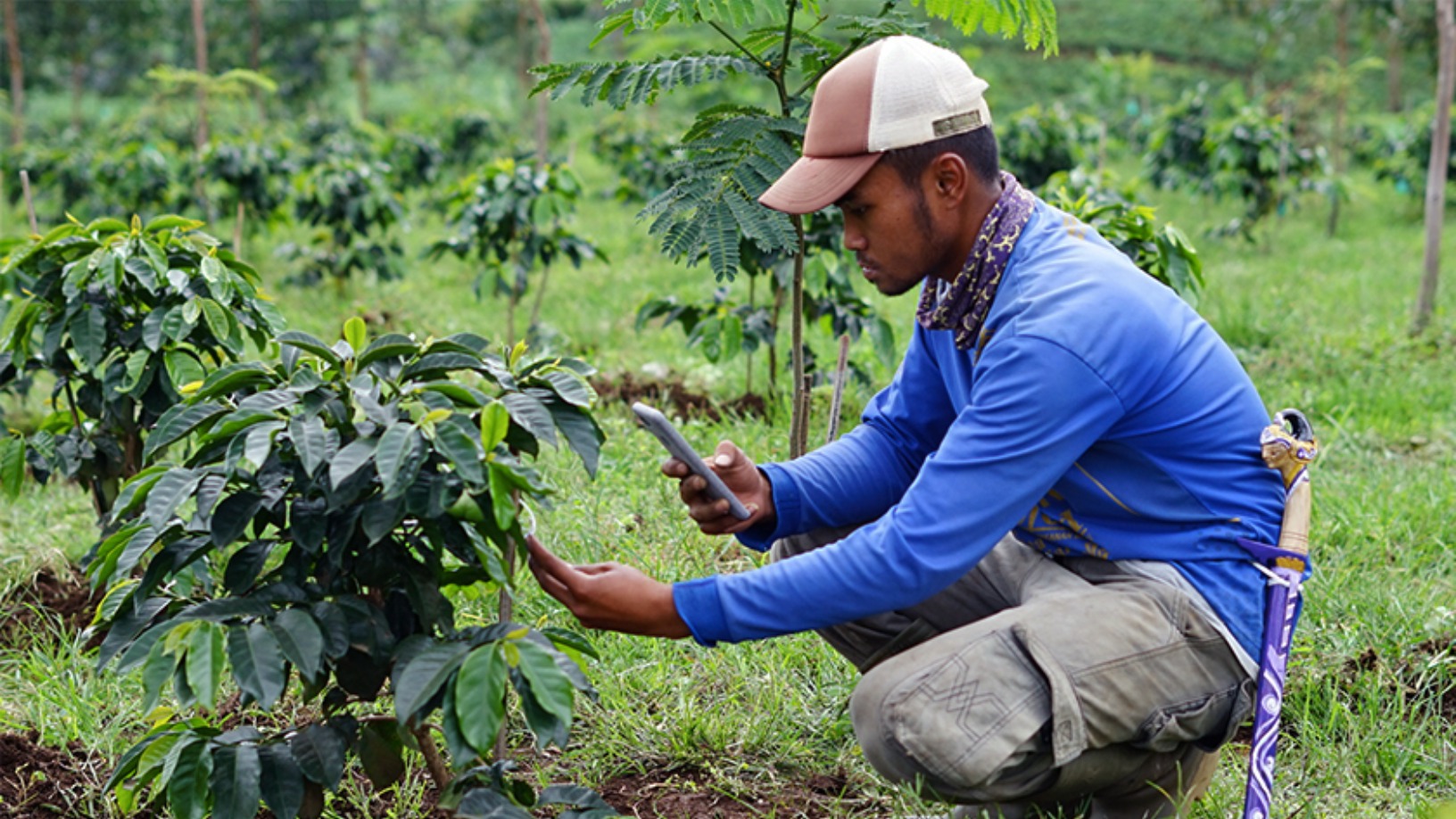
FROGS: Overcoming challenges to launch Indonesia's first drone-taxi for daily commutes
The Yogyakarta-based startup backed by UMG Idealab seeks more technical resources to launch Indonesia's first homegrown “flying taxi,” after the success of its agritech drones

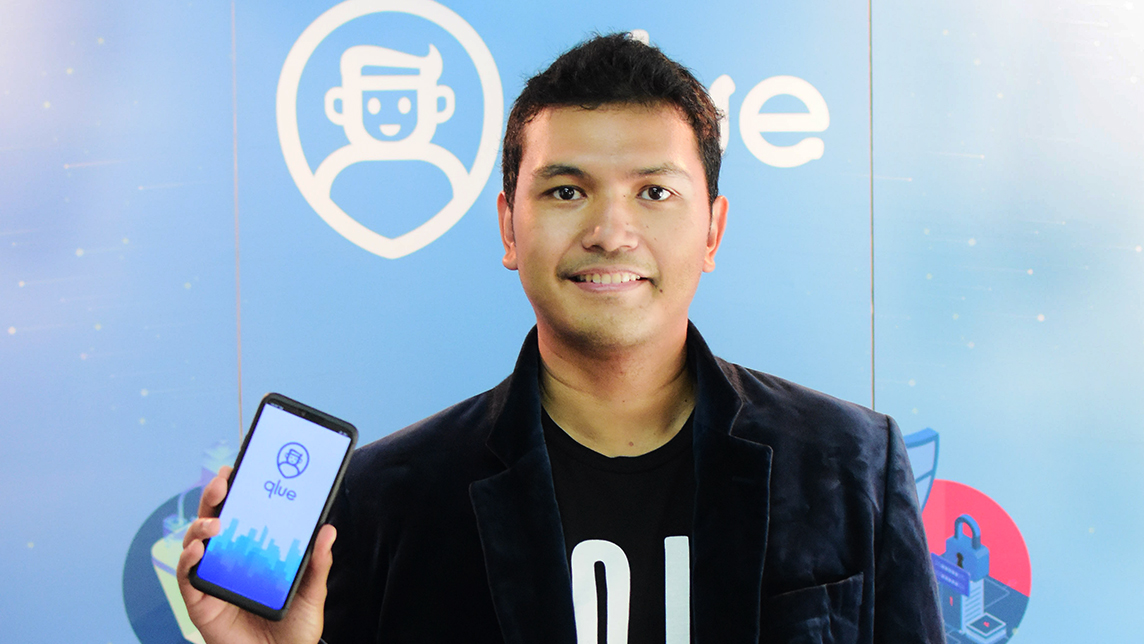
Interview with Qlue CEO: "We didn't know what a smart city should look like"
Co-founder and CEO of Qlue, Indonesia's largest "smart city" company, Rama Raditya explains how citizen involvement – not high-tech – is the true innovation of smart cities and the agent for change; plus how his startup has grown from partnering governments to businesses, and more
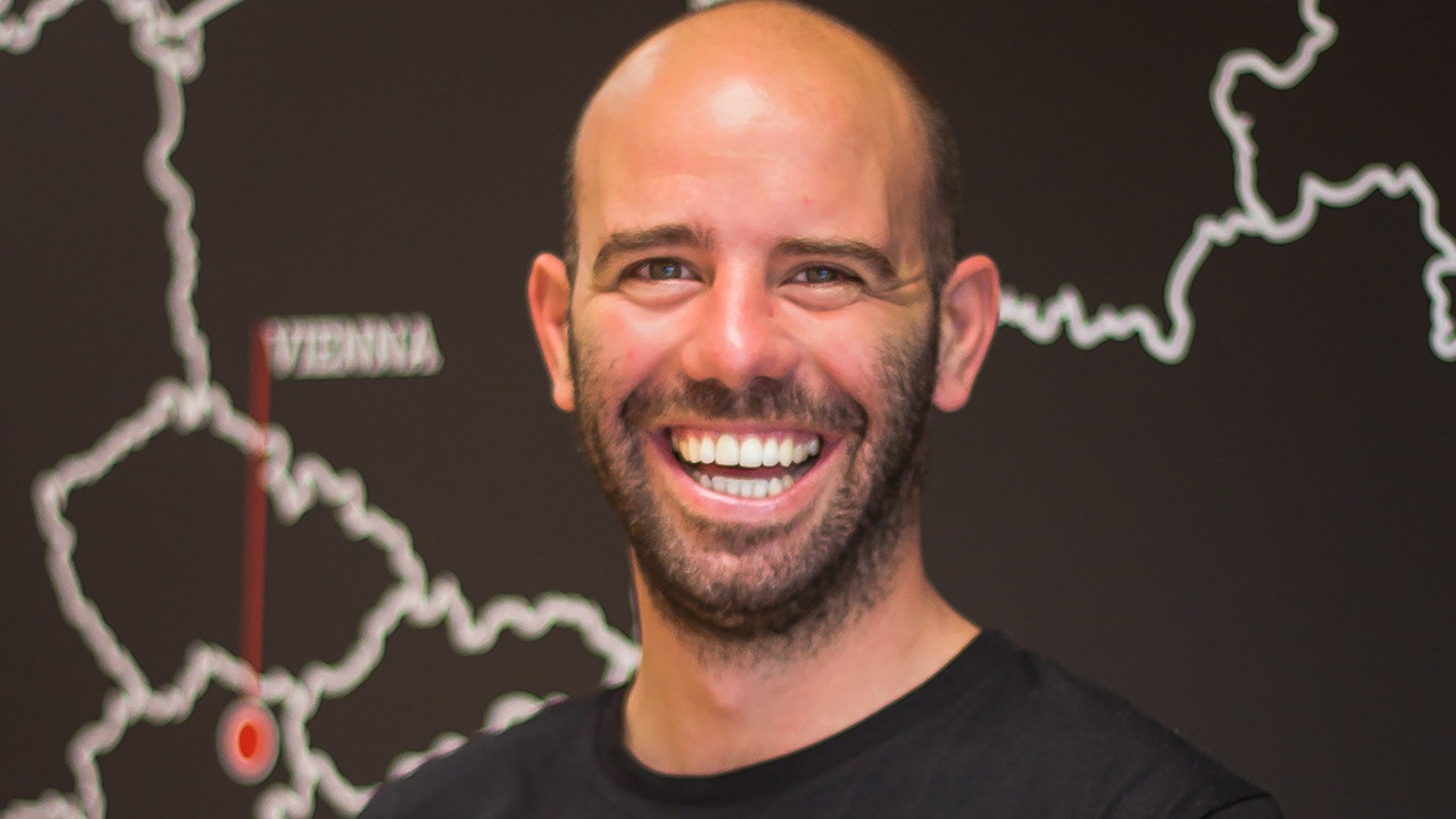
SigmaRail in funding talks, eyes 10-fold surge in revenue
The profitable Madrid-based startup is behind the “Google Maps” for railways to help make trains safer and provide better services

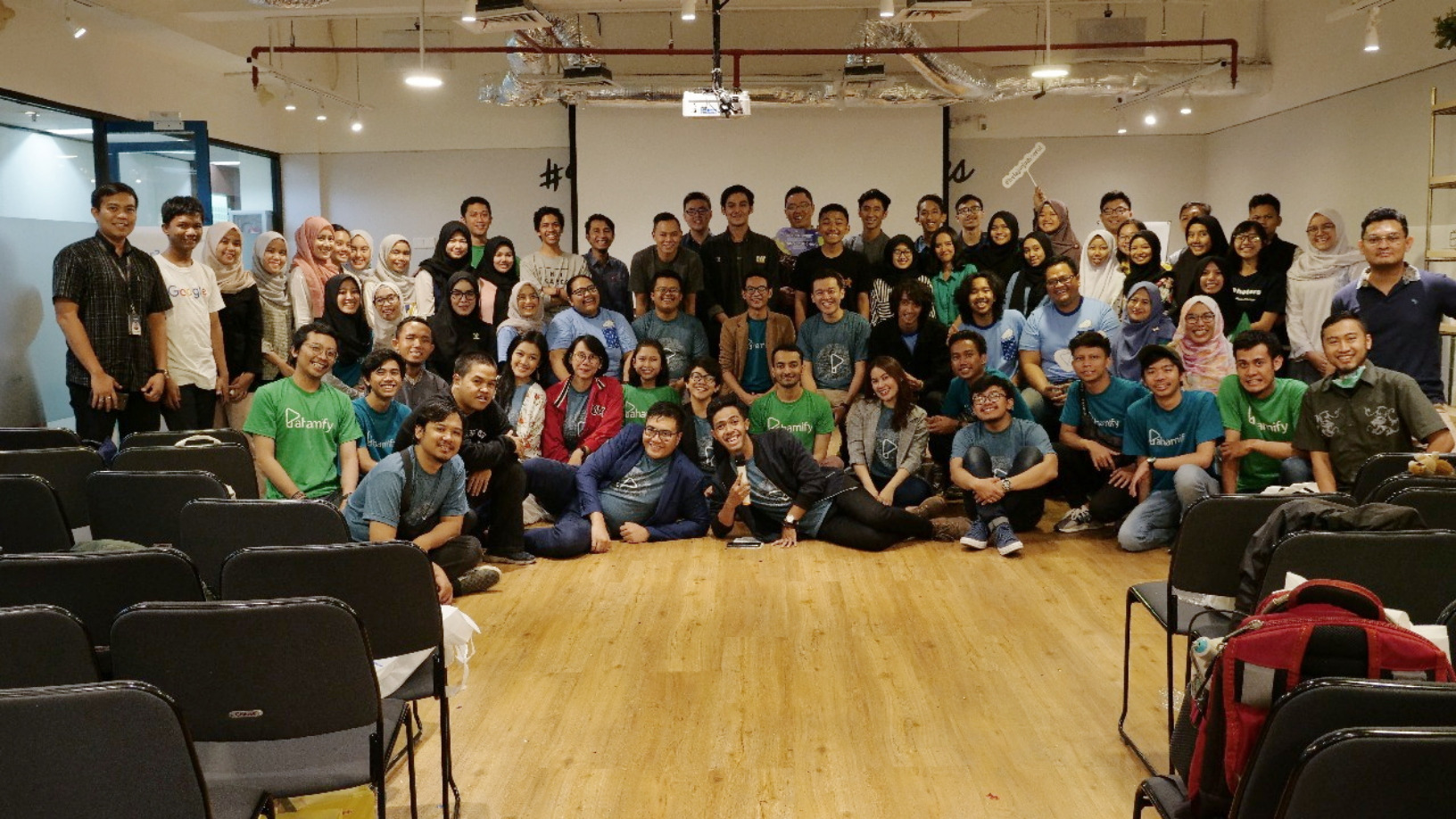
Pahamify: From YouTube success to new popular edtech app
Created by ex-PhD students, Pahamify combines the scientific approach with animation and games to bring back the excitement of discovery in learning
Tutellus.io: Creating social change by tokenizing education
Tutellus.io has built an incentive-based tokenized education system to boost students’ motivation and teachers’ commitment while facilitating global access to education

Shiheng Tech: The brains behind Starbucks' online delivery success in China
Using real-time data analytics to optimize last-mile delivery, Shiheng Tech offers the perfect on-demand recipe for F&B businesses

Koiki: Delivering social advancement, one parcel at a time
Social enterprise startup Koiki seeks to reduce the carbon footprint of e-commerce deliveries and provide jobs for Spain's most vulnerable people

Sorry, we couldn’t find any matches for “social mapping”.
POPULAR DATABASE